How Happy Meals Killed Tim Burton's Batman
Batman should have known you don't mess with clowns...

The reasons why certain planned movies didn't end up the way they were initially planned to go are myriad and as broad as directors and producers going to creative war, tax kick-backs disappearing and executives not believing that anyone would buy a female action figure. You know, like a doll. Those things that have sold countless millions across the world. Look, nobody's saying these decisions were ever right...
That last point about marketing is arguably the most important one at an executive level. While a film-maker is inherently concerned with delivering on their own vision, a studio has more than just an auteur on their mind. They're the faceless folk who wouldn't let Lord and Miller make their "wacky" Han Solo movie, who robbed us of Edgar Wright's Ant-Man, who killed the Jurassic Park sequel with the mutant human-dinosaur hybrid soldiers and who killed Zack Snyder's vision for the DCEU dead. They're not always wrong.
They're also the reason why Tim Burton was only a producer on Batman Forever and not the director, as he had initially been set to be. Famously, it was decided that Burton's vision for Batman was simply too dark and wasn't appealing enough to the key family demographic that would mean the difference between some hundreds of millions and LOTS of hundreds of millions.
Yes, Burton's Batman movies were brilliant, but they were a carnival of grotesques and monsters - including Batman himself - and part of the point of the lead was that he was anything but aspirational. This was not a hero you'd want to step into the shoes of, because the cape and cowl came with emotional wounds. That made him more interesting, but it didn't exactly make him a good toy marketing tool.
And these things matter.
3. The Batman Returns Toy Problem
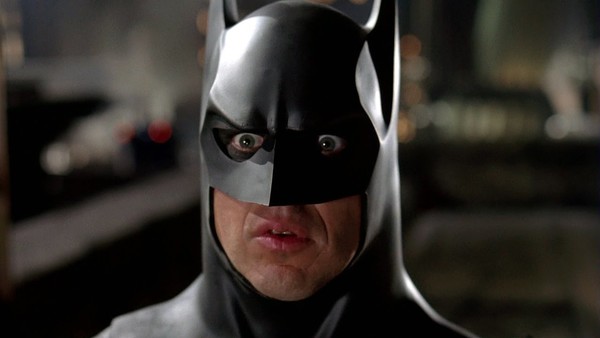
The story has always been that Warner Bros bowed to toy partners because they argued that there was no way of selling toys based on Burton's monstrosities. To be fair, they absolutely couldn't have done so to kids (though the Burton tie-in toys are delightful and the crowning part of lots of more grown-up collectors' collections) and Warner Bros were in the business of making fast bucks in the 1990s. They still are, but their approach is different.
That era was a time of instant return without too much thought about legacy. Sure, sequels were a nice idea, but looking back at the biggest movies of the early to mid 90s, they were geared towards short-term gains and ticket sales. That's why huge movies like Twister are mostly just remembered vaguely.
The studio needed their lucrative marketing partners for the first two movies. It was very much a huge part of their strategy as materials released ahead of 1989's original Batman reveal extensively. As the LATimes reported in 1992, the key partners were McDonald's, Diet Coke and Choice Hotels and a massive 120 product tie-ins were released including "talking toothbrushes, roller skates, and, naturally, T-shirts... boxer shorts, sunglasses and throw pillows... beach towels, beanbag chairs, weightlifting gloves and, yes, mugs."
[CONTINUED PAGE 1 OF 4]
2. The Tie-In Deals
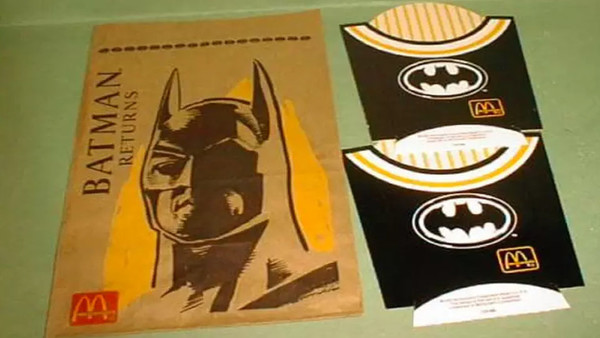
It was a Batmania assault that dwarfed all movies around it in terms of licensing partners and while Warner Bros picked up less licensing partners, the number of products and the scale of the campaign was the same as with Batman. In both cases, that meant huge marketing focus even as Warner Bros. consumer products and licensing president Dan Romanelli claimed they "didn't want to overhype the movie."
That's exactly what they needed to do, because that's how you make money. That's why the key partners McDonald's, Diet Coke and the Choice Hotel chain spent $60 million on TV advertising, including scenes from the film to specifically tie in to their products. If you want some scale of how much money that actually was, Warner Bros themselves spent $20m on marketing the entire movie. They were leaning on their partners a lot.
Unfortunately for the partners and McDonald's in particular, they didn't really know the movie they were working with. Working from a rough-cut of the movie - which Burton was still arguing with censors about because of its extreme scenes - McDonald's took the line that Batman Returns was a family friendly film. We can only guess what that rough cut showed, because it absolutely wasn't any of Tim Burton's decidedly not-family friendly Batman Returns.
Their plan was simple: let Batman Returns completely take over their restaurants. In the run-up to the film's release, all of McDonald's branding turned into a Batman campaign. You couldn't get moved for his logo or his face and the lids of every commemorative tie-in cup was turned into a Batdisc that doubled as a flying disc.
And it wasn't just a matter of slapping on some logos and making everything look cooler. McDonald's really committed. The LATimes article reveals that the company transformed all of its more than 9,000 restaurants in the United States and Canada into the "official" restaurants of Gotham City. As McDonald's Corp. public relations manager Susan Bergen said, it was a first for the company:
"We've never before given over our packaging like we have with this promotion. The idea is pleasing to the customers because they feel a part of all the excitement about the movie itself."
They also, obviously, added Batman Returns toys to their Happy Meals and released a series of commercials as an aggressive tactic of taking advantage of the relationship...
That weird choral "it's Batman time at McDonald's" over The Penguin summoning his army perfectly sums up the weird Frankenstein marriage between the two companies and just how much one didn't understand the other. The advertising very much paints the image of the wrong movie - which is even more confusing when you factor in the use of the obvious Darth Vader voice at one point in the voice over.
[CONTINUED PAGE 2 OF 4]
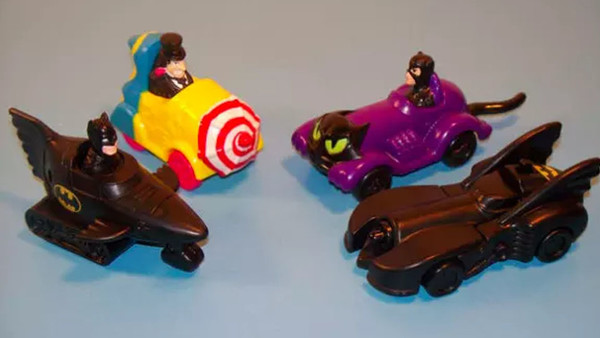
McDonald's had screwed up, because they were marketing the wrong movie to their family demographic and that was going to reflect badly on them. Later, Tim Burton would openly talk about how the relationship soured.
"I think I upset McDonald's. [They asked] ‘What’s that black stuff coming out of the Penguin’s mouth. We can’t sell Happy Meals with that!’"
Given how disjointed the image portrayed by the McDonald's marketing and the actual movie was, it's no surprise that there was an angry backlash from parents, with one writing:
Violence-loving adults may enjoy this film. But why on Earth is McDonald’s pushing this exploitative movie through the sales of its so-called ‘Happy Meals?’ Has McDonald’s no conscience?
Even further, Christian-based organization Dove Foundation demanded to know why McDonald's was continuing to market violence. The fast food giants may have been upset, but they continued the relationship for the entire length of the contract. They'd spent all that money, why wouldn't they?
To try and appease some of the angry, Warner Bros claimed they were tying into Batman: The Animated Series more overtly and claimed they were consciously "careful not to provide actual toys from the movie.” There was definitely an attempt to lean on the upcoming animation in Batman Returns marketing. Romanelli told the LA Times that
But there are differences this time, Warners licensing guy Dan Romanelli said that the Fox network show was essentially designed to keep the characters in front of a young audience so that "retailers will be able to feel comfortable that they will get support." In other words, Warner Bros knew that Batman Returns wasn't right for toys or their marketing partners, so they used an entirely different Batman product to parlay any detrimental effect.
McDonald's were too far gone though.
That does explain why the toys bear little resemblance to anything in the film (though the Batmobile is obviously identical), but it doesn't account for the heavy use of clips or McDonald's conscious decision to tie the restaurant experience to the movie. That was their mistake and they weren't the only family friendly partners who saw a lack of opportunity in Batman Returns characters. It's just that others may have been a little smarter than tying so closely.
The marketing worry was such a problem that key toy partners Kenner simply released figures in 1992 under the Dark Knight Collection that were nothing like anything that appeared in Batman Returns.
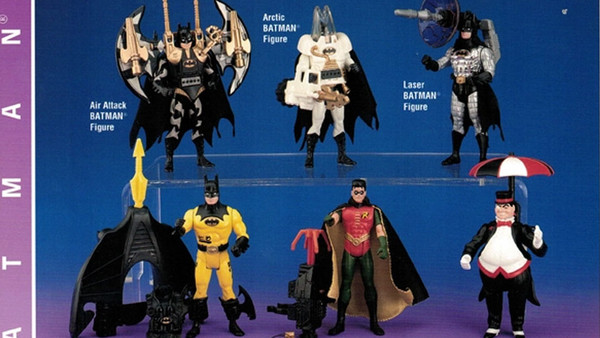
Mysteriously, these figures then became the early additions to the Batman Returns toy line, despite looking absolutely nothing like the characters in the movie. In the absence of marketable toy opportunities from Burton's own lines, Kenner simply added their own existing line to the Batman Returns label.
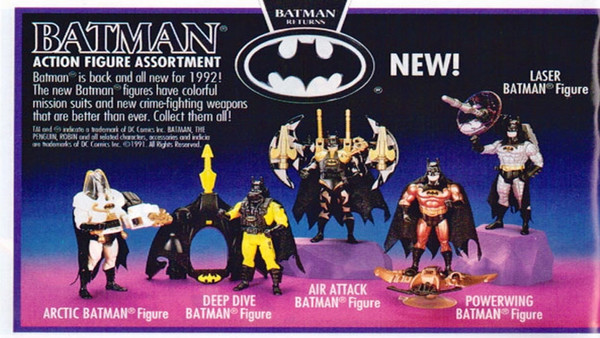
They even included Robin, who had been included in early drafts of the movie and a raft of vehicles drawn from another source other than Batman Returns. Looking at the toys now, you get a picture of them tying into a movie that simply didn't exist...
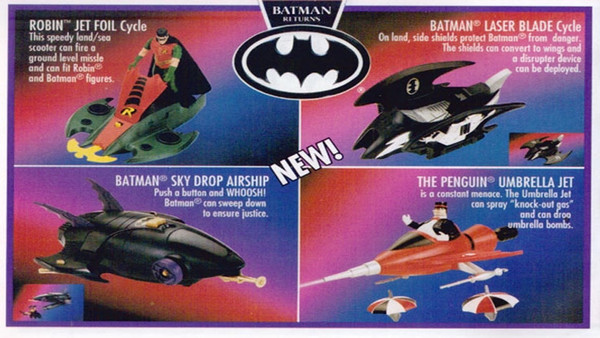
When you're having to allow marketing partners to market your film by NOT marketing your film, there's a problem.
[CONTINUED PAGE 3 OF 4]
1. The Backlash
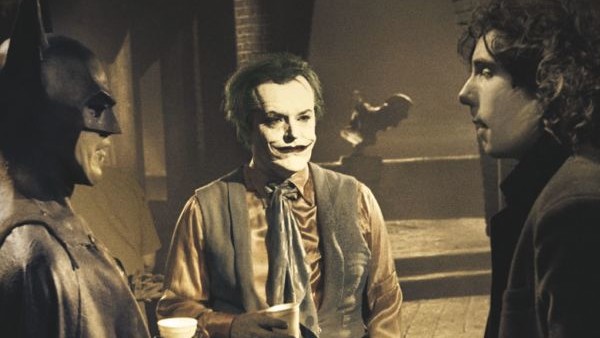
For Warner Bros, that problem was Tim Burton's vision and the director had to go. Their relationship with McDonald's changed the trajectory of Batman movies and while McDonald’s spokeswoman Rebecca Caruso played down the objectives of the campaign, it was clear the comapny was aggrieved:
“The objective of the [Happy Meal] program was to allow young people to experience the fun of Batman the character. It was not designed to promote attendance at the movie. It was certainly not our intent to confuse parents or disappoint children.”
There was something of a feeling that Burton's film had duped people who didn't realise it would be so dark and you have to suspect that - despite McDonald's claims - a lot of that was down to it being marketed aggressively as a family friendly movie.
Batman Returns screenwriter Daniel Waters recalled in the 2005 documentary Shadow of the Bat – Part 4: Dark Side of the Knight) audience reactions and it certainly sounds like that fits:
"It’s great. The lights are coming up after Batman Returns, and it’s like kids crying, people acting like they’ve been punched in the stomach, and like they’ve been mugged. Part of me relished that reaction, and part of me to this day is like, ‘Oops.’”
McDonald's were so affected by the whole situation that when it came to tying in with Jurassic Park - 1993's biggest merchandising opportunity - they changed tact. As well as apparently asking Steven Spielberg to tone down the violence of Michael Crichton's original novel (and adding in "good dinosaurs") - no doubt via the studio - as a provision of them having a relationship at all, they marketed their tie-in lines more selectively.
The McDonald's Jurassic Park promotion was aimed at teen-agers and adults, instead of pitching to young children because of the backlash the Happy Meal/Batman Returns relationship had inspired. They still transformed their restaurants - this time into "official visitor centers" - but their assault on DinoMania was very much not one plastered with a message of family friendliness.
Warner Bros, meanwhile, took the opportunity to suggest that Burton might want to do something smaller (which he took as pressure to step down, despite his interest in making Batman Forever) and changed their approach to the tone of Batman movies. The backlash made them re-evaluate how they should be aiming at their key demographics - not just the ones watching the movies, but also the ones buying licensing rights, which was just as lucrative, if done right.
Burton moved on, but McDonald's stuck around, though the tone of their Batman Forever tie-in promotion was noticeably different and there was no attempt to make Batman Forever seem so family friendly, ironically (given that it was).
The outrage they - and fans duped by their idiotic marketing campaign - kicked off, made Batman Forever a far more easy movie to tie products into, which is why there was such a phenomenally large tie-in toy line released for it compared to the comparative lack of Batman Returns toys. Warner Bros got there in the end.
In short, it's easy to dismiss Joel Schumacher's Batman tenure as a disaster, but the one key thing to remember is that kids loved Batman Forever in 1995 and they loved the toy tie-ins. The toy manufacturers loved Schumacher and Warner Bros for it and Warner Bros loved the licensing money. And in the end, that's why Batman movie history went the way it did.
Still, it's pretty ironic that a clown helped to kill Batman.