The Hunger Games: 10 Nagging Questions Answered

Confused about some aspects of the Hunger Games movies so far? Here are the answers to those nagging questions that were only explained in the book.

If you€™re going to adapt a best selling-novel (or three), it€™s always useful to turn the original story into a piece of work that can stand alone as a separate entity. The Hunger Games, of course, stands alone as a blockbuster sensation, and Jennifer Lawrence has earned the franchise millions of new adoring fans - some of which aren't even aware that it was based on a book first. But so often when cinema-goers discuss the questions they have about the film - die-hard "tributes" as they call themselves - point to the novels for answers. But not all of us have read the novels. And obviously, there are going to be certain aspects of the book that won't make the screen version of the story; half of the first movie is dedicated simply to the build-up of actually entering the arena. Nevertheless, us Hunger Games viewers that haven't read the books have some fairly probing questions that the lovely Katniss Everdeen has never answered on-screen. Here are 10 questions that the casual Hunger Games fan probably has about what's happened in the films so far - questions with answers that haven't been fully addressed, and the subsequent explanations to help you better understand the world we're dealing with...

10. For A Dystopian Future, Why Is Technology So Erratic?
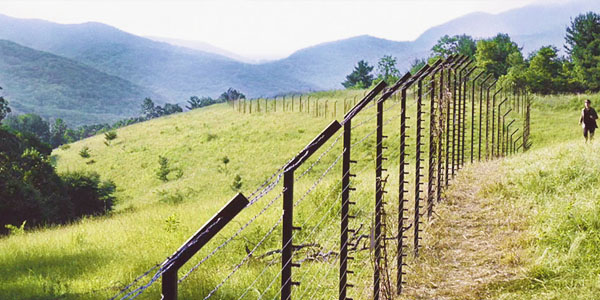
At the start of Catching Fire, we see President Snow visit the victorious Katniss Everdeen in District 12. He's brought with him a video of her kissing Gale that he captured secretly, and he lets her know that he's onto her: he's not going to let her cause any kind of revolution. Leaving aside where exactly he got the footage from, it's a poor quality video. Fair enough, this is a poor mining district, but this is the President - could he not afford a portable TV at the very, very least? What's not really alluded to is that the districts are starved of electricity. There's very little of it actually reaching Katniss's hometown, and that explains why she can escape through an electric fence every morning to hunt squirrels. It's one of the more straightforward answers that the book gives us, but it explains why Snow doesn't own a mansion in every district with 60-inch televisions on the wall, huge sound-systems and jacuzzis full of girls (also because it doesn't exactly fit the aesthetic of the film).

9. Why Don't Districts Rebel Sooner?

The whole world watches the Hunger Games. It's held primarily as entertainment for those who live in the Capitol, but every district has giant screens that the town gathers around to watch their tributes in action. It would understandable if many chose not to watch - they're not forced to, and a silence protest is perhaps the safest - but no, they tune in, just like the richer viewers. What exactly do so many have to root for, though? Their tributes obviously, but is it just a staunch loyalty that keeps them glued to the action? Well, no. In the books, it's made clear that the winning district gets fed; an extra grain for a whole year to be precise, so there's good reason not to rebel. Also not mentioned in the films - if you rebel against the Capitol, you have your tongue cut out. Avoxes, as they're known, are mutes that work community service in the Capitol, as punishment for standing against the government. So with just two extra lines of dialogue in the movies, we could have all admired Katniss even more for putting her neck on the line. As it stands under Snow's regime, a district has a 1 in 24 chance every year of acquiring more food for their family. That's probably more likely than striking out against a mega-rich dictatorship and not getting your tongue removed. The phrase "May the odds be forever in your favour" making a bit more sense now?

8. Are Katniss And Peeta The Only Previous Winners To Have The Slightest Slither Of A Conscience?

The premise of The Hunger Games is a statement on modern society; is this where reality television will lead? Will the world ever get to the point where we don't care about the slaughter of children if it makes for decent entertainment? Obviously, the leading pair do care. Both Katniss and Peeta show their repulsion to the society that they inhabit, and on a number of occasions, they rebel against the needless deaths that the Capitol just doesn't care about. It just seems that only a few people are unhappy with this world, though: why are Katniss and Peeta - and Haymitch if he's pushed for an answer - the only contestants we see that show disdain for the Hunger Games? We see the world through Katniss's eyes, and thus we don't see all that much about what the others think; more to the point though, District 12 is the furthest from the Capitol. They're the poorest and the worst off. There are richer districts, closer districts, and districts who take the competition more seriously (more on that later). And it's the brasher personalities from these places that dominate the arena, right? Most keep their head down simply because it's the easiest thing to do - and anyway, there are those worse off than them. They're all pretty poor, but it's no wonder the revolution is born from the poorest, most isolated place in Panem.

7. What's Up With Haymitch's Alcoholism?

When we first meet Haymitch, we're unsure what to think of him. He's the only surviving victor from District 12, but he seems to have a raging drink problem; is he really a suitable coach for this year's tributes? Actually, he is. He soon cleans up his act and teaches them everything they'll need to know when they reach the arena. It's a surprising turnaround for the Hunger Games veteran: we don't see him slip back into his depression for the rest of the first movie. So was his drunkenness a plot device used only for a scene? Well, Haymitch's troubles run deeper than the film explains. He first turned to booze when he won the Games; his whole family was murdered after Snow considered him to have cheated in the final showdown. He isolated himself away from the rest of the district and started sleeping with a knife. It's only when Katniss, in the early moments of meeting him, throws a knife at him that he thinks he's got some tributes worth fighting for. For so long, he was disheartened by tributes who showed no fight within them, and now he's actually got something to work with. At the start of Catching Fire, he relapses. He's not totally over his alcoholism just because he believes Katniss can win the Hunger Games, but it's not one of the more explored undertones of the series.

6. Why Doesn't District 12 Use Any Of That Land For Farming?
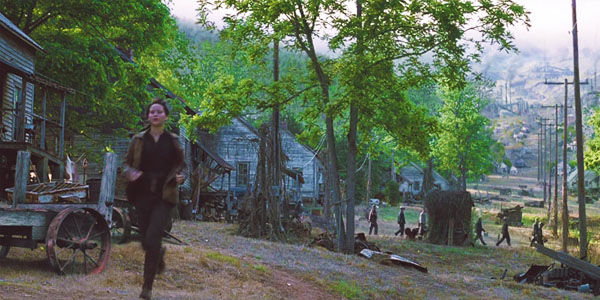
I don't know if you've ever tasted a squirrel. A quick web search will return reviews ranging from "like dry chicken" to "rubbery lamb," and you can't exactly get a lot of meat from them. It may be a delicacy in District 12, but it's probably not through choice, is it? With that lush, wonderful land that Katniss goes hunting in, though, why don't the townspeople farm? It's an obvious solution, but if it's one that answered comprehensively in the book: they're not allowed to. 12 is the mining district; it's 10 and 11 that take care of livestock and agriculture respectively. Katniss isn't even supposed to be out that far, either - it may be quite simple to escape through that aforementioned gap in the fence, but that fence is a serious border that should never be crossed. The films just never actually explicitly mention the consequences. District 1's job is to make luxury goods for the Capitol; they're almost the middle class of Panem. Further and further out though, the jobs and districts just get worse. District 13, home of nuclear weapons, was obliterated and the ruins are apparently still smouldering. Maybe having to live off squirrels isn't that bad, then?

5. Why Doesn't The Starving Katniss Eat Everything In Sight Once They're In The Capitol?
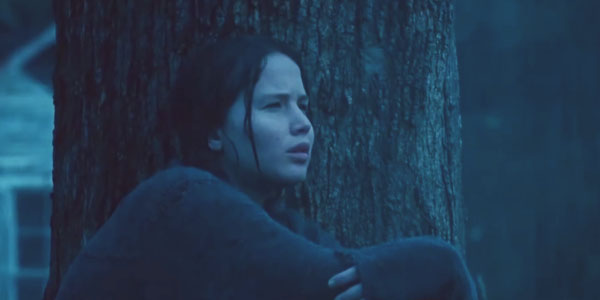
So whilst Katniss lives off rodents, Peeta works in a bakery. Alright for some, you might think, but he states that he's never actually eaten any bread that wasn't stale. He explains in the novels that he was even beaten for burning a couple of loaves; he's only kept in employment by the elite, and even they seldom need a nicely-decorated cake. Which somewhat tells us why such a poor mining town - who can barely afford bread - has a cake shop. The people in the Capitol don't even realise that the District children are starving. They vomit simply so that they can eat more. With plenty of food to go around, why doesn't Katniss take advantage of this, given that she's never been in an environment where decent food is free? A nice roast dinner has got to be the biggest perk of having to fight in a televised dual to the death, surely? In the books, Katniss does actually gorge on the Capitol's food; Jennifer Lawrence's portrayal is more reserved though, probably so that she isn't seen to be joining in with the Capitol's crass binging. No one would blame her for not wanting to eat that much when she's there anyway; it's an environment primed to put anyone off their dinner.

4. Why Should Any Of These Kids Form Alliances? Aren't They Mortal Enemies?

It's a fight to the death between total strangers, and yet when Katniss arrives with Peeta to fight in the Hunger Games, she feels like an outsider compared to the others. She watches as the contestants side with one another, and it's even suggested in the second film that every winner knows the other; what kind of get-togethers do all these previous winners have exactly? Do they all just reminisce over how they survived up trees and killed children? In the districts closer to the Capitol, volunteering's just a regular thing. They're trained from birth for the Games; they call themselves "Career tributes" and they see it as an honour to fight for their district. They choose Peeta to join them because he might have information on Katniss. Why's Katniss so important? She scored an eleven in the preliminary tests: they see her as a threat, and after all, it makes more sense to team up to take out the biggest threats of the smaller districts, before all turning on one other. It's not just tactically astute, it's chilling. And these are kids that are brought up simply to know that if they want to survive, they must side with other kids, and pick off the weaker ones. That's as powerful as any other message that author Suzanne Collins has given us; it's a shame it's not alluded to more in the movies.

3. Why Does Anyone In The Districts Care About Peeta And Katniss's Relationship?

No one could understand why the Capitol would let the pair both live at the end, but Snow made it very clear; it gives the country hope: "A little hope is effective. A lot of hope is dangerous. Spark is fine, as long as it's contained." Killing everyone in the Games gives no hope to the world at all. The Capitol seem to enjoy the "romance" between Peeta and Katniss, but why should the districts, when these are the people who killed their kids? Well, they're the hope for the rest of the world; no one's bothered about whether they're in love or not - they're just a symbol of triumph against the totalitarian regime. The books certainly made it clearer, but it's missing the point to pick "Team Gale" or "Team Peeta" when the real cause is the inner strength of one girl. That's something that hasn't really caught on with some fans; Suzanne Collins even tried to make the "shippers" look stupid when she gave her leading duo names that form a rude portmanteau. If they're anything like the books though, the following two films will probably expand on Katniss's relationship with both men- - if you're interested.

2. Where Exactly Is The "Hope" In Butchering 23 Children? Wouldn't It Be A Better To Hold A Lottery?

Continuing on the subject of hope, that's a skewed logic that old Snow has. Are his citizens supposed to feel grateful that he spared the life of one child, when he sent 23 others to their deaths? In the year that Haymitch won, there were double the tributes. Does that halve the hope? Surely, holding a Willy Wonka-style lottery would be far more incentive to giving the Districts hope? We're told though that the Hunger Games is a punishment for a past rebellion. It's brushed over, but it started in District 13 - the district furthest away from the Capitol - as the revolters in that town had two other districts standing strong alongside it. The Capitol obliterated District 13, and the other two gave in. The Hunger Games was curated to remind the surviving districts just how mercilessness the Capitol was, and just how futile it would be to stand against them. Make no mistake about it; President Snow's speech about giving hope to the districts is just a small consolation in his grand massacre. The novels go into more detail about just how devastating the first rebellion was; if anything, the only people who get hope from the competition are citizens already residing in the Capitol.

1. If Haymitch Can Send Gifts To Katniss, Why Did She Have To Try So Hard To Get Sponsors?

It's a curious question, isn't it? Haymitch made such a big deal about how important it was to come across as likeable; this is a televised competition, after all. And yet when the gifts arrive into the arena, they have a short message and a "H" emblazoned on an accompanying note. Now it's either the former Steps member that takes a shine to Katniss, or these are in fact from Haymitch. It's never actually made all that clear, but presumably these are gifts from sponsors that Haymitch is allowed to send off himself with a note. In the books, these gifts never included any notes; in fact, they never had a sponsors' name on them ,either. So how exactly, in either the books or the movies, do rich corporations and philanthropists show the Hunger Games viewers how kind they are? Commercial breaks, maybe? Remembering that the sponsors are watching actually makes the little discrepancies of the story more logical. Why did Clove take a chance to gloat to Katniss instead of killing her? To make a show for the sponsors. Why do the Careers assemble? Because it's easier to prove your worth to sponsors if you're the charismatic one in the group. Why didn't the Careers set Katniss's tree on fire? It's better television to kill her themselves, of course. The more you think about it, the more twisted it really becomes. Like this article? Let us know in the comments section below.

Contributor
Contributor

Mark White hasn't written a bio just yet, but if they had... it would appear here.