Hunger Games: Mockingjay Part 1 - 10 Reasons It Sucks (And 2 It Doesn't)

Splitting the book really wasn't worth it.

Today's the day! The long-anticipated third installment in the Hunger Games franchise, Mockingjay Part 1, is finally out in the wild, albeit amid plenty of controversy regarding the now-expected splitting of any popular novel series' final book into two parts in order to part fans with even more cash. The Hunger Games is no exemption to the rule, and much like most other franchises that have pulled this tactic on audiences, the results are...mediocre to say the least. Mockingjay Part 1 is still batting at a fair 72% on Rotten Tomatoes at the time of writing, albeit with a lesser 6.6/10 average score compared to the previous two films (7.2 and 7.5 respectively). The consensus is that, though the movie will do enough to please hardcore fans, it's also exactly what its Part 1 title suggests - a rather unnecessary, padded bridging film that sets up the sure-to-be-spectacular final movie next November. Still, that's far from the only problem facing this effortlessly cobbled-together film which, aside from a few successful elements, makes few pains to disguise the fact there's little reason for it to exist, and that it's just a cheap commercial ploy from Lionsgate. Nevertheless, expect astronomical box office receipts this weekend, even as audiences will no doubt be groaning the world over once the abrupt credits sequence rolls. Here are 10 reasons Mockingjay Part 1 is a total disappointment, and 2 reasons it's not. Bear in mind that SPOILERS DO FOLLOW.

10 Reasons It Sucks

10. It's A Blatant Cash-Grab

Of all the two-part (or in the case of The Hobbit, three-part) movies audiences have had to sit through over the last few years, perhaps only Twilight's Breaking Dawn Part 1 has had less of a sense of purpose than Mockingjay Part 1. Much like that film, this is filled with about as much wheel-spinning as it is actual plot development, and of the 123 minute run-time, there's maybe 50 minutes of decent material. Of course, it would have just made sense to make those 50 minutes the introductory portion of one single, 3-hour Mockingjay film, but that's not how studios, driven primarily by greed, actually think. So, as a result, audiences are forced to sit through this laboured build-up movie which is pretty damn shameless about the fact that not much really happens: it's a whistle stop tour of the Districts followed by a quick set-up for the war to take place in Mockingjay Part 2. Unless audiences start voting with their wallets, practices like this are only going to get worse: just wait until studios start trying to routinely split final novels into three parts. It's just a matter of time...

9. Lack Of Action

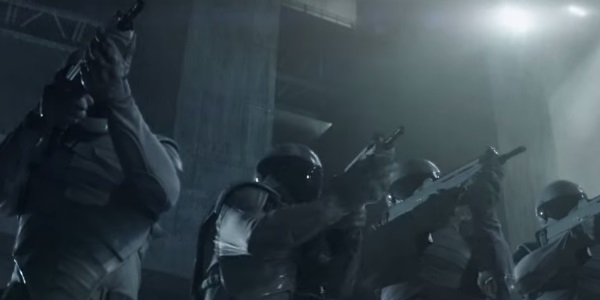
The previous two Hunger Games movies did fantastic jobs of balancing drama with action, aided by a central premise that revolved largely around the thrill of the chase. However, while Mockingjay Part 1 smartly moves away from that formula, it fails to replace it with anything approaching exciting action. The movie has less than 10 minutes of full-on action, featuring a few 1-2 minute snippets of gunfire and fighting peppered throughout, but nothing sustained nor particularly entertaining to watch. Though it's fair to say that the first half of the Mockingjay novel is relatively bereft of action as well, that only further explains why this movie shouldn't really exist in the first place. If the 50 minutes of good material acted as the first act of a 3-hour Mockingjay movie ahead of intense action later on, then it would be totally permissible. If you're not a reader of the books and go in expecting an action extravaganza, disappointment is inevitable, because there's so little of it, and what little does appear isn't especially memorable.

8. The Satire Doesn't Try Hard Enough
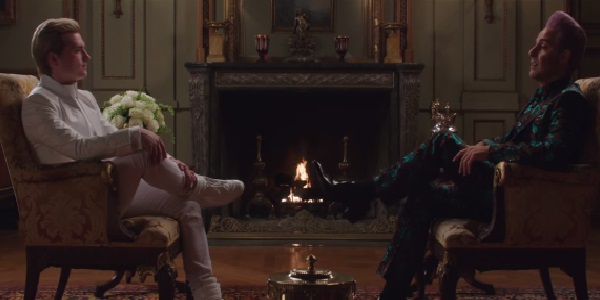
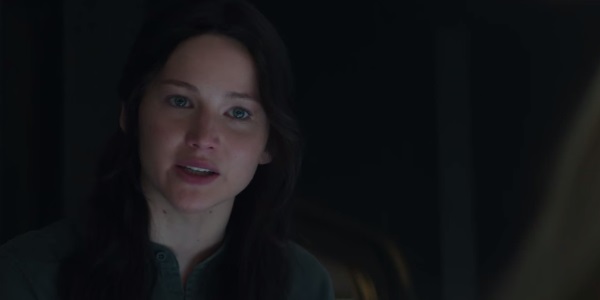
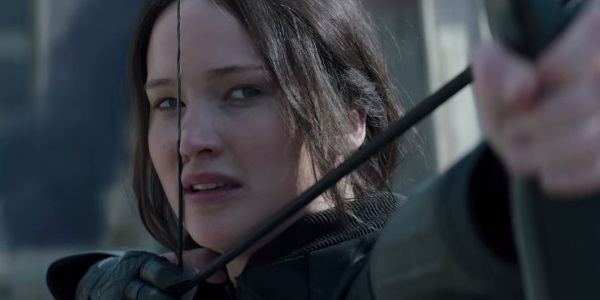
One of the more interesting aspects of Mockingjay Part 1 is the PR war being fought by the revolutionaries and the Capitol, in which Katniss (Jennifer Lawrence) is made into a Mockingjay, a public poster figure for the rebellion, complete with corny, gung-ho propaganda which, rather amusingly, somewhat resembles the trailers for the movie themselves. On the other side of the coin, Peeta (Josh Hutcherson), has been hijacked and brainwashed into making anti-rebellion statements on Capitol TV, and so, both sides are essentially trying to out-propaganda the other. It's an interesting idea, taking a clear jab at the falsity of news media and superficial nature of politics, but director Francis Lawrence just doesn't go far enough with it. Given how bleak and self-serious this film is, a funnier, sharper send-up would have provided some much-needed comic relief. Instead, the mockery is relatively downplayed here, yet given how little material there actually is in the film, there was certainly plenty of room to expand upon this aspect without drowning out the drama.

7. Too Much Exposition

Christopher Nolan's Interstellar hasn't had to wait long to find a competitor for the dubious honour of being the most exposition-laden movie of the year. A classic filmmaking rule is "show, don't tell", something that's been largely ignored in Mockingjay Part 1, an extraordinarily expository movie which is less about thrilling set-pieces and steeping the audience in the war-torn Districts, and more about endless, tired dialogues building up Mockingjay Part 2 and the awesome action audiences will eventually get to see...just for the low cost of yet another cinema ticket. This is further problematic considering how little of what's spoken in this film is actually necessary and not total filler. It's mostly endless discussions that don't add a whole lot to the story, with some relevant character development and plot movement peppered in-between.

6. Underdeveloped New Characters

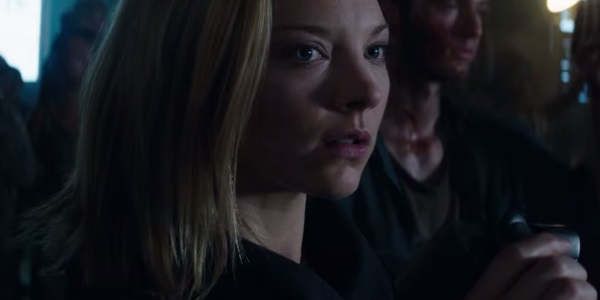
Given how much spare time this movie has, it's surprising more scenes aren't devoted to introducing and developing the host of new characters thrown into the mix. For starters, President Alma Coin (Julianne Moore) is barely introduced with a name drop and pretty much exists with the presumption that viewers have actually read the books. Then there's the propaganda team who visit the burned-out Districts with Katniss, led by director Cressida (Natalie Dormer) and a number of other characters you'll struggle to remember the names of unless you're an avid fan of the books (except for that one guy whose name rhymes with "bollocks"). So many new characters are thrown into the mix yet, rather disappointingly, they get the short shrift, especially Cressida, one of the most seemingly important new characters who never gets anything beyond a surface-level development despite the movie having plenty of time to do so.

5. Poor Pacing

Further to the point that there's about half a movie of decent material here, Mockingjay Part 1 is also sluggishly paced to the point that even self-confessed obsessives may find themselves becoming fidgety and exhausted. The opening act feels especially slow, with numerous, lengthy scenes of Katniss walking around and not doing very much except helping to pad the run-time out. Occasionally the pacing ramps up slightly with a pleasant burst of action or a dialogue of consequence, but on the whole, it's a painfully distended package that barely hides the fact it's totally dragging its feet throughout.

4. Not Enough Haymitch

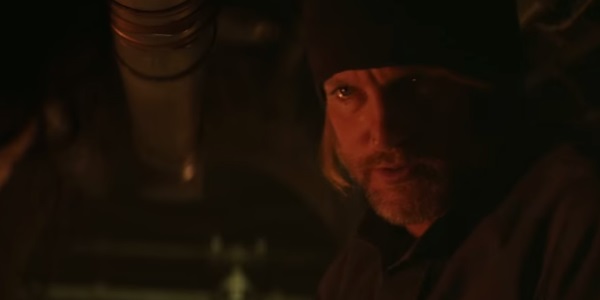
Though it wouldn't be reasonable to expect Haymitch (Woody Harrelson) to appear in the movie much more than he does in the book, it's still frustrating how little of the fan favourite character (and actor) appears in Mockingjay Part 1. For starters, he's absent from the entire first 40 minutes of the movie, apparently because he's drying off in a sobriety program. Once he shows up, he has one memorable dialogue in which he helps aid the propaganda fight, before he disappears for another half-hour, shows up again for a brief chat, and then pretty much disappears into the background for the rest of the movie. In fact, there's little here to suggest that Harrelson worked more than a few days on the movie, which is pretty disconcerting. Given how conspicuous Peeta is by his absence throughout most of the movie, it might have made more sense to amplify the presence of one of the series' most beloved characters. Instead, he pretty much feels like an afterthought.

3. Drab Cinematography

Though Mockingjay Part 1's setting is undeniably bleak, and the flashy colours of the previous movies would have proven jarringly inappropriate in the war-torn landscape that dominates this movie, it's such a bland-looking film for the most part. There's only so much audiences can stomach of aggressively grey, washed-out visuals before it becomes aesthetically uninteresting, even ugly, and a clearer effort to diversify the look of the film would have made some of the duller moments a little easier to sit through. The entire movie is shot so darkly that audiences may well find themselves begging for a splash of colour long before the end.

2. Robert Knepper Appears... For A Whole 10 Seconds
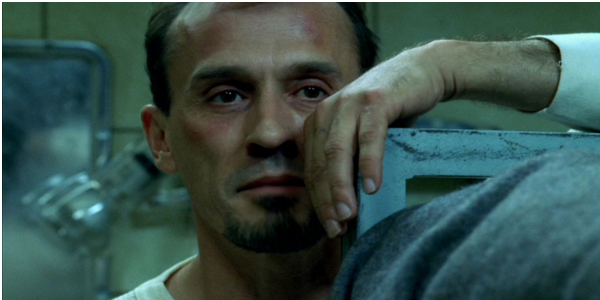
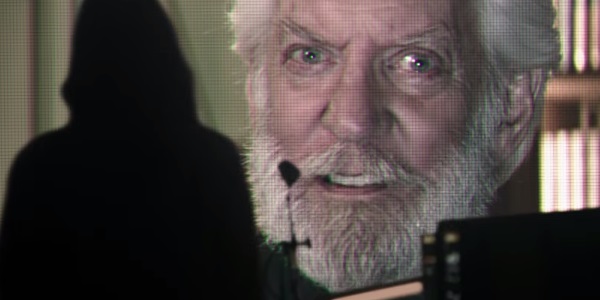
One of the more interesting prospects for the film ahead of release was the addition of a new character who didn't appear in the books, President Snow's minister Antonius, played by Prison Break's T-Bag himself, Robert Knepper. However, Knepper's character appears in the movie for roughly 10 seconds, having a quick word with President Snow (Donald Sutherland) and then promptly disappearing without a trace. Seriously, what was the point hiring such a great actor for such a minimal role? The likely explanation is that Antonius will have a significantly more important part in Mockingjay Part 2, but even so, it likely would have been a smart idea to at least introduce his character properly here, especially with all the spare time the movie had.

1. Anti-Climactic Ending

Any movie that ends with what amounts to "to be continued..." is always going to irritate people. Just look at The Matrix Reloaded, which features one of the most infamously obtuse and groan-inducing sequel hooks of all time. The mega-abrupt climax to Catching Fire was itself accompanied by eye-rolling in cinemas the world over, and expect that to go double for this film. The film ends, of course, with Peeta's rescue and the discovery that he has been hijacked by the Capitol, turned into a weapon in an attempt to kill Katniss. The final shot has Katniss observing Peeta as he struggles in the medical bay, restrained to a bed. Katniss' face reflects on the glass and the film cuts to black. Credits roll. It's difficult for a movie of this type not to be anti-climactic, but given how little progress through the book the film actually made, it's a fair complaint. Where the split would occur was a major point of contention ahead of the movie's release, and many are likely to feel that the split should have come significantly later in the book, such as during the intense bombing sequence later on. But in the interest of fairness, not everything in the movie was a complete let-down, so here are 2 aspects of the movie that actually worked for the most part...

...And 2 Reasons It Doesn't

2. Strong Performances

If there were two actors who were always going to deliver regardless of the rest of the movie, it's the late Philip Seymour Hoffman (Plutarch) and Julianne Moore (Alma Coin) who give easily the best performances in the entire movie. Though they're not exactly working with stellar material, their dialogues throughout create the most engrossing drama, as they throw themselves completely into their roles. Lawrence is meanwhile mostly business as usual, if not free from a few creaky moments of over-acting (and one unintentionally hilarious awakening from a bad dream). She does a solid enough job, while other supporting players, such as Sam Claffin, Harrelson, Sutherland and Hutcherson, do their best even if their screen time is extremely muted throughout. Even when the movie isn't being particularly interesting, it's fun to watch these actors just going at it (especially Moore and Hoffman), and had the series been in the hands of lesser actors, this bridging installment would have been decidedly less watchable.

1. PG-13 Isn't A Problem This Time

One of the frequent complaints about the first two movies was that the 12A/PG-13 rating wasn't especially appropriate for a series of movies revolving around young people murdering each other. What made the rating especially problematic was that so much of the action revolved around close quarters combat, and as such directors Gary Ross and Francis Lawrence struggled to depict the violence properly, often resorting to irritating shaky cam to mask what was really going on. Mockingjay Part 1, however, isn't stuck with the same problem, largely because there are no Hunger Games taking place in this movie. Instead, the little action that does appear is largely based on gun-fire and explosions, so there's nothing too graphic to shy away from: people fall down when they're shot (admittedly bloodlessly for the most part), and explosions do a pretty fine job of obscuring themselves. This is the first movie in the series where the rating wasn't distracting, though it's fair to say that this is in part simply because there's not a whole lot of action in the movie to begin with. Have you seen Mockingjay Part 1 yet? If so, what did you make of it? Shout it out in the comments!

Contributor
Contributor

Stay at home dad who spends as much time teaching his kids the merits of Martin Scorsese as possible (against the missus' wishes). General video game, TV and film nut. Occasional sports fan. Full time loon.