Hunger Games: Mockingjay Part 1 - 9 Easter Eggs You May Have Missed

Did you know there's a post-credits scene?

When the series first burst onto cinema screens, The Hunger Games was a world away from what it is now. Made for a comparatively slight $78 million and directed like an indie flick, its main claim to fame was that its plot had similarities to Battle Royale, a Japanese thriller most of those citing plagiarism hadn't even heard of before. Now, with Mockingjay: Part 1, the first half of an adaptation of the final book in the series, dominating the box office, it's a very different story. The adventures of Katniss Everdeen in the futuristic dystopia of Panem (real names went out of fashion about the same time as democracy) have become a phenomenon in their own right, the release of each movie serving as the definition of event cinema. Not bad from a young adult novel originally intended to just lightly satirise the media. As you'd expect of any modern, fan-driven movie, there's plenty hidden in Mockingjay: Part 1 for eagle-eyed viewers to uncover. Here's nine of the best easter eggs. Naturally, spoilers are present from the off.

Honourable Mention - Phillip Seymour Hoffman Tribute

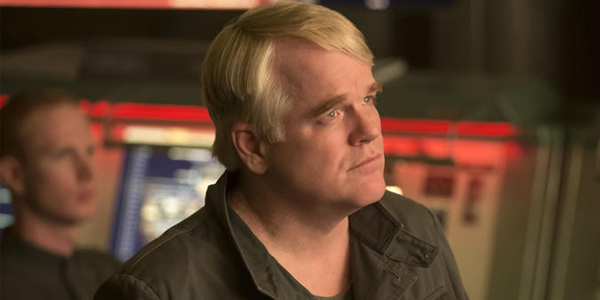
It'd be easy for the final two Hunger Games to be overwhelmed by the death of Phillip Seymour Hoffman - for better or worse it was the only talking point around A Most Wanted Man, his final lead role, earlier this year. The actor died of a drug overdose while filming his role of Plutarch Heavensbee, naturally bringing a lot of focus to the film. It's commendable that director Francis Lawrence managed to keep Hoffman's performance as just a performance - the film never over-eggs it for the sake of legacy. There was, however, a nice, unavoidable tribute right after the closing title card dedicating the film in his memory, which while overt, is worth a mention.

9. Jennifer Lawrence's Wig

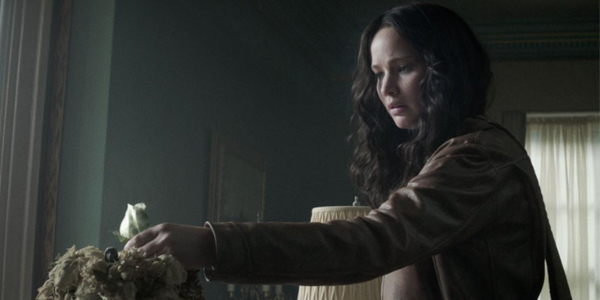
There's something different about Katniss in Mockingjay: Part 1. No, not the switch from reluctant tribute to rebellion mascot, but her hair - this time around it's a wig. You'd hardly notice - it's the work of a Hollywood level make-up team, not something brought from a fancy dress shop for a tenner - but throughout the movie the iconic black locks are fake. Director Francis Lawrence was insistent during Catching Fire that his star's hair be the real thing, but this time he had to relent. And, interestingly enough, it was his previous commands that caused the issue in the first place. Lawrence has stated in interviews that the constant dying - she's a natural blonde, but has had it go various colours, ranging from black to red - had destroyed her hair, making a short cut and wigs a much more stylish (and bearable) option.

8. Rope To Hope

One of the stand-out elements of Mockingjay is Katniss' rendition of The Hanging Tree, which provides another memorable music motif for the series. Lawrence says she was petrified of singing on set, although listening to the finished version she had little to be worried about. In keeping with the movie's themes of propoganda and altered image, the song gets butchered in the edit, with Plutarch changing one word, consequently altering the song's tone - "wear a necklace of rope," becomes "wear a necklace of hope". Going pretty meta, this isn't just part of the Rebellion's propoganda campaign, but also the film's - the officially released version on the soundtrack is the tampered version. Despite some fan bemoaning, in a practical manner it makes sense to lean on the altered version - "necklace of rope" isn't a reference to a noose, but a nod to Katniss and Prim's childhood, where they made rope necklaces. With that element absent from the movies, the change is a sensible one.

7. President Alma Coin's Contact Lenses

Despite having a bigger role on film than in print, there's little development of President Alma Coinin in Mockingjay: Part 1 (bar becoming a more personable public speaker), saving much of her character beats for the second half of the story. That's fair enough given that Julianne Moore managed to deliver a performance that's entertaining despite the lack of progression. It's not just Moore that helps create the feel of Coin - the hair and make-up team were on hand too. On top of that wig, Moore used contact lenses to to further give the District 13 Rebel leader a distinct look. They're only overtly obvious in a handful of shots, instead, for the most part, creating a slightly hard-to-pin aspect to the character - if eyes are the window to the soul, then Coin's is hidden behind a veil. Moore is no stranger to contact lenses to help drastically alter her appearance for a tricky role - she underwent a similar transformation for her spot-on Sarah Palin in HBO's Game Change.

6. Effie Takes Plutarch's Lines

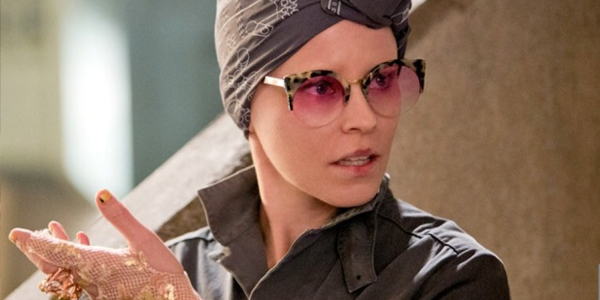
As already discussed in the Honourable Mention, Phillip Seymour Hoffman's death had an resounding impact on the film, although you'd hardly noticed it in Mockingjay: Part 1. There were two major dialogue scenes and a handful of background appearances still left to be shot when the actor overdosed, which naturally posed a problem. Rather than trying to emulate the actor with CGI and body doubles a la Paul Walker in Fast And Furious 7, Oliver Reed in Gladiator, Brandon Lee in The Crow and so on, Francis Lawrence instead realised enough was already filmed the whole problem could be got around with smart editing and a little script reallocation. The major impact of this on Mockingjay: Part 1 is that Effie, who already had a boosted part in the film (she's not in District 13 in the book), delivers a speech originally intended for Plutarch. That whole coffee-longing and fashion-revealing was going to come from Hoffman, not Elizabeth Banks, although it just, kinda works. The second scene Hoffman couldn't complete will come in Part 2, with Haymitch taking up the dialogue.

5. The Avox

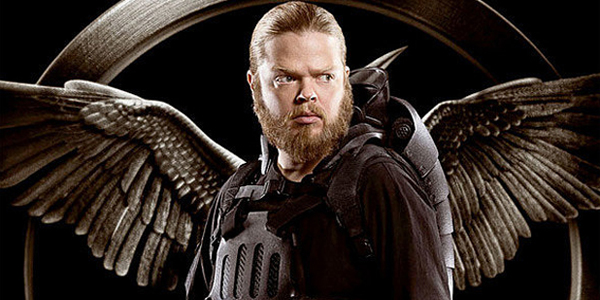
Mockingjay: Part 1 introduces us to a news team noticeably darker than Anchorman's. Fox News-esque in the way they hound after the best shot to manipulate the masses, they're a welcome addition to a film that could have veered too sharply into militaristic sci-fi. A stand-out is Pollux, a cameramen who inspires Katniss to sing The Hanging Tree; he's one of the characters that would no doubt have had a distinctly smaller impact had Mockingjay been a single film. Of course, the most notable element of Pollux is that he's an Avox - a former rebel against the Capitol who's had their tongue removed and been forced into slavery. Although Pollux marks the debut of the word on screen, this isn't the first time Avoxes have appeared in the movies. In the first two films the masked servants who serve the tributes in days leading up to the games are Avoxes. Silent and masked in the movies, in the books have a more direct link to the satirical element.

4. The Film-Makers Are The Rebellion

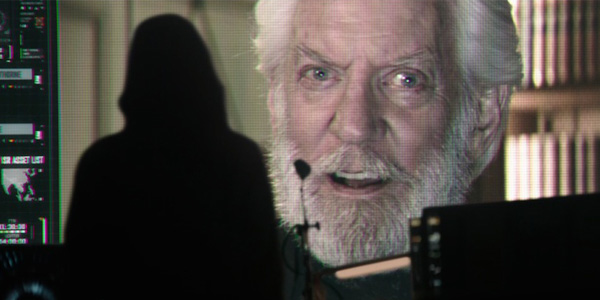
It's already been established that Mockingjay: Part 1's central approach is to look at the role of propaganda, taking the baton from the media's softening of violence seen in The Hunger Games. And, because the Francis Lawrence-era Hunger Games can't help but blurring the lines between Panem and reality, this seeped into the real world. The marketing campaign had already dipped into this, with teaser trailers that were in-world messages from the Capitol, but in the movie the whole thing is amped up to another level. The TVs in District 13 most prominently present propaganda from the Capitol for some reason, but when they're on screensaver mode they present images and text exactly like those used across the movie's standard marketing - Mockingjay Lives, burning birds and all that. Which means one exciting thing - the films are stylistically on a level with the Rebellion's plan, making the film-makers representatives of the Rebels. This could even prompt a reading that the whole series is an in-world, incredibly well-tempered, piece of propaganda in support of the Rebellion, although maybe that's taking it all a little too meta.

3. Corialanus Snow

For readers this entry will be well known, but for movie-only fans it's a pretty big reveal snuck into the film under the veil of accepted knowledge. Finnick Odair's finest (and only) hour in the film (seriously, why was the incredible Sam Claflin so underserved?) sees the former tribute reveal some pretty shocking things about how the Capitol operates. Not only is the post-victor life hardly a fun one for "desirable" tributes, but the poisonous truth behind Snow's power is revealed. A little less obvious is the on-screen reveal of the President's first name - it's Corialanus. This is the first time his name has been confirmed in the movies and serves as a nice cultural reference. The most famous Coriolanus is the Roman leader, immortalised in Shakespeare's tragedy of the same name. Although it could just be a reference, the name may shed some light on Snow's origins - the real life Coriolanus was a former soldier who tries to work his way into politics, only to be knocked back, to which he responds with a massive campaign of vengeance. This does lead to Coriolanus' death, although could things have gone differently in Panem?

2. All Those References

Mockingjay: Part 1 marks the point where The Hunger Games series all-but gives up on trying to win over the unconverted. The first two movies are essentially pre-reading, with the events of the treequel directly continuing an already in-progress story. But the film goes one further than other fan-exclusive franchises, with copious direct references to The Hunger Games and Catching Fire, showing that the events of those movies have become as mythical in Panem as they have in the real world. It all helps further increase the meta-feel of the whole thing. Hopefully even a passive viewer would have picked up on nods to Katniss volunteering for the Games or Peeta "making" people like her during the brain-storming session, but there's more obscure ones (see Finnick's talk of discovering Katniss' feelings for Peeta). Sure, they're not the most hidden of references, but the sheer number of nods (compare this to Harry Potter or Star Wars, which lean noticeably less on earlier films) makes it a worthy mention.

1. The Post-Credits Scene

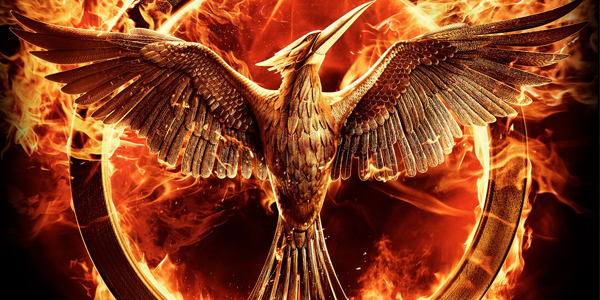
Neither of the first two movies featured a post-credits sting, and with the final scene serving as good an advert for Mockingjay: Part 2 as any, you'd be forgiven for thinking nothing was going to come after the (very long) credits for Part 1 other than the studio logos. You'd, however, be wrong. Those who stick around are treated to a little graphic that further stokes the (still catching) fire for the final movie. Essentially a continuation of the mockingjay transformation that appeared at the very end of Catching Fire, the forty second sequences sees the iconic emblem burn into life and morph through the logos of the three movies before the bird finally flaps its wings and destroys the outer ring. Mockingjay escaping its confines and burning solo - could that be a metaphor for where the series could be heading? Quite obviously yes. Were there any more The Hunger Games: Mockingjay Part 1 easter eggs this list missed? What were you're thoughts on the film? See the discussion catch fire below.

Contributor
Contributor

Film Editor (2014-2016). Loves The Usual Suspects. Hates Transformers 2. Everything else lies somewhere in the middle. Once met the Chuckle Brothers.