In Defence Of Last Action Hero
A post-mortem of Arnie's criminally underrated "dud."

It scarcely seems possible, but Arnold Schwarzenegger's divisive action-comedy Last Action Hero is over 30 years old. While it's fair to say that the film isn't fondly remembered by the general public alongside Arnie's most iconic action classics, there has nevertheless been a passionate groundswell of support for it in cult cinema circles over the years.
Though it quickly gained infamy as a rare flop during Arnie's late-80s/early-90s hot-streak, there have been calls by fans for the film to be re-evaluated by critics and nay-sayers in recent times.
To that end, the thesis is such: Last Action Hero is not a perfect movie by any means, but as a piece of switched-on, sharply-crafted, one-of-a-kind entertainment, it's never received the credit it so thoroughly deserves.
More than enough time has passed for contemporary audiences to turn around on the movie, so why, then, are the stories of its failure more widespread than any and all appreciation for it?
As we argue the merits of the John McTiernan-directed meta-actioner, let's first go back and consider the film in the entirety of its context. It's often glibly held up as an unprecedented failure of star-driven hubris, but how exactly was Last Action Hero a "dud"?...
9. Anatomy Of A Flop
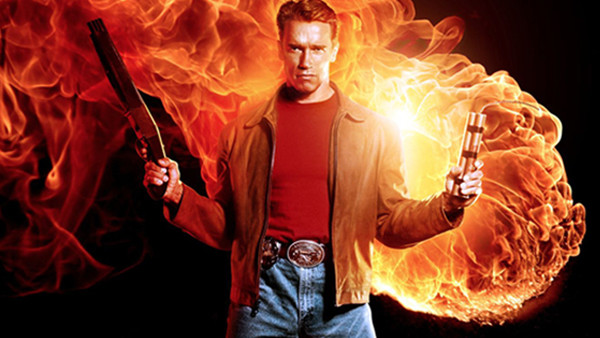
Last Action Hero is frequently held up as one of Hollywood's most infamous flops, and the most embarrassing miss of Arnold Schwarzenegger's career.
While the latter might well be true, the former is in fact something of an embellishment, even if the film was unquestionably a failure with critics, general audiences and the studio who funded it.
Yes, the movie was largely panned by the press, and even with the benefit of contemporary, revisionist reviews, Last Action Hero still sits at a rather paltry 34% on Rotten Tomatoes, with a mere 4.9/10 average score.
For what it's worth, it was also nominated for six Razzie awards: Worst Picture, Worst Actor (Schwarzenegger), Worst Director, Worst Screenplay, Worst New Star (Austin O'Brien), and Worst Original Song (AC/DC's "Big Gun"), albeit winning none.
The figure that really matters, at least in business terms, is of course its box office take. Budgeted at a colossal $85 million - including Schwarzenegger's $15 million salary and $500,000 on advertising the movie on the side of a NASA rocket...which ended up launching months after the movie's release - the film's global take was a soft $137.3 million, cemented by a mediocre C+ CinemaScore.
While it clearly covered its base production costs and then some - ensuring it wasn't an historic dud by any means - a titanic marketing budget from a grossly over-confident Columbia Pictures took an additional bite out of any potential profits.
Though Last Action Hero was not successful with mainstream crowds or the press, to call it a legendary cinematic dumpster fire is not accurate. It's also the starting point for where we can examine the film's sure status, through a modern lens at least, as a thoroughly misunderstood classic.
8. The Trouble With Expectations

Any big-budget movie starring an A-list action star is going to bring with it a certain set of expectations, and with Last Action Hero being Arnold Schwarzenegger's immediate follow-up to 1991's mega-hit Terminator 2: Judgment Day, his fans were basically expecting another balls-to-the-wall action flick.
The marketing certainly didn't help, downplaying the movie-within-a-movie premise and the presence of a kid sidekick (Austin O'Brien), while Columbia firmly put the cart before the horse by suffocating the film with outrageous paid product tie-ins.
Burger King paid $12 million for brand recognition alongside the movie, Mattel spent $5 million on toys, and more than two-dozen other companies also got in on what they assumed would be another monster hit from Arnie. The movie was merchandised in just about every way a tentpole film can, which in retrospect given the movie's tone, seems totally inappropriate.
Even more ludicrous in retrospect is the fact that it was pitted up against Jurassic Park, releasing just a week later as though it had a realistic prospect of surviving the onslaught of a Spielberg movie (even with Spielberg's prior film Hook underperforming at the box office).
Columbia head Mark Canton refused to delay the movie despite even original writer Zak Penn telling him he wanted to see Jurassic Park more than Last Action Hero, resulting in a game of chicken that, in ironic echoes of a scene from Last Action Hero itself, didn't go well for the instigating party.
Bad marketing and stubborn studio decisions have been the death knell of many great movies, and had Columbia not so insistently set such misplaced expectations for Last Action Hero, it probably could've succeeded given the profitability of Arnie's other comedy movies (Kindgergarten Cop made $202 million, for Pete's sake).
It wasn't just the movie's release that proved problematic, however, with the fast-tracked production ending up quite the nightmare itself...
7. A Most Peculiar Production
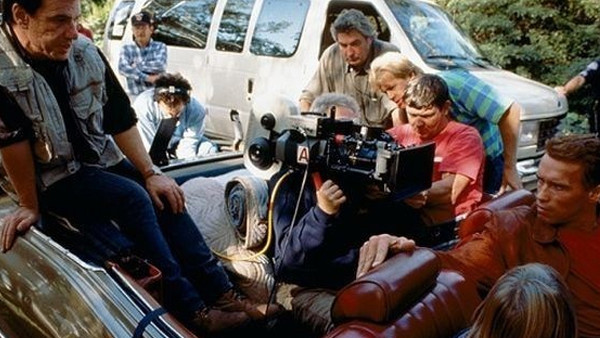
Even if you're (somehow) not a fan of Last Action Hero, you can probably appreciate just how much worse the movie could've been if the script wasn't given a late, uncredited revision by legendary novelist William Goldman.
Originally, warm-hearted projectionist Nick (Robert Prosky) was going to be the Devil who wishes to steal Danny's soul, there would be a scene where Danny has a phone call with his dead dad, and according to McTiernan, the script featured "150 toilet jokes" which Goldman removed.
The real trouble began after the script was locked down, though, and the entire process from pre-to-post-production lasted just 9.5 months, an unfathomably fast turnaround time for such an expensive, lavish project. Shooting only finished barely a month before its premiere, and reshoots took place less than three weeks ahead of release.
According to McTiernan, this resulted in the final movie basically being the assembly cut, with insufficient time to take multiple passes at the edit. This may explain why one of the most common criticisms of the film is its 131-minute runtime, which could've been ironed out and trimmed down with more time.
Given the clear pressure McTiernan and co. were working under from an obstinate Columbia who refused to push the movie to later in the summer, it's honestly pretty miraculous that the movie's as entertaining as it is, warts and all.
Now that the context of its release is laid out, though, let's take a deep dive into exactly why Last Action Hero is such a damn great movie...
6. A Movie Ahead Of Its Time

An infamously terrible test screening of Last Action Hero had audiences respond with choice quotes such as, "the movie laid there like a big fried egg" and dubbing it, "Willy Wonka with guns" (like that's a bad thing!?).
Is it not conceivable that the movie was just a little too clever for its own good, and therefore ahead of its time? After all, in addition to releasing amid expectations that it would be another T2, Last Action Hero preceded successful meta genre films such as Wes Craven's New Nightmare and Scream, not to mention Galaxy Quest and, more recently, the Jump Street movies.
It's easy to see how, in our ultra-ironic, sardonic Information Age, a movie like this would've been decidedly more successful. Give a vehicle like this to The Rock, give it some Deadpool-esque viral marketing and you've got a solid success on your hands, if not a mammoth smash hit.
Back in 1993, though, audiences didn't quite know what to do with something so brazenly self-aware, especially as its cachet of pop-culture references weren't exactly narrow. In addition to giving Robert Patrick's T-1000 and Sharon Stone's Catherine Tramell cameos, there are nods to the Oscar-winning movie Amadeus and Ingmar Bergman's 1957 existential masterpiece The Seventh Seal, among other more niche movies.
While to a contemporary audience familiar with the postmodern pop-culture vomit of shows like Family Guy, these seemingly scattershot touchstones might coalesce into a more acceptable whole, 25 years ago the mainstream crowd couldn't make head or tail of it.
It might seem awfully snotty to say "some people just don't get it", but if you can't find the humour in a fake trailer for a Schwarzenegger-starring action movie adaptation of Hamlet, there may be no helping you. Not everything works in the movie - the addition of a Danny DeVito-voiced cartoon cat sidekick might be one step too silly - but it's at least easy to see why it still has its passionate cheerleaders a quarter of a century later.
That's to say little of the movie's overall desire to lampoon the very notion of action movies themselves, achieved by the live-wire synergy between co-writer Shane Black and John McTiernan...
5. The Shane Black-John McTiernan Dream Team
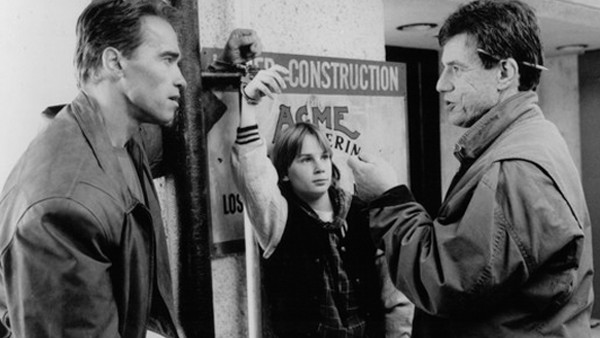
Last Action Hero is obviously a send-up of bombastic, testosterone-fuelled action flicks, but rather than skimp on the gonzo action while pushing the laughs to the forefront - as is so common in the action-comedy genre - this is a movie that instead juggles both splendidly.
This is in large part because the movie has two men at the forefront who are respective masters of these genres. McTiernan, best-loved for Die Hard, Predator and Die Hard with a Vengeance, once again serves up deliciously-helmed mayhem, albeit with the added comedic twist lent by Shane Black, who of course made his name off the Lethal Weapon franchise.
Ironically, original writers Zak Penn and Adam Leff wrote the script as a parody of Black's movies, only for Black and his writing partner David Arnott to come aboard and rewrite their work over several drafts.
Fusing McTiernan and Black's unique sensibilities resulted in a movie where a guy can get killed with an ice cream cone propelled from an exploding ice cream van, and it can be both hilarious and terrifically shot. This is a film where Arnie shoots a stick of dynamite through the air, because why not?
The movie-within-a-movie parody wouldn't be as effective as it is without a director capable of taking the material seriously from a stylistic perspective, which perhaps only further confused audiences about the movie's true intentions at the time of its release.
Today, Tina Turner's cameo as the Mayor, the hilariously on-the-nose exposition, Lethal Weapon-esque jazz music, absurd product placement and countless other wink-wink lampoons of the action genre couldn't make it seem much more obvious. That they're true to the absurdity - and the joy - of the genre ensures the movie retains an affectionate tone that never ventures into mean-spirited territory.
And of course, McTiernan couldn't resist including a few game references to his own work, namely a helicopter laser aimed at Arnie's head distinctly resembling the Predator, and a slow-motion fall mirroring Hans Gruber's (Alan Rickman) unforgettable demise in Die Hard.
It all combines to ensure that Last Action Hero keeps its finger firmly on the pulse of action cinema.
4. It Features Arnie's Career-Best Performance (Seriously)

Even Arnold Schwarzenegger's biggest fans probably wouldn't deem him an acting great, but he has benefited from being extremely well-utilised throughout his career, with his role in the Terminator franchise obviously being his most iconic part to date.
As brilliant as he is in T2 in particular - which is hilariously sent-up here with Sylvester Stallone appearing on a standee in the Arnie role - his best and most interesting performance is actually in this movie. Not only does Schwarzenegger play a self-reflexive action parody of himself, but literally plays Arnold Schwarzenegger, the actor, in act three.
The bulk of the first two acts both mock and deconstruct Arnie's popular action star persona, with him gamely playing the part straight until Danny passes through the cinema screen into his world.
From here, the tables are turned, and a weirdly depressing visage of an action hero's off-screen life is painted, where he pays a pharmacy employee to call him to give the impression he has friends, he's wracked with PTSD over his son's murder, and feels untold existential angst after learning he's the creation of a Hollywood scriptwriter.
From the silly action to the more subversive musings, Arnie nails it all completely, and even when the movie goes full-meta with Schwarzenegger and Jack Slater meeting, he never lets the mask fully slip.
He also gets extra points for willingly mocking not only his action stardom but his public persona also, with his real-life ex-wife Maria Shriver even chiding him for shamelessly plugging his Planet Hollywood restaurant at the Jack Slater IV premiere.
All things considered, it's fairly easy to understand why 1993 audiences, generally unfamiliar with metatextual movies, would balk at seeing Arnie take such a left-field role that wasn't a card-carrying comedy on the level of, say, Twins. They did, however, sleep on what's the most terrifically dynamic and multi-faceted performance of the legendary star's career. There, we said it.
3. The Unexpected Benefits Of WTF

Yes, that's Ian McKellen dressed up as Death from The Seventh Seal, in case you forgot he was in this movie. When Danny and Jack travel back to "the real world" at the start of act three, Danny knowingly tells him, "you can't go through life nitpicking every little thing", as if Shane Black was, in typical Shane Black fashion, lampshading the rough-edged absurdity of his own movie.
It's just as well, because even staunch defenders of Last Action Hero will have troubling denying that it can be a bit of a mess. One of the most common things reviewers said about the movie is that it should've been a far broader action parody, rather than throwing a cartoon cat into the mix amid the aforementioned obscure pop-culture references.
Indeed, Last Action Hero could have turned out a far more accessible - and therefore far more boring - movie, but instead McTiernan and Black teamed together for what's arguably the most surreal and peculiar big-budget, A-list action-flick ever made.
Yes, there's a distinct lack of clarity regarding the rules between the movie world and the "real" world, but with Black's pen at work, it's rather easy to accept this as merely another layer of his intentional commentary. After all, the real world depicted isn't in fact real at all, is it?
It's tempting to say, "Just switch your brain off and enjoy it", but that would betray the fact that this is, at its best, an extraordinarily intelligent and literate movie. Do all the edges fit together neatly? Absolutely not, but that only enhances the film's enduring status as a demented curio, a work of anti-tentpole cinema that almost anarchically soils convention and, yes, sometimes narrative logic too.
Is that the long-winded equivalent of, "Just roll with it"? Perhaps, but for the overwhelming majority, Last Action Hero's eccentricities play in its favour rather than to its detriment.
As fascinatingly entertaining as the more expectation-defying elements of the movie are, one of its more conventional-ish aspects also ends up being one of its level-best: the antagonist...
2. Charles Dance's Villain Is The 90s Icon That Never Was

While this is a Schwarzenegger movie through and through, Charles Dance very nearly wrestles it away from him several times with his deliciously, darkly comic performance as antagonist Mr. Benedict.
Though originally written to be a secondary antagonist with the Devil being the primary villain, rewrites smartly beefed-up Benedict's role, and almost two decades before he became known to a whole new generation in Game of Thrones, he delivered a villainous performance very nearly as great.
Benedict begins the movie as a lackey of sorts to the "true" baddie, Tony Vivaldi (a slumming but enjoyable Anthony Quinn), but through his continued exasperation with Vivaldi's idiocy - including Vivaldi's constant butchering of classic idioms - he eventually murders his boss and goes into business for himself. Not before hilariously dubbing him a "spaghetti-slurping cretin", of course.
Dance is so fantastic here that, had the movie gotten the marketing and release it deserved, Benedict could've been remembered as one of the best and most iconic action movie villains of the 90s. The world isn't just, of course, and Dance never received sufficient accolades for his work outside of cult circles.
After all, the sequence where he enters New York City, murders a man and is both delighted and stunned at the lack of repercussions for his actions, is worth the price of admission alone ("I just murdered a man and I want to confess!").
As Benedict quips to the camera, in a wonderfully smarmy British accent no less, "If God was a villain, he'd be me," he manages to walk a delicate line between delicious ham and bone-chilling cool. The fact that he tells young Danny, "I have killed people younger and smarter than you", in a PG-13 movie no less, only cements how brilliantly he avoids making Benedict a goofy caricature, especially considering the false eye and all.
In the film's climax, Benedict even tells Slater, "In this world, the bad guys can win!", and Dance is so damn good you might almost believe him.
1. Remember, It Was The Start Of A (Doomed) Franchise

Another frequent complaint about the movie is that Benedict hints at a far more interesting third-act than the one we actually get. Though Death is released from The Seventh Seal into New York City, Benedict also talks to Slater about the possibility of letting loose other classic movie villains, such as Dracula, King Kong, Hannibal Lecter, and, erm, Adolf Hitler.
None of this happens of course, likely due to the complex legal red-tape more than anything, and while that's understandably disappointing to many, it's important to remember that Last Action Hero was never meant to be just one standalone movie.
Like any tentpole Arnie blockbuster, Columbia had sequels in mind, with studio head Mark Canton apparently hoping it could compete with the likes of Lethal Weapon and Batman (which he had worked on over at Warner Bros). Canton even hoped to have Las Action Hero 2 ready as fast as summer 1994, but it wasn't meant to be.
25 years later, studios are still very much in the business of counting their chickens before they've hatched, albeit more typically in the pursuit of lucrative cinematic "universes" rather than mere traditional franchises.
Universal was widely mocked for their over-eager effort with last year's The Mummy, and while Last Action Hero shouldn't be let off the hook for banking too enthusiastically on its own success, it's at least evident that Benedict's name-drop wasn't entirely for nothing.
Had Columbia not bungled the release quite so disastrously, maybe, just maybe there could've been a sequel and Arnie perhaps wouldn't view this as one of his most embarrassing failures (according to McTiernan, anyway).
Nevertheless, all these points considered, and the film's many flaws accepted, Last Action Hero enters its 25th year in the pop-culture lexicon and continues to be long overdue a wider re-appraisal from film buffs, critics and general audiences alike. Let's make it happen.
What's your take on Last Action Hero? A misunderstood, flawed classic, or every bit the dud its reputation suggests? Shout it out in the comments!