Is THIS The Most Underrated WW2 Movie Ever?
Noir-Drenched War - Why Attack's Genre Fusion Deserves Greater Recognition
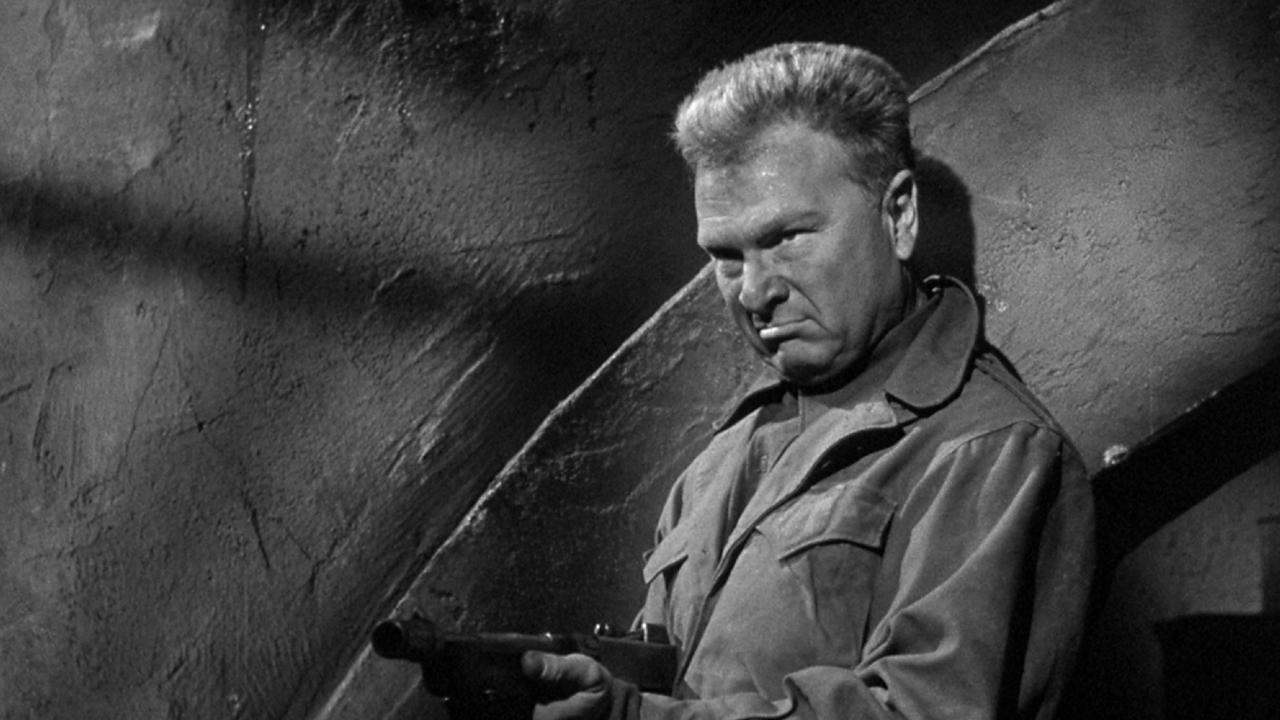
Of course, Attack was not the only war film from the 1950s or even before to convey a message. Just a year later, in 1957, David Lean's masterpiece The Bridge on the River Kwai situated a Shakespearean tragedy about the cost of the British stiff upper lip within the South-East Asian Theatre of WW2, while Stanley Kubrick's WW1-set anti-war drama Paths of Glory arrived in the wake of several disastrous colonial actions from the European powers - principally France. There are two things that distinguish Attack from its contemporaries, though: its thematic content, which scrutinised American post-war paranoia and a shift away from New Deal politics; and Aldrich's noir influences.
With its sumptuous black and white photography, dark subject matter, and morally flawed cast, Attack shares more in common with the noir films of the day than it does its genre peers - a direct result of Aldrich's career before that point. Attack was his first war picture, with the seven films he made before then belonging to the Western, noir, and drama genres respectively. Cinematographer Joseph Biroc - who collaborated with Aldrich 14 times across his career - had also cut his teeth shooting across those same three genres, with the bulk of his work pre-Attack coming in noir pictures. (His first meeting with Aldrich was also on a noir film - World for Ransom.)
It's no surprise, then, that the makeup of Attack was rooted not in the war film, but in noir. Aldrich and Biroc had honed their styles within that space, while Marvin and Palance had both delivered arguably their then most iconic performances in the same arena. (The Big Heat for Marvin, and Sudden Heat for Palance.) The play on which the film was based, Fragile Fox, dwelled on themes of corruption and moral decay in an otherwise widely respected and powerful institution. Its theatrical origins also necessitated an adaptation smaller in scale compared to most other conventional war films, allowing for a greater focus on character drama and for that noir dynamic to bubble to the surface.
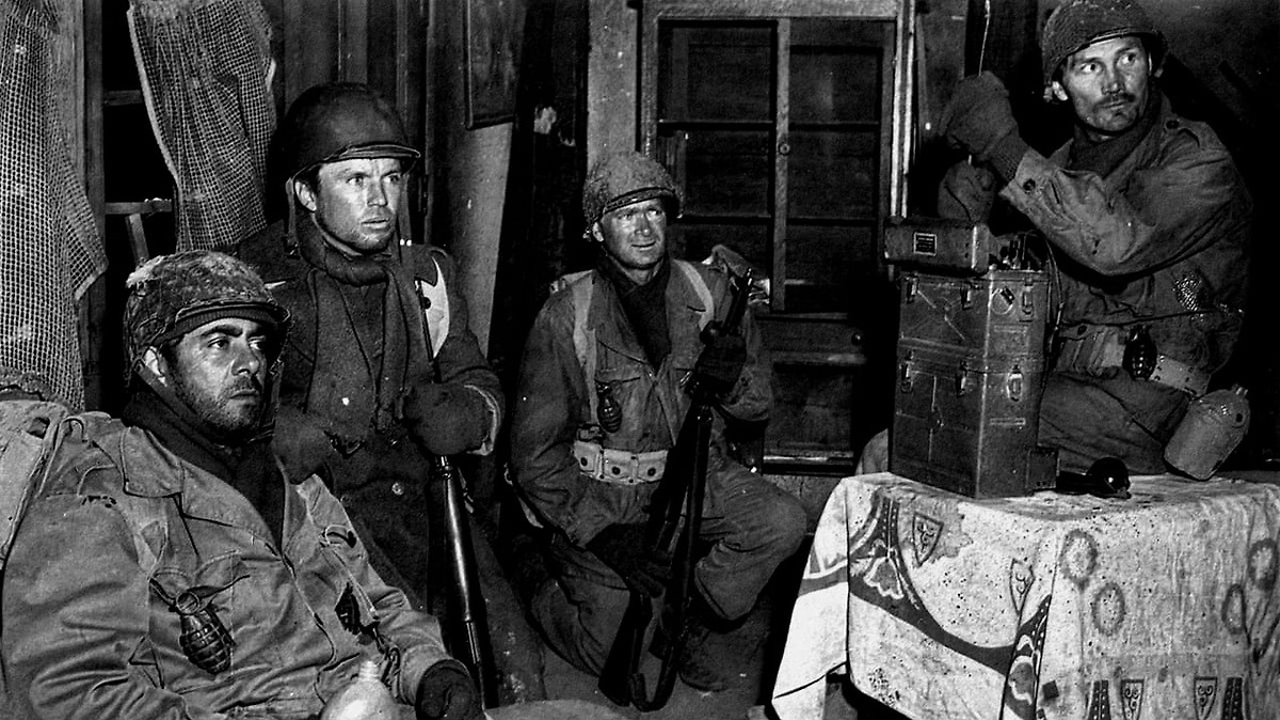
Attack had different objectives compared to many other war films of the day and even those that emerged later. 1965's The Battle of the Bulge, for instance, took a more comprehensive focus in the vein of Daryl F. Zanuck's The Longest Day (albeit with a markedly less impressive eye for historical authenticity), while the majority of war pictures from that period functioned along similar lines, recounting the full scope and scale of World War 2's most significant battles. Attack, conversely, was microcosmic - a snapshot of a scrambled-together defence that resulted in some of the heaviest US losses of the war until the Nazi advance broke down. It was a cold, brutal engagement that illustrated Allied frailties - the perfect battle to delve into dysfunction and discord on both a literal and allegorical front, which Aldrich exploited for full effect on the big screen.
Instead of vast, open engagements, Aldrich confines Attack's action to claustrophobic levels. Interiors are dimly lit and caked in shadow, with regular use of close-up shots in exterior sequences ensuring that the proceedings maintain a consistent, intimate feel. It also helps that Palance, Marvin, Albert, and others like the great Robert Strauss all had striking facial features, imposing their own individual presences in ways that allowed silence to strike just as hard as Norman Brooks' cutting dialogue. Palance, carved from stone, gradually crumbles over the course of the film, while Marvin slyly bides his time like a cat waiting to strike. It's like the frame is struggling to physically contain them, boxing and agitating each character until the pressure is released with an inevitable explosion.
[Article concludes on next page...]