Is THIS The Most Underrated WW2 Movie Ever?
There Wasn't Any Other War Film Like Robert Aldrich's Attack
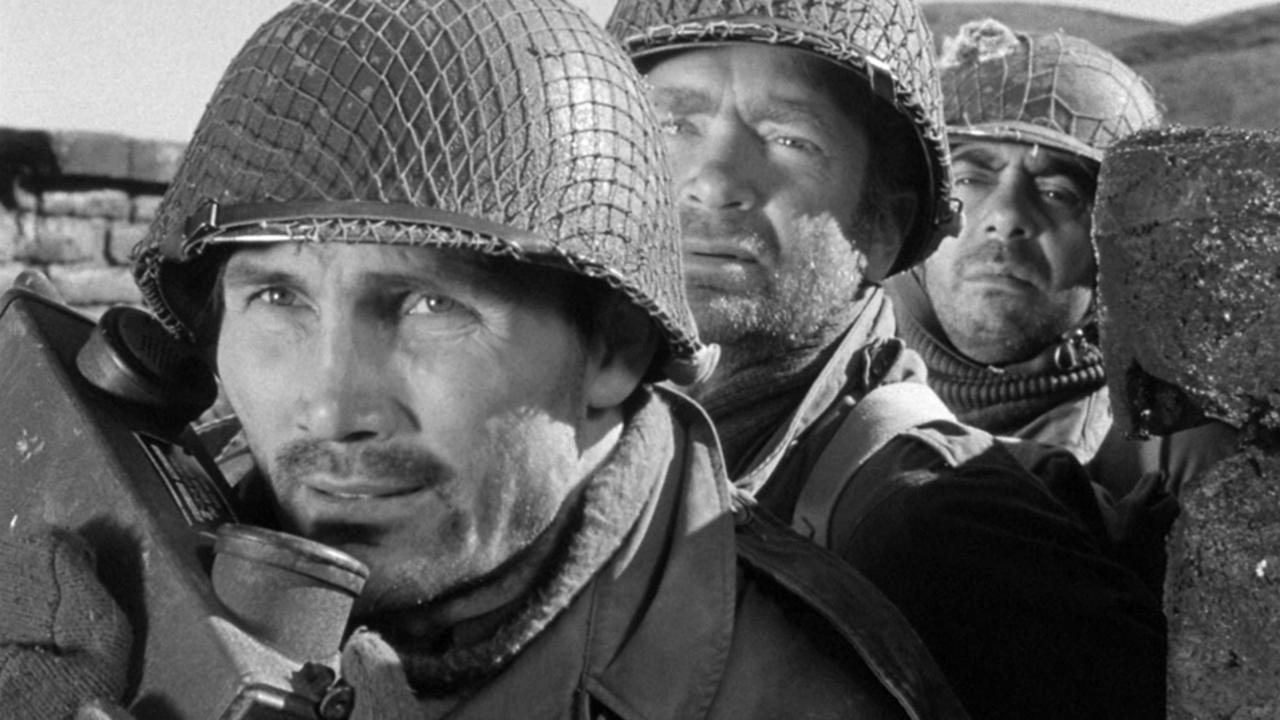
As an adaptation of a stage play, Attack is suitably character-driven. Palance plays an effective but war-weary officer, Lieutenant Joe Costa, with Smithers' Lt. Woodruff an equally competent but more conciliatory ally. Further up the command chain lie Eddie Albert's Captain Cooney and Lee Marvin's Colonel Clyde Bartlett. The former is an incompetent braggart reviled by his subordinates for his part in the deaths of US servicemen, while the latter is a politically ambitious officer whose ties to the influential Cooney family have allowed the former to rise up the ranks and gain his own command.
Cooney himself is the victim of a ruthless father - his soldiering nothing more than a desperate attempt to reverse a slow and devastating process of emasculation - while Bartlett is cold and self-serving. While the war was for many a matter of survival, for Cooney and Bartlett, it's about self-preservation - an opportunity to be leveraged at the expense of the men in their care, even if it costs them their lives.
This self-interest exacts a heavy toll on Palance's Costa, who, after one Cooney-enforced blunder too many - and a deliberate attempt from Cooney to send Costa on a suicide mission - resolves to frag his superior. All hell breaks loose in the Ardennes as the Battle of the Bulge begins, and Costa attempts to make his way back to exact revenge. But this isn't a story about heroes and villains; in Aldrich's own words (and quoted again from Williams' book), Attack was about "the terribly corrupting influence that war can have on the most normal, average human beings, and what terrible things it makes them capable of that they wouldn’t be capable of otherwise."
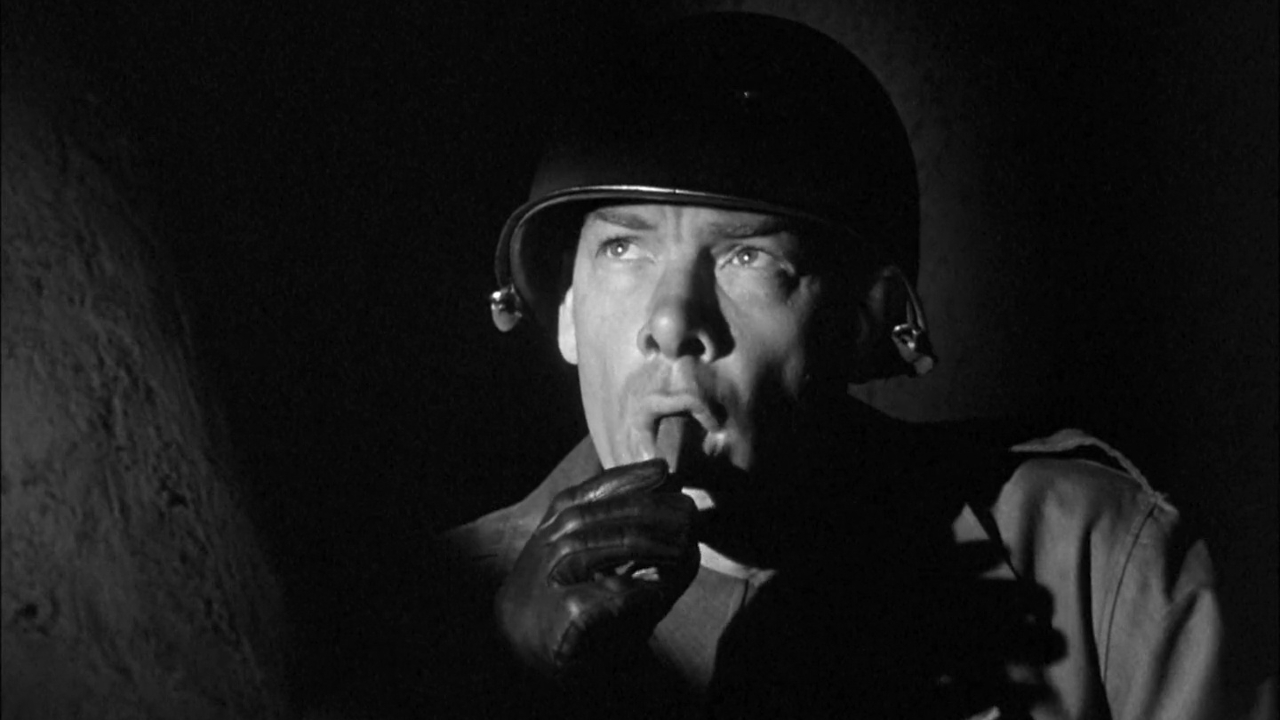
Here, the Second World War is turned from a historical moment of resilience, liberation, and empowerment to something fundamentally ugly - a nightmare that let loose man's frailties and broke everything in its wake. As Attack pertains to the Red Scare and the renegotiation of New Deal politics specifically, Aldrich speaks to an uncomfortable historical reality, demystifying the rapidly enshrined mythology of WW2 by not just posing the question of where the country was heading with witch hunts, intolerance, and inequitable wealth mere years after those sacrifices were made, but by understanding that this corruption had long been a fixture of US political culture. Attack thusly takes on dual significance - as an unvarnished, bleak portrayal of the closing stages of the war, and, as Williams surmises, a form of quiet resistance to the social status quo Aldrich operated in.
Contextualised that way, Attack feels more of a piece with something like High Noon than it does the other war films of the period. If Fred Zinnemann's film was an allegory for Hollywood blacklisting made potent for its subversion of Old West mythology, then Attack applied that same ethos to the new mythology: the American military. Just as the staples of the Western were inverted for High Noon - specifically the lack of frontier solidarity - so too were the war genre's for Attack. Fear lingers at the edge of every frame, and any notions of traditional heroism are abandoned in favour of a stark depiction of warfare that doesn't shy away from the horrific. There's genuine suffering, wounds both physical and mental, and an unrelenting, unsentimental approach to its characters. Everyone's a bit of a bastard - even our heroes.
Within that iconographic framework, Aldrich turns what was a symbol of might and justice into a creaking machine sustained by broken men. The implication is that it is the system, not individual neglect, that is responsible for the Cooneys and Bartletts of the world, with the ending going so far as to offer a conclusion that resistance, not compromise, is the only route to victory. It's a powerful stance to take given the historical context, especially since - as Williams highlights - Aldrich diverted from the ending of Fragile Fox to convey it, but it also affords Attack a depressing prescience and salience. We continue to negotiate and compromise with mechanisms of persecution, corruption, and cronyism, but resistance - genuine, actual resistance - necessitates direct opposition.
It's the kind of war film that would define the Vietnam generation, with Aldrich's fifties classic foreshadowing the rise of the more cynically minded genre picture. Brian G. Hutton's Kelly's Heroes - a similar misfit WW2 picture to Aldrich's The Dirty Dozen - focused on a band of self-interested GIs going AWOL to steal Nazi gold, while Aldrich's 1970 effort, Too Late the Hero, similarly applied Vietnam-era characterisation to its Pacific Theatre setting. Both of those examples differ from Attack in their use of irony and satire to deliver their message, but Attack is an essential part of that lineage - a Red Scare allegory war film from the fifties that has the same rawness and emotional heft as Oliver Stone's Platoon.
[Article continues on next page...]