James Bond: The True Story Of Quantum Of Solace's Failure
Quantum of Solace's production problems hindered the success of 007's first sequel.

The financial and critical success of Casino Royale proved to Bond producers, Barbara Broccoli and Michael G. Wilson that reinventing the 007 franchise was a necessary step in bringing Bond into the 21st Century. It was now an established fact that sacrificing the classic tropes such as gadgets, one liners and megalomaniac villains for a more grounded and humanistic approach was the way forward.
Casino Royale disproved many of the negative expectations that fans had regarding Craig’s performance and how it would impact the movie. Afterall, the character of James Bond is the most important factor in carrying the narrative. Craig was an instant success and many of the controversy surrounding his appearance was soon forgotten. Over the course of one movie, many were hailing him as the best Bond ever; steep claims for those who had only recently disregarded his announcement as 007 due to the colour of his hair.
It was without a doubt that another instalment in the series was going to happen. With the inevitable knowledge, viewers were intrigued to see if Daniel Craig could maintain the proficiency of his performance and not a one-hit-wonder. With this in mind, as well as the popular demand for another movie, Broccoli and Wilson were put under cracking pressure to deliver a better movie in a shorter amount of time.
This resulted in Quantum of Solace, the first direct Bond sequel ever made and a disappointing movie which failed to improve on the greatness of its predecessor. The real question is what went wrong with Quantum of Solace and many of the blame for the film’s failure can be credited to its production.
5. The First Bond Sequel

It only made logical sense for Quantum of Solace to be a sequel. Casino Royale was a reboot of the 007 franchise and therefore changing the timelines of the series wasn’t likely to dramatically influence the series more than it already had been. In the past, almost all Bond movies have had little to no connection with one another until Daniel Craig’s portrayal.
There were occasional references to previous movies such as Bond’s visit to his wife’s grave in For Your Eyes Only, alluding to his marriage during George Lazenby’s one movie career in On Her Majesty’s Secret Service. On the subject of Lazenby’s movie, he cements the lack of continuity with the cringe inducing one-liner ‘This never happened to the other guy.’
This time, Quantum of Solace would take place directly after Casino Royale. More specifically, the movie would ‘pick up right where Casino left off’, a common saying spoken in relation to the timings of the movie. It follows Bond’s actions taken after the death of Vesper Lynd and his attempt to repress his desire for revenge. The movie sounded like an interesting concept. Very rarely had Bond sought revenge in the previous movies.
There were inklings of revenge scattered in some performances however most movies never strayed from the slapstick violence and unrealistic characters. Only Timothy Dalton’s time as Bond saw a full revenge plot take place in License to Kill and it was a very well received movie although financially, it failed to meet the quota of the other movies. This may have been because of the movies 15+ age rating - a rating that Casino Royale almost attained but was downgraded with a handful of cuts on the barge scene; a reasonable decision due to the nature of that segment.
[NEXT: What Does The Title Mean - Page 2 of 5]
4. The Unusual Title

So, what does Quantum of Solace mean? It’s a question that puzzled even the cast members and crew when probed with the question. Wilson decided the title days before the first press conference for the movie.
Taken from the name of one of Fleming’s short stories, Quantum of Solace was described by Craig in an interview as ‘Bond looking for his quantum of solace and that's what he wants, he wants his closure. Ian Fleming says that if you don't have a quantum of solace in your relationship then the relationship is over.’
The short story itself depicts Bond attending a dinner party in which one of the guests, the Governor of Nassau, recounts the story of a marriage between one of his employees and an air hostess. However, the air hostess becomes unhappy with their marriage and initiates a long standing and open affair with a professional golf player. Once the affair is discovered and ended, the husband and wife continue their marriage in order to appear happy to the public, however the two haven’t any quantum of solace for each other left.
It is not a conventional tale of Fleming’s as it is not a traditional Bond story. However, Quantum of Solace acts as a way of developing the character of Bond and the differences between his career as an agent and the reality of the real world’s drama. This has little relation to the movie however as the term Quantum of Solace represents the smallest amount of gratitude or care that one person has for each other in a relationship and without this, the relationship crumbles under these foundations; possibly in relation to Bonds clinging love for Vesper despite her betrayal.
[NEXT: Where It All Went Wrong - Page 3 of 5]
3. The Problems Arise...

With the title decided, the other 99% of the movie had to be made. As Casino Royale entered postproduction in July of 2006, it was announced that Quantum of Solace would be released with a confirmed date of May 2008. With a very tight schedule of 18 months to write, cast, direct, edit and promote the movie, Quantum of Solace was delayed until late 2008.
This was a reasonable decision however other external forces threatened the movie’s production even further: The Writer’s Guild of America Strike from 2007-2008. The strike demanded that the writers, Paul Haggis and Robert Wade as well as Marc Forster who was the new director hired for the movie write the movie extremely quickly before the strike happened. According to Haggis, the script was completed two hours before the writer’s strike. It is possible that this method of writing the script incredibly quickly in order to avoid the writer’s strike as well as the tight deadline affected the overall quality of the final product. However, one could also argue that the choice of director for Quantum of Solace also negatively impacted the movie.
Marc Forster had never watched any of the Bond movies aside from Casino Royale and, therefore, had never been particularly interested in pursuing the career as director for 007 until the movie’s release in 2006. Forster’s time as director for Bond was chaotic as a result of this writer’s strike.
Forster’s script had to be constantly altered and, due to the tight deadline, rewrites had to take place hours before scenes were filmed with both Forster and Craig writing just to make ends meet. In an interview with Time Out, Craig remarked that "There was me trying to rewrite scenes – and a writer I am not. Me and the director [Forster] were the ones who had to do it. The rules where you couldn’t employ anyone as a writer, but the actor and director could work on scenes together. We were stuffed."
The writer’s strike had resulted in inconsistencies that went against what Forster wanted to make. Due to the Forster’s vision for the movie, it's likely that the script had to be altered to accommodate. One of Forster’s main visions was to have Quantum of Solace move ‘tight and fast – like a bullet’ as he viewed that Casino Royale’s length was too long. Therefore, scenes were cut in addition to the constant rewrites going on too.
[NEXT: What It Was SUPPOSED To Be - Page 4 of 5]
2. Forster's Vision For Quantum

Not only this, but Forster was heavily influenced by the four elements and wanted to incorporate them in his movie through action set pieces. This was a bizarre decision by Forster and resulted in the exclusion of a potentially superior and cinematically gratifying conclusion in the Swiss Alps. Forster opted for setting the final action sequence in the Atacama Desert involving an engulfing array of flames and an ironically amusing fight scene between Bond and the pathetic villain, Dominic Greene.
Forster was completely aware of the problems that these factors caused, and this put him in a perplexing position in which the tight schedule and script problems made him resort to drastic measures. Collider’s interview with Forster in 2016 details that the director’s disastrous time with Quantum of Solace. In Forster’s words: ‘Worst case scenario, the strike goes on, I’ll just make it sort of like a 70s revenge movie; very action driven, lots of cuts to hide that there’s lots of action and a little less story.’
This completely contradicts Forster’s intentions on exploring the character of Bond further, signifying the effects of poor production time and management. The subject of ‘lots of cuts’ is one of the major points of criticism for Forster’s creation. The editing techniques of Quantum were fast and sporadic, like that of Casino Royale and it fit with the newer genre of action movies. However, Quantum of Solace’s shot lengths are drastically shorter that its predecessor. Where Craig’s first outing had short cuts to highlight the disorientating, adrenaline fuelled encounters, Quantum of Solace exaggerates this to the extreme and causes the viewer to lose grasp on what is happening.
[NEXT: After The Credits Rolled - Page 5 of 5]
1. The Aftermath...
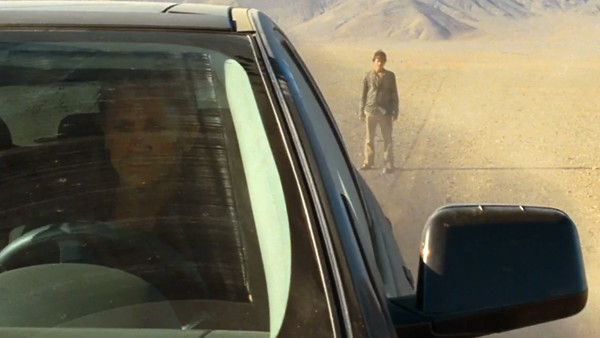
Despite being the fourth highest grossing Bond movie, Quantum of Solace was a grandiose disappointment by many fans and average viewers. This was a radical difference to the appraisal distributed to the cast and crew of Casino Royale. Quantum of Solace failed at many of the aspects that made Casino Royale such a ground-breaking movie for the 007 brand. Craig’s performance was well received but the narrative was regarded as too confusing and convoluted, poorly explained and reinforced with too many filler action scenes that were disguised as vital plot elements.
Other characters such as Dominic Greene were shockingly underdeveloped and poorly written with motives and intentions that can’t be matched by that of Mads Mikkelsen’s performance as Le Chiffre. Olga Kurylenko’s role as Camille was also poor not because of her acting capability but due to her character being unneeded for the plot. Characters from Casino Royale such as Felix Leiter and Renee Mathis return for short appearances despite how likable and well written their characters were previously, especially Leiter. Jeffrey Wright proved to be a fantastic fit for Leiter and his neglected role in Quantum was a disappointment along with the rest of the movie.
The Bond franchise has been producing movies since 1962 and with dozens of movies under its belt, it is inevitable that mistakes are made along the way. In the case of Quantum of Solace, many of these mistakes come from poor writing and direction issues. However, Quantum of Solace remains as an example of what tight schedules, deadlines and the high demand for financial success can do to an anticipated sequel.