John Hughes Films: Ranked From Worst To Best
Naked blonde walks into a bar with a poodle under one arm, and a two-foot salami under the other...
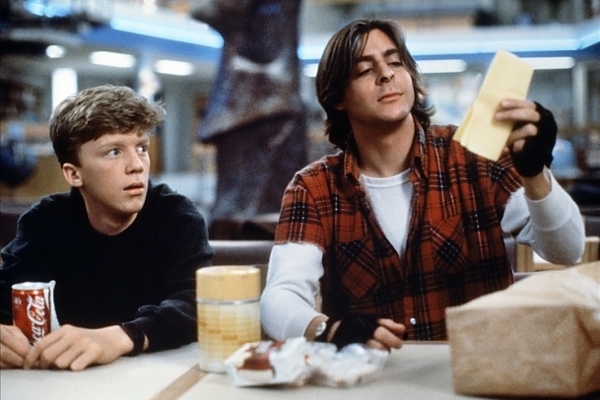
John Hughes was, by his own admission, a very ordinary, non-exceptional kid. He didn't even have a particularly noteworthy high school life, which is somewhat ironic given how effortlessly he managed to convey it in his film work. He may not have been the kid he portrayed in his movies, but he related to them and wanted to show the world they weren't as bad as other films routinely made them out to be.
One of Hughes' defining characteristics was his ability to see teenagers not as kids or as young adults, but as people. This, in turn, ensured that his films connected with a sizeable audience. But Hughes wasn't just about love triangles, prom nights and cliques - he was so multi-layered and moved away from the teen films that brought him so much success, writing side-splitting comedies and romantic dramas, replacing the teens with twenty somethings and families.
Hughes had a hand in writing many big hits (such as Pretty In Pink, Home Alone and Flubber) but was the writer and director of only eight films between 1984 and 1991, when he decided to quit directing and spend most of his time as a script doctor.
He made eight films in that seven year period, the majority of which are celebrated as some of the best of their kind...
8. Curly Sue
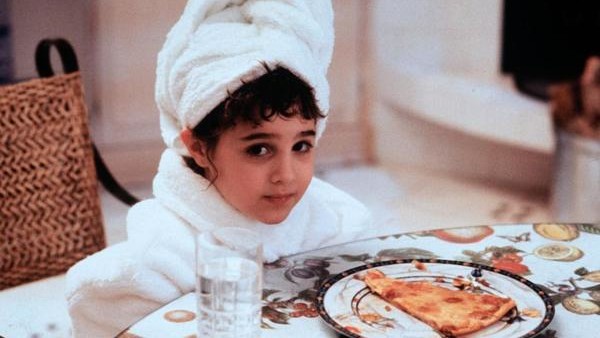
The last film written and directed by John Hughes was also, sadly, his worst. The John Hughes formula had worked wonders in the past but, by this point, the formula didn't seem to gel at all. It is a schmaltzy, queasily sentimental film and while there is no doubt that its heart is in the right place, the writing and execution are well below Hughes' normal standards.
Besides the overwhelming sentimentality, the film has other problems. James Belushi is a thoroughly unconvincing and unlikeable male lead, for one. The film isn't funny, for another. Also, the film is a pretty blatant example of class envy: there are only two types of people, the rich (Kelly Lynch's bad lawyer turned good) and the poor (Belushi's con man with a hear of gold). Please.
It works on a very base level as a kids film, but its manipulative nature cannot be denied and the IN YOUR FACE PUNCH YOU ON THE NOSE style of comedy gets really tired, really fast.
7. She's Having A Baby
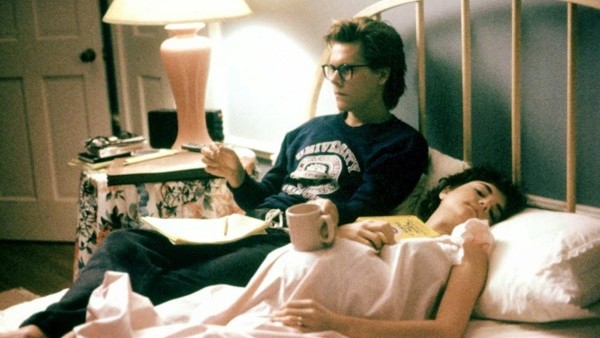
While Curly Sue received a much-deserved lashing off critics when it was released, the poor critical response to She's Having a Baby was simply not deserved. Although it wasn't totally slagged off, the film received less-than-stellar reviews, with the main complaint being that they expected a John Hughes film to be much funnier. Those that did so missed some poignant moments of drama and Hughes' overall point about the uneasy transition from singledom to family life.
Indeed, there's something frighteningly relatable about Jake Briggs' (Kevin Bacon) struggles with temptation, as he acclimatises to his new suburban surroundings and adjusts to being a married man and a future father. She's Having a Baby's most powerful moment is a stunning montage set to Kate Bush's This Woman's Work, which really pulls at the heartstrings.
The film also has its funny moments, too, particularly a satirical neighbourhood cookout scene. Alas, this did not translate well, and it failed to muster decent reviews or do business at the box-office (a disappointing $16 million).
The film has a real emotional honesty and is ripe for re-evaluation. Nowhere near as bad as you've heard.
6. Sixteen Candles
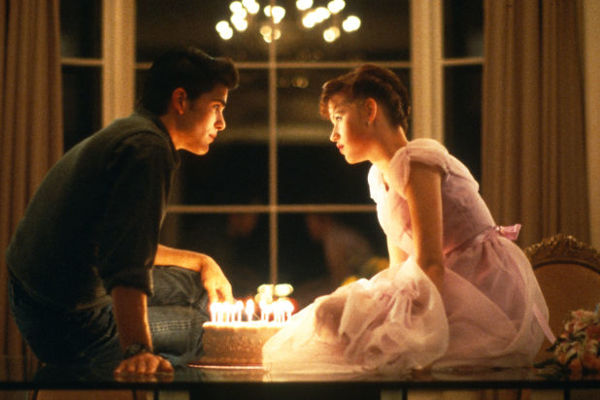
Okay, now we're getting into what John Hughes did best: the coming-of-age teen film. Curly Sue and She's Having a Baby failed to resonate with critics and audiences in part because they dealt with adult characters and themes. Hughes undoubtedly excelled when writing dialogue for teenagers and young people. He just had an ear for it. That talent is on full display in Sixteen Candles, the first film directed by Hughes.
Another talent on display is that of his young cast, notably eighties teen queen Molly Ringwald, who cuts a very sympathetic figure as the unlucky in love Sam, who struggles with her chaotic adolescent existence (and her crush on a popular senior) on her sixteenth birthday - which her preoccupied family have forgotten about. The dialogue is good, but the plotting is a bit haphazard and the film has also retroactively been criticised/condemned for supposed racial stereotyping with the character of Long Duk Dong, as well as an unsettling scene that seems to implicitly condone date rape.
Those negatives aside (and there is no getting around them when watching the film in 2015), Sixteen Candles is an enjoyable film thanks in large part to the performances and Hughes' knack for writing believable, funny dialogue for teenagers.
5. Uncle Buck
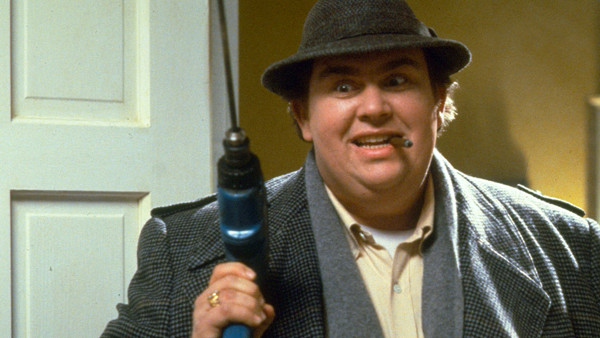
After the disappointing critical and commercial reaction to She's Having a Baby, Hughes must have been thrilled with the reception to Uncle Buck, an out-and-out comedy starring the late, great John Candy as Buck, an irresponsible but good-natured uncle who needs to babysit his young nieces and nephew when a family crises arises.
This is the John Candy show, no question about it. One of the most eminently watchable actors ever, Candy invariably steals the movie with a role that seems tailor-made for him. Both Danny DeVito and John Goodman, two fine actors who would have no doubt done a good job, were considered but, really, it's hard to see anyone but Candy as Uncle Buck.
He is the heart and soul of the film, but he's given great support by the rest of the cast, including a young Macauly Culkin (the scene where Culkin's character interrogates Buck is one of the film's best). It's a goofy film that employs a lot of slapstick and physical comedy, but it works.
Not Hughes' best, but one of his funniest.
4. Weird Science
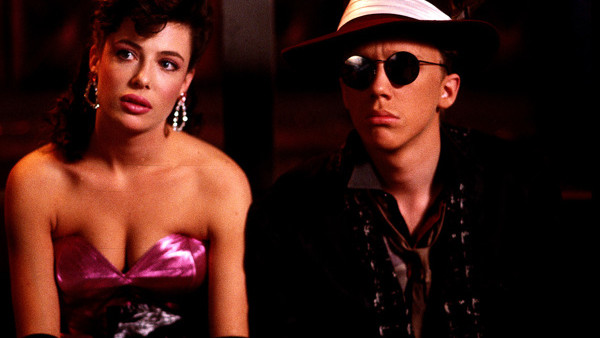
From my heart and from my hand why don't people understand intention? Weird Science!
The majority of Hughes' films have not, erm, aged well, at least from an aesthetic point of view (the same can be said for a great deal of 80s films). The technology, the music, the BIG HAIR...it's all so wonderfully...'of its time'. Never is that as evident as in Weird Science, which concerns two hapless nerds and their attempts to create the perfect woman via their computer.
It's cheesy, the premise is ridiculous and its nowhere near as polished as some of Hughes' other films, but it's oh so much fun to watch. It's a little rough around the edges, sure, but you cannot help but enjoy Kelly Lebrock's "Mary Poppins with breasts" routine or Michael Anthony Hall trying to fit in at a black dive bar or Bill Baxton's overbearing older brother schtick?
It's a film of stand-out moments and performances, rather than a cohesive whole and has rightfully become something of a cult classic. Cracking theme song, too.
3. Ferris Bueller's Day Off

Bueller... Bueller... Bueller... Ferris Bueller's day Off's premise is so simple, yet ingenious: what would happen if a high school kid decided to play truant and spent the day doing things he wanted to do, while trying to outwit his family, friends and teachers?
Remarkably, Hughes wrote the script in less than a week, successfully pitched it the day after he finished writing it and pretty much stuck to the script from there. The original cut of the film ran two hours and forty five minutes, thankfully trimmed by an hour for theatrical release.
The finished product blends all of Hughes' recurring themes and motifs and is, essentially, a doting letter to his beloved Chicago. The city's landmarks are all over the film and there's memorable scenes at the the Art Institute of Chicago, Wrigley Field and others. For the film's most spectacular and iconic moment (Ferris invading a parade), Hughes simply added a float to it without telling anyone and filmed the action, most of it spontaneous.
Behind all the pomp, however, is a serious message and a lot of heart. There is a sophistication and a likability with Ferris that few teen films have and it remains one of the best of the genre. Totally life-affirming and endlessly re-watchable, that this isn't Hughes' best/most fun film speaks volumes of his talent as a writer and director...
2. Planes, Trains And Automobiles

Planes, Trains And Automobiles marked a shift in Hughes' work, as he began to move away from the teen angst films that proved so popular. His transition to full-on comedy here, with adults as the central protagonists, showed Hughes' versatility and that he wasn't just about high schoolers and their problems.
The film was helped, of course, by the incredible talents of its leads, John Candy and Steve Martin. Their chemistry was off-the-charts, with Martin's relative restraint providing a nice counterbalance to Candy's manic, physical performance. The man versus technology road trip story has been done before, but never has it been as funny as it was here.
Despite being a comedy first and foremost, there is an undercurrent of sadness running throughout the film, punctuated towards the end when Martin's Neal Page realises something tragic about Candy's Del Griffith. The balance is measured perfectly, though, and you walk away from Planes, Trains... with a big smile on your face (even if the final freeze frame shot is a total heart-breaker). The favourite films of both Steve Martin and John Candy.
1. The Breakfast Club

Another simple, ingenious premise expertly crafted by Hughes: what would happen if five high school kids, from completely different backgrounds, had to spend a Saturday in detention with each other? The result was The Breakfast Club, arguably Hughes' most popular and influential film.
The real strength of the film lies in the fact that the audience can, more than likely, identify with at least one of the central characters. Whether they were a brain, an athlete, a basket case, a princess or a criminal, Hughes' characters spoke directly to the people going to see them. Those characters, which may seem like base stereotypes today, were expertly portrayed by Judd Nelson, Anthony Michael Hall, Ally Sheedy, Molly Ringwald and Emilio Estevez, members of the so-called 'Brat Pack'.
Add in some genuinely hilarious moments, some drama, a cracking soundtrack, a couple of life lessons and, hey ho, you've got a winner.
What's your favourite John Hughes film? Let us know down in the comments.