Justice League: The Real Story Of The Snyder Cut
Release The Snyder Cut.
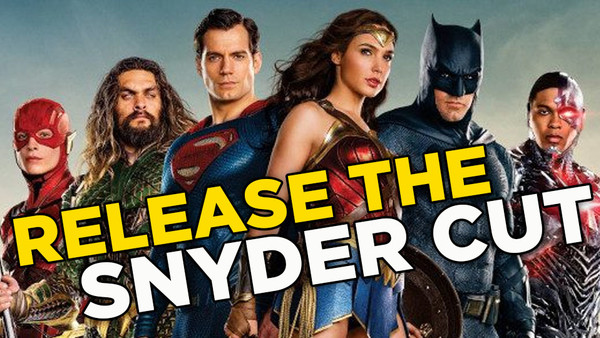
It's funny how the tides of narrative shift. When Batman v Superman came out, the poor reception led to Warner Bros rethinking their entire approach to comic book films and making large-scale changes to their intended slate. The blame - because we have to live in a binary world of extremes where there MUST be one person to blame - lay, apparently, at the feet of Zack Snyder.
It's not hard to see why it happened - Snyder had spoken publicly about his reluctance to ever make a "normal" comic book movie when he was making Watchmen and his obvious fascination with deconstructing established tropes was an easy stick to beat him with. We could call him a betrayer of lore and source material and point to where he said he didn't even like Superman.
But then, quietly, Snyder redeemed himself for a lot of fans by releasing a director's cut of Dawn Of Justice that wasn't just better than the theatrical cut, but vastly superior. It was like he was working unshackled and this was his true vision and it worked. So it's strange that Warner Bros then slapped the shackles back on him and tightened their grip on Justice League, adding creative requirements and limits on Snyder's vision from day one and then seemingly changing them as a reaction to what he was making.
4. The Background
Like Tim Burton before him, Snyder's vision was just too dark for Warner Bros. They had aspirations to make a financial behemoth in the vein of the MCU and to continue selling lots and lots of lovely merchandising licences for Batman - the same reason Burton was so unceremoniously shunted out of Batman Forever, despite Batman Returns' successes. Their manifesto is one of money, not of creative vision and what they saw in Snyder's original take on Justice League was financial disaster, so they took drastic measures.
First, they told Snyder to change his first cut and the result was something that was deemed "unwatchable" by the studio. Then, as Snyder faced an unthinkable family tragedy, they took things further, replacing him with Joss Whedon - a man so well-versed in the MCU's pillars that he'd basically built some of them himself. His agenda was to lighten and tighten, refilming things, cutting others and bringing in an entirely different tone. He was given an unenviable task at best and an impossible one at worst.
And then the film came out and it was a monstrosity that underperformed badly at the box office and led to yet another critical mauling. With the injustice of what had happened to Snyder - not least because of his family's tragedy but also because he had PROVEN with the Director's Cut of BvS that he was capable of delivering - fans took up the cause to get his fabled first cut - the Snyder Cut - out into the world. We all deserved to see it, clearly, and Snyder deserved to be given the chance to let his vision out.
The question, for two years, though, has been what that vision actually was. Would it have been worth seeing? Would it have outperformed the theatrical cut? To answer that, we have to examine exactly what Snyder would have included that Whedon didn't and the directions his replacement took that he simply wouldn't have.
Now we answer it...
[CONTINUED]
3. Snyder's Vision
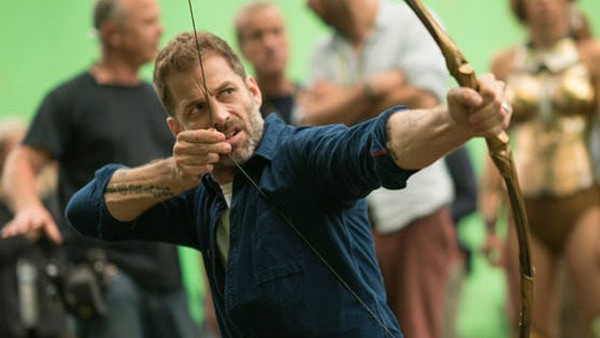
It seems simple enough to start both with the suggested length - 3 and a half hours - and with the assertion that Snyder's tone would have been significantly darker. And that it would have been consistent, which is one of the biggest issues with Justice League. Even the replacement of Junkie XL's original score with Danny Elfman's speaks of a fundamental development of tone. There has always been some suggestion that Snyder's fans love his work because he refuses to cow to comic book movie tropes and conventions - the safety blanket of Marvel, basically - and that his stories are "for grown-ups" but his cut WOULD have been a comic book movie. Subversive does not mean a betrayal. It's just a shame - for his fans, at least - that Warner Bros couldn't accept as much.
The problem for them was that Superman and Batman ranked the lowest of all of the superheroes in Justice League. Combine that with Snyder killing Superman and planning on killing Batman in the sequel (according to leaked plans) and you can see why the studio might have started to believe those suggestions that Snyder DID hate their merchandise selling flagship characters. After all, the MCU was built on Iron Man and Captain America - they didn't die at the end of the start of the franchise.
The changes to Snyder's cut - in terms of balance of characters - suggests that's where Warner Bros' thinking was. In the Snyder Cut, many of the characters were given a lot more to do and there were significantly more characters involved than we even got to see. The Flash, Aquaman and Cyborg were more than the glorified cameos they became in the theatrical version, all of them were darker than we got to see (Flash went from being a legitimate action hero badass to a bit of a greenhorn) and Batman and Superman were CONSCIOUSLY sidelined as story elements rather than the most important parts.
That's why Whedon shot pretty much all of Superman's scenes again. There might be a couple remaining from Snyder's shooting, but the digitally removed moustache gives away the extent of how much was redone and it looks like basically all of it. The reason, clearly, is that Whedon's agenda was to make Superman the heart of his movie, where Snyder had quite openly stated that Cyborg was the heart of his...
[CONTINUED]
2. Cyborg And The Character Balance

In Snyder's cut, we got to see Cyborg's origin story, including the football match sequence that has been widely teased and the inclusion of Victor Stone's mother, Elinore Stone, who would be killed in a car crash caused by her son when the question of his father's presence in his life came up. He would then have been revived with a Mother Box as per the scene in BvS and it would have been him who discovered and revealed the most about the Mother Boxes tot he rest of the League throughout the film. We would also have seen lots more of him discovering and using his powers.
Crucially, Victor would have been key to the importance of the Knightmare scene, which would have come to him as a vision of what would happen if the Unity wasn't stopped. It would also have made the long-rumoured cameo appearance by Darkseid possible. That would have tied into the relevance of that sequence from Dawn Of Justice that just sort of ended up not meaning anything at all to Justice League.
Batman actually had some sequences cut, despite the concern over him being pushed to the bottom of the ladder after the test screenings. His investigation into the Parademons was trimmed and so too was his journey to find Aquaman, which we saw flashes of in the trailers and which was said to be significantly longer. Aquaman's storyline seems to have generally been cut a fair bit, as Willem Dafoe's Vulko was edited out entirely and Mera was demoted to a cameo, with the fight sequence between the couple and Steppenwolf underwater being heavily trimmed too. And there would have been a set-up for Aquaman's solo movie at the end that ended up on the editing room floor.
The events around Superman's resurrection and the explanation for how he didn't become Doomsday (the codex inside him, basically) were also cut and he was elevated as a character, including Whedon's decision to give him dialogue after his resurrection, which Snyder had not planned. There was also a sequence explaining how the Kryptonian ship was deserted enough for the heroes to use the Genesis Chamber. It's not a huge thing, but it's that sort of narrative bridging that was missing.
Lois Lane's scenes were rearranged and trimmed, but she at least made it into the film, which is more than can be said of Kiersey Clemons' Iris West, who The Flash saved in a car crash in a big CGI driven sequence. That scene and Iris were cut in their entirety and there seems to have been a conscious effort to put training wheels back on Barry Allen, as most of his action sequences from the two big battles were cut to make him seem like less of a rounded hero. Whedon obviously saw him more as comic relief and the idea of him punching falling debris out of the way or actively kicking Superman didn't fit with that.
There would also have been more of an agenda to explain Barry's appearance in Dawn Of Justice as he travelled back in time from the point in the timeline where the Unity was completed - the same Knightmare visions that haunt Cyborg.
There were other cuts as well, but there's also an indication of the things in the theatrical cut that Snyder would not have included...
[CONTINUED]
1. Whedon's Take

The humour was mostly shoe-horned in by Whedon as part of his need to lighten the tone - though not the gag about Aquaman sitting on Diana's lasso. Wonder Woman's story - or at least the references to her own movie - were beefed up because of the success of Patty Jenkins' movie. Snyder also had no Russian family in his cut, which has Whedon all over it.
For all of the talk that Whedon's cuts and changes were minimal, the reality of the past two years reveals that they were numerous and sought not to follow Snyder's blueprint - which was way darker, way more invested in mythology and way more focused on setting up future movies - but to reinvent and reshape the story in Whedon's Marvel-fed image. It wasn't successful because it wasn't the right way to approach the film at all.
Whether Snyder's vision was correct also remains a point for debate, but there's something romantic about the idea of not knowing for certain. It gives his fans a hero who never needs to be weighed up against his actual achievements with Justice League. All we need is the vaguest suggestion - teased through concept art and leaks - that Snyder's version would have been cooler and would have had set-pieces and lore and world-building that WOULD have improved it and Snyder becomes the hero his fans want him to be.
Quite why he'd sanction the release of his version when he can trade on that magic is a little confusing. But then, Snyder is persistently committed to his own vision - hence his release of Directors Cuts of other movies - and it is increasingly clear that he believes, stubbornly, in the quality of his vision. Which is partly what fuels his fandom.
Will we ever actually see the Snyder Cut? Well, there's a lot of interest in it thanks to the second anniversary of Justice League's release coming with further support from involved parties - including Ben Affleck and Gal Gadot - and there is SOME belief that it will actually lead to activity, but you have to question, somewhat, whether Warner Bros would ever sanction a movie that effectively stands as a monument to their wrongness. Would they allow something to come out and be better than the version THEY greenlit? Would they allow the black mark against them and whoever said yes?
There is the faintest glimmer of hope - and what is a world without hope anyway? - and it may be that Warner Bros see an opportunity to release the Snyder Cut on HBO Max, but whatever the case, it's been a compelling story probably more interesting than the theatrical cut itself.
Would you like to see the Snyder Cut? Share your thoughts below in the comments thread.