Life Itself Review: 2 Ups & 8 Downs
This Melodramatic Bore Is Unbelievably Bad...

Life Itself is the new theatrical release from screenwriter and creator of the emotional TV show This Is Us, Dan Fogelman. Considering his award-winning credentials, the buzz surrounding him as a creator right now, and the all-star cast he assembled for the film, many were pegging it as a possible (if unlikely) contender for this year's Academy Awards.
Until they actually saw the film, that is.
Upon release, the film was savaged by audiences and critics alike. Widely derided as an over-the-top attempt at crafting an emotional tear-jerker, the film's box office has been affected pretty drastically, with it being Fogelman's first flop in every regard.
But is Life Itself as bad as everyone says it is? Let's find out.
Downs
8. The Opening Sequence
To say that the film gets off to a wobbly start would be an understatement. Fogelman kicks the film off with what will come to be one of the film's most distinct calling cards; misguided misdirection.
Narrated by Samuel L. Jackson, the opening sequence takes great joy in purposefully confusing the viewer, focusing on several different people as possible protagonists before finally settling on Annette Benning's Dr. Cate Morris. Shortly after Samuel L. Jackson's narration tells us that she's the definite protagonist, she gets hit by a bus and dies. It is then that Samuel L. appears in-the-flesh and states that this movie is too crazy for him and he leaves the film.
This is all later retconned into being the beginning of a screenplay Oscar Issac's Will has been attempting to write, but that doesn't make it any better. Not only is it a nonsensical opening that has practically no bearing on the rest of the film, but it is also so condescendingly smug it is unbearable. Through Samuel L. Jackson's narration, Fogelman practically spends the entire sequence patting himself on the back for coming up with such an opener in the first place.
It is blindingly obvious through the form (chapter introductions, nonlinear storytelling, Samuel L. Jackson as a narrator) and later narrative references (Will and Abby love Pulp Fiction) that this is supposed to be an attempt at a Tarantino-esque voice in the writing style, but even Tarantino has never written a sequence this obsessed with itself.
7. The Handling Of Sensitive Subjects

Fogelman is no stranger to writing stories that delve into sensitive subject matters, it's practically all he does on This Is Us. And Life Itself is no different, involving storylines rooted in subjects such as mental illness, depression, miscarriages, and even suicide.
But never before as he so cavalierly dismissed the gravity and impact of these concepts in the name of shock. When Dr. Cait Morris finally reaches through Will's jumbled memories and intentionally unreliable narration, he is forced to realize that his wife Abby is dead. He then immediately pulls a gun out of his bag and shoots himself in the head.
Absolutely none of this is even remotely earned. Just like in every other instance in this film, Fogelman goes for the jugular for a cheap shock rather than for anything meaningful. Similarly, when the film later picks up decades later with Dylan, Will and Abby's orphaned daughter, the film just kind of glosses over any kind of arc for her in favor of just painting her as a perpetually sad and lonely girl in need of saving.
Fogelman founds his narrative on subject matters that require the most delicate of handling and then proceeds to treat them with all the care of a four-year-old putting their action figures in a blender to see if they'll still be intact when it's over.
6. Fogelman's Direction
For as much as I'm bashing him here, it is important to note; Dan Fogelman is a talented artist. As a writer, he's been a part of crafting some of the more beloved films of the last decade. He wrote the screenplay for Disney's Tangled (which remains one of Disney's strongest recent films and is better than Frozen in every way) as well as the script for Crazy, Stupid, Love (one of the best romantic comedies of the last twenty years).
But a director, he isn't quite there. His only previous directorial credit prior to this film was Danny Collins, an Al Pacino-starring dramedy that earned middling acclaim thanks to the performances. But here, Fogelman's direction is exceedingly limited and feels as if it is constantly working against itself.
The muted colors, the constant shake of the hand-held camera, the often too-close framing that literally cuts into the performances, the (frankly) uninteresting cinematography. Nothing about the film feels cinematic in the least, made all the more noticeable by how often Fogelman and cinematographer Brett Pawlak swing for the fences and absolutely whiff.
They continuously attempt to create grand visuals to compliment their globe-spanning story of love and loss and it is never anything short of laughable. On This Is Us, Fogelman regularly relies on talented directors such as George Tillman Jr. and Regina King to bring his vision to life. And here without them, his complete misunderstanding of cinematic language is on full display.
5. The Unreliable Narrator

A huge part of this film's entire narrative is centered around Abby's college thesis paper, which centered around the trope of the unreliable narrator.
In an effort to tie this in thematically, Fogelman's makes sure that the entire film is heavily narrated. And while his intent is blindingly obvious, the use of this is to the film's own detriment. The first rule of storytelling is to show not tell, and Life Itself spends all one-hundred-and-seventeen-minutes of its runtime (don't be fooled, it feels like an eternity) telling us everything and showing us practically nothing.
In Will's introductory sequence, he walks into a coffee shop and proceeds to disrupt the entire setting. He drunkenly and haphazardly sings to himself, clearly in the midst of some sort of emotional breakdown. But we as an audience never get to experience any of this for ourselves. Instead, Fogelman layers the scene with narration telling us about how troubled Will is and why he's distraught. To top it off, the narration literally begins with;
"Will was troubled. But you probably don't need me to tell you that."
The entire film proceeds this way, with Fogelman preferring to shove exposition down our throats rather than leaving even an ounce of nuance to any scene.
4. Saccione's Introduction Is Cringe-Inducing

Mid-way through the film, Life Itself comes to a full-stop and switches narrative gears completely, focusing on an entirely different story with entirely different characters. Which would be a welcome reprise, if the second half wasn't possibly even worse than the first.
Transporting the narrative to Spain, this chapter begins with Antonio Banderas' Saccione (owner of an olive farm) having a sit-down talk with Sergio Peris-Mencheta's Javier (worker on said olive farm). They sit together as Saccione delivers a several-minutes-long monologue about his family's history and why he owns the olive farm in the first place. Over the course of just a few minutes, he spells out his entire life story to a man he has, by his own admission, hardly ever talked to before.
In response, he expects Javier to tell him his own life story as well. And when Javier refuses, saying he has no big story to tell, Saccione is disappointed. And somehow, Fogelman expects us to side with Saccione. After this sequence, Javier goes on to fail as a husband and a father, with Saccione taking his place, and the film plays as if viewers should rejoice in this fact as if he deserves to be punished.
Not only is this sequence dull and brings the film to a complete stand-still, but it is also problematically representative of Fogelman's entire ethos. Vulnerable displays of emotions are good and anything less than blatant heart-string plucking is bad and deserves to be punished. Heck, Fogelman practically said as much in response to reviews like this(https://www.hollywoodreporter.com/news/dan-fogelman-fires-back-at-film-critics-poor-life-reviews-1145929).
3. It's Smug Self-Satisfaction With Every Reveal
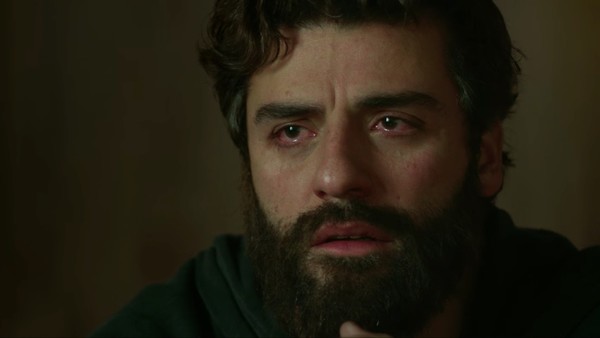
J. J. Abrams often receives criticism for his use of the 'mystery box' storytelling structure, thanks to a perhaps-too-open TED talk a few years back in which he revealed his writing methods.
Anyone who has ever complained about Abrams' use of this technique should be physically forced to sit down and endure Life Itself and then write an extended retraction because Fogelman takes this structure to absurdly terrible new heights.
Everything in this film is treated as a reveal. Even things that are common knowledge to the characters in the film are treated as big reveals to the audience. Something as simple as the fact that Abby is pregnant in the initial flashback of her and Will in bed is treated as a big twist, with both of them jokingly gasping and saying things like, "You're pregnant?". It is brushed off as being played for cheap laughs but in reality, it's just more of Fogelman's insufferable writing smugly patting itself on the back.
Later, when Abby's unreliable narrator thesis is introduced into the story, the film acts as if the audience should be in absolute awe of this concept, as Will reflects on his previously-shown memories in a different light. But as the film itself states, the unreliable narrator is a trope. It's a cliche so heavily overused that Fogelman treating this as some shocking reveal comes off as parody.
2. Wallowing In Trauma
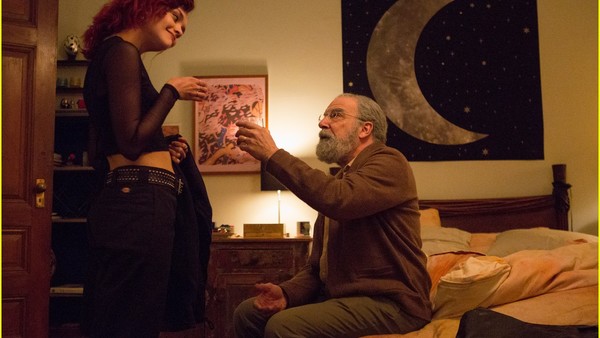
At the end of the film, it's revealed that the narrator of the story has actually been Elena Dempsey-González, the future-daughter of Dylan and Rodrigo, the entire time reading from her hit book titled (you guessed it) Life Itself. As she finishes reading the story, she says that what she ultimately learned was life is about finding love and light not "wallowing in trauma".
That's a sweet message and all but here's the thing: this film is nothing more than an extensive exercise in wallowing in trauma. Much like the more recent seasons of This Is Us, Fogelman mistakes getting an emotional reaction (read: making people cry) for good filmmaking.
Viewers can probably count on one hand the number of minutes in which characters are actually happy in this film. And that's because anytime a couple is happy in this film, it is literally fast-forwarded past. Will and Abby's relationship is covered in the span of a montage but the film chronicles Will's depression over Abby's death in painstaking detail.
Similarly, Javier gets to be a good husband and father for all of a two-minute montage before he's suddenly written out as a bad guy (?) after Rodrigo is traumatized by seeing Abby get hit by a bus.
For Christ's sake, the entire reason for that final monologue about now wallowing in trauma is because of Dylan and Rodrgio's relationship, something the film entirely skips over. Meanwhile, audiences get to see the moment Abby gets hit by a bus not once, not twice, but four different times.
1. It Ignores Its Own Message
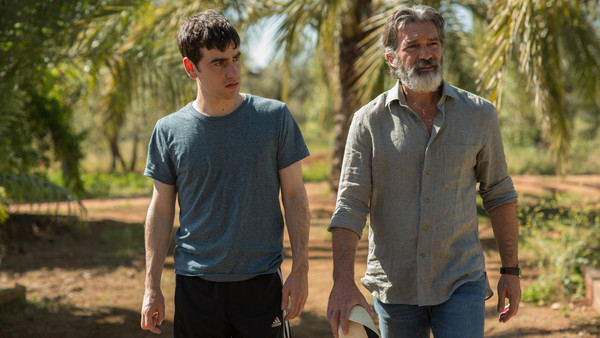
In Abby's thesis on the unreliable narrator, she (laughably) hypothesizes that life itself is the ultimate unreliable narrator. That life can seem as if it is taking you in one direction only for it to then completely pull the rug out from under you at the last minute. Or to put it more plainly, life has no overarching plan, it simply exists.
This is the ground upon which the entire film is built. It's the reason the opening sequence exists, it's the reason the film spends so much time attempting to misdirect the audience. And yet, the film somehow misses out on this message altogether.
Because the two seemingly disparate strands of the story don't just collide together in a single moment by some happenstance, they become integral parts of one another. Rodrigo's family goes to New York and is on the bus that kills Abby, whose daughter Dylan then grows up to fall in love with Rodrigo.
Not only is this an unbelievably major coincidence, but it also flies in the face of everything the film is attempting to say. Because according to the actual text of the film, life isn't an unreliable narrator, its the author of a too-ridiculous-for-a-Lifetime-movie screenplay.
And now on to the positives...
Ups
2. Lots of Bob Dylan Is Never A Bad Thing

From the very opening of the film, before anything is even on the screen, Bob Dylan's music plays a huge role in this film.
More specifically, Bob Dylan's 1997 album Time Out of Mind plays a huge role in this film and let's be honest, it's never a bad thing to get a whole lot of Dylan. While his music may be often painfully misused in this film, it's still genuinely great music and the thought that Fogelman was at least trying to do right by his audience and introduce younger fans to the genius that is Bob Dylan is heart-warming.
It also fiercely defends Dylan's song, Make You Feel My Love, which is great so that's a plus. It's weird that Fogelman thinks that the ultimate word on the song is "it was even covered by Garth Brooks" but we're letting bygones be bygones here.
1. The Incredibly Game Cast

Despite the atrocious material they are saddled with, Fogelman has assembled an all-star cast here and gosh-darn-it they are just trying so hard to make this thing not seem like the most ridiculous thing in the world. Nowhere is it more apparent that Fogelman and the studio were aiming for Academy Awards glory with this film than in just how seriously everyone takes their performances.
Oscar Issac may be bogged down by ludicrous dialogue (like suggesting he and Abby turn off Bob Dylan to listen to Thirty Seconds to Mars or Smash Mouth instead) and nonsensical character turns (read: everything above) but he is fully committed to the bit.
Similarly, Antonio Banderas may be playing an atrociously awful on-the-nose representation of Fogelman's own storytelling sensibilities, but its also the most invested performance audiences have seen out of him in nearly a decade.
And boy, does this film assemble an incredible group of actresses and give them nothing to do. But Annette Benning, Olivia Wilde, and especially Olivia Cooke all do their absolute best with the paper-thin characters they're given.
So while the performances aren't good, the cast does their best to play it as straight as they can and with a script like this, that alone is worthy of praise.