The Lord Of The Rings: 8 Confusing Plot Holes The Movies Never Explained

As they slowly and surely become a full blown, six film epic, one big question arises about Peter Jackson's Middle Earth movies; what do we call them? The Lord Of The Rings seems pretty apt given the route taken with The Hobbit, but that kinda devalues the newer movies. The Middle Earth Saga sounds cool, but throws up a worrying parallel with an equally adored classic trilogy with an eternally lambasted first prequel. The real issue is that, as of now, with The Desolation Of Smaug just about to hit cinemas worldwide, we€™re still not quite sure what The Hobbit is trying to be. Is it an adaptation of Tolkien€™s book? Obviously on a base level yes, but as a trilogy it€™s so much more. Is it attempting to tie directly into The Lord Of The Rings? Sort of, but for every returning character there€™s many distinctions that make this feel completely different. Is it a brazen cash in? That€™s the question that has polarised audiences since even before An Unexpected Journey was released. There is admittedly a real irony in all the criticism of Jackson€™s numerous changes to turn The Hobbit it into a film trilogy when The Lord Of The Rings was likewise heavily bastardised to make it suitable for the screen; The Two Towers novel includes both Shelob and the death of Boromir. Why it was less of an issue ten years ago is twofold; not only are audiences, for the most part, more acquainted with the short children€™s book The Hobbit than the complex, lengthy Lord Of The Rings, but the changes felt in service of the films themselves, rather than their commercial prospects. Through all this, I think one thing everyone can agree on is that The Hobbit is yet to do is address some of the hanging threads that have never been resolved from the original trilogy, instead actually managing to make some more of its own. To highlight this and get your film appetite whet for the next instalment this Friday, here are eight addressed issues with Peter Jackson€™s Middle Earth Sextet (no, that doesn't sound quite right). Spoilers for the whole series, including the final two, as of yet unreleased Hobbit films, are present throughout.

8. Where Was Gollum Originally Planning To Take The Hobbits?

It€™s hard to criticise Gollum€™s part in the story in relation to plot given that he€™s pretty aimless beyond coveting the One Ring. While making for an instantly memorable character, it does mean when he does start to plan ahead it gets a bit messy. First leading the hobbits to the Black Gate before realising their intention, he plans to lead them to another, secret way into Mordor. All fine and dandy. Except Faramir waylays them, making Gollum feel betrayed, so he plots to kill Frodo and steal the ring. His plan? To lead the hobbits up the secret way into Mordor where Shelob will attack them. Wait a second; Gollum didn€™t actually change his plan at all. He led Frodo and Sam the exact same path he always intended. Did he forget about Shelob until he started plotting or did he know a route round the spider's lair? The film presents the cave as a one entrance, one exit deal, so the latter seems unlikely and the former is too lazy to really be considered. It€™s not even like the Precious side was somehow influencing Smeagol earlier; all the time the harmless plan was in place the evil half had been defeated.

7. Why Does Frodo See Sauron When Wearing The Ring But Bilbo Doesn€™t?

When Bilbo first wears the ring in An Unexpected Journey and the horror draped landscape Frodo endured was replaced by a greyed out ghosting everyone was pretty accepting of it; Sauron is still busy Necromancing around Mirkwood and is far from full power. By the time Fellowship Of The Ring kicks off, however, he is, hence Frodo€™s experience. What level of awareness Sauron and the Nazgul have of the ring€™s location and use is strongly up to contention. Sauron clearly couldn€™t see the wearer every time the wearer saw him (Sauron is definitely aware Frodo twice, at Amon Hen and Mount Doom, but all other times it€™s not made clear) and the Ringwraiths only knew its location when it was being worn (hence Gollum€™s torture). As this, like many of Middle Earth€™s magical elements, isn€™t determined I can€™t really discuss what the evildoers see. What can be looked at is the effect from the ringbearer€™s side. Judging by his jovial treating of the One Ring at his birthday, Bilbo never sees the Eye of Sauron, something Frodo certainly does mere weeks (or years, depending if you're in Tolkien or Jackson€™s tale) later. As it's never mentioned again, I guess it's just another element of the ring of (plot convenient) power.

6. Why Did Trolls Lose The Ability To Speak In Just Sixty Years?

More a side effect of Tolkien changing audience between his two Middle Earth novels, this is something pushed to the fore by The Hobbit Trilogy and its attempt to Rings-up the more modest original. In The Lord Of The Rings even the smartest animals tend to keep their communication to a series of grunts because talking animals reduces the tension in any encounter immediately. The Hobbit book, being aimed at a much younger audience and happily have a less epic feel never have this concern; many of its key sequences (the trolls, Smaug) thrive off this technicality. And while no one will bemoan the opportunity to hear a dragon voiced by Benedict Cumberbatch, it€™s a little harder to swallow for other creatures. Jackson smartly kept the eagles mute (€œWe€™ll help you now, and once more Gandalf, but after that even if Middle Earth is on the brink of destruction you can jog on€), but in giving the trolls voices he creates a massive issue. Across both trilogies they€™re set up as dumb hulks used for their brute force and little else. Allowing them to speak suddenly means that even if they aren't incredibly intelligent, they are much more advanced than the barely sentient beings led us to believe before. It may be in the book, but The Hobbit is heavy with dramatic licence, so few would have begrudged Bilbo tricking mute trolls.

5. How Did The Palantir Get In The Water (Theatrical Edition)?

If a source we don€™t adore becomes a movie that requires the book to really appreciate, it€™s an incomplete piece, but if we already know the story that€™s a-OK. When writing The Lord Of The Rings Jackson did an amazing job of balancing both sides of the argument. But that didn't stop some confusing leaps, albeit coming from a different source to normal. The argument of whether the theatrical or extended editions of The Lord Of The Rings is better will never be really decided (in my opinion theatrical are better on their own, extended are better with the books to lean back on), but for the most part they're similar enough you can enjoy either without much difficulty. The only place where the plot really differs is at the start of Return Of The King, where Saruman either meets his end or remains trapped in Orthanc. Both scenes end with Pippin picking up the Skype-ball (Palantir if you€™re being traditionalist), despite its presence in the water only making sense in one. The theatrical one runs straight through with no death of Saruman, essentially making that non-canon. It€™s not like this was a scene that just happened off camera; he categorically didn€™t die/drop the orb, so there€™s no way for the Palantir to have got in water without extreme coincidence.

4. Why Did The Eagles Drop The Dwarves On Top Of The Carrock?

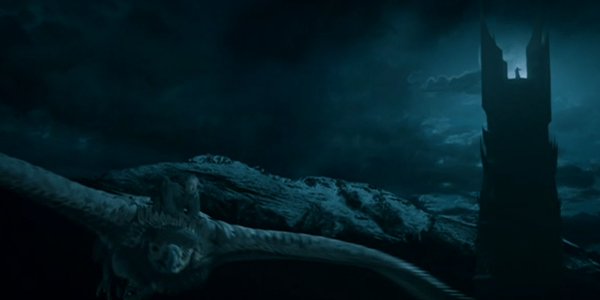
Ah the eagles. The creatures which Tolkien himself said he pushed to €œthe absolute limit of their credibility€. You know we€™re going to see them conveniently return to this list later, but for now let€™s focus on a secondary complaint. Before its CGI enhanced tracking shot-cum-tease, An Unexpected Journey ended its story with the gang saved from Azog by the giant eagles and dropped off on top of the Carrock, a massive rock in view of Erebor. While it€™s nice for them (and a weary audience) to see their goal, why did the Eagles not put them on the ground? There€™s some steps leading off from the peak that seem to have been thrown on in post production in an attempt to quell the more common criticisms of getting down, but even if there is a safe path, it's still adding in an extra diversion in a path already mired with them. I can understand why they wouldn€™t want to go closer to a sleeping dragon and there€™s something to be said for convenience. In the novel this moment segues straight into the introduction of shapeshifter Beorn, which only serves to make this moment more problematic; his inclusion in this film (rather than at the start of the sequel) would have alleviated much of the confusion.

3. Why Were Things That Should Never Have Been Forgotten Lost?

There€™s no denying the opening of The Fellowship Of The Ring is anything but awesome. Giving out reams of exposition in such a mythological way sets the stakes high. In fact, that€™s exactly what Galadriel says;
€œAnd some things that should not have been forgotten were lost. History became legend. Legend became myth.€
It€™s such a cool line, which makes it all the more painful for me to say it doesn€™t make an ounce of sense. What€™s been forgotten? It can€™t be playful language referring to the actual location of the One Ring because that€™s fancy talk for the sake of fancy talk. And it can€™t be anything to do with knowledge of the ring either, because Galadriel was around before the Great Rings and Elrond was there in Mordor when Sauron fell: two key players in the War of the Ring know first hand what came before. For the general populace these events became legend and, yes, one of the key points of the story is how a being less than an everyman saves the day, but what€™s stopping Elrond realising the ring could still be out there after Isildur€™s death and reminding people this isn€™t made up?

2. Was Saruman Evil Already, Or Just A Dick?

Unlike Radagast and Legolas and Frodo and Azog, Saruman is one of the characters shoehorned into the events of The Hobbit that actually feels like he belongs. The White Council€™s appearance in An Unexpected Journey sets up a key side of the later conflict and was one of the few instances where it felt this was the start of a greater story, rather than a series of adventures (the key difference between the films and books). But while his presence is acceptable, his manner isn€™t. Watching the scene there is no way to discern if Saruman is purposely siding with the Necromancer, or simply being stubborn. He dismisses Radagast and denies the Witch King€™s return without a second thought. Jackson may have wanted some ambiguity in the scene, but it€™s too brief to not just seem silly. The real issue is that Gandalf immediately runs to Saruman sixty years later when the One Ring has been discovered, meaning his judgement is recognised as right, rather than short sighted. Maybe the last two films will sort this out, but as it stands it looks like an excuse to have Christopher Lee come back and villain it up.

1. Why Not Just Use The Eagles?

Well it just had to be this one didn€™t it? For all it€™s recurrence in LOTR fandom, the question of why Gandalf didn€™t ask the giant eagles to fly the ring to Mordor remains a massive hole at the centre of the series. Fans will likely be rolling their eyes at this point, ready to jump down to the comments and explain it away. But while there€™s logical solutions to this question, none carry much weight. The most common defence, that the eagles were their own race and not just Gandalf€™s servants, is all well and good, but surely it€™s in the eagles€™ best interest to destroy the ring; they are clearly closer the €˜good€™ side given their actions elsewhere. What makes this so hard to ignore is that eagles actually turn up at the final battle; they weren€™t wanting to sit this out at all. And in them managing to take on a gaggle of Fellbeasts this scene succinctly destroys the defence that flying enemies might have put them off. I€™m yet to be given any convincing reason why destroying the One Ring was less important than day to day eagle chores. Let's not forget that while the idea may seem silly, so does a small group walking the whole way. Your move, Tolkienites. Know any solutions to these problems? Or do you have any more to raise? Head down to the comments and let us know.

Contributor
Contributor

Film Editor (2014-2016). Loves The Usual Suspects. Hates Transformers 2. Everything else lies somewhere in the middle. Once met the Chuckle Brothers.