
Man of Steel has been out for a few weeks now, and fans have had time to digest it. While the critics have certainly had their fun bashing it, fans have adamantly defended it. I find myself somewhere in the middle. The first time I saw it, the atmosphere drew me in enough to enjoy it a quite a bit. Even so, there were some things that nagged at the bag of my mind, moments that just didn't feel right. After seeing the movie twice more, the flaws have become more clear, and they're noticeable enough to jolt you out of an otherwise enjoyable viewing experience. Some of these moments are structural concerns, others are logic factors, still others are character deviations. Taken together, we present Man of Steel's 10 Biggest Blunders. 10. Superman Doesn't Show Much Restraint

It's all well and good for Pa Kent and Jor-El to preach endlessly about the many moral responsibilities of having super powers, but there's often too many words and too little action. We see Jonathan telling Clark he needs to show restraint, or the world will reject him. We see Jor-El stating that Superman can be an ideal to strive towards. The problem is that most of these speeches are made before the mid point of the movie, up to which time we haven't really seen him demonstrate much greatness. We've seen him rescue a school bus and an oil rig. The rest of the time he tries to hide from everybody. Oh, and he decides to exercise revenge on a guy being mean to him by destroying his truck. And the goal was restraint, right? Then, after Superman comes out in the open, he proceeds to demonstrate his "greatness" by demolishing dozens of buildings in a careless fight with Zod, assumingly leaving thousands of innocent civilians dead. Doesn't really look like restraint to me. In fact, at no point in the film do Superman's actions prove that restraint is the right course of action. The only time we see restraint is with Jonathan's death, which is an extremely contrived scenario (more on that later). This would be okay if there were some consequences for Superman's lack of restraint, but there are none. For a good example of how this exact scenario can be done right, watch the Justice League: Unlimited episode, "Clash." The episode's climax features a showdown between Superman and Captain Marvel where their battle winds up destroying an entire city. Rather than ignoring the consequences, the episode directly deals with them, and shows Superman's guilt over running amok, making him aware of the kind of damage super heroes can cause when left unchecked. It drastically alters the way Superman conducts himself, and the dramatic weight is real and fully felt. If MOS had handled the climax with the same kind of realism and drama, Superman would have appeared much less careless. And don't give me that "wait for the sequel" spiel. If Goyer and Snyder knew what they were doing, there would be consequences for Superman's actions in the same film they're committed.
9. So The World Isn't Ready For Superman... But Then Suddenly It Is

There's also a lot of long-winded speeches about how the world isn't ready for Superman. Jonathan even lets himself die to prove that (more on that later). But then General Zod shows up, and suddenly the world is ready for him... Um, why exactly? I mean yeah, technically Superman needs to show himself to protect the world from Zod, but I thought the idea of "being ready" was more philosophical than literal. Superman should have proved himself to the world BEFORE being outed by a threat from above. It's a little strange that Supes goes through this whole transformation of discovering the Fortress of Solitude, putting on the costume, becoming a flying Jesus, and then... going back to hang out with Ma on the farm. Maybe the progression of Superman: The Movie is still too fresh on my mind, but in that movie his transformation in the Fortress of Solitude causes him to "become ready." In the "Superman's first night" sequence he demonstrates this by revealing himself to the world on his own terms. He rescues as many people as he can on a single night, proving that he's someone to be trusted. Because, in MOS, Superman doesn't reveal himself until Zod calls him out, it makes his whole mantra ring a little hollow. Kal should be ready to save the world as soon as he puts on the suit; instead he passively returns to the farm. If he wanted to prove himself, he should have done so by helping people right after he became Superman, not because an outside threat reluctantly forced his hand.
8. The Flashback Structure

I don't understand why the movie presented the flashbacks out of sync. Snyder could have just shown all of them in chronological order, and it would have been a lot easier to follow Superman's journey. Instead they're presented as though someone spun a wheel and said "Okay, let's put the scene where Clark saves the fat kid HERE." The writers lazily attempt to connect the flashbacks by using visual imagery, like a yellow school bus in the distance, or an image of a cross glaringly shoved into the background. But flashbacks only work when they're triggered by some kind of emotional connection to the present day material. This admittedly happens with the graveyard bookends to the Jonathan death scene, but the scene in itself is so stupid that it renders all emotionality null and void (a lot more on that later). The worst thing about the flashback structure is that Jonathan dies in flashback 3, but is alive again in flashback 4. Generally when writers want you to care about someone who's going to be killed off, they do it by using each of the character's scenes to build up to his death, and then removing him from the movie afterwards. Cutting back and forth to him after his death completely ruins any emotional build-up, and comes off as though the writers forgot they killed him. I get the feeling the only reason they didn't do the Smallville scenes chronologically was to avoid repeating the formula from the original Chris Reeve film. But you know what? If it ain't broke, don't fix it.
7. Jonathan's Death

I've already said a bit about this, but the scene is so stupid that it really needs to be examined in detail. Jonathan has an argument with Clark, sees a tornado, gets out to help people, tells his son (the guy with the superpowers) not to do anything, goes to rescue the dog, breaks his foot, again tells Clark not to save him (Even though Clark can get him to safety immediately) and lets himself get blown away - all to prove a point about restraint. I could have bought this if Clark is ever discreet about his powers throughout the movie, but in fact he's pretty reckless. He later saves an oil rig, smashes up a truck, and casually reveals his identity to Lois, all with very little regard for restraint. Kind of makes Jonathan's sacrifice a little meaningless doesn't it? And If Supes was willing to take all of those risks in being discovered, then what's the difference here? Oh nothing, except that his FATHER is the one who's about to die. The other people who saw his powers managed to forget about him after he pulled a Bigfoot. He could have done the same thing here. Superman frankly wouldn't let his father die like that. He would zoom right in and save him regardless of what Jonathan wanted. That's just what Superman does. He should have grabbed the dog from the car to begin with. He wouldn't have even had to use most of his powers. He could have walked over to the car, picked up the dog, and walked right back through the tornado. Instead he lets his father get killed. This is a completely nonsensical scene. The writers badly needed to hit home their idea about restraint, so they created a sequence that warps the characters into fitting a specific plot point. If anything, plots should be altered to fits characters, not the other way around.
6. So Zod Wanted Lois Lane To Ruin His Plans...
Why exactly did Zod want Lois Lane to board his star ship along with Kal-El? He doesn't seem to need her for anything. It's later stated that Zod tried to read her mind to find out more about Superman, but that seems like a pretty poor excuse. Superman was already on the ship and they were reading his mind as well. Did they really need both of them? Let's think, who's going to tell you more about Superman? Lois Lane, or Superman? Clearly Goyer just needed to find a way to get Lois onto that ship, and failed to come up with any sort of tangible reason, other than "because the script said so." Lois needed to get up there to change the atmosphere and break Kal out, so that's what she did. Who cares about rationale? It just comes off like Zod is a self-sabotaging masochist who secretly wanted Lois to change his ship's atmosphere. Maybe he thought there'd be some trippy side effects from the atmospheric shift. Or maybe he just wanted to take a little detour and spend some time with Lois in the Fortress of Solitude. Can't say I'd blame him.
5. Jor-El Gives Superman The Codex Because...

Some of the changes to the Superman mythology in Man of Steel are pretty cool. Lois Lane knows exactly who Clark Kent is, and there's no beating around the bush for once. Superman is Krypton's only natural born child, creating an even deeper separation between Kal and the rest of his people. But Superman carrying all of Krypton's people in his DNA is a bit... heavy handed. As a natural born Kryptonian he already stands out, it's not necessary for him to literally carry the seeds of existence. He's the savior of all, we get it. We get it from all the obvious Jesus symbolism, especially him falling from the spaceship oh-so-dramatically with his arms in crucifix formation and an operatic choir in the background. It's a little ridiculous. Another thing is that it's never quite clear exactly what Jor-El wants Kal to do with all that Kryptonian DNA. According to Zod, Jor-El gave Kal his people's DNA in order to overwrite the Earth with Krypton. And Jor-El never really denies that. Superman asks him point blank if Zod's claim was true, and Jor doesn't actually respond, he just gives him another speech about Jesusy-things. Later on Jor says that humans and Kryptonians can share the world, but in the same breath calls Krypton a ghost. Ooookay, so which is it Jor? Do you want the people of Krypton to live again or do you want their memory to rest in peace? One would think if you wanted your son to repopulate the earth with Kryptonians you would have actually mentioned that to him at some point, rather than letting your arch nemesis spill the beans. Has your computer brain malfunctioned from spending too many years in the arctic? And anyway, if Jor does hope for Kal to rebirth the people of Krypton, doesn't that still involve altering the atmosphere like Zod wants? Red sun or yellow sun, you can't have it both ways. And if you do leave the atmosphere intact, then giving birth to Kryptonians will create a race of flying super powered beings, many of whom will probably pull a Zod and declare themselves Earth-overlord. And I'm pretty sure Jor didn't intend for the people of Earth to be subjugated. This is pretty lazy writing. All of the info about the DNA/Codex fly by extremely quickly, and if you're not paying close attention it just comes off that Zod and Jor-El have the same goals. And this problem could have been solved with a fully-fleshed out conversation between Kal and Jor. A major writing misstep here.
4. Fake Dramatic Tension

Nothing bothers me more than suspense without purpose. Moments that try to build tension while having zero dramatic weight behind them. There are plenty of moments like this in Man of Steel. If I wanted to be nitpicky the first one I'd mention is when Superman battles Zod's phantom drill machine. The battle drags on endlessly, taxing Superman to the point where you're supposed to fear he might not make it. But of COURSE he's going to make it. No one REALLY thought Superman would be killed. Of course, if I complain about that, I'm going to have to complain about the climaxes of virtually every action film in existence. No, that's not the sort of fake tension I'm talking about. I'm talking about scenes like Zod's fight with Jor-El. After being defeated, Zod says to Lara "Don't do it" with regards to sending baby Kal in to space. Then, ridiculously, Lara hesitates! She pauses for a dramatic second, her hand hovering over the launch button as though she's ACTUALLY considering leaving Kal to die on Krypton. COME ON! You can't possibly try to build dramatic tension with this moment. Every one who knows Superman's origin story knows that Kal's parents send him from Krypton. So why beat around the bush by trying to build some kind of preposterous will-she wont-she tension? Not to mention the person telling her to stop is ZOD. Why the heck would she consider letting her son die? Because of the prompting of a maniacal general who just tried to kill them? It makes no sense. How about when Lois is on Zod's ship? Jor-El gives her the instructions to defeat Zod and save the earth, and Jor asks "Will you help me?" Then the camera shows a dramatic close-up of her face and cuts away before she answers. What the hell is that? Do the filmmakers really expect us to believe Lois wouldn't immediately say yes to saving the Earth? What's the need to cut away dramatically like this? Does she have some kind of good reason to NOT want to save the earth? Was I supposed to worry that her response would be, "No, I'd like to let the earth burn from alien death rays, thanks." UGH. Then of course there's the infamous ending where Zod-ever-so-slowly tries to laser-beam an Earth family to death while Superman restrains him. Even though they have about five feet of room in front of them to escape. But no. They're just going to sit there screaming for their lives while a laser beam inches towards them at a snail's pace. And Superman REALLY wasn't gonna find a way to save them, right? Puh-leaze. Maybe I've seen too many super hero movies, but moments like this just make me despise genre conventions.
3. Superman And Lois Lane Kiss For Some Reason
 This is another case of two characters doing something because the writers said so. Now, I get that Superman and Lois Lane are, well, Superman and Lois Lane. But you can't just bank on that fact to get the audience to accept that two characters are romantically attracted to one another. Superman: The Movie and Superman II knew who these two characters were, but let their relationship develop naturally and meaningfully over the course of two movies. Here there's no real development. The movie portrays them more as friends with a kinship than two people who are attracted to each other. I actually liked this approach at first, and everything up to the prison scene took on a more subtle texture. You get the sense of a little flirting and some mutual admiration, and maybe the idea that their relationship could grow into something over time. But then one awkward cut later and they're staring at each other passionately in the middle of the desert - and this scene literally repeats three times. Superman saves Lois from something, they stare at each other with passion-eyes, then Superman senses some far away danger and flies away before you can shout "Tease!" The final time this happens they actually do kiss, but for no apparent reason at all, other than that they just feel like boinking the first person they see across from them. Then there's that god awful "You know, they say it all goes downhill after the first kiss," exchange... Why hello there George Lucas, have you crawled out of your grave to write more romantic dialogue for poor unsuspecting sci-fi movies? You were really better off writing dialogue for Wookies. Bottom line, the writers shoehorned the Lois/Superman relationship into this movie without giving it it's proper due, playing on the fact that we already know they're destined to be with each other. And that's a darn shame, because many past iterations of Superman have shown just how interesting this romantic pairing can be.
2. So Is It A Drama Or An Action Flick?

Here we have another structural problem. A major one. Rather than giving this movie a healthy balance of action and drama, director Zack Snyder decided to spill all the drama into the first half, and cram all of the action into the second half. Act 1 is Clark moping around under the weight of Jor's and Jonathan's philosophies, and Act 2 is Clark taking that weight and using it as a battering ram to knock Zod and his goons all over Metropolis. It's like Chris Nolan half-heartedly attempted to guide Snyder through Act 1, then got bored and replaced himself with Michael Bay for Act 2. You know, I'm getting increasingly wary of Mr. Explosions. The third act of The Dark Knight Rises also suspiciously felt like it was directed by Bay. Could it be that... GASP! Has Michael Bay secretly been replacing directors half way through their movies? Is this part of some insidious Hollywood plot to bring down the credibility of all pop movies? Are they installing Bay to bring in millions of dollars in ticket sales from testosterone-fueled teenage boys? Probably. But Michael Bay aside, Man of Steel is seriously unbalanced. The major shifts in tone prevent the movie from maintaining a fluid structure, and any attempts to create real drama in the first half are watered down and cheapened in the second half. It's like Act 1 is Richard Donner's Superman I, and Act 2 is Richard Lester's Superman II. The major shift in tone was awkward enough between two movies from the same series, but such a shift occurring in the middle of one film is a minor disaster. Admittedly some of the action scenes are really cool, but they go on for so damn long that the bald patterns on the guy sitting in front of me started to show more variety. It makes it that much harder to buy Jor-El's and Jonathan's self-serious preaching when an hour later humanity's savior is casually demolishing buildings all over Metropolis. You can't have The Dark Knight and The Avengers meshed into one movie. It doesn't work.
1. Superman Kills Zod With No Consequences
 Well, you all knew this one was coming right? The aforementioned Zod tries-to-laser-beam-family scene ends with Superman breaking Zod's neck and screaming in agony. When I first saw this it completely threw me out of the movie - Superman doesn't kill!! But after thinking about it, I decided I didn't mind the killing itself that much. Superman clearly regrets it. He felt he had no choice, and was doing it for the greater good. Zod made it plain that Superman's only choice was to either kill or be killed, making Superman's decision inevitable. No, it wasn't the killing that got me, it was the way the writers chose to handle the aftermath. We get Superman crying into Lois' arms, and then in the very next scene he's shooting down satellites and making wisecracks with military personnel. What the hell??!! Where's the emotional damage? Where's the scarred and tortured Clark? Where's the scene where he vents his feelings to Lois and swears never to kill again? You NEED to have that in there when Superman kills someone. Even if the killing is justified, which this was, Superman simply wouldn't be Superman without bearing the burden on his shoulders. Just like with the thousands of people who were most likely killed in those buildings, Superman appears to show very little care towards his actions. For someone whose whole mantra is valuing all life, he seems to have no qualms in dispensing casual death. It's very out of character, and Goyer and Snyder should have known better.
The most annoying part is that this isn't a case of the writers not understanding a character. They clearly understand Superman, having spent an entire movie explaining who he is. It's more like they needed to get from point A to point B in the story, and were so concerned with getting there that they let themselves temporarily forgot who was travelling between the points. Which is almost a worse crime. It demonstrates a lack of conviction in giving us a consistent character. They basically decided "Oh screw consistency, Superman screamed in agony, that's all we need. Next scene!"
Again, a lot of people may claim that they'll deal with the aftermath of Superman's actions in the sequel. David Goyer himself said they wanted to build upon the idea that Superman killing Zod would be the character-defining act that prompts him to never kill again. That's all well and good, but it needs to be demonstrated in THIS movie, not a movie we won't see for another two years. If they really wanted the consequences to carry over between the two films, then the weight of those consequences needed to be felt at the end of this movie, rather than ignored. That would have made the transition between the two movies more natural. Because they decided to end the movie on a more upbeat note, any dramatic weight from Zod's death will feel disjointed in Man of Steel 2. But I guess we'll just have to wait and see. 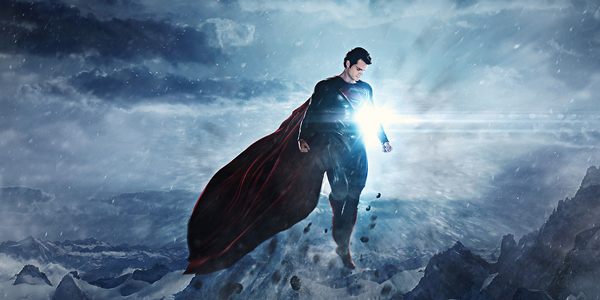
This may be hard to believe after all the bashing, but I actually enjoyed Man of Steel quite a bit. It's fun, it's epic, there's some good acting (Michael Shannon and Amy Adams get particular props) and some of the new mythology is cleverly written. There's just a lot of logical and structural flaws that bring the movie down. If only the filmmakers had paid a bit more attention to character over story, to logic over convenience, we could have been given a hero who truly deserves to call himself "Superman." So there you have it, Man of Steel's 10 biggest blunders! Feel free to sound off in the comments with your own Man of Steel pet peeves!
Aaron Berke
I'm an all-around film enthusiast - always have been, always will be. When I'm not writing about movies I'm sitting in a dark room watching one on my laptop. You might also find me at the local movie theater watching Christopher Nolan's new movie for the 80th time. I'm the guy in the back wearing the "It kept spinning" t-shirt.
I also just started a blog called "The Dream Factory," in which I post video reviews of the latest TV shows and movies. So hopefully if you like the way I write, you'll love the way I talk. You can check out the blog here: http://aaronbaron.wordpress.com/
See more from
Aaron