Martin Scorsese: Ranking His Movies From Worst To Best

A true cinephile and master of controversy is getting his films ordered.
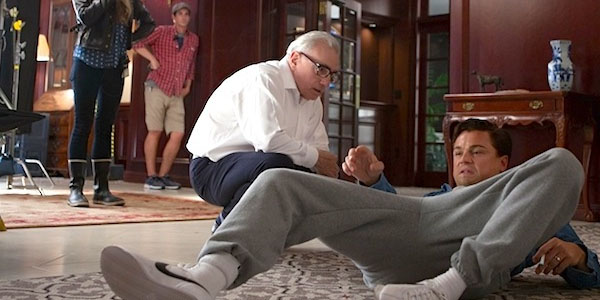
Some of the best filmmakers working today are renowned for their passion for cinema as an art form - Paul Thomas Anderson, Steven Soderbergh and Quentin Tarantino are all known for their cinephilia, and their vast knowledge of movies shines through in each of their films. Martin Scorsese, however, is considered by many to be the ultimate filmmaker's director. With an illustrious career spanning decades, his filmography is a rich reflection of his encyclopaedic knowledge of the history of cinema, while his activities outside of his own filmmaking demonstrates an enthusiasm for restoring and reviving hidden gems from around the world. This obsession is perhaps best reflected in his book and documentary series A Personal Journey With Martin Scorsese Through American Movies - a 225 minute foray into the obscure and influential movies which shaped both the medium and his own approach to movies. Its comprehensive nature has perhaps only been surpassed since by film critic Mark Cousins's series The Story of Film. With so many classic titles under his belt it's impossible to assess and rank Martin Scorsese's filmography without a degree of subjectivity, and readers are invited to challenge the positioning of his films in this list, ranked as they are from "worst to best". With 23 movies some misses amongst the hits are inevitable - without further ado let's work our way through the cinematic world of Martin Scorsese.

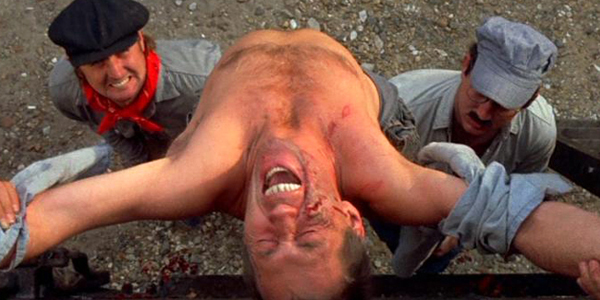
23. Boxcar Bertha

Martin Scorsese's second feature film, Boxcar Bertha, was a loose adaptation of the life of Bertha Thompson written by Ben L. Reitman, Sister of the Road. Coming out of the Roger Corman exploitation production line, it starred Barbara Hershey in the title role with David Carradine, Barry Primus and Bernie Casey in supporting roles. The most obvious drawback to Boxcar Bertha is its obvious indebtedness to Bonnie and Clyde - in a sense this is a low budget, B-movie reworking of the same themes, with Bertha and her associates caught up in the political upheavals of Depression-era America and forced into a life of crime. Scorsese's directorial flourishes are occasionally evident, but the overall weakness of the material itself makes this a minor work in his output. It's far from great, but probably doesn't deserve its 43% Rotten Tomatoes rating, and at least legendary critic Roger Ebert saw in this film Scorsese's potential to go on to bigger and better things.

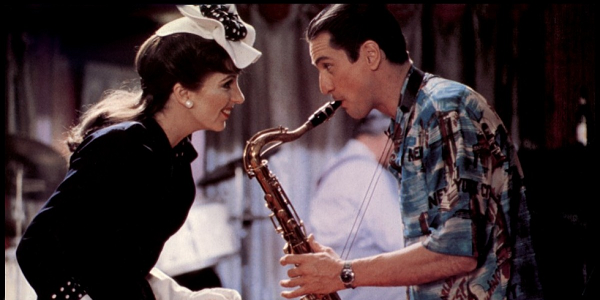
22. New York, New York

Martin Scorsese's passion for all things cinema history-related is evident in much of his work - his gangster films alone reveal an informed understanding of the dynamics and tropes of the genre, which he expertly handles and subverts. With New York, New York Scorsese turned his hand to the MGM musical classics and delivered an epic-length, sometimes sprawling tribute to the legends of old. Starring Robert De Niro and Liza Minnelli as two performers and lovers, it is as much an ode to the titular city as it is to the music scene which flourished there. Half respectful nod, half playful parody, its box office failure is said to have led the director further into his cocaine-fueled lifestyle, something which has been explored in detail in the exceptional book Easy Riders, Raging Bulls by Peter Biskind. Scorsese's lack of control over the project has been cited as one justification for its flaws, and it sits uncomfortably alongside his other better work.

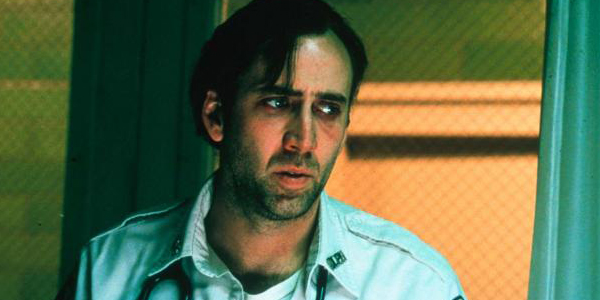
21. Bringing Out The Dead

Martin Scorsese hasn't experienced many bombs at the box office, but his movie Bringing Out The Dead, released on the cusp of the new millennium, performed very poorly in cinemas and consequently is one of his most overlooked films. Starring Nicolas Cage as paramedic Frank Pierce, it is a nocturnal movie in which the constant rushing of ambulances leads the audience to one sordid, bleak scenario after another. Frank is a man teetering on the edge of a mental breakdown, and each of his co-workers throughout the film (played by John Goodman, Ving Rhames and Tom Sizemore) seem to bring out his world-weary feelings of resignation and despair. Cage's performance seen today is another reminder of how good he used to be (notwithstanding his recent semi-return to form, Joe) and Scorsese's direction is exemplary, but there's something missing in Bringing Out The Dead, its bleakness and lack of depth reducing it to one of his lesser works.

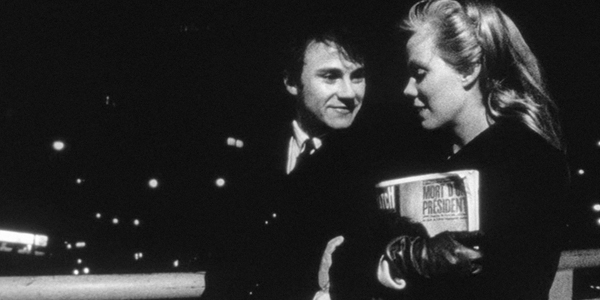
20. Who's That Knocking At My Door

Roger Ebert was also an enthusiastic supporter and champion of Scorsese's debut feature film, Who's That Knocking At My Door? Released in 1967 and starring a baby-faced Harvey Keitel alongside Zina Bethune, it went on to win the 1968 Chicago Film Festival and establish Scorsese as a director to watch. Keitel plays J. R., a youthful, fun-loving and exuberant Catholic Italian-American who encounters a beautiful woman (Bethune) on the ferry and decides that it's high time he brings his profligate lifestyle to an end and settle down and raise a family. But tearing himself away from his drinking buddies proves to be more difficult than he expected, particularly when he learns of her dark secret. Who's That Knocking At My Door? has been described as something of a dry run for his later movies, particularly Mean Streets, and indeed many familiar themes - not least the questioning of one's religious faith - are explored in full. It's a strong debut by anyone's standards, shot in crisp black and white and full of energetic performances.

19. Kundun

If there's one thing that cannot be denied about Scorsese's foray into the territory of sprawling historical epic Kundun, it's that it looks absolutely marvellous. From Dante Ferreti's sumptuous art direction to Roger Deakins's exceptional cinematography, each frame could have come from the lens of an award-winning photographer. That the film itself often feels rather dislocated and disjointed is no doubt on account of its chronology - spanning several decades it tells of the search for the Dalai Lama and his exile from Tibet and treads through spiritual territory which marks a break from Scorsese's preoccupation with Catholicism. Ironically, given the film's aspirations towards imparting a profound message, beneath the gloss there's little to hang on to in terms of connection with the characters and narrative coherence. Still, as a picture postcard overview of an historically significant time and place it deserved to perform better at the box office than it did.

18. The Colour Of Money

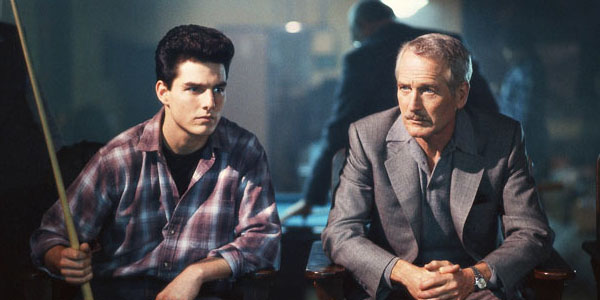
One of the defining moments of Paul Newman's career came in the early 1960s with his portrayal of Fast Eddie Felson in the film The Hustler. Critically acclaimed and widely regarded as a classic, the idea of revisiting the character 20 years later seemed almost like sacrilege to fans of the original. In the more than capable hands of Martin Scorsese, however, people had nothing to worry about. Newman reprises his role and is joined by Tom Cruise as co-star, who plays the arrogant hustler whom Eddie takes under his wings. Scorsese manages to make the pool games as exciting as any violent action scene he's filmed in his gangster movies, and each frame positively zings with cool camerawork and sharp as a pin cinematography. It's debatable whether or not The Colour of Money manages to transcend the original, but as unexpected sequels go it's one of the best. Newman finally won the Academy Award for Best Actor he deserved, too, once again signifying Scorsese's ability to draw out the best performances from his leading men.

17. The Age Of Innocence

A common thread running through Martin Scorsese's movies is his meticulous attention to period detail - we've already seen strong evidence for this with Kundun, and with The Age of Innocence he turned his hand to New York in the early 20th century. The sumptuous visuals in The Age of Innocence certainly match the opulent lifestyles of its central protagonists, including Newland Archer (Daniel Day Lewis), his respectable bride-to-be May Welland (Winona Ryder) and the fated lover Countess Ellen Olenska (played by Michelle Pfeiffer). This is a side to New York opposite to the grimy underworld and mean streets Scorsese usually mines for his intriguing explorations of violence; these are characters hemmed in and constrained by an entirely different set of circumstances. More poignant than most of his films, Scorsese would later return to an earlier era in New York and again collaborate with the always excellent Daniel Day Lewis for Gangs of New York.

16. The Aviator

One of the most difficult genres of movie to pull off successfully is the biopic. From the outset it's compounded with a number of problems the filmmaker has to tackle, from the authenticity of the narrative presented and the problem of casting the subject matter in a negative light, which all too often can reduce a biopic to little more than an exercise in hagiography. Martin Scorsese's The Aviator, which tackles the life of famous industrialist, aviation pioneer and billionaire Howard Hughes, is undoubtedly one of the better efforts out there. Scorsese's wonderful attention to period detail makes it an instant visual treat, while Leonardo DiCaprio's strong central performance as the wealthy man whose life descends into a reclusive kind of madness engages the viewer's attention from start to finish. Nevertheless, like most biopics, The Aviator sometimes feels disjointed, presenting a string of life events rather than a cogent and solid narrative, and by the time the film reaches its near-3 hour running time conclusion exhaustion has started to set in.

15. Cape Fear

For Scorsese's penultimate film with long time collaborator Robert De Niro, the director opted to remake one of Hollywood's classic revenge thrillers, Cape Fear. With the original stars Gregory Peck and Robert Mitchum making guest appearances, De Niro was joined with Nick Nolte and Jessica Lange. De Niro plays psychopathic rapist Max Cady who, having been released from prison after serving a fourteen year sentence, decides to track down the defense lawyer (Nolte) who deliberately fudged the trial and exact his revenge. It's a taut thriller, stripped to the bare bones and more economical than much of Scorsese's other work. It's also, unfortunately, inferior to the original, although considering how great that was, this is no major criticism. Comparisons aside, Scorsese's Cape Fear remains a solid genre effort with sterling performances all round.

Contributor
Contributor

Andrew Dilks hasn't written a bio just yet, but if they had... it would appear here.