Marvel Cinematic Universe: 11 Little Known Facts About The Thor Movies
 Both Thor and its sequel - Thor: The Dark World - have become huge box office hits following their releases in 2011 and 2013 respectively, having provided audiences worldwide with action, great storytelling and awesome special effects. But those are things that we see and therefore things that we know about openly and explicitly. And while that's great, it's always interesting to look deeper in to the production of a movie to find out a little bit more about the whos, the whats, the wheres, the whys and the hows - and that's what we'll be doing here. We've discussed the Easter eggs in the Thor movies here at WhatCulture, but now it's time to look at some somewhat obscure facts about the two movies. Here are eleven relatively little known facts about the Marvel Cinematic Universe's Thor movies...
11. There Were 30 Mjolnirs Made For Thor: The Dark World
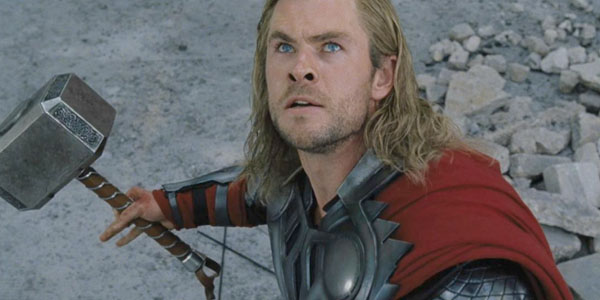 In all of Thor's movie appearances to date, there have been several versions of Mjolnir made for differing purposes, but in Thor: The Dark World there were no less than THIRTY versions of Thor's hammer made. The hammers were made from different materials for different scenes with the "master" version being made from aluminium. The reason for this huge number was physics-based, so that the battle scenes showed the heavier hammer as having enough "oomph", while also making the hammer easy to carry and lighter during non-combat scenes - so each one was essentially a different weight to serve a different purpose. There was also more intricate aesthetic detail on some of the hammer castings for close-up scenes, while the long-shot scenes didn't require it.
10. Tom Hiddleston's Methods
Tom Hiddleston revealed that, in order to get in to character and in order to express himself as Loki in particular scenes, he would take inspiration from a trio of actors who he felt were right for certain characteristics. The three actors in question were Peter O'Toole, Clint Eastwood and Jack Nicholson. For example, when Hiddleston looked at Peter O'Toole as inspiration for Loki he explained; "Interestingly enough, Kenneth Branagh said to look at Peter O'Toole in two specific films, The Lion in Winter and Lawrence of Arabia. What's interesting about The Lion in Winter is, O'Toole plays Prince Henry, and what's beautiful about his performance is you see how damaged he is. There's a rawness to his performance, it's almost as if he's living with a layer of skin peeled away. He's grandiose and teary and, in a moment, he turns hilarious and then terrifying. What we wanted was that emotional volatility. It's a different acting style, it's not quite the same thing, but it's fascinating to go back and watch an actor as great as O'Toole head for those great high hills". For the parts of the movie he drew inspiration from Clint Eastwood for, it was when Loki needed to look as though, whatever he was feeling, he had it hidden away in a drawer somewhere and had thrown away the key. And for the Jack Nicholson-inspired parts, it was when Loki was looking to be having a really good time and a deep sense of enjoyment whilst carrying out his dastardly plans. Apparently Tom Hiddleston also found the Loki helmet very uncomfortable to wear, as it was very heavy and he couldn't see out of it properly. He has claimed he channelled this discomfort into Loki's battle scenes.9. The London Train Scene Is Geographically Very Wrong
 When Thor gets on to the Tube in London (which is clearly at Charing Cross), he asks how to get to Greenwich from there (so that he can continue his fight against Malekith and save the universe), and is told by a fellow passenger that he is three stops away - this is incredibly wrong. The correct route from Charing Cross is as follows: Leave the Tube station, board the National Rail train from Charing Cross mainline station, then change at London Bridge. Even from there it is probably quicker to keep going to Maze Hill station, one stop after Greenwich, given its relative distance to the location where crazy stuff was going down. The passenger could have even told him to take the short walk to Embankment, taking the District to Monument, changing to Bank and taking the DLR to Cutty Sark. He could even have got on to the number 53 bus - which would probably have made him late, but that's another story. The fact is it was horrible geography and you'd think that the extra who gave him his directions (who was probably a local who knew the routes in detail) would've just said "can't I just give him the correct directions for the sake of keeping this film accurate?" But no, no dice.
8. Kenneth Branagh Used A Colour Scheme That Mirrored Thor's Costume
 Throughout the entirety of the first Thor movie, director Kenneth Branagh tried to utilise a colour scheme in the scenery that mirrored Thor's costume as a means of immersing the audience in to the character more. Branagh has said that he particularly enjoyed a shot in the scene whereby the mortal Thor is taken to a New Mexico hostpital. The room in which Thor was being kept was predominantly blue, but the red aspect of Thor's costume was accounted for by virtue of a red pair of Crocs placed in the background (see picture). There was also a red fire alarm on the wall. If you look closely at the movie throughout its run-time - particularly in the scenes on Earth as a means of reminding us who Thor actually is - every scene has a touch of each colour from Thor's costume in it.
7. Thor: The Dark World Was The Last Film Written By Don Payne
 In 2011, after gauging how well the first Thor movie (which was also written by Don Payne) did at the box office - and realising that it had done very well - Marvel Studios president Kevin Feige publicly stated that Payne had begun penning the script to the sequel. Payne was formally hired for the role (alongside Robert Rodat) in June of 2011 and completed the script prior to being diagnosed with bone cancer, from which he passed away on Tuesday the 26th of March in 2013. Don, who also wrote the superhero films My Super Ex-Girlfriend and Fantastic Four: Rise of the Silver Surfer and was a key writer of the animated series The Simpsons, is survived by his wife Julie and his children, two sons and a daughter. Thor: The Dark World is dedicated to his memory.
6. The Jane Foster As A Kid Photos Were Actually Natalie Portman
 In Thor: The Dark World, during some of the scenes in which Jane Foster, Erik Selvig, Darcy Lewis and Ian Boothby are researching in the house in London, there are photos of a young Jane Foster on display. These were real pictures of Natalie Portman as a child, which were provided for the movie by Portman's mother. How's that for intricate movie detail? Indeed, this wasn't even the first time Portman's mother had provided photos of her daughter as a youngster to add realism to one of her films - she did exactly the same thing for Black Swan, the 2010 psychological thriller/horror film starring Portman and Mila Kunis.
5. Jane Foster's T-Shirt Foreshadowed Thor's Power Returning
 In the scene of the first Thor movie where Thor, powerless, confronts the Destroyer Armour (which was being controlled by his rogue adopted brother Loki), Jane Foster is wearing a T-shirt portraying a picture the sun (with a face) emerging from behind a cloud. This was representative of the subsequent events, in which Thor would be "killed" by a punch from the Destroyer Armour, but the act of bravery in confronting it proved him worthy of wielding Mjolnir again. As a result, the hammer returned to him from the temporary S.H.I.E.L.D facility in which it was enclosed and, in turn, returned his formidable and godlike power and allowed him to emerge, from the brink of death, as powerful as ever - just as the T-shirt was conveying in pictorial analogical form.
4. There Was An Entire Town Constructed In New Mexico For Thor
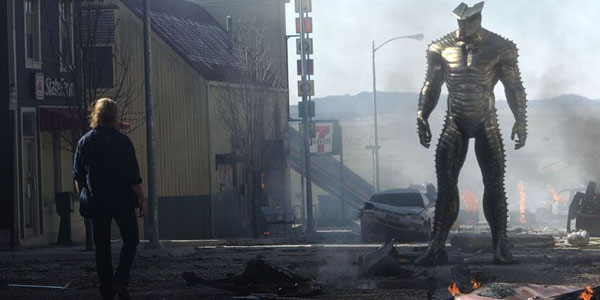 In the first Thor movie, the town in which Thor temporarily settles with Jane Foster, Erik Selvig and Darcy Lewis - and the one in which he has the showdown with the Destroyer Armour - wasn't actually a real town at all. An entire town set was constructed in Galisteo, New Mexico, to serve as a fictional location for the film. It utilised the remains of a small old-fashioned Western film town set, which was extensively modified, grown and added to for the shoot. In hindsight, that was probably for the best - given that the Destroyer Armour wrecked most of it (I can't imagine the locals of a real town being too keen on that idea!).
3. The Cast Could Have Been Very Different
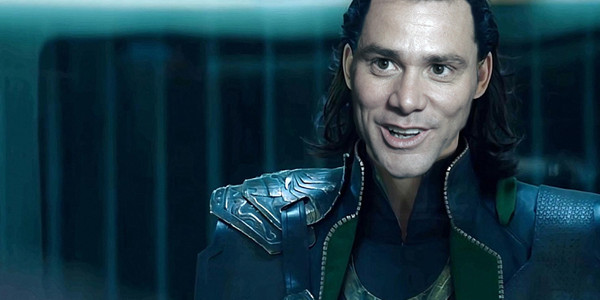 Obviously this particular fact applies to any film, but it's more about WHO could have been cast - had some of the original casting ideas come in to fruition, or had some of the other auditionees been cast - that isn't very widely known. For the role of Fandral in the first movie, Zachary Levi was approached but he had to turn it down due to scheduling conflicts. Dominic Cooper (who, of course, now plays Howard Stark in the Marvel Cinematic Universe) was then rumoured to be considered for the role but, instead, actor Stuart Townsend was cast. However, days before filming began he left the role due to creative differences with the film-makers. Joshua Dallas finally took the role only to be replaced by original choice Zachary Levi in the sequel. It was rumoured that Jesicca Biel and Diora Baird auditioned For the role of Sif - a role which ultimately went to the very gorgeous Jaimie Alexander. Brian Blessed was rumoured to be one of the first choices for Odin - who, of course, was so excellently portrayed by Sir Anthony Hopkins, ultimately. It was rumoured that the likes of Jim Carrey (who had previously worn a mask belonging to Loki in "The Mask") and Josh Hartnett were originally seen as candidates for the role of Loki - a role that has since been made so iconic by the brilliant Tom Hiddleston. Although this isn't exactly a "little known" fact, originally, Hiddleston auditioned for the role of Thor. For his screen test, he put on twenty pounds of muscle. However, when Kenneth Branagh came on board to direct, he took Hiddleston out for breakfast and told him "I want you to play Loki". Branagh then asked Hiddleston to lose the twenty pounds of muscle he had put on by sticking to a strict diet while training in the Brazilian martial art of capoeira. With regards to Thor, the likes of Brad Pitt and Channing Tatum were considered as potential candidates, but the final choice for the titular role came down to brothers Chris Hemsworth and Liam Hemsworth. Chris said he found it funny, explaining; "We both came all the way over here from Australia and ended up battling against each other." He claimed that he bore no ill-will towards his brother, Liam, and he was actually rooting for him to get the role. Originally, the movie was intended to be a mere television movie, however, with Tyler Mane (who played Sabretooth in the original X-Men movie) in the role Thor. An alternate story for the movie saw actor Kevin McKidd playing Thor's comic book alter-ego, Donald Blake, but he was scrapped along with the idea to include the character. It's hard to imagine any of those possibilities now, given how well every single actor did in their roles in the two movies - but hopefully the above image at least gives you an idea about how one of those particular ideas might have looked!
2. Alan Taylor Openly Distanced Himself From The Collector Scene
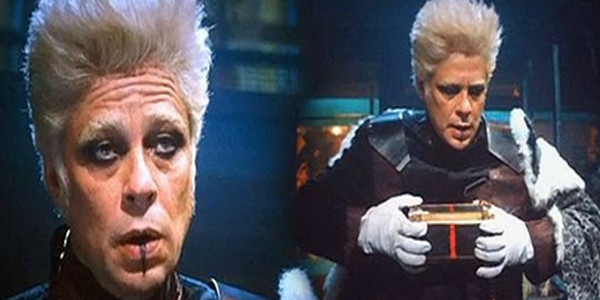 Thor: The Dark World director Alan Taylor made it abundantly clear that he was not responsible for the mid-credits scene in his movie. In fact, he seemed to be quite unhappy about its inclusion. When asked if he directed the scene in question (the one with the Collector, as played by Benicio Del Toro), Taylor said "I absolutely did not. I am very happy to not take responsibility." Then, when asked if it was James Gunn (Guardians of the Galaxy's director) who directed the scene, Taylor said "I wouldn't blame it on James Gunn... er... I wouldn't attribute it to James Gunn... it's clearly his sets and his characters." Then, when asked if he wasn't comfortable with the scene, Taylor reiterated "I am very happy not to take responsibility for that." He was then asked about the different tone of the scene, elaborating that "it's a different tone. I would have shot it differently. But I think it's cool that it reaches out and touches that other universe. That universe is coming. The Guardians universe is really cool and wacky... but that sequence in the credits, I would say, is the only part of the movie where I'm happy to give the credit away." Since the interview, Taylor has indeed retracted these words (too little, too late though, Alan! Your real opinion is out there!), citing jet-lag and having done countless interviews that day as a reason for his moody comments, and Gunn has indeed accepted the retraction, saying "Alan has apologised profusely, both personally to me and to the press. He's a good guy." Personally, I don't blame Taylor for his comments - the scene looked like something out of Red Dwarf!
1. Kenneth Branagh Used Tilted Angles To Resemble Comic Book Panels
 In order to make the first Thor movie look like the classic "Thor" comics, director Kenneth Branagh chose not to be slavish to the Jack Kirby designs he used to love so much as a child. The master illustrator's and other "Thor" artists' influence was incorporated in to the movie in a very different way, however. Branagh explains that "one unifying thing, which I had to do some persuading to get away with, was canted angles. I moved the camera a little lopsidedly, both up in Asgard and down here (on Earth), to evoke what I would call a comic book style, where the panels are coming at you, the characters are busting out." He also explained that such angles were particularly utilised when filming Thor's hammer, Mjolnir; "We were constantly raiding these 600 editions for various things, like ways to frame the hammer. It's Thor's iconic weapon, but it's hard to make a hammer really exciting. It's hard to make it heavy, hard to make it dynamic. So we literally pulled everything from the comics to see how they framed it. We used every cheat of scale, every perspective trick in the book. It had to be on an angle, we had to get it up foreground, we must use a wide-angle lens. You can't make it look normal, even though it screams, 'I'm a hammer!"' So next time you watch Thor, take a look at the angles in and from which it was filmed - you'll look at it very differently when you consciously know what the intention was. And there you have it; eleven little known facts about the Thor movies. Did you enjoy this list? Do you know of any other interesting or tasty titbits regarding either of the movies? Let us know in the comments box below. And please feel free to follow me on Twitter!