MCU: 10 Fascinating Facts About Captain America: The Winter Soldier (2014)
Ever wondered what was going on with Hawkeye?

Captain America: The Winter Soldier released in 2014 as the third entry in the second phase of the Marvel Cinematic Universe. Directed by Joe and Anthony Russo, it is frequently regarded as one of the strongest Marvel films ever released, with the film marrying superhero fiction with the conspiracy thriller genre to create one of the most compelling comic book movies of all time.
It is a brilliant film - perhaps even the MCU's best - and naturally given the amount of time, love and care put into it, there's also an awful lot fans may not know about the Captain America sequel. From wardrobe choices to sneaky cameos, the film is jam-packed with interesting little stories, references and more, emphasising its unique status within the wider Marvel canon.
So, as we've already done with the pervious releases in the MCU in time for the release of Avengers: Endgame, let's take a look at one of the smartest Marvel films ever released, and some of the stories that made it just that little bit more special...
10. Robert Redford Was Cast For A Specific Reason

Although the following statement might seem a little redundant - bear with - it's worth noting that the casting of Robert Redford as Alexander Pierce was very deliberate.
The Winter Soldier takes so many cues from seventies-era conspiracy fiction, and it's a genre Redford himself was heavily synonymous with, having boasted starring roles in both All the President's Men (1976) - Alan J. Pakula's film based on the exploits of Bob Woodward and Carl Bernstein, the two journalists who exposed the Watergate scandal - and Three Days of the Condor (1975), the latter of which focused on a CIA agent on the run from the very agency he worked for. Sound familiar?
Other such works cited as inspiring the tone and story of The Winter Soldier include Klute (1971) and The Parallax View (1974) - both also directed by Pakula - and it's easy to see how that inspiration works to the film's benefit. Redford's presence in particular serves as a neat little callback to that era, and he actually accepted the role for two reasons specifically: first, because his grandkids wanted to see him in a superhero film; and second, because he rarely got the opportunity to play the villain.
Redford's casting worked for all parties in the end, especially during a point in which the MCU was still labeled as having a 'villain problem'.
9. Nick Fury's Anecdote Had Real Life Origins

As Nick Fury introduces Captain America to the next generation of S.H.I.E.L.D. hellicarriers - aka Project Insight - he recalls a story involving his grandfather.
Emphasising the ostensible need for pre-emptive military capabilities, something Rogers decries as "fear... not freedom", Fury mentions how his old relative worked as an elevator operator at an unnamed hotel. On his way home, his grandfather would often get trouble from violent troublemakers, which prompted him to start carrying a handgun. It fails to convince Rogers that Project Insight is more pragmatic than, say, proto-fascist, but part of the story actually has real life origins.
Although Samuel L. Jackson's real-life grandfather didn't carry a gun, he did in fact work as an elevator operator in a hotel.
Coincidence? Perhaps - although Jackson had gone on record as early as 2013 regarding his grandfather's profession, so there's a good chance the detail may have been added in during filming.
8. Cap's S.H.I.E.L.D. Uniform Is Lifted Straight From The Comics
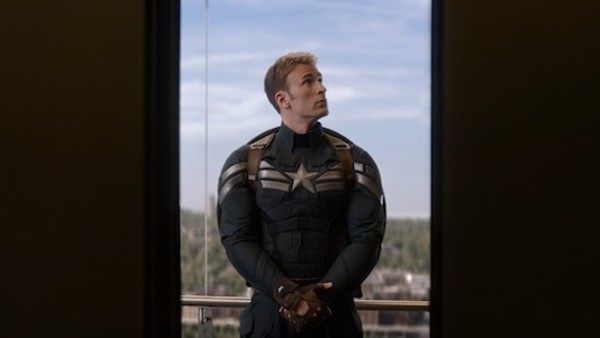
Those going into The Winter Soldier without prior knowledge of the comics may have thought Cap's suit something of a departure from his traditional look - and it is. The character is usually seen wearing his iconic red, white and blue outfit comprised of the star-spangled banner's stars and stripes, but he has switched between various looks in recent years.
The outfit scene in Winter Soldier is much more military-looking than the one seen in the Avengers, and for good reason. Steve is getting used to the modern world and is a fully paid-up agent of S.H.I.E.L.D., and with the more covert nature of the job comes an emphasis on a more muted colour pallet - in this case blue, brown and silver.
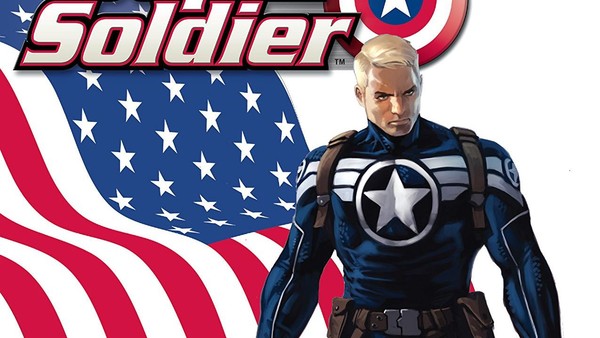
Back when the film was released, Rogers had only recently been using the outfit in the comics. He first used it after returning from the dead in Captain America: Reborn, deciding that with Bucky having taken on the mantle of Captain America in his absence, it was time for him to move on and assume a different identity. He became the director of S.H.I.E.L.D., re-formed the Avengers and went by his civilian name (although his comic was then renamed Steve Rogers: Super Soldier).
Steve doesn't become the director of S.H.I.E.L.D. in the film, but it's worth noting just how recent an addition his outfit was, as well as how great it looks on camera.
7. Hawkeye Was Originally Meant To Appear

Before Avengers: Age of Ultron, Jeremy Renner didn't really have much to do as Hawkeye. He had a brief cameo in Thor, an underwhelming bit-part in The Avengers and was (surprisingly) nowhere to be seen in The Winter Soldier. The film is all about S.H.I.E.L.D., and yet Clint Barton was nowhere to be seen.
Apparently, Hawkeye's omission wasn't originally intended. Writers Christopher Markus and Stephen McFeely had wanted to include Barton in the film, but scheduling conflicts with Renner forced them to cut him from the script. That, along with the fact that there were already quite a few characters to begin with, even led to a scene where Black Widow and Cap discuss Barton's whereabouts, but that too ended up being scrapped.
The original idea was to have Hawkeye go after Cap after Pierce gives the order. Following his escape from the Triskelion, Barton would've fought Cap in order to give the impression that he was still on S.H.I.E.L.D.'s side, when in actual fact, he would be making the battle look genuine in order to sell Rogers' escape.
However, despite not physically appearing in the film, The Winter Soldier does include a little nod to the character. Black Widow wears an arrow necklace in her civilian clothes, which was apparently Scarlett Johansson's idea to ensure a little bit of Clint was on camera.
6. Those Ties To Community

Joe and Anthony Russo may have presided over the three most pivotal Marvel films to date in Civil War, Infinity War and Endgame, but they weren't always so synonymous with big screen blockbusters. In actual fact, before Winter Soldier, the pair were arguably most famous for their contributions towards NBC's Community, a vastly under-appreciated TV series created by Dan Harmon.
Apparently it was the Russos' involvement in the show's famous paintball finales that convinced Kevin Feige they'd be a good fit for Marvel Studios. The duo had previous credentials on You, Me and Dupree, but it was on Community where their talent really shone through.
The directors actually managed to work in a cameo from one of the show's leads into Winter Soldier too. Danny Pudi, who plays Abed on the show, gets a quick scene where he plays a S.H.I.EL.D. agent aboard one of the Helicarriers. Jim Rash, who portrayed Dean Pelton too, managed to work in a cameo on Civil War, but the trend seemingly came to a close with Infinity War.
5. Chris Evans And Scarlett Johansson Wrote A Lot Of Their Own Dialogue

Christopher Markus and Stephen McFeely may just be the unsung heroes of the MCU. The pair not only wrote The Winter Soldier, but also Civil War, Infinity War and Endgame too. For the second Captain America film, however, they actually had a little help from the film's two leads.
Speaking to Metro back in 2014, Stephen McFeely mentioned how both Chris Evans and Scarlett Johansson ended up contributing to the script in several key areas, specifically during their scenes together.
"The script was in pretty good shape when we started, but Chris had a lot of input on the scene where he’s meeting Sam Wilson for the first time, and what it would take to make Captain America – who probably gets stopped in the street all the time – turn around for that extra conversation. And then he and Scarlett were involved in that scene in the car when they’re driving to Camp Lehigh and they’re talking about kissing and all that. I think actors very often know their voices better than I do, so I have no problem with them adding a couple of lines to a scene or telling a different joke."
Given that one of the film's best elements is the back and forth between Rogers and Romanoff, Evans and Johansson's tinkering with the script must've been a success.
4. Cap's 'To-Do' List Varies From Territory To Territory
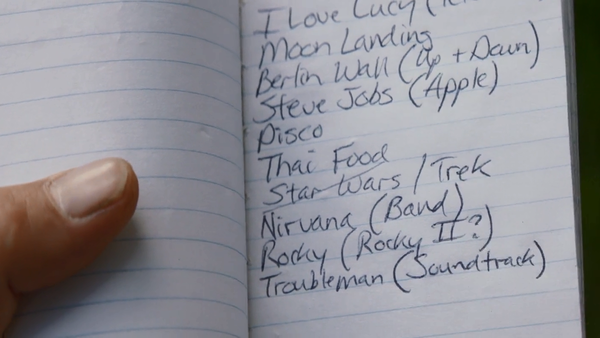
In a bid to make Captain America more global, Marvel Studios made it so that the character had a different 'to-do' list for each territory the film released.
The original booklet sees Cap add the Troubleman soundtrack to his rapidly expanding list, which includes references to historic events like the moon landings, the fall of the Berlin Wall and the emergence of Disco during the seventies. However, in several other territories, Steve has been catching up on completely different histories and cultures.
For the UK release of Winter Soldier, Cap's notepad has stuff like The Beatles, the World Cup Final and Sherlock scribbled down; in Australia, references to AC/DC, Tim Tams and Steve Irwin are all noted instead, while the Russian release saw Cap catching up on the works of Vladimir Vysotsky and the Soviet-era movie Moscow Does Not Believe in Tears.
It's a nice touch, but it maybe also doesn't make sense given how Cap lives in America and is an American. Still, here's hoping he managed to watch Rocky before going on the run in Civil War.
3. Captain America Writer Ed Brubaker Has A Cameo
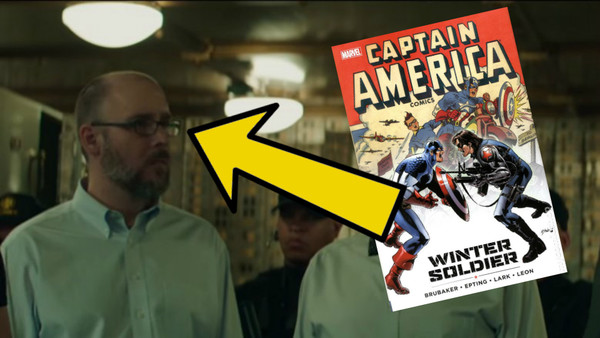
The MCU may not directly adapt Marvel's comics beat for beat, but they do apply elements from specific stories very liberally. Infinity War bears all the hallmarks of 1991's Infinity Gauntlet comic - with a sprinkling of Jonathan Hickman's Infinity for good measure - while Thor: Ragnarok took the idea of a gladiatorial Hulk directly from the Planet Hulk series from the late 2000s.
When it comes to The Winter Soldier, however, it's much easier to see where it takes most of its inspiration. Several storylines are mirrored, including the seventies-era Secret Empire comic and the Ultimates too, but most material is taken from Ed Brubaker and Steve Epting's legendary run on Captain America. It was his decision to bring Bucky back to life as the Winter Soldier, and the film's blend of espionage action with classic superheroics was first pioneered during Brubaker's stint on the character.
It's rare that creators ever get a proper credit for their works when the next blockbuster comes around, but Brubaker was acknowledged during the course of the film. He appears as one of two Hydra handlers when Bucky is brainwashed during the second act, and it serves as a great nod for those familiar with the writer's work.
2. There's A Sneaky X-Men Reference

It would be a further four years until Marvel could even broach the possibility of using the X-Men in the MCU, but The Winter Soldier actually managed to include a sneaky reference to one of the teams from that corner of the Marvel Universe.
In the comics, Department H is a Canadian agency that headed up the country's superhero program. They were also originally responsible for Wolverine's adamantium graft, and later headed up the creation of Alpha Flight, Canada's own answer to the Avengers who've been synonymous with the X-Men for sometime.
The group only gets a passing mention in Winter Soldier during a conversation with Black Widow, but the Department would later be revisited in Agents of S.H.I.E.L.D. There, it is explained that the MCU version is still a Canadian branch, so might it even be possible that this is how Marvel will introduce some mutants into their onscreen apparatus? One can only hope.
1. It's The First Time Cap Doesn't Use A Gun On Camera

Captain America isn't Batman. He's a soldier who's used firearms in the past and probably will again in the future, but he tries to avoid them if possible. However, despite Rogers preferring to use his mighty shield as frequently as possible, every single film to feature the character up until The Winter Soldier had him using guns.
Granted, that makes sense in The First Avenger (he is fighting in a literal war after all), but it's still weird to think that it was only as recently as 2014 that he retired their use in combat; even 2012's The Avengers included a brief sequence where Cap used an assault rifle, but since the release of Winter Soldier he hasn't actually used any.
This fact is made even more interesting by the fact that Cap featured in three separate films prior to his debut in the MCU, all of which saw the title character use guns without batting an eye.
It's a small detail, but seeing as how the change has stuck with the character since The Winter Soldier, it's still important.