MCU: 10 Reasons Why Phase 4 Has Failed
The Multiverse was supposed to take Marvel to new heights. Instead, Phase 4 has crashed and burned.

On November 11, Black Panther: Wakanda Forever will cap Marvel's Phase 4. Wakanda Forever looks like a sure-fire hit that will win critical plaudits; however, even if the film proves successful, it may not be enough to paper over the lingering sense of disappointment fans had with Marvel's latest crop.
Coming off the success of Endgame, it is hard not to notice how inconsistent Marvel's follow-up to Phase 3 has been. While Phase 4 has Disney+ successes like Werewolf By Night and Loki, and cinematic hits like Spider-Man: No Way Home and Shang-Chi, Marvel has dropped more duds than in any previous phase.
Thanks to Eternals, Doctor Strange in the Multiverse of Madness, and Thor: Love and Thunder, Marvel has suffered its lowest CinemaScore ratings, lowest Tomatometer scores, and biggest box office drops ever. If Kevin Feige intended Phase 4 to keep audience interest high, then Phase 4 can be dubbed a failure.
Feige apparently agrees. Sensing that fans were concerned with the MCU's direction, the Marvel Studios President took the unprecedented step of releasing the titles for Phase 6's final chapters to allay fans' concerns. This vote of no confidence in Phase 4's ability to hook Marvel fans is the surest sign things aren't well in the MCU.
Not so long ago Marvel appeared untouchable. So, what went wrong? Let's explore the various ways Phase 4 flew off the rails and determine if Marvel can right the ship, or if it will continue to flounder until the franchise is truly underwater.
10. Too Many Movies And Series

Early in its run, Marvel Studios expanded into television and streaming with Agents of S.H.I.E.L.D. and an array of Netflix series. However, once audience interest dipped in its TV offerings, Marvel's cinematic universe mostly divested itself from these shows, making them only tangentially related to in-movie continuity.
After that, Marvel mostly relied on feature films to create continuity between instalments. This made the larger cinematic narrative Marvel unfolded easier to follow. Averaging only three films a year, keeping up with the larger MCU story wasn't that big of a commitment.
Phase 4 threw this audience-friendly storytelling approach out the window. Not only did Marvel increase the number of feature films it released in a single year, it also flooded audiences with Disney+ series, many of which directly impacted the larger continuity of the MCU. If an audience member missed out on What If...?, WandaVision, and Loki, then much of what happened in Multiverse of Madness would appear baffling.
Marvel's inundation of content is causing its larger narrative to become unfocused and muddled, leaving all but the diehards out of the loop. This no doubt impacted audience scores and box office declines, and risks alienating casual moviegoers on a large scale.
9. Quality Control Dipped

Marvel owes much of its success to Kevin Feige. Famously, Feige took a hands-on approach with the MCU franchise, being more of a creative force than most producers, ensuring that Marvel products met a high standard. For instance, Feige famously ousted director Edgar Wright from Ant-Man when the pair butted heads over Wright's vision for the film. Until recently, Feige's tactics made Marvel's films cohesive and streamlined.
Unfortunately, Phase 4 suffered from the producer's take-no-prisoners approach. Scott Derrickson's vision for Multiverse of Madness clashed with Feige's, forcing Derrickson out of the director's chair. The Marvel Studios President brought on Sam Raimi to finish that film, which resulted in a muddled project that received a low-for-Marvel B CinemaScore and had a massive 67% drop on its second weekend at the box office.
Feige's sliding grip on quality control can be blamed on the glut of Phase 4 Marvel projects. Recently, director Bassam Tariq stepped away from Marvel's Blade reboot a month before filming was set to start. Insider sources cited Feige's inability to keep up with his overfilled schedule as a reason the project fell apart. Marvel's rapid expansion is already too much for Kevin Feige to manage, which bodes ill for future phases.
8. The Disney+ Shows Underwhelmed

WandaVision started off Marvel's expansion to Disney+ with a bang. With massive viewing numbers and critical plaudits, Wanda Maximoff's solo series appeared to augur continued success for Marvel in its revamped foray into streaming. However, the series finale disappointed many fans, with some being irate that their theories about the series' main villain didn't pan out. The divisive nature of WandaVision's finale proved to be a bad omen for the rest of Marvel's Disney+ slate.
Loki and Hawkeye were generally well-received, but Moon Knight divided fans and She-Hulk and Ms. Marvel sparked vociferous online backlash. While many of the Ms. Marvel and She-Hulk online naysayers were trolls arguing in bad faith, the viewing numbers proved that both series failed to pique wider audience interest relative to WandaVision and Loki.
Guardians of the Galaxy proved that Marvel can put C-list comic book characters on the A-list. Yet, Marvel Studios has been struggling to make She-Hulk and Ms. Marvel breakout stars. Although these characters were not meant to carry the greater MCU franchise, they also failed to make fans yearn to see these figures in big-screen crossover events as well. Instead of building hype, Marvel's Disney+ series are contributing to superhero fatigue.
7. Not Enough Big Name Actors
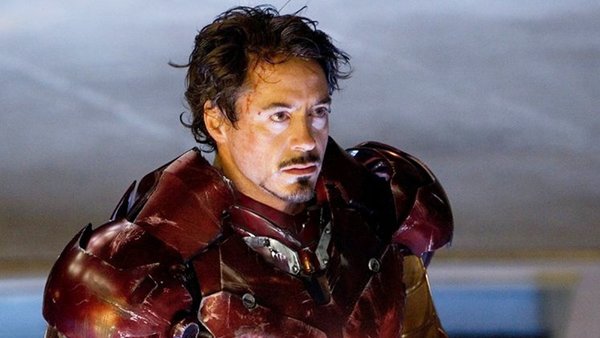
Casting troubled leading man Robert Downey Jr. as Iron Man was Marvel's first step on the road to the MCU becoming the biggest franchise ever. Prior to his superhero debut, Downey had a well-publicized battle with addiction that almost tanked his career. In fact, his behind-the-scenes behavior was so notorious, Marvel found it difficult to insure him for the role. That gamble paid off, though, and Downey Jr.'s star wattage turned Iron Man into a hit.
Marvel doubled down on bringing in big name stars to fill out its roster. Chris Evans, Scarlet Johansson, and Chris Hemsworth upped the big name ante, with respected veteran actors like Mark Ruffalo, Gwyneth Paltrow, and William Hurt filling in supporting roles.
As the MCU progressed, casting rumors became a part of fan discourse, but after Endgame, the well of big Hollywood stars is running dry. Angela Jolie and Salma Hayek co-starred in Eternals, only to be consigned to bit-part players in support of a cast of relative unknowns. Simu Liu broke out in Shang-Chi, but Florence Pugh made less of an impression in Black Widow.
Phase 4's lack of star power failed to build buzz, and the box office and reviews suffered for it.
6. The Black Widow Movie Came Too Late

After a supporting role in Iron Man 2, Scarlett Johansson's Black Widow soon became a fan favorite and central figure in the Avengers. The character came into her own in Avengers: Endgame, making the ultimate sacrifice to help bring about Thanos' defeat. Widow's noble end capped her character arc, turning her from a mercenary into a true hero.
Bafflingly, Marvel decided that post-Endgame was the right time to finally give Black Widow a solo movie. While the film itself was a solid thrill ride that introduced entertaining new characters, it couldn't help but feel too late. Black Widow added few new layers to the character while also highlighting the fact it took Marvel too long to give its most popular female cast member a solo adventure.
Adding to these concerns, COVID-19 hampered Black Widow's box office. The film was released in theatres and on Disney+ concurrently, hurting its tally. On top of this, Disney and Scarjo entered into a well-publicized tiff over the film's hybrid release. What should have been a triumphant moment for Black Widow fans, morphed into a fiasco that started Phase 4 off on the wrong foot and set a bad tone for Marvel's latest crop.
5. No Clear Antagonist

Phase 4’s wildly popular Disney+ series Loki introduced the villainous Kang the Conqueror to audiences. A time-traveling, universe-jumping being from the year 3000, Kang made a strong impression when he squared off against Loki in the series' season finale. It appeared the inter-dimensional being would be Marvel's new Big Bad.
However, Phase 4's subsequent films and shows have failed to drop any Easter Eggs or hints about Kang's endgame, or even mention the character at all. This approached provided a sharp contrast to other Marvel phases, where the Infinity Stones and Thanos were introduced in the MCU's very first phase and alluded to in subsequent films.
In fact, post-Loki, fans were left in the dark about whether Kang would even return or not. Recognizing that diehards were growing concerned about the lack of a central antagonist, Kevin Feige announced that the penultimate film of Phase 6 would be titled Avengers: The Kang Dynasty. While this might have allayed fans' gripes about where Phases 5 and 6 were heading, audiences still have no clear idea what Kang's goals are. Without a narrative spine to link Marvel's films together, Phase 4 has devolved into a mess.
4. No Central Protagonist

Tony Stark's noble sacrifice in Avengers: Endgame left the MCU with no clear protagonist to tie its numerous films together. When WandaVision premiered, it seemed like Wanda might take up the mantle of Marvel's new central figure, with the series giving Maximoff an arc that took her from a grief-stricken villain to a hero.
Unfortunately, Multiverse of Madness wound back Wanda's arc, turning her into a one-dimensional villain who perished in the film's finale. Many fans felt Maximoff's villainous turn disrespected the character and only added to the general frustration fans had with Marvel's most recent slate of pictures.
Early in Phase 4, Benedict Cumberbatch's Doctor Strange also appeared to be a character who would lend cohesion to Marvel's new films. Strange popped up in Spider-Man: No Way Home to explain the concept of the multiverse, and a trailer for Multiverse of Madness aired at the end of No Way Home's credits, suggesting that the two films would be connected from a narrative standpoint. Instead, the events of No Way Home had little impact on Multiverse, and Strange became a co-lead with Wanda, suggesting his role in the MCU's larger story will be a secondary one.
3. COVID-19 Hurt Production

It would be unfair not to mention the elephant in the room.
In early 2020, COVID-19 up-ended life around the globe, and the film industry was one of the many hit hard by the ravages of the pandemic. Not only were movie productions halted, but theatres worldwide were closed down. Marvel Studios tackled these hurdles as best they could. Disney intended Black Widow's hybrid release to give audiences a chance to stay home and stay safe, but this resulted in a lackluster box office and a highly-public spat with Scarjo.
Likewise, Thor: Love and Thunder and Doctor Strange in the Multiverse of Madness faced troubled and rushed productions due to pandemic restrictions. The cast of Guardians of the Galaxy had to quarantine for two weeks before they could film their glorified cameos in Love and Thunder, and this obstacle translated to lifeless and perfunctory performances onscreen. Not only were performances affected, but a backlog of VFX work caused by the pandemic made for uneven special effects in both pictures.
Hopefully, Marvel's next Phase will be free from such concerns. Kevin Feige may well get his mojo back when things are more normal and Phase 4's troubles might prove to be only a hiccup.
2. Too Many Characters Introduced

The Marvel Cinematic Universe's bread and butter is introducing characters across multiple films and bringing them together for a massive event picture. This is literally the key to its titanic success at the box office. However, if Marvel Studios wishes to keep audiences invested in its franchise, it needs relatable characters that audiences care about. Paradoxically, Marvel's doubling down on what made it successful is also causing it to flounder.
This quandary is no better exemplified than in Eternals, which introduced a whopping 11 new characters only to receive the MCU's first rotten Tomatometer score for its efforts. Oscar-winning director Chloé Zhao had trouble juggling so many heroes, leading to a leaden pace that took too long to get to the superheroic fireworks. On top of this, the picture lacked memorable turns from its players, and none of the new characters broke out as fan favorites.
Kevin Feige's insistence on introducing more and more characters so Marvel can create bigger and bigger event films is tanking the franchise. By the time Secret Wars arrives, the thrill of seeing hundreds of comic book characters onscreen at the same time will be gone. Feige needs to scale back and focus on making memorable characters audiences care about.
1. The Multiverse Fizzled
Avengers: Endgame teased the possibilities of alternate dimensions, with Loki fully introducing the concept to the MCU.
The multiverse offered limitless storytelling possibilities, where infinite versions of audiences' favorite characters could visit new worlds and realities. Spider-Man: No Way Home delivered on this promise; uniting three Spider-Men from different franchises, No Way Home proved to be the biggest hit of Phase 4, delighting audiences and critics alike.
Unfortunately, the very next MCU movie featuring the multiverse showed that the Multiverse concept was already wearing thin. Rather than expanding the notion of alternate dimensions, Multiverse of Madness used the multiverse as a vehicle for celebrity cameos that at best were mildly cool.
The multiverse's storytelling limits were no better exemplified than in the much touted return of Patrick Stewart as Professor X. Instead of incorporating Professor X into MCU's larger narrative, Wanda Maximoff promptly dispatched the character in a tasteless way intended for shock value. Beyond this, Professor X was already killed in two previous X-Men films, highlighting MoM's lack of creativity.
If the venerable studio cannot find a way to make the multiverse interesting, then their problems will extend far beyond Phase 4, because the franchise is all-in on that concept.