MCU: 12 Things You Learn Rewatching Black Panther
An MCU high-point, but not without issues.

Avengers: Infinity War is finally here, signalled by the culmination of our epic rewatch of every single Marvel Cinematic Universe movie ahead of the Big One.
The series concludes with the most recent MCU release, of course, Black Panther, which is so fresh it's actually still playing in cinemas in some corners of the world.
With the near-universal critical acclaim it received, it's the franchise's best-reviewed film to date, and against considerable industry scepticism also scored an astronomical $1.32 billion box office haul.
Black Panther is a great movie, no question, though there's also been a lot of hyperbole written about it. No, it's not better than The Dark Knight, nor is it in fact the MCU's best film (The Avengers is still the one to beat, guys).
Somewhat removed from the honeymoon period of its release, a follow-up viewing reveals a mighty, yet evidently flawed offering that's certainly one of the franchise's strongest solo offerings to date.
Thanos may have arrived, but there's still time for one last MCU refresher course before all the insanity all kicks off. Here we go...
12. The Nigeria Assault Is Frustratingly Incoherent

Pretty much every comic book movie that isn't a full-on origin story opens with an action sequence depicting the focal superhero kicking a**, and Black Panther is certainly no exception.
It's a damn shame, though, that the opening Nigeria-set showdown is such a mess visually. As T'Challa (Chadwick Boseman) assaults the Nigerian mercenaries kidnapping men and women alike, the scene's combination of choppy editing and low lighting make it tough to know what the hell's going on.
Sure, you can argue it's an intentionally confusing flourish on director Ryan Coogler's part, to make the audience feel as bewildered as the mercenaries are, but it doesn't exactly amount to a satisfying intro for the hero.
It's extra disappointing as expectations were enormously high for the movie's action given Coogler's fantastic work on Creed's fight sequences. The more pared-down fighting later in the movie is well-executed, but this opening battle is honestly a bit of a dud.
11. The Museum Sequence Is Timely & Thought-Provoking

Erik Killmonger (Michael B. Jordan) makes his first appearance at a British museum containing countless artefacts lifted from African cultures.
Moments before he and Ulysses Klaue (Andy Serkis) "liberate" a Wakandan, vibranium-laced weapon from its display case, he chides a museum employee for claiming it to be British property, asking her, "How do you think your ancestors got these?"
It's a surprisingly provocative scene for an MCU movie (or really, a superhero film in general), but it's all the more trenchant when you consider that these conversations over artefact ownership are still going on today, especially with the British Empire's storied history of colonial atrocities.
Just this past week Ethiopa pleaded with the British to unconditionally return Ethiopian treasures plundered in the late 19th century, and with this scene also serving as Killmonger's introduction, it's certainly a potent statement of intent for the character.
10. The Romance Adds Nothing To The Movie

The romantic woes of the MCU have been well-documented by this point, that the majority of these movies just can't seem to develop compelling love stories that are both interesting and feel like an organic consequence of the characters meeting.
Though Black Panther doesn't labour its romance too much, the mere fact that T'Challa and Nakia (Lupita Nyong'o) have to be fledgling lovers at all just feels like an executive-mandated demand and a box that has to be ticked.
The fact that they kiss at the very end of the movie was inevitable from the moment we heard about their strained prior relationship. While the potential for Nakia to become T'Challa's Queen is vaguely more interesting than other MCU love-ins, it still feels like a fairly lazy, arbitrary attempt at character development.
9. Killmonger's Role Is Surprisingly Small

Though Killmonger makes one hell of an impact by the time the movie is done, it's really quite surprising just how little he's in the entire film. After his introductory scene in the museum, he stays off screen for a whole 40 minutes before resurfacing to break Klaue out of CIA custody.
He's in just two scenes in the first half of the movie, and though the second half is far more eagerly devoted to his presence, it's still incredibly odd that the film's antagonist is absent for such a huge chunk of it.
Could even more have been with Killmonger if his presence felt a little more pervasive? Perhaps, but his arc is so well-executed in the second and third acts that it's hard to argue with it too much. More than anything, it's a gamble that mostly pays off.
8. Forest Whitaker Was Totally Wasted

Ahead of Black Panther's release, Forest Whitaker referred to his character, Zuri, as "Black Panther's version of Obi-Wan Kenobi", which naturally got fans excited that he'd have a significant, memorable role in the movie.
While Zuri as a character is instrumental to a point - presiding over distribution of the heart-shaped herb and witnessing N'Jobu's (Sterling K. Brown) death - Whitaker's part is both small and fairly forgettable.
He's not really much more than a generic sage character, spouting exposition when necessary and that's about it. Even his death is so hilariously inevitable it can't muster much emotion. It's a shame, as Whitaker certainly looks the part, and an actor of his calibre deserved a far more nuanced character to work with.
7. The Maglev Train Is A Weird Red Herring
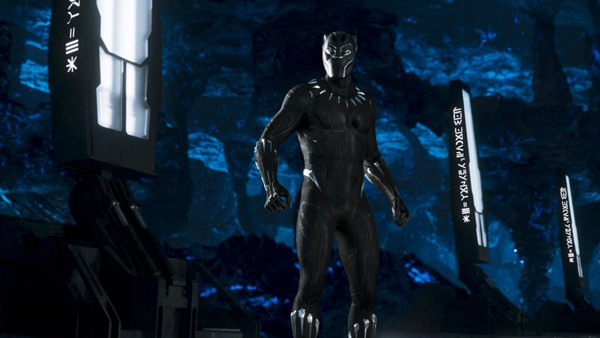
Though the final battle between T'Challa and Killmonger of course takes place amid Shuri's (Letitia Wright) maglev train system, the fight scene isn't really about the train: it's just a cool backdrop for the finale.
The maglev is first introduced when Everett Ross (Martin Freeman) wakes up in Wakanda, and Shuri explains that she uses magnetic levitation technology to transport vibranium around Wakanda. This is aided by the use of sonic stabilisers, which can temporarily deactivate vibranium to make its transportation around the land safer.
From the moment Shuri says this, it feels like the tech is going to have some sort of major purpose later on, perhaps with Killmonger using it to take Wakanda's vibranium stockpile hostage.
As it turns out, it's a total red herring and never referenced again. Sure, it's entirely possible Marvel is playing the long game and the tech will be an important factor in a future movie - either Infinity War or Black Panther 2 - but it's definitely surprising that the potential to deactivate vibranium wasn't further explored.
6. Killmonger Is Far More Interesting Than T'Challa

Black Panther is the MCU's only movie to date where the villain is unequivocally more interesting than the hero. Generally the franchise's films will coast on the charm of their superheroes while letting the antagonists take a bit of a backseat - hence the oft-cited "Marvel villain problem" - but not this time.
Though T'Challa is a refreshingly earnest hero with a strong sense of moral propriety who isn't dropping sarcastic one-liners every 20 seconds, his stature as a man born into royalty just can't measure up to Killmonger's far more fraught, complex origin story.
This is a man whose father was murdered in his youth, and who had to grow up amid enormous racial inequality in the U.S., before killing his own race in war, and somewhat understandably desiring a change of the status quo.
His methods may be misguided, but the guy was dealt a horrible hand and makes more than a few valid points - especially regarding Wakanda's refusal to help black people the world over - adding a wealth of shade to his villainy.
T'Challa's a likeable character in his own right, but Killmonger steals the show in practically every scene. Black Panther 2 sure will struggle to fill that void.
5. Andy Serkis' Overacting Is Totally Distracting

Andy Serkis' was perfectly cast as infamous black market smuggler Ulysses Klaue, bringing a manic energy to Black Panther that's both hilarious and...more than a little distracting.
His twitchy, boorish performance mostly strikes the right note, fleeting between comedy and terrifying intensity, but there are definitely moments where Serkis dials things up just a little too much, and his presence evokes a scenery-chewing vibe rather than one depicting megalomania run amok.
At least his character had a pretty concrete function in the plot, though, neatly setting up Killmonger's arrival in Wakanda. And even if you were a little irritated by Klaue, the guy was dead by the half-way mark anyway.
4. The Embarrassingly Bad CGI Is A Major Issue

Probably the most complained-about aspect of Black Panther upon release was the disappointingly ropey quality of the visual effects. Even so, it was much easier for fans to let this gripe slide while watching the movie for the first time, with their focus trained on the story unfolding before their very eyes. Second time? Not so much.
The most egregious VFX gaffes include the floaty visuals as T'Challa leaps from car to car during the South Korea chase, the dodgy green screen when he talks to T'Chaka (John Kani) on the ancestral plane, the war rhinos in the final battle, and most hideously, the goopy, video game-esque climactic fight between T'Challa and Killmonger.
This is a $210 million movie, and yet there are countless blockbuster films that cost far less than this that look so much better. On repeat viewings, the underwhelming CGI is more difficult to hand-waive, if only because it suggests that either Marvel was too stingy to throw more money at the VFX, or the movie needed a longer post-production period.

3. Everett Ross' Survival Is Still Surprising

You'd get no points for assuming that Everett Ross was probably going to die during the movie's final battle, considering how a sacrificial death on his part could be interpreted as redemption for his status as a "coloniser."
Though it's a pretty close call, Ross ends up surviving the final Wakanda assault by the skin of his teeth, which given how blatantly he was set up to perish, remains incredibly unexpected.
Granted, having him die to save Wakanda would open the movie up to "white saviour" accusations - which would be especially gross in a freaking Black Panther movie - plus, wouldn't it be just a little too obvious?
Still, accepting the fairly unimportant role Ross has in the MCU, it's a legit surprise he wasn't offed at the eleventh hour.
2. Killmonger's Death Is The MCU's Most Poignant

Up until this point, there probably won't be much of an argument that the MCU's most poignant and affecting death scenes were Agent Coulson (Clark Gregg) in The Avengers (which was ultimately reversed) and Yondu (Michael Rooker) in Guardians of the Galaxy Vol. 2 (somewhat forced though it was).
Well, Black Panther's greatest accomplishment just might be that not only does it deliver the most emotional death in the entire MCU, but the person in question is a villain.
Killmonger's arc is so thoughtful and well-realised that his death scene ends up mustering genuine pathos that's typically reserved for a fallen hero. The tragedy of Killmonger's life aside, the devastation of his premature end is capped by his haunting final quote: "Bury me in the ocean with my ancestors that jumped from ships because they knew death was better than bondage."
While Infinity War could very well end up imminently topping this, it'll sure take some doing, no matter how much we love the Avengers.
1. The Mid-Credits Scene Is A Pointless Bore

Though Black Panther's post-credits scene is an undeniable crowd-pleaser - Bucky getting thawed out as the newly-dubbed "White Wolf" - the mid-credits scene is, well, a bit of a bust.
The scene simply shows T'Challa appearing before the United Nations to reveal Wakanda's true nature to the world, but considering that the end of the movie already states that this will happen, actually showing it in such stodgy, uninteresting fashion just feels pretty redundant.
At least Marvel had the good sense not to make it a post-credits scene, because people would've gone home mad as hell. It's still fundamentally lacking in purpose, though.
What did you make of Black Panther upon rewatching? Shout it out in the comments!