Midsommar Review: 7 Ups & 3 Downs
An aptly effed-up follow-up to Hereditary.

Ari Aster's follow-up to last year's art-house horror smash Hereditary is out now, and though the consensus seems to be that it doesn't quite reach the jaw-dropping heights of his debut, Midsommar is nevertheless a thoroughly worthy successor.
That Aster has delivered another scintillating horror-drama so quickly is, honestly, miraculous, cementing him as a filmmaker who comfortably avoids the sophomore slump while carving out a fine niche for himself as a distinctive genre voice.
He's aided of course by a top-drawer cast once again, with an awards-worthy central performance that, like Toni Collette's work in Hereditary, is sure to be totally ignored by the Academy.
While more mainstream audiences are sure to be thoroughly deterred by the film's slow pace and an alienating tone that makes even Hereditary seem conventional by comparison, discerning horror fans are sure to get a massive kick out of it, flaws and all.
One can only imagine what Aster might be cooking up for the three-peat...
Downs...
3. The Wildly Overlong Runtime

Midsommar clocks in at a beefy 147 minutes, an extremely uncommon run-time for the horror genre, and one that Aster's film doesn't fully justify.
While there's not a single scene in the movie one could deem "boring", there are definitely flabby moments in the middle that drag on longer than they need to.
You can argue that Aster uses his slow crawl to establish tone and atmosphere, and he certainly does that in great abundance, but there's also a point where some might wish he'd just get to the heart of the matter a little more hastily.
Though Aster makes mostly canny decisions throughout, it's tough to escape the feeling he got a tad self-indulgent with his second film.
While it's largely a pleasure to follow him down this demented rabbit-hole, 2.5 hours is ultimately a bit long for what he's offering.
2. It's Pretty Predictable

Tying into the runtime issue is the fact that Midsommar is not a particularly surprising or unexpected film in really any way.
Though the marketing played things rather coy, it won't take genre aficionados long to figure out where the plot's going, and for the most part the through-line doesn't offer up any subversion or deviation from the expected beats.
It's certainly delivered with a singularly f***ed-up panache, but that already excessive length is compounded by Midsommar taking few surprising steps towards the finish line.
While Hereditary served up a gigantic narrative swerve at the end of its first act, there's nothing like that here: what you see is pretty much what you get, no matter the remarkable execution.
1. It Lacks The Visceral Impact Of Hereditary
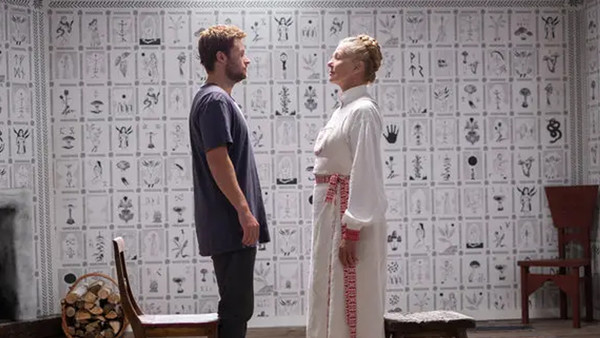
If you're expecting Midsommar to deliver a massive punch to the gut like Hereditary did, you should probably forget about that right now.
To be fair, Midsommar's opening sequence is an absolutely harrowing primer for the rest of the story, but the film never once gets close to the abject, heart-wrenching horror of that decapitation scene from Hereditary.
Though this film lingers on its gory violence far more insistently than Aster's first film, it lacks the genuinely stomach-churning impact of Hereditary's more spare grisliness, and overall the human drama elements, though strong, can't match Hereditary's genuinely upsetting grief narrative.
These issues aside, Midsommar is absolutely a horror film worth watching, and here's why...
Ups...
7. Florence Pugh's Phenomenal Performance

Florence Pugh continues to cement herself as one of the most consistently brilliant actresses of her generation with her scintillating turn as protagonist Dani in this movie.
Pugh has been on a roll for quite some time, but her turn here is surely her most emotionally demanding to date, asking her to dig deep from the outset and never really let up.
The actress does a truly outstanding job depicting the overwhelming power of despair and the damaging potential of toxic relationships, in a turn that's absolutely worthy of major awards but, of course, is destined to be snubbed by the Oscars.
Still, it's further confirmation that she's prodigiously talented and clearly has an Academy Award in her future if she keeps this quality of output up.
6. Ari Aster's Incredible Direction

If Hereditary was one of the most impressive directorial debuts of the last decade regardless of genre, Midsommar again confirms that Aster is capable of producing phenomenally controlled results on insanely low budgets (this film cost just $8 million).
Aster has a creative knack for camerawork that most filmmakers decades his senior don't, making even potentially mundane dialogue-driven scenes interesting and compelling to look at.
But Aster's biggest strength is ultimately his work with actors: he knows how to get uncomfortably intimate and realistic performances out of his casts.
As with Hereditary, he teases an offputtingly raw performance out of his lead, while even basic, awkward chit-chat between characters plays out so realistically it feels like you're watching a documentary.
Though it's tempting to consider what Aster could achieve on a larger budget, there's a lot to be said for what he's pulled off with such constrained resources in these two movies, so perhaps it's a wheelhouse he's better off sticking within.
5. The Totally Compelling Human Drama

Though Midsommar's dramatic elements can't match Hereditary's genuinely insightful meditation on how humans deal with grief, it still pulls off some terrifically effective character drama that, outside of the film's genre context, totally works when played entirely straight.
While horror movies often use "character development" as a superficial gloss, Midsommar is as much a simple drama as it is a horror film about the inner workings of a pagan cult.
The grounded heartbreak felt by Dani from the outset creates an effortless, thick atmosphere of dread throughout the film, and even in its more outrageous moments, Midsommar never forgets about the people at its core.
4. It's Surprisingly Hilarious

By far the biggest surprise here is the unexpected abundance of comedy throughout the film.
While Hereditary was ultimately a pretty humourless affair - and appropriately so - Midsommar uses well-placed black humour to highlight the absurdity of the characters' predicament.
Much of the comic relief dialogue is given to Will Poulter, who plays Mark, the classmate of Dani's boyfriend Christian (Jack Reynor), and he totally knocks it out of the park.
Elsewhere plenty of cringe comedy is mined in the early going from the inherent awkwardness of Dani joining these four lads on their trip to Sweden, and once all hell truly breaks loose later on, Aster cranks the gallows humour up to unforgettably demented levels.
That the comedy never upsets the horror on display is a testament to Aster's delicate tonal assurance, knowing when to milk an absurd moment for chuckles and when to leave well alone.
So rest assured, Midsommar's tone isn't really anything at all like Hereditary's: you'll be laughing far more than you probably ever expected to.
3. The Terrific Ensemble Cast
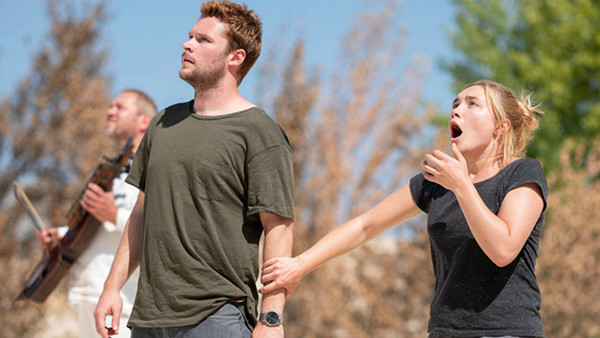
Florence Pugh is obviously the standout here, but the entire ensemble cast absolutely kills it, and there's not a weak link among the bunch.
In addition to Pugh and Poulter, Jack Reynor gives perhaps his finest performance to date as Christian, playing the character with an agreeable ambiguity that ensures he never quite turns into a generic "a**hole boyfriend" caricature.
The majority of the ensemble is made up of native Swedish actors, however, whose deceptively charming performances help sell the cult's inviting exterior, no matter that the audience knows something bad is eventually going to happen.
Just as Aster amassed a remarkable cast for Hereditary, he once again proves himself a master at getting the very best out of his lot, be they A-listers or total unknowns.
2. It's Beautifully Shot

In addition to Aster's exceptional eye for compelling images, Midsommar is another beautifully lensed effort from the director, reunited with Hereditary DP Pawel Pogorzelski to entrancing effect.
There are so many memorable shots in this film worthy of being hung up on a wall, but the aesthetic achievement is all the more impressive given that Midsommar takes place almost entirely during the day.
There's a reason basically everybody sets horror films at night, because it's just inherently creepier. Aster seemed to consider doing the opposite a challenge, and it's one he and Pogorzelski rise to with game aplomb.
Though it's probably fair to say that the film doesn't get under the skin in quite the same way that Aster's first film does, it is an absolute visual feast from start to finish regardless.
1. The Killer Musical Score & Sound Mixing

And as the perfect accompaniment to those gorgeous visuals, this movie sounds incredible.
Though it's easy to take quality sound mixing for granted, it really draws attention to itself in this film, making terrific use of the high and low end, such that you'll be able to hear various disembodied voices talking at you from the sides of the cinema as incidental dialogue plays out.
While Colin Stetson didn't return to provide the film's score, The Haxan Cloak makes for a fantastic substitute, offering up an ominous incidental drone through much of the movie that subtly heightens the pervasive sense of dread.
These elements combine to ensure that Midsommar is almost as much of an aural showcase as it is a visual one, and one of the most sublimely ravishing genre films of the year, no question.