No Time To Die Review: 7 Ups & 3 Downs
Daniel Craig's 007 gets a stylish, emotional send-off.

Some 18 months after it was originally supposed to release, Daniel Craig's final outing as James Bond is finally here, and it's safe to say that No Time to Die was mostly worth the wait.
The capping entry into Craig's 15-year tenure as 007 doesn't even begin to reach the euphoric highs of Casino Royale or Skyfall, but it is effortlessly superior to Quantum of Solace and Spectre, landing respectably in the middle of Craig's five movies.
But more importantly, No Time to Die gives Craig's iteration of the character a full-hearted, entirely complete send-off that brings his whole five-film arc to a fittingly affecting climax.
Some of its creative decisions are sure to divide fans both hardcore and casual alike, but all involved have acquitted themselves admirably with what's likely to land in the upper-middle echelons of the 25 Bond films released to date.
Though it certainly makes sense to let fans marinate on Craig's time as Bond for a little while before announcing his successor, hopefully we won't be left waiting quite so long for the spy's next outing. Until then, 007...
Downs...
3. Rami Malek's Safin Is A Dull Villain
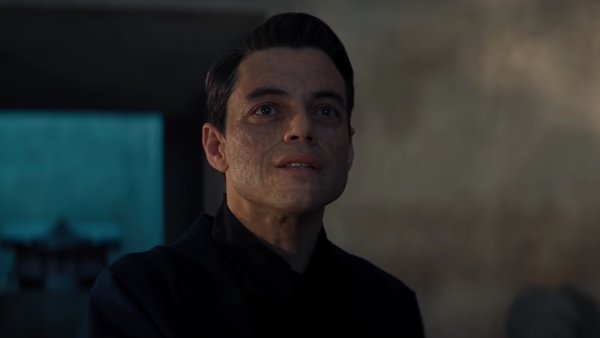
By far the biggest downer of the entire movie is its villain. Any way you slice it, Lyutsifer Safin (Rami Malek) is a dull, generic Bond antagonist with uninteresting, over-familiar motives.
One senses that the filmmakers wanted to deliver a traditional Bond villain - he's disfigured, has an awesome lair, and touts a ridiculous megalomaniacal plan - but he's ultimately got so little screen time that he lacks both the depth and presence necessary to register much of a pulse.
Poor Rami Malek, a talented actor who's given very little to work with here and so can't do much but just go through the motions.
While you can certainly argue that No Time to Die is far more about Bond's personal journey than a typical Bond plot, as villains go Safin is staggeringly low-effort.
As much as fans complain about Quantum of Solace's Dominic Greene (Mathieu Amalric) being boring and unimposing, Safin honestly isn't very far off.
For a film that otherwise puts so much effort into feeling epic and operatic, Safin's basically just... there.
2. It's WAY Too Long

No Time to Die is, at 163 minutes, by far the longest Bond film, and considering how blockbusters just seem to be getting longer and longer with each passing year, there's a genuine concern that no Bond film needs to be pushing three hours.
And those concerns are unfortunately well-founded here.
While hardly a slog, the film doesn't even begin to justify its epic runtime, and though the expansive canvas allows scenes more time to breathe - the pre-title sequence is a solid 20 minutes long, for instance - the flabby middle could've used some judicious whittling down.
There are numerous subplots crammed into the middle of the film which could've easily been streamlined or ditched entirely for the story's benefit.
Again, Bond's journey here is such a personal one that the usual Bond breadcrumb-following narrative really wasn't necessary, and consequently feels like dead weight.
1. The Ridiculous, Convoluted Plot

Without getting into too much detail, No Time to Die's plot is pretty damn absurd - much more so, in fact, than it really seems keen to admit.
As with Spectre, there's a clear desire to please old school Bond fans who miss the bombast of the Roger Moore era, and so the story ties itself up in various convoluted, over-the-top knots in an attempt to be both epic and "complex."
Between the manner in which Blofeld (Christoph Waltz) is integrated into the story, and the nature of Safin's attempts to control the world, it all feels thoroughly daft and totally at odds with the film's more serious-minded, emotional objectives re: Bond himself.
This is definitely a case where less would've been more, where keeping the scale smaller and the stakes intimate would've caused less of a clash with Bond's internal quest.
But these issues aside, No Time to Die sticks the landing for the Craig era. Here's what it gets right...
Ups...
7. Daniel Craig Gives One Of His Best Bond Performances

Whatever issues you might have with the film, few are likely to come away with anything but surging praise for Daniel Craig, who cements himself as one of the greatest Bonds ever with another exceptional performance.
No Time to Die gives him the floor to deliver some of his most dynamic work as the character, forced to consider a much wider range of emotions than he has in any of his other Bond film.
Craig is ferociously intense, charming, broken down, and often hilarious all at once, making the absolute most of the film's personal stakes and also the script's intent desire to take the sexist 007 of the past firmly to task.
As much as Craig seems relieved to be done with the Bond role, you can't accuse him of phoning it in during his final outing as the character.
6. Cary Fukunaga's Stunning Direction

Though it'll always be disappointing that Danny Boyle departed the project shortly before shooting was intended to start, Cary Fukunaga (Beasts of No Nation, True Detective) has proven himself a splendid replacement.
Fukunaga, the first American filmmaker to direct a Bond movie, brings his confident, stylish eye to the forefront to deliver one of the slickest and most visually electrifying Bond films ever.
With the help of Oscar-winning cinematographer Linus Sandgren (La La Land), Fukunaga creates a breathtaking feast for the senses that manages to be relentlessly energetic and quietly contemplative just as the script calls for it to.
Fukunaga's also an extremely skilled actors' director, and in turn pushes the cast to make the most of the material afforded.
Even when the script falters, Fukunaga proves himself one of the most talented and assured directors the franchise has ever been lucky enough to have aboard.
5. It Cleverly Reinvents Bond For The Modern World
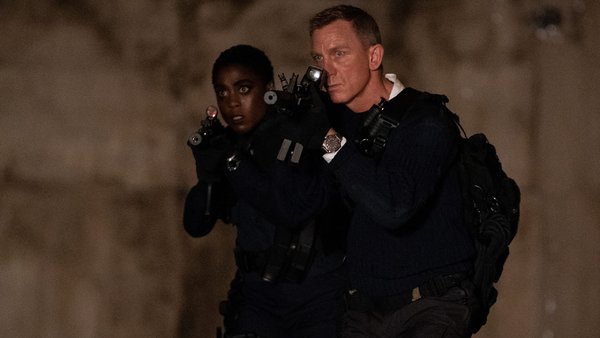
There are of course more "traditional" Bond fans who've expressed concerns that No Time to Die would "go woke" or basically serve to erase the character as fans know him.
But one of the smartest things the producers have done here was bring Fleabag's Phoebe Waller-Bridge aboard to polish the script, as her witty, self-aware influence is felt all throughout the film.
It's clear that Waller-Bridge was tasked with helping deliver a more contemporary James Bond that moves away from the gross womanising and casual sexism of the past to something more respectful for 2021.
That's not to say that the film makes Bond seem like a dinosaur or sanitises his edges, but simply put him in situations where he's forced to team up with extremely capable female agents - such as Nomi (Lashana Lynch) and Paloma (Ana de Armas) - rather than hook up with them.
Almost all the female characters in the film feel fleshed out and substantial, and the script nimbly draws attention to 007's sexist past with wit and humour without turning it into an Issue.
It's sure to rub less open-minded Bond fans the wrong way, but considering some of 007's questionable interactions with women in even the recent Craig movies, it was absolutely a long time coming.
4. The SUPERB Action Sequences

No Time to Die may not quite deliver the franchise-best thrills of Casino Royale or Skyfall, but it is nevertheless one of the most impressively action-packed entries in the franchise to date.
The expanded runtime gives Fukunaga the floor to serve up some elaborate, deep dish set-pieces that really run the gamut of Bond history, from motorcycle chases to town shootouts, and of course, a prolonged battle in the villain's lair.
It's all wrought with slick style and grounded with a very real sense of tension for perhaps the first time in the series, especially later in the film, that Bond's life truly is hanging in the balance and he might not make it out alive this time.
Don't be shocked if Fukunaga snags himself another major tentpole gig - perhaps even a superhero movie - soon enough.
3. The Fantastic Ensemble Cast

Though No Time to Die is absolutely Daniel Craig's show, the film affords a lot of space for its massive ensemble cast, who bring plenty of their own flavour and personality to the table.
Where to begin? Léa Seydoux's Madeleine Swann feels like a far more complete and compelling love interest for Bond than she did in Spectre, while Lashana Lynch and Ana de Armas are both terrifically entertaining as agents Nomi and Paloma, even if the latter isn't in the film nearly enough.
Ben Whishaw is once again a hoot as Q, Jeffrey Wright is a welcome presence as a finally returning Felix Leiter, and Ralph Fiennes' M gets some added dimension.
The only misses among the cast are perhaps Naomie Harris being relegated to a desk job yet again as Moneypenny, and Billy Magnussen's CIA agent Bond fanboy Logan Ash, though that's more a fault of the script than Magnussen's performance.
2. Hans Zimmer's Killer Score

Hans Zimmer is basically a dream choice to score a Bond film, and he totally delivers above and beyond what audiences will be expecting.
Zimmer ingeniously blends the classic brassy Bond themes fans expect and want with his own flashier, pulsing, operatic sensibilities to deliver a score quite unlike any other in the series.
Zimmer also makes the inspired decision to use Louis Armstrong's "We Have All the Time in the World" as a leitmotif throughout the film to highly nostalgic and emotional effect.
As much as Zimmer has a tendency to phone it in on "lesser" projects, he undeniably brings his A-game to No Time to Die, and the result is one of the most explosive and affecting scores the franchise has ever seen.
1. It's The Strongest Send-Off For Any Bond Actor

No Time to Die may be far from the best Bond film ever, but it is the most satisfying send-off for any Bond actor to date.
While most other Bonds have just disappeared into the ether unceremoniously, there's a clear effort here to bring closure to this era of 007 and wrap up a self-contained, five-film arc in an emotionally gratifying way.
And it totally works. Not every choice is going to sing for every fan, but the film finds a meaningful way to elevate and reconsider the Bond character, ensuring that he doesn't just vanish from our screens without a proper farewell in the process.
If previous final Bond outings have often felt like non-events, No Time to Die makes far more of an effort to wrap up 007's journey with emotion and grace.