Olympics 2012 Film Part 2 - South Africa, Yugoslavia, Turkey, New Zealand & Austria
See what films we awarded gold, silver and bronze too...
 I was a sceptic; I thought it could not be done. I did not believe that London could host such an important global event, let alone pull it off with such grandiose confidence. But now the Olympics are over and to be honest, I dont want it to end. Particularly considering my last images may be that of Jessie J ruining Queen, or Liam Gallagher proving he needs Noel. But with Britain standing 3rd in the medal rankings, we can be proud of our athletes efforts. Whether it was handball, hockey or dressage, my eyes were opened to the magic of the Olympics and Im sad to see them go. So why not cling on for a little bit longer and join me as I attempt to blur the realms of Film and the Summer Olympics. Hopefully you read part 1 where I chose films that represented: North Korea, Jamaica, Iran, Argentina & Mexico. If you did not, shame on you, but you can find it here: Olympics 2012 in Film part 1 And now here is part 2 of my Film Olympics. South Africa 70 Medals
South Africa has a rich film history dating back to the turn of the 20th century; unfortunately its cinema is tainted by the racial divide at the countrys core. This provided an avenue for artists to vent their anger and disgust at the racial injustice, but it also helped to imprint such a horrible social attitude onto the countrys cinematic past. In early 20th century South African cinema, much of its audiences were Black slaves, with the cultural output being made predominantly by white landowners to damage their belief in their own history and self-worth. Many European film companies were the creators of such propagandist films, which reinforced white supremacist ideologies. Even in contemporary cinema the issue still remains at the core of South African exports. And although the Apartheid has supposedly ended, its history will never be forgotten in a country which still has extremely tense racial relations. With nearly half of its population living below the poverty line; impoverishment still remains a major contemporary issue for the country. It is not only its own domestic cinema that aims to tackle such issues, with many established western studios making films based around South African narratives. Clint Eastwoods recent Invictus is just one example of this. However, its own cinema seems to be garnering an increasing amount of acclaim in recent years, with more and more talent emerging from the country which has lacked any clear cinematic identity. Bronze Cry, The Beloved Country (Darrell Roodt, 1995) Made a year after the last traces of Apartheid legislation had ended, Cry, The Beloved Country is the second adaptation of Alan Patons book of the same name. Given the books optimistic quality towards racial integration, it seems fitting that it was remade after legislation had all but evaporated. The book was written before the apartheid had taken effect, giving rise to the warning signs of fractures between the races. The film starts with Reverend Kumalo who goes to Joburg to look for his missing son and daughter. He soon finds his daughter but discovers that his brother is encouraging the upheaval of the white leadership. Unfortunately his son also becomes embroiled in the murder of a young white man, Arthur, who ironically, was an advocate of black rights. Arthurs father James, has different views however, and is depicted as a white supremacist land owner. Through the differing emotional grief that they both encounter, Kumalo and James signal hope for South Africa as they unite in their sorrow. The two central performances of Kumale (James Earl Jones) and James (Richard Harris) carry the film, but it is the timing of its release which makes it so important. Released shortly after the apartheid, it brought Patons ideas to fruition, in a time where the hope for racial equality has begun to be realised. Silver District 9 (Neil Blomkampf, 2009) I have a feeling this decision may court some controversy. It clearly hasnt been around that long, so without any time to embed itself into South African cinema, how have I given it Silver? Well in the broader sense it may be one of the best sci-fi films of recent history, if not, it is certainly one of the best alien invasion movies ever made. But it reaches the podium because of the allegory, deep within its narrative. An alien ship arrives over the cityscape of Johannesburg, but instead of going all Independence Day on the city, it instead comes to a standstill. Upon contact, its alien inhabitants prawn-like in appearance, are malnourished and weak. So when a reconnaissance team is sent to investigate, they offer to help the aliens allowing them onto earth. But when the population of Joburg become agitated by their presence, it is ordered that they remain segregated in an area known as District 9. When Wikus, the protagonist of the story, is sent to help with the segregation, he becomes embroiled in a much larger plot than he could imagine. It is clear to see the immediate allegorical link between the Prawns captivity and the apartheid. With private security firms being hired to contain the aliens (much like in reality to keep black South Africans apart from whites) the comparison becomes even stronger. Blomkampfs confidence in tackling this subject through the genre of sci-fi is breathtakingly superb; particularly when you consider this was his first feature film, albeit one which is based upon a short film of his. It is not easy tackling such a problematic subject within a genre piece, but Blomkampf however does it by refusing to shy away from its allegory, instead he accepts it and continues to pump more and more into it. This is not just another sci-fi flick, it means so much more. Gold Come Back, Africa (Lionel Rogosin, 1959)
 An extremely important film, which shot in secret, has to be considered one of the greatest covert pieces of filmmaking. Directed by Lionel Rogosin a New Yorker with a documentary filmmaking legacy, the film has often been praised for its influence on African cinema. Spending months planning to shed light on the fascism and racism of the apartheid, Rogosin went to great lengths to ensure that his film was made. Come Back, Africa was filmed with the fear of being discovered by an apartheid government,which looked to stamp out any criticisms or challenges to the horrendous status quo it had created. It follows the life of Zachariah, a black African with a wife and child who are abused both mentally and physically by the laws of the apartheid. Constantly striving to make a living, he is continually forced back to unemployment by whites. With unemployment a constant issue, the anxiety that he will not be able to provide for his family, is at times to much to bare. His living conditions dont help either, cramped in a blacks only settlement, many societal issues such as violence rise within. And when he has an altercation with a local Tsotsi gang leader, the consequences for him and his family are dire. One of the only films to portray Black South Africans in a positive light, Come Back, Africa should forever be seen as one of the most liberating acts in cinema. Exposing the affect the apartheid had on a black man looking to provide for his family, Rogosin takes away the black from the man and presents a tale of humanity repressing humanity for ones self-belief in dominance. Banned in 1959, it wasnt until 1988 that it got its first extremely important showing in the country. Im unsure as to if there will ever be a more important screening in world cinema.

 Considered a cult film in Yugoslavia, The Marathon Family is the only film on the podium to have genuinely come from the original nation. Much like the films that will gain Gold and Silver, dark comedy is what permeates the screen. Focusing on a pre-WWII family of undertakers, in a small Yugoslavian township, the Toplavic family have been undertaking for 6 generations. When the youngest son Mirko, decides that he does not want to be a part of the family business, the argumentative family obviously take great offence. Particularly when they discover that Mirko instead, only shows interest for a local girl, Kristina. Kristina is the daughter of Bili Piton, a local delinquent, who helps the family cheat overheads by recycling old coffins and selling them as new. When the family refuses to pay Bili, all hell breaks loose, and murder doesn't just become a supplement for their business, it becomes a choice for the family. Extremely dark, you can see why this has cult status in its native land. It is a Yugoslavia meets Six Feet Under match, with hilarious results. Normally it would have got the gold, but the fact of the matter is, the film is extremely hard to get hold of. Which is a great shame, because as Yugoslavian cinema goes, it is a great example of the dark comedy that is prominent in its cinematic history. Silver - Black Cat, White Cat (Emir Kusturica, 1998)
 With Underground, Kusturica began to display a comedy which could be defined as circus comedy. A type of comedy which teeters on the realms of reality, with an ability to embrace surreal farce. While Underground flirted around a very historical backdrop, Black Cat, White Cat, instead chooses to focus upon the extremely farcical. When Matko, the idiot of the piece, is tricked out of a petrol train heist by gangster Dadan, he convinces him that even in his failure, he still owes him money. Matko plans to repay the debt he has been fooled into believing he owes, by marrying his son, Zare, to Dadans midget daughter, Afrodita. There is a problem however, in that Zare is actually infatuated with Ida, a young waitress. In the ensuing chaos of the rather forced shotgun wedding, all manner of things go wrong. With unexpected deaths in the family, the wedding continues onwards and upwards becoming more and more absurd at every available turn. The film is ridiculous, its stupid, but most of all it is incredibly funny. Weirdly however, it has a sentimentality to it which seeps through the absurdity to give the film an added charm. Given that after the harsh reception Underground got in his native land, Kusturica semi-retired, eventually returning to direct Black Cat, White Cat. Thankfully he did, because his talent shines through in a comedy which may be one of the greatest foreign language comedies of all time. Gold Underground (Emir Kusturica, 1995)


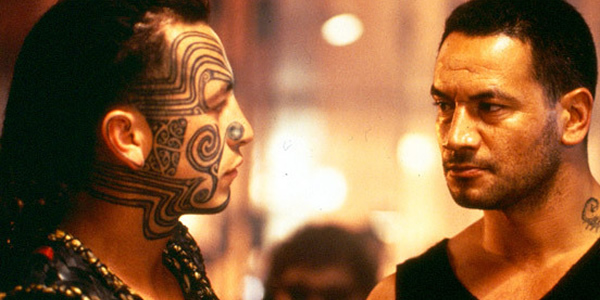 Before Lee Tamahori became a cross dresser offering police oral sex, he examined the life of an urban Maori family and their struggles with domestic violence, alcoholism and poverty. Jake the father of the family, is central to all the issues. He regularly drinks, often hits his wife Beth and spends most of their money on alcohol. His son Nig soon moves out of the house, dismayed by his fathers behavior he joins a Maori gang and soon adorns a face tattoo after a gruelling initiation. Their other son Boogie is sent to a foster centre due to the anti-social nature of Jake and Beth. However, the most prominent sibling is Grace, their young daughter. She keeps a diary of her life and writes stories as escapism to her brutal upbringing. However when one of Jakes friends, Bully, goes too far with masculine bravado, the family is torn apart from the vicious repercussions. Tamahori tackles the struggle of Maori identity in modern New Zealand, with a brutal film, holding nothing back in its depiction of violence. Such a raw and contemporary take on Maori culture is rare in cinema, to approach it in such a way may seem exploitive, yet the film is full of such unruly emotion, that its hard not to be impressed by the fierce boldness and honesty in the films tone. It never shies away from the more discouraging part of its culture, and in turn never turns a blind eye to the more horrific elements of humanity. Silver - Meet the Feebles (Peter Jackson, 1989)


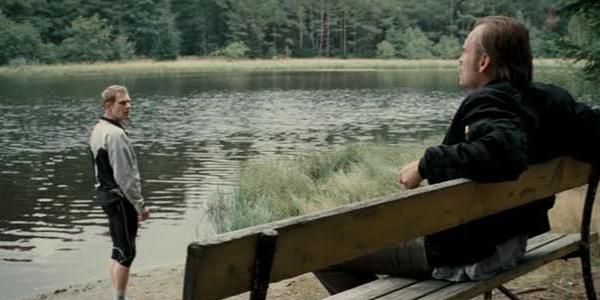 A brilliant film which was nominated for the foreign language Oscar, Revanche, is a story about a botched bank robbery that leads to repercussions for both its perpetrator, and the police officer that attempts to stop it. Alex, who works for the owner of a brothel, falls in love with an employee, Ukrainian prostitute, Tamara. Trying to begin a new life elsewhere, he plans a bank robbery to earn the money for both of them to escape their jobs. Tamara however, understands the potential consequences of going through with the robbery, scared about what the ramifications to be. On the other side are policeman Robert and his wife Susanne. Struggling to create a family due to Robertss infertility, the couple are in love, but the lack of a child lingers over their marital existence, haunting its development. When both sides clash during the bank robbery, one seeks retribution for their loss. With performances that feel natural, the actors make their characters seem less like narrative pawns and more like humans stuck in a situation which is dictated by their emotions. The story thus becomes unpredictable, much like life. Unlike many films, the characters of the piece decide with their emotions, appearing to avoid a pre-ordained narrative expectation. A Neo-noir film that seems very American in nature, Revanche is a brilliant examination of the human mind coping with a loss whilst having the ability to exact revenge. It examines the mind having to confront the choices available to them, the result is rather superb. Silver - Funny Games (Michael Haneke, 1997)

