Oscars: 10 Best Pictures That Actually Were The Best

At least the Academy got these 10 best picture winners right out of the 83 dished out so far.

Next month is the 86th Academy Awards ceremony but ever since sentimental fighter pilot movie Wings beat F.W. Murnau's still lauded Sunrise to the inaugural big prize, there has been a general feeling that the Best Picture Oscar doesn't really represent the year's best film at all. The Academy has a reputation for picking safe "prestige" dramas over anything original, innovative, stylised or genre films. This is nothing new. The 14th ceremony in 1942 gave the top award to worthy Americanised Welsh mine drama How Green Was My Valley, despite the other nominees including the hugely innovative and influential (not to mention far more entertaining) Maltese Falcon and Citizen Kane. In the 84 Oscar ceremonies between Wings' first win and the triumph of 12 Years a Slave, Gravity or The Wolf of Wall Street this year, there have been bafflingly undeserved winners (Driving Miss Daisy in 1990), good films beating genuinely great ones (The English Patient over Fargo in 1997), and films that were definitely the best of the nominees but not of the year (Slumdog Millionaire is a far better film than Benjamin Button or The Reader, but is it really better than WALL-E?). But how many Oscar Best Pictures can genuinely be said to have been their year's best? Just this ten, we think, and, as you'll see, even these have some pretty strong competition. Honourable mention: Rebecca (Best Picture in the 13th Oscar ceremony in 1941), The Godfather: Part 2 (1975), One Flew Over the Cuckoos Nest (1976), and The Deer Hunter (1979) are all deserving of a place on a list of all time greats. Unfortunately they came out in the same years as His Girl Friday, Chinatown, Jaws, and Halloween respectively and therefore were not the best films of their year.

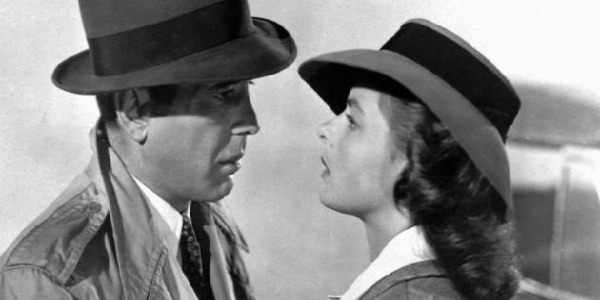
10. Casablanca - 1944

It took until the 16th Academy Awards to get an unequivocally correct choice for Best Picture and, indeed, a true classic that could easily make the case for being the best Best Picture of them all. A war time drama that's the perfect balance of cynicism and sentiment, Casablanca is one of those films where everything comes together just right. The script is endlessly quoted and referenced and Humphrey Bogart is at his grizzled romantic best. Other nominees: 1944 was last Academy Awards ceremony for another 66 years to choose between 10 nominees for the big prize and some were obviously just there to make up the numbers (The Ox-Bow Incident was only nominated for this single award, the last Best Picture nominee to pick up no other nominations). The war understandably cast its shadow over Hollywood at this time and the other fancied nominees, For Whom the Bell Tolls and Watch On the Rhine, shared Casablanca'a anti-fascist theme, but without its spark or charm. Britain's best hope, meanwhile, was the full on war propaganda of Noel Coward's In Which We Serve. Other deserving contenders: The war also played a significant part in the year's other noteworthy productions, like Billy Wilder's Five Graves to Cairo. Perhaps the best of the bunch was a British picture much more subtle, nuanced and emotionally satisfying than In Which We Serve, Powell and Pressburger's The Life and Death of Colonel Blimp. Unfortunately the war audience were so unreceptive to its sympathetic portrayal of a German army officer that it wasn't released in the US until two years later, and only then in a recut form, making it ineligible for Best Picture anyway.

9. All About Eve - 1951

Fading Broadway actress Margo Channing is perhaps screen legend Bette Davis' finest role, yet another Best Actress nomination on the way to being the first person to be a ten time acting nominee. Davis may be the star turn in Joseph L. Mankiewicz's tale of the bitchy rivalry between Channing and the ambitious but seemingly butter-wouldn't-melt ingenue Eve Harrington (Anne Baxter), but it is a film that is full of quality. An Oscar darling, All About Eve was nominated for 14 awards and won 6 including Best Picture. Other nominees: The 1951 ceremony was all about larger than life actresses past their prime and, to be honest, there's very little to choose between Eve and its leading rival Sunset Boulevard. Eve may have Davis' great role, but Sunset Boulevard gave us a brilliantly bonkers Gloria Swanson as silent star Norma Desmond. Both lost out as Best Actress to Judy Holliday in Born Yesterday. While that film and fellow Best Picture nominees Father of the Bride and King Solomon's Mines were all deemed significant enough to get a later remake, it's Eve and Sunset that remain firmly ensconced in the upper echelons of the AFI's Greatest American Films list. Other deserving contenders: The inevitable American bias of the Academy Awards is on show here. While the year's two leading contenders rank high on the AFI's best film list, it's British equivalent ranks Carol Reed and Graham Greene's The Third Man as the greatest British film of them all. Expertly shot and scored, penned by one of Britain's finest writers and featuring a bravura performance from Orson Welles, The Third Man would have been a worthy Best Picture contender. Equally of note away from the States, Akira Kurosawa's Rashomon and its intriguing structure of unreliable witnesses continues to influence and be referenced to this day.

8. The Apartment - 1961

The Academy has a reputation for snubbing some of the true greats. Fortunately this is not the case with Billy Wilder. Despite Sunset Boulevard losing out to All About Eve, the witty and cynical writer-director won 6 Oscars from a total of 21 nominations, making him one of the most decorated filmmakers of them all. The Apartment was Wilder's only Best Picture winner and the last winner of the black and white era (there would not be another monochrome Best Picture until 1994). The film perfectly captured Wilder's misanthropic yet romantic worldview and, along with predecessor Some Like It Hot, marked the highpoint of an enduring partnership with lovable sadsack actor Jack Lemmon. Other nominees: If anybody feels the sort of aggressive campaigning Miramax used to get their films into Oscar consideration in the 1990s was in poor taste, they need only look at The Alamo's 1961 campaign to see how it really shouldn't be done. Many blamed The Alamo's overblown, bombastic campaigning for voters turning away from it and opting for The Apartment instead, or maybe it's just that it was a bland, leaden John Wayne vehicle. Fellow nominees Elmer Gantry, Sons and Lovers, and The Sundowners were Oscar-y, but mostly forgotten. Other deserving contenders: The Academy may have been kind to Wilder down the years, but the same cannot be said for Alfred Hitchcock and 1961 was another year in which one of the Master of Suspense's suspenseful masterpieces was overlooked. Wayne's push for votes for The Alamo saw both Hitchcock 's Psycho and Stanley Kubrick's Spartacus miss out on even being nominated. Meanwhile, once more the Oscars' focus on Hollywood meant classics from overseas barely got a look in. Antonioni's L'avventura and Godard's Breathless were two of that years foreign language films that may have been worthy of consideration.

7. Lawrence Of Arabia - 1963

When Peter O'Toole died last year, the one piece of work that all the obituaries and tributes focused on was this sweeping David Lean epic. O'Toole picked up his first Oscar nomination for Lawrence, although he lost out to Gregory Peck, with the film winning 7 other awards including Best Picture and Best Director for Lean. Lean's impressive biopic of the enigmatic T.E. Lawrence's First World War campaigns in the Middle East is widely regarded as the pinnacle of filmmaking on the grandest scale, described by Steven Spielberg as "a miracle" and scoring both 5th on the AFI's greatest films list and 3rd on the BFI's. Other nominees: Peck beat O'Toole to the Best Actor award for his role as honourable lawyer Atticus Finch in the adaptation of Harper Lee's To Kill a Mockingbird and the film was probably the strongest contender with Lawrence for the big prize. Not at all made to the epic size of Lawrence, To Kill a Mockingbird was then, and remains today, one of the most loved American films, with the AFI naming Finch the greatest movie hero of the 20th century. D-Day drama The Longest Day did have an impressive scale and an incredible ensemble cast, but was made with perhaps less artistry than Lean's film and was in black and white at a point when all the Best Pictures started to be in colour. Other deserving contenders: Other quality black and white pictures to come out in 1962 included Cold War conspiracy The Manchurian Candidate, Stanley Kubrick's take on paedophilia comedy-drama Lolita, elegiac western The Man Who Shot Liberty Valance, and bitter psycho-drama Whatever Happened to Baby Jane? All remain highly regarded, but perhaps don't have the status of Lawrence.

6. The Godfather - 1973

Back in the 1970s everything Francis Ford Coppola touched turned to gold, with all four of the films he directed in that decade becoming enduring classics and picking up Best Picture nominations (not to mention winning one of the golden baldies for penning the screenplay for Patton in 1971). The first of Coppola's film adaptations of Mario Puzo's Mafia family saga was the highest earning movie ever up to that point and is often cited amongst the greatest of them all. Other nominees: Weimar showgirls and the rise of Nazism musical Cabaret won rave reviews for its evocative decadent style. In any other year it would probably have won the main award. As it was, Cabaret had to be happy with director-choreographer Bob Fosse beating Coppola to the directing award and winning 8 Oscars in total to The Godfather's 3. Having been nominated for Foreign Language Film in 1972, Swedish drama The Emigrants stepped up to a nod for the main Best Picture a year later, but was probably just pleased to be nominated. Other deserving contenders: The Godfather may have been 1972's biggest earner, but the most profitable film and arguably the one with the highest cultural impact was porn hit Deep Throat, hardly a contender for Best Picture, though. The Emigrants may have been an unusual non-English language Best Picture nominee, but there were possible alternatives in major European directors Luis Bunuel and The Discreet Charm of the Bourgeoisie, and Werner Herzog with Aguirre, the Wrath of God.

5. The Silence Of The Lambs - 1992

Genre films rarely get much love in the major categories at the Oscars, horror and related genres even less so. However, the grand guignol of this cannibals and serial killers thriller proved surprisingly right for the Academy's appetites in 1992. The Silence of the Lambs was only the third film to win all five major awards at the Oscars: Best Picture, Director, Actor, Actress and Screenplay. Dark and gothic, with two memorable and complex leads who have an intriguing chemistry, The Silence of the Lambs is deserving of its spot as the Academy's most favoured horror. Other nominees: If the Oscars have never cared much for horror, then that counts double for animation. In 1992 Beauty and the Beast became the first animated film to be nominated for Best Picture (and remains the only one during the era of just 5 nominees). Disney fairytale storytelling at its most charming, with beautiful visuals and catchy songs, Beauty would have been a worthy winner. Barbra Streisand weepie The Prince of Tides was a rare Best Picture nominee with a female director, but a lack of a directing nod for Streisand herself suggested it had little chance of winning. Other deserving contenders: Ridley Scott's feminist road movie Thelma & Louise and Terry Gilliam's urban Holy Grail fantasy The Fisher King picked up acting nods, but were somewhat surprising omissions from the Best Picture list. Palme d'Or winner Barton Fink was brilliant, but maybe too weird for such a mainstream award, while The Silence of the Lambs' cannibal theme didn't open the door for other man-eating films like dystopian French satire Delicatessen.

4. Schindler's List - 1994

With a film about the "Schindlerjuden" first suggested in 1963 and Thomas Keneally's non-fiction novel Schindler's Ark published in 1982, Schindler's List took a long time coming to the screen. Director Steven Spielberg, a master of populist entertainment, resisted making such a weighty film himself for a long time, but his eventual decision to direct paid off with what many consider the director's masterpiece. Beautifully and timelessly shot in black and white, Schindler's List was the first monochrome winner since Wilder's The Apartment. Wilder, a Polish-Austrian Jew who arrived in Hollywood fleeing the rise of Nazism, had been an early possible choice as director in the 1980s and described Spielberg's film as "absolute perfection". Other nominees: The Merchant-Ivory adaptation of Kazuo Ishiguro's modern classic The Remains of the Day was almost the opposite of Spielberg's skill with big movies. A brilliant work of intimacy and repression, it was possibly not grand enough to win and lost out on all 8 of its Oscar nominations. Mute musician drama The Piano won both lead and supporting actress awards and director Jane Campion was only the second woman to receive a Best Director nomination, but just didn't strike a chord with quite such a wide audience. Other deserving contenders: 1993 had been the greatest year of Spielberg's career. Not only did he direct the Oscar Best Picture winner, but also the biggest film of the year (indeed the highest earning film of all at that time). Jurassic Park is a perfect example of thoroughly entertaining blockbuster filmmaking, but dinosaur movies don't win Oscars. Away from Spielberg, romantic fantasy Groundhog Day is equally perfect at what it set out to do and deserved a chance at Best Picture too.

3. The Lord Of The Rings: The Return Of The King - 2004

Another genre little loved by the Academy needed another film too good to ignore in order to get noticed. Peter Jackson and New Line's Lord of the Rings trilogy is an incredible filmmaking achievement, from the epic sweep of its storytelling to the incredible attention to detail in every aspect of its production. Whether the third film is the best of the three is up for debate, but nevertheless it received the Academy's honours for the whole trilogy. The Return of the King won all 11 of the Oscars for which it was nominated, equaling the highest Oscar haul ever. Other nominees: Sofia Coppola's Lost in Translation is comfortably her best film, a sweet low key drama of a developing relationship between Bill Murray and Scarlett Johansson, both at their very best. Coppola won the Best Screenplay award, usually the compensation for films too small scale genuinely to compete for Best Picture. Much larger in size, Master and Commander: The Far Side of the World won director Peter Weir a Bafta, one of the rare occasions Peter Jackson was beaten. The film is a great rendition of life on a Napoleonic warship, but was never going to be as pop culturally significant as Lord of the Rings. Other deserving contenders: With one fantasy film and one naval adventure already amongst the nominees, it was unlikely that the first, joyously entertaining, Pirates of the Caribbean film would get any more nominations than Johnny Depp's acting nod. Animations both blockbusting (Finding Nemo) and indie-artistic (Belleville Rendez-vous) were also great, but ignored in favour of the more traditionally Oscar friendly Seabiscuit and Mystic River. Perhaps the best film of the year from outside Middle Earth, though, came from Brazil thanks to powerful, vibrant favela gangster picture City of God.

2. No Country For Old Men - 2008

Virtually every film written and directed by Joel and Ethan Coen received glowing critical notices, but it took until their 12th movie, this violent Cormac McCarthy adaptation, for them to be given Hollywood's biggest prize. The Coens won an impressive hat trick of Best Picture, Director and Screenplay (as well as actor Javier Bardem winning for his role as psycho killer Anton Chigurh), brilliantly capturing the characters, landscapes and dark heart of McCarthy's neo-western storytelling. Other nominees: That year's Oscar race was billed as a straight fight between two darkly violent sort-of-westerns as No Country narrowly, and rightly, won the vote from Paul Thomas Anderson's oil drama There Will Be Blood. Prestigious British literature adaptation Atonement and quirky pregnancy comedy-drama Juno were good films and not without their admirers, but lacked the overall genius of the Coens. Other deserving contenders: A third revisionist western, the beautifully shot Assassination of Jesse James by the Coward Robert Ford, was strangely overlooked when that was the popular genre of the moment. David Fincher's true life serial killer drama Zodiac was a far better film than his next, Benjamin Button, which gained much more Oscar attention. Gothic musical Sweeney Todd, probably the last great Tim Burton film, won more attention at the Golden Globes. France, meanwhile, gave us quality contenders like The Diving Bell and the Butterfly, and Persepolis, but we'd have to wait another four years for a French winner.

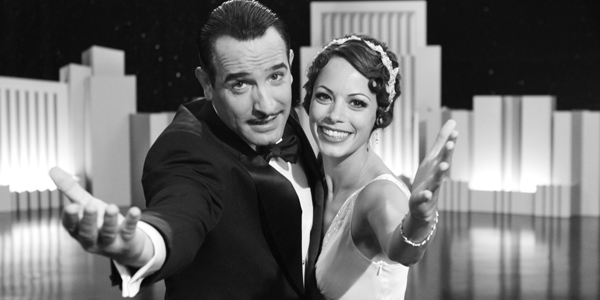
1. The Artist - 2012

A black and white, silent French comedy without recognisable stars may have seemed an unconventional Best Picture nominee, let alone a winner, but that just goes to show how good The Artist is. Michel Hazanavicius' film was the first black and white winner since Schindler's List and the first silent winner since Wings. Winning 7 Oscars in total made it the most decorated French film of all time and with good reason. It sparkled and charmed while other nominees bored. It told a story about the joy of cinema by putting that joy right there on screen. Other nominees: The rest of the, now ten films long, nominee list had plenty of bland, worthy, mediocre and middle of the road fare nominated for their Oscar-iness: Extremely Loud and Incredibly Close, The Help, Midnight in Paris, and War Horse. Martin Scorsese's Hugo, a rare child friendly picture from a director more associated with gangsters, was another charming, heartfelt tribute to the era of silent cinema, but was probably derailed by The Artist's runaway success. Other deserving contenders: While a comedy winner is slightly unusual, a broad comedy like Bridesmaids stood no chance despite its critical popularity. Arthouse movies on traditional horror movie subjects aren't always popular with the Academy either, otherwise We Need to Talk About Kevin and The Skin I Live In might have got a look in. Steve McQueen's Shame may not have been mainstream enough for a Best Picture, but that is likely to be remedied with his latest this time round. Of course notions of "best" are entirely subjective, so if you're baffled by how The Artist managed to win Best Picture in the year of Twilight: Breaking Dawn: Part 1 or think that Terms of Endearment genuinely was the best film to come out in 1983 let us know in the comments below.

Contributor
Contributor

Loves ghost stories, mysteries and giant ape movies