Oscars 2015: 5 Best Director Predictions

Tons of big name directors vie for Oscar, but only these five will make it.
Practically every director you can think of now has at least some niche fan base of ardent supporters who could write a doctorial dissertation on the cinematic "vision" that he or she possesses. With the proliferation of film oriented websites, passionate cinephiles have never had the ability to share and discuss their feelings on their favorite directors and their films like they do now. This sort of exuberant love for filmmakers is ultimately a good thing, but it does leave for a pretty painful Best Director category when Oscar nominations come rolling into town. Just look back at 2012, when "for sure" nominees such as Katherine Bigelow for Zero Dark Thirty and Ben Affleck for Argo missed out on Best Director nominations. While cyber teeth gnashed on Twitter and all over the web bemoaning the terrible injustice done to these directors, the real pain was felt by Oscar pundits whose assured swagger on the certainty of their nominations left them with their own healthy heap of humble pie to chow down on. These high emotions and the increasingly large pool of "big name" directors make Best Director an especially treacherous category to prognosticate, and 2015 is certainly no different. Nevertheless, the work must be done, so what follows is a ranked guess from least likely to most likely of this year's crop of Best Director nominees.

5. Bennett Miller - Foxcatcher

Thus far in his career Bennett Miller has been very successful with the Academy and with his third feature film, Foxcatcher, the trend looks to continue. Unlike his previous two films though, Foxcatcher, which was originally slated to be part of last year's Oscar race before a release change has had a rocky awards season trajectory to say the least. Receiving rave reviews at Cannes, earning Miller Cannes' Best Director prize, the film seemed to slip into oblivion as shinier new toys distracted critics in the prestige gamut that is the October-January release window. Many thought the film would find new life with the onslaught of critics awards, but while most regional critics have skipped citing the film outside of some of its performances, Foxcatcher has found unlikely allies in the form of the Hollywood Foreign Press (aka Golden Globes) and industry guilds, putting it right back in the thick of the Oscar hunt. The film, which delves deep into the bizarre psychological menage et trois between eccentric millionaire John du Pont and the Olympic wrestling fraternal duo of Mark and Dave Schultz, is an undeniably chilly affair. Directed by Miller with a sterile sense of objective detachment, the film is not going to be everyone's cup of tea, but its dogged sense of cinematic classicism is without a doubt the consequence of the film's direction. While the competition for the fifth slot in this year's Best Director race is fierce, Foxcatcher's phlegmatic tone is one that will likely appeal to the more high-brow oriented Directors Branch. It is easy to see someone like Morten Tyldum for The Imitation Game or Ava DuVernay for Selma grabbing the final spot, but given this branch's predilection for films where the director's presence is clearly felt, Miller should have the upper hand on this year's competition.

4. Wes Anderson - The Grand Budapest Hotel
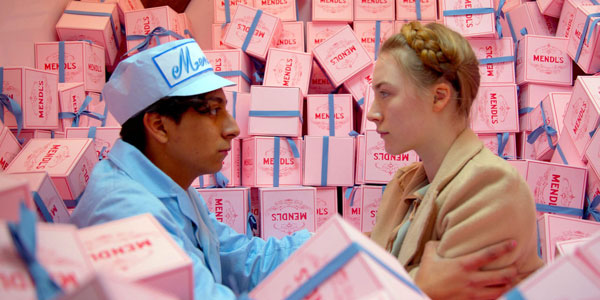
For as highly regarded of a director as he is, some may be surprised to find out that Wes Anderson has never been nominated by the Academy for Best Director. They have twice nominated Anderson as a writer and once nominated him for his role in heading up Best Animated Feature nominee Fantastic Mr. Fox, but for his unique skills as a director, Anderson has yet to be recognized. That may very likely change this year though as Anderson appears to have his best shot yet at nabbing that elusive Best Director nomination with The Grand Budapest Hotel. A brilliantly written and directed whimsical comedy starring Ralph Fiennes as the head concierge of an elegant European hotel in the fictional Republic of Zubrowska before the onset of the Second World War, the film has been Anderson's most successful film to date, both in terms of its reception with critics and the public at large. While Anderson's previous contemporary-set films have been dismissed by some as overly quirky and excessively hipster, particularly by the cantankerous geriatric's club that is the Academy, The Grand Budapest Hotel's period setting makes it much more accessible to those that don't get dead pan humor and just want those pesky kids to get off their lawns. The film also allows Anderson to show off all his best traits in their best possible light, from his trademark fastidious art direction, to his encyclopedic referencing of classic films, to his typical cast of wonderfully zany characters. Anderson's first Best Director nomination is long overdue. His directorial voice and vision has been a consistently unique and enjoyable contribution to contemporary cinema. With the stiff competition, Anderson could still easily miss the cut, but The Grand Budapest Hotel is very much a directorial statement. It's hard to imagine the Directors Branch passing him over yet again for what many consider to be the director's best work to date.

3. Damien Chazelle - Whiplash

Out of all the names in contention for this year's Best Director Oscar, Chazelle's is easily the least well known. After his debut feature failed to gain much attention, Chazelle had to make a short version of Whiplash, based on a scene from the actual movie, in order to gain funding for the feature film version of Whiplash. While these humble origins may sound like the stuff Independent Spirit Awards are made of, not Oscars, a very similar road to Oscar glory was taken by the then unheard of Benh Zeitlin and his film Beasts of the Southern Wild back in 2013. Both Beasts of the Southern Wild and Whiplash started their long awards season marches in January, in the high altitudes of Park City, Utah. While both films were well received at Sundance, the popularity of these movies grew overtime as their undeniable crowd pleasing abilities slowly grew from one audience to the next. One advantage Whiplash has that Beasts of the Southern Wild did not is that Whiplash is semi-autobiographical. Chazelle originally wanted to be a jazz drummer in high school and was part of a jazz band at school, but realized he didn't have the talent to make it thanks to a particularly sadistic instructor who served as the inspiration for the unforgettably twisted jazz teacher, Fletcher, played to perfection by J.K. Simmons. Drawing artistic inspiration from your own life is something that fellow artists usually appreciate and the impeccably paced film, which almost seems to mimic the rhythms of a jazz song, is an accomplishment of directing if there ever was one. Many pundits currently view Chazelle as a dark horse candidate that may be able to slip into the fifth spot if he is lucky. Given his lack of name recognition, this analysis is certainly understandable, but Whiplash is a film that is simply too popular and beloved for Chazelle to slip through the cracks.

2. Alejandro Gonzalez Inarritu - Birdman

Alejandro Gonzalez Inarritu built his reputation as a filmmaker of movies with earnest topics and somber narratives. The quartet of Amores Perros, 21 Grams, Babel, and Biutiful wouldn't exactly make for the cheeriest movie watching experience of your life, which is why when Inarritu announced that his fifth feature film, Birdman, was to be a comedy about a washed up actor, once famous for playing a superhero in a film franchise, trying to gain artistic credibility by directing and starring in Broadway play, more than a few were left scratching their head. Fast forward to the present day and Birdman is unequivocally one of the critics' darlings of the year, receiving multiple nominations across many different categories from practically every awards body imaginable. The cast, the "one-shot" cinematography, the editing, the score (which was unfortunately ruled ineligible from Oscar recognition), the script, and even the production design have all received accolades for being one of the most exceptional in their respective fields. All these kudos across the spectrum of jobs necessary to make a film means one thing: the director knew what he/she was doing. A film as technically impressive as Birdman requires a singular vision and Inarritu's work in Birdman is that of an individual driven by an idea. From the satirical commentary on the current state of film culture, to the lambasting of self-righteous critics, to the introspective peak into the fragile egos and self-deceptive mind games employed by narcissistic actors, to the human story of man who wants to feel like he matters again, Birdman has a lot on its mind and delivers it in its own unique style. With as much love as Birdman has received this awards season (the movie is a very legitimate contender to win the Oscar for Best Picture), Inarritu is an absolute lock for what will be his second Best Director nomination. Even with the amount of big name directors vying for a slot in the Best Director field, there is no conceivable way Inarritu misses out on a nomination.

1. Richard Linklater - Boyhood

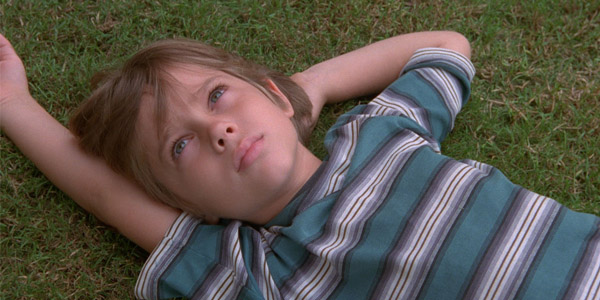
Linklater, the philosopher of 21st Century filmmakers, first came onto the cinematic scene in 1991 with Slacker. Since then, Linklater has continued to prove himself to be a fearless experimentalist, playing with the notion of time and space in film with his Before trilogy and utilizing rotoscope technology to achieve the surreal, dream like effect of his film Waking Life. While not all Linklater's films are successful, for die hard cineastes, Linklater is a director whose work has demanded attention for some time. With Boyhood, a film Linklater made over twelve summers in order to literally document the growth of a child on film in a fictional narrative, even those who found Linklater's previous work too intellectual to emotionally connect with are singing his praises. The universality of the events depicted in the film are hard not to relate to and for many, Linklater has achieved his magnum opus with this film. Whether it is staring up into the sky as a young child, having a memorable moment with a parent, or going off to college for the first time, Boyhood is chock-full of scenes that get to the very heart of the human experience. Interestingly, Linklater still manages to fit in some random philosophical musings that are so common in many of his other movies, clearly identifying Boyhood as a Linklater film for those devotees of his previous work. The result is a mix of both the common and the artistic and the consequence for Linklater is that he will finally be an Oscar nominee. The real question for Linklater though will not be if he can receive his first Oscar nomination (that is a forgone conclusion at this point), but whether he will win the Oscar on his first time out. The race is definitely going to come down to either Innaritu or Linklater, but which one it will be may come down to the final moments. Regardless of who wins though, Linklater's Boyhood has made an undeniably significant impact on cinema. Who do you think will make this year's Best Director lineup? Are these five directors the ones to beat or do you think someone else will slip into the final field? Let us know what you think in the comments section below.

In this post: 
Birdman
 
Posted On: 
Contributor
Contributor

A film fanatic at a very young age, starting with the Teenage Mutant Ninja Turtle movies and gradually moving up to more sophisticated fare, at around the age of ten he became inexplicably obsessed with all things Oscar. With the incredibly trivial power of being able to chronologically name every Best Picture winner from memory, his lifelong goal is to see every Oscar nominated film, in every major category, in the history of the Academy Awards.