Oscars 2019 Winners: 5 Things The Academy Got Wrong (& 5 They Got Right)
The best and worst of the 91st Academy Awards.
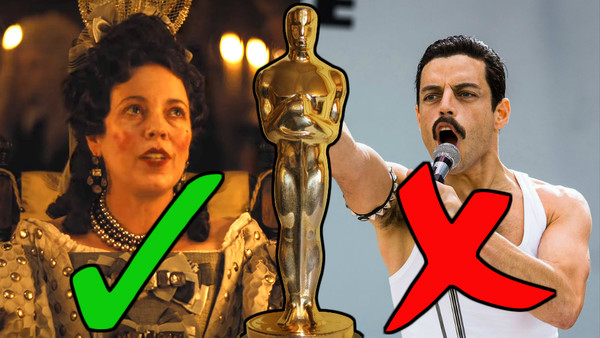
And that's a wrap on the Oscars for another year.
The 91st iteration of the Academy Awards has come and went, in a ceremony that managed to go pretty well despite not having a host. In fact, there's a strong argument to be made that not having a host helped the ceremony move along at a better pace, and put the focus on presenters who only had to deliver in a short segment, rather than carry an entire broadcast.
The build-up to the awards has largely been dominated by the Academy's attempts to shake-up the broadcast, which has been losing viewers for a number of years now. A slew of ideas were introduced - Best Popular Film, only performing two of the Original Song nominees on the night, pushing a few awards to the ad-breaks, and Kevin Hart to host - that were all walked back after people got up in arms.
The result was a broadcast that ran just over three hours, and yet was mostly enjoyable, but what about the awards themselves? These are the decisions the Academy can't reverse - unless it's La La Land winning Best Picture - but there are a fair few they really should, alongside plenty they managed to get right too.
What They Got Wrong...
5. First Man Beats Infinity War For VFX

First Man is an exceptionally good film, which deserved far more recognition than it received, both in terms of nominations - it should've been in the Best Picture race, as well as Editing, Cinematography, and Score - and wins on the night. But the award for achievement in Visual Effects? Not so much.
That's not to say First Man's CGI isn't impressive: there's a lot of subtle, in-camera VFX that helps make the film and its space sequences look great. But Infinity War deserved to take the top prize here.
The CGI across the whole movie was great, with some superb VFX-led action scenes, such as the fight on Titan. That puts it in the mix anyway, but it's the creation of Thanos - becoming not only a huge alien creature, but one imbued with so much personality and a range of emotions - that is up there with the very best of what we've seen in the comic book realm. The Oscars voters don't like superhero movies in this category, but this year - when they finally embraced such movies elsewhere - was the one to change it.
4. Black Panther Wins Original Score

Of the three Oscars picked up by Black Panther, this one is the least deserved. That's not to knock Ludwig Goransson too much, who makes his score stand out from anything else in the MCU with an array of African influences, but more so because Nicholas Britell's work on If Beale Street Could Talk is so indelible.
Britell's score is a big reason the film works so well. It flows in perfect harmony with the performances and script, elevating those things around it. It's capable of harnessing the power of love we're seeing on the screen, or of quietly reminding us of the darkness that's lurking underneath the entire story. It's a beautiful, hugely evocative array of music, which does more to complement and enhance that around it than any of the other contenders.
3. Bohemian Rhapsody Takes Both Sound Awards

Musicals - or films containing lots of music and about the subject - often do well in the sound awards, but even with that it's hard to find a good reason to Bohemian Rhapsody to win here. That's especially so when you consider most of the sound was already done for them, given it's Queen's music. They do a good job of syncing that to Rami Malek's lip movements, but that's about the extent of it.
In contrast, you have First Man, which is one of the best sounding films ever made. The way it both engineers those sounds and then mixes them together is what contributes to the film making space so terrifying, and to keeping the emotional threads running throughout the film. It's capable of blowing your ears off, but also making your heart soar.
A Quiet Place would've been more deserving too, in the Editing category. This is a film built around staying silent, and that makes its soundscape completely unique and in need of working perfectly with everything else in the movie, which it absolutely does. Roma and A Star Is Born could feel hard done by here too (A Star Is Born does a lot of what Bohemian Rhapsody does, but with more original elements, and done better too).
2. And Film Editing

Far too often, Best Film Editing ends up going to the film with the most editing, hence why Vice and Bohemian Rhapsody were the favourites going into Oscars, and why Bohemian Rhapsody won on the night.
Bohemian Rhapsody's editing has gone viral in recent weeks, with one scene in particular doing the rounds to highlight how bad it is. That's maybe a tad unfair - the rest of the film does fair better than that sequence - but it is in keeping with its approach to editing.
With BlacKkKlansman and The Favourite both in the mix here, and both doing great things with regards to how they're stitched together, it should've went to one of those two. They're not as kinetic or choppy as Bohemian Rhapsody or Vice, but are far more coherent, well-paced, and still feature plenty of flair, with the cross-cutting and transitions in BlacKkKlansman especially a great feat of editing.
1. Green Book Wins Original Screenplay & Best Picture

Green Book's win in Best Original Screenplay was an early warning that it might be winning at the end of the night too, since it was largely expected The Favourite was going to take the prize there.
That would've been more richly deserved: Green Book's biggest strength is the performances of Viggo Mortensen and Mahershala Ali, with the latter in particular elevating what he's given to work with. The Favourite's performances are superb too, but you can really feel the screenplay when you watch it, from the dialogue to the sheer invention to the layered reveals. It drips off the page and onto the screen, which should've allowed it to take the Screenplay prize over Green Book.
It gets worse in Best Picture, where it was a battle between Green Book and Roma. The former feels like a movie from 30-years-ago (there's a reason for all those Driving Miss Daisy comparisons). It has a charm, but in a year with so many powerful films, it isn't good enough. Roma, on the other hand, is a beautiful, cinematic masterpiece from one of the modern greats. Both epic and intimate, it's a stunning achievement that deserved to be recognised above all the other Best Picture nominees. But, since it was Netflix, that would've been the Academy embracing the future. Green Book is very much going back to the past.
What They Got Right...
5. Black Panther Wins Costume Design
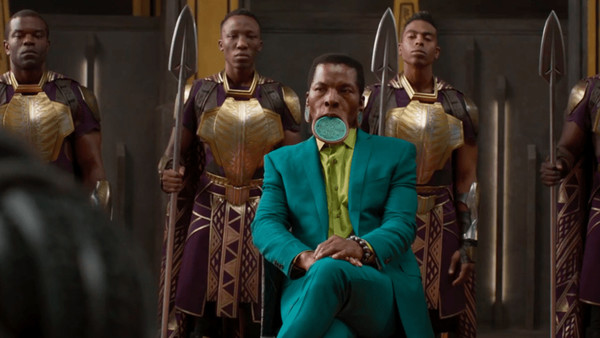
While Black Panther's win for Original Score was undeserved, and its win for Production Design really could've gone either way (Roma should've edged it, but Panther's is superb too), the one trophy there can be no arguments about is Costume Design.
The great Ruth E. Carter had some blueprints to work with from the pages of Marvel Comics, but what makes Panther's costumes so special is how she keeps the spirit of that but blends it with traditional and modern African designs. There's a wide array of colours, styles, and textures on display, all of which make a massive contribution to Wakanda feeling like such a well-populated, lived-in world. The costumes here all felt like things we hadn't seen before, which isn't something the other nominees could boast.
4. Into The Spider-Verse Wins Animated Feature

While it was mostly expected, Spider-Man: Into The Spider-Verse's win wasn't quite as locked in as, say, that for Shallow (which was so obvious there's not even much point going in-depth into it, because of course Shallow won and is good). Disney and Pixar's dominance here meant there was a slight chance the Academy would baulk at the idea of giving this to such a groundbreaking movie and revert to what they know.
Thankfully, that didn't happen, and Into The Spider-Verse took him the animated feature prize. It's richly deserved for the animation style alone, which is quite unlike anything made before; its unique blend of 3D animation with hand-drawn comic book panels is truly spectacular. Just as amazing, though, is how it uses that to tell a blast of a multi-verse tale and an engrossing, emotional origin story too.
3. BlacKkKlansman Takes Best Adapted Screenplay

With one of the Screenplay awards not going to script, there was a chance the same could happen in the Adapted category too. There weren't any choices here that would've been as egregious as Green Book, with the next favourite Can You Ever Forgive Me?, which would've been a perfectly palatable winner.
Still, BlacKkKlansman was the most deserving. The way Spike Lee and his team of co-writers (David Rabinowitz, Charlie Wachtel and Kevin Willmott) make Ron Stallworth's crazy story work on the page and then screen, with so much of Lee's trademark humour, ability to shock, relevancy, and power imbued in there, is a masterclass in adaptation, and finally won Spike Lee an Oscar.
2. Roma Wins Best Cinematography & Best Director

Roma may not have taken home the big prize as many expected to - and that it richly deserved - but it did still pick up some big wins, and allowed Alfonso Cuarón to make history in the process.
With his Best Cinematography win, Cuarón became the first DP ever to win that award for a film they also directed. That was made even better when he was able to go all the way in the Best Director race too. Neither were entirely unexpected - although if Roma had won Best Picture, there would've been a greater chance for, say, Spike Lee to take home the Director prize - but both went to the right home.
Roma is a gorgeous film, and Cuarón's work in it in both roles is a large part of why it's so great, so it's nice he got the recognition he deserved.
1. Olivia Colman Wins Best Actress
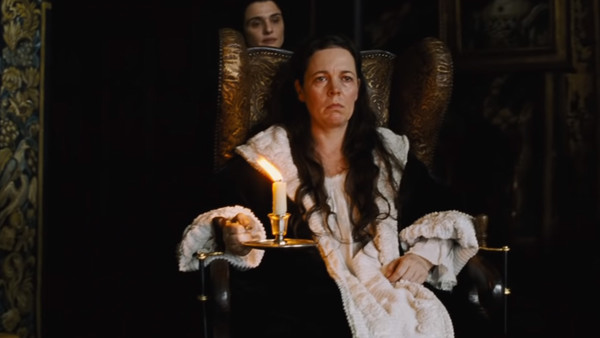
Having won a number of awards in the build-up to the Oscars, and with a large narrative of being 'due' given it was her seventh nomination, Best Actress seemed like Gleen Close's award to lose. Sure, it was a, er, close contest, but all the signs suggested The Wife star would be taking home the gold.
In the night's best major upset, the Best Actress statue instead ended up going to England's national treasure, Olivia Colman. This isn't great simply because Colman is so incredibly likeable and funny - although that helps, as evidenced by her brilliant speech - but that she really does give the best performance of the bunch too. Close's restraint in The Wife is superb, but we've seen it before. Colman runs the full gamut from subtle tragedy to madcap hilarity, and it's wonderful to watch both that performance and her getting the recognition she's long deserved.
What did you think of the Oscars 2019? Let us know down in the comments.