Oscars: Every Best Picture Nominee Of The 2010s - Ranked Worst To Best
The good, the bad, and the forgettably average from this decade's Academy Awards.
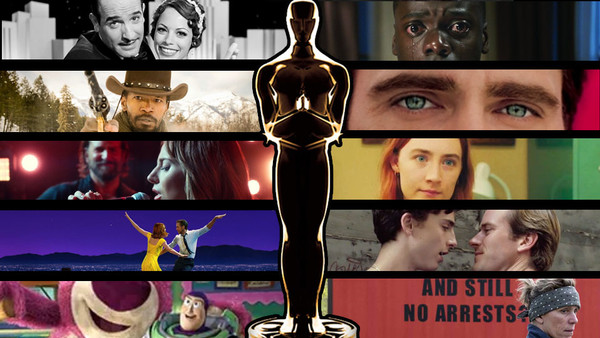
For the final time this decade, the Academy Awards are upon us. The 2019 battle is one of the most open and unpredictable in years, and it closes out what's been an interesting period for the Oscars.
The 2010s, which has existed after the expansion of the Best Picture race, has flipped between excitement and boredom. The broadcast has lost viewers at a rapid rate, and yet there've been winners you'd never expect. It's been infuriating, and it's been joyous, from The King's Speech reigning supreme to The Shape of Water making an almighty splash.
We've had huge upsets, such as Spotlight's triumph over The Revenant, the wrong winner announced in one of the greatest gaffes in Oscar history, and all manner of controversy, from #OscarsSoWhite to this year's attempts at shaking up the ceremony in numerous ways, none of which have stuck. The Academy has, to its credit, made an effort to change with the times, and yet on occasion it's stubbornly clung to the past.
With the field of Best Picture nominees in any given year this decade ranging from 8-10, there's been a lot of great films nominated, and even a few great winners too, but also a lot of forgettable fare you can't believe got a nod in the first place. But which are the worst offenders, and which ones deserved to go home with the gold?
79. Extremely Loud And Incredibly Close

In the grand history of baffling Oscar nominations, Stephen Daldry's Extremely Loud & Incredibly Close is right up there with the most erroneous. There's no doubt that the story is an important one and there are some meaningful things to say in there, but this was not the way to say them.
Part of the problem is Daldry's decision to ladel on lashings of sugar and the other is the very obvious belief in the worthiness of the story, which has fundamentally compromised how the story is being told. And most vulgarly of all, it looks like it aimed squarely at getting Oscar attention without ever seeking to earn it properly.
Simon Gallagher
78. Tree Of Life

I don't think it's hyperbolic to say that The Tree of Life is the reason a lot of people instantly turn their face up at any movie described as an "art film" or "arthouse" in general. Terrence Malick's "epic" is indulgent to the point of parody, meandering around through time and space in a way that seems profound if you squint, but mostly just ends up amounting to close to three hours of the director being so pleased with itself.
There have been plenty of similar films that revel in the same kind of grandiosity and attempt to tackle similar lofty, inherently human topics that The Tree of Life also approaches, but with purpose and clarity and without half of the self-importance. It's bold and ambitious for sure, but surprisingly impenetrable, and unforgivably cold considering its subject matter.
Josh Brown
77. The Imitation Game - James

The Imitation Game isn't an outright terrible film, not least because of Benedict Cumberbatch's strong performance in the lead role. It's a fine movie to have in on the background of a lazy Sunday afternoon, which is its biggest problem. It feels like a TV movie, rather than the kind of account someone as fascinating and important as Alan Turing.
The formulaic plotting and the drab cinematography do little to capture the imagination, so while Cumberbatch deserved a Best Actor nod, it's hard to see why this was in the Best Picture race. Compared to the compelling true story of Turing, this is just a pale imitation.
James Hunt
76. American Sniper

Neither historically accurate nor particularly spectacular (at least by Clint Eastwood's high standards), American Sniper often feels too much like an exercise in jingoistic flag-waving rather than focusing on the more interesting subject of the real toll of a job like sniping on the front-line.
It's not a bad film per se (and it could have been a lot less accomplished in another director's hands), but there isn't enough focus on the background of the Iraq war and there's a little too much wilful propagation of the ideas of locals in a foreign warzone being somehow less developed. There's also very little depth in anyone other than Bradley Cooper's Chris Kyle, so it's hard to call it a real Best Film contender.
SG
75. Vice

Smug, self-satisfied, and condescending, Vice doubles-down on Adam McKay's worst filmmaking impulses displayed in the better The Big Short. Completely over-edited, it tries to force the life of Dick Cheney to be fascinating in a way it just isn't, and yet often leaves the most interesting elements in the pieces of text that appear on screen.
It's boosted by some strong performances, not least from a transformed Christian Bale, which help make it watchable, but the way it thinks it's so smart and talks down to its audience is shockingly bad. Watch the new Fast and the Furious movie instead. It's lit.
JH
74. Lincoln

If there's a prime example of a prestige, oscar-bait film, it's Steven Spielberg's Lincoln. Take a beloved real-life person from history, get an incredible actor to portray them and a steady pair of hands behind the camera, and watch as you ride your way to endless Oscar nominations and appearances in secondary-school history classes for the rest of time. Oh, and make sure the film itself is at least two-and-a-half-hours long. And grey.
That might be writing the film off a bit too much - it's competent, tells an important story, and is clearly fuelled by real talent. But there feels like an ulterior motive behind each element, and it lacks the heart a story like this should have.
JB
73. War Horse

Adapted from the phenomenally successful stage play by Steven Spielberg, War Horse is just as you'd expect from the master story-teller: it hits all of the necessary emotional beats, the character dynamics are its biggest strength and there are some set-pieces that only he could pull off.
It's still hard to shake the nagging suspicion that the material isn't quite up to Spielberg's level and at times you can really see where he struggled to pull something out of it. Which is why it's curiously dull in places alongside some truly breathtaking looking sequences: almost - rather fatally - like he was drawn to making it for parts of the material but not all of it.
SG
72. Philomena

There's a sequence in the wonderful The Trip in which Steve Coogan laments his lack of success in big movies, which came some three years before he wrote and co-starred in this delightful (if comparatively slight) comedy/drama about a woman's quest to find a child she was forced to give up for adoption as a young, single mother.
The story is ostensibly a two character play that sees them Judy Dench's Phil and Coogan's journalist Martin Sixsmith following breadcrumbs to find her long lost son, only to discover a web of institutional corruption in the church. But this is no mirror of something like Spotlight - it's an achingly personal story of profound tragedy that soars on Dench's performance and Coogan's strong, funny/sad writing.
SG
71. Darkest Hour

A lot like Lincoln, Darkest Hour's aims are obvious. it suffers from many of the same problems - more of an "important" film than a good one - but the real reason it places so low is for that awful, revisionist-history, totally-fabricated scene on a train towards the end. Whatever genuine drama, whatever genuine authenticity, the film had been building, it breaks in that two-minute period.
Unlike Lincoln, however, there is a genuine creative spark which pokes its head through just enough to elevate it. Some of the photography can be striking, really evoking the claustrophobia and isolation of organising a war from the confines of a bunker, while the set design and costumes are undeniably lavish and authentic.
JB
70. Green Book

On a surface level, Green Book is fine. There's a very easy-going charm to the movie that allows it to coast along, mostly on the back of two strong lead performances from Viggo Mortensen and especially Mahershala Ali.
The trouble with Green Book, though, is that it feels like a movie for 1989, not 2019. Its approach to racism is all filtered through the lens of Tony Lip, whose son co-wrote the damn movie, and thus feels like a movie designed to make white people feel better about racism. Shirley is given far less consideration, as is the Jim Crow era, or even the Green Book of its title. In a year where so many films are taking such complex and considered approaches to the same subject matter, Green Book isn't good enough.
JH
69. Lion

Lion leans just ever-so-slightly too close towards going full Oscar bait, although it avoids coming incredibly close thanks to its heartwarming story and captivating the lead performances.
The first half, which follows young Saroo separated from his family in India, is excellent. Sunny Punwar is irresistibly charming in a way few child actors ever are, and these moments are both affecting and unpredictable. Unfortunately, it becomes a little more conventional - and baity - when we switch to adult Saroo. The plotting is a little muddled, but Patel's performance still makes it work.
JH
68. The Theory Of Everything

You can almost set your watch these days to how quickly people turn on films like The Theory Of Everything. It seems the biopic of Sir Stephen Hawking is too nice, too "Oscar-baiting" and just too good to be considered a real contender. If you admire Eddie Redmayne's stunning performance as Hawking, you're apparently only encouraging him, as if a complete physical transformation like that deserves anything but praise.
Sure, it's fully invested in emotion provocation, but this is an emotionally provocative story and a film's success in making you feel shouldn't be transformed into a stick to beat it with simply because you feel foolish enough to have felt it. The Theory Of Everything is very good. Eddie Redmayne is brilliant in it. It's a story dedicared to one of the most important men in scientific history and if you believe it doesn't deserve praise for being a fitting celebration of him, you're sadly mistaken.
SG
67. The King's Speech

While arguably any other film from 2011 should have won Best Picture over The King's Speech (such as Inception, Black Swan, The Fighter, or even Toy Story 3), the biopic is still solid when taken in isolation, bolstered in no small part by the great performances from Colin Firth, Geoffrey Rush and Helena Bonham Carter.
Problems do creep in with Tom Hooper's direction, though. The filmmaker has a distinct style, for sure, with bleak colour palettes and a reliance on close-ups focusing on wringing the most emotion out of any scene. But that style is adhered to with such a stubbornness, regardless of the needs of the scene in question, that whatever power it may have held is diluted. For a story like The King's Speech, that's not too distracting, but it still feels like there could have been a better way to visually bring it to life.
JB
66. Hacksaw Ridge

The acceptance of Mel Gibson back into Hollywood's elite made this one of the decade's more controversial Best Picture nominees. While Gibson's actions shouldn't be so swiftly forgiven or forgotten, if you set them aside for a moment, what you find is a very well-crafted war movie.
Andrew Garfield gives a moving, career-best performance as Desmond Doss, a Christian pacifist who still wants to serve. It falls down on a story level by the ending being a little rushed, and the setup to the action could be stronger. But once it does get to the battlefield, it puts you right in the thick of the action, fully depicting the horrors of war and bludgeoning your sense while doing so.
JH
65. Bohemian Rhapsody

Any criticism of Bohemian Rhapsody now feels like a minefield. Are we supposed to put aside the controversies of Bryan Singer's involvement and focus on the merits of the film? Are we supposed to ignore the fact that Queen clearly led the direction of the story and chose to charitably clip of some of the ore difficult edges of their own story?
Or can we look at Rami Malek's brilliant performance? Or how great the Live Aid sequence is? Or how well Queen fans will say it celebrates Freddie Mercury? It's a good film, though it's incredibly flawed in itself, but it feels impossible to separate the material from the context now. At least we can all agree that that transition shot featuring the Galileo-ing cockerel is the greatest single edit in the history of cinema, though, right?
SG
64. The Big Short

Adam McKay's filmmaking style isn't for everyone. The way the director flitters between comedy, serious drama and fourth-wall breaks can occasionally feel a little jarring (and no doubt a nightmare for an editor), but the strongest argument for this style working has to be The Big Short.
The director's first breakout hit away from the straight, mainstream comedies he was known for, The Big Short took on a pretty intimidating real-life topic in the 2008 financial crisis, revelling in the absurdity of genuine history while offering a scathing criticism of everyone involved in the crash, with each player brilliantly brought to life by top Hollywood talent like Brad Pitt, Ryan Gosling, Christian Bale and Steve Carell.
JB
63. The Help

Buoyed by an excellent cast, on the surface, The Help appears to be the kind of thing the Academy loves: a sort of clinically tidied up version of history where everything is handily potted and the darker elements are mostly glossed over. But The Help is actually a lot better for its performances than its material.
It's also devoid of the usual emotional clawing that would typically come with this sort of story of downtrodden underdogs and pantomime villains (see !2 Years A Slave), aiming instead for laughs occasionally punctuated by dramatic heft. More than anything, we ought to be thankful to it for giving us a new improved version of Octavia Spencer and the stunning Viola Davis.
SG
62. Life Of Pi
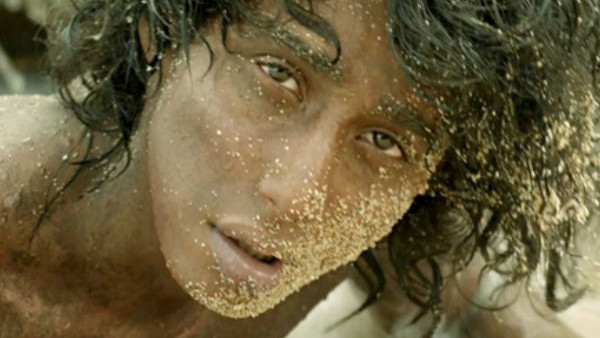
Life of Pi is a curious example of how a film can burn bright during awards season, but then completely fade away. Ang Lee's film was lauded at the time for its visual effects, which came at a time when the industry was obsessed with 3D.
In fairness to Lee, the effects work on the movie is stunning, but what else about the film does anyone remember? The film doesn't go anywhere near deep enough into the thematics of its spiritual story. It's a shallow, shaggy-tiger tale that's biggest show of faith is that what it's doing is important. It's a technical marvel, but not much more besides.
JH
61. American Hustle

American Hustle is very much an "actor's film". The ensemble cast, including Christian Bale, Bradley Cooper, Amy Adams and Jennifer Lawrence, all give incredible, committed performances (bar a couple dodgy accents), each lavished with ridiculous, period-authentic hair and makeup.
The only real problem is the story itself isn't quite strong enough to support them. Despite the real-life inspiration, much of the narrative feels familiar in its presentation and execution, struggling to weave this tapestry of huge personalities together in a satisfying way.
Still, there's always entertainment to be found in just how unwieldily the film gets, and at 138 minutes, the opulence and indulgence of American Hustle's world is kind of the point.
JB
60. The Post

With Steven Spielberg directing, Tom Hanks and Meryl Streep leading an incredible ensemble cast, and a great story that runs adjacent to All The President's Men, it was inevitable that The Post was going to be pretty good. But why isn't it great?
Part of the problem is that it gives so many of its cast - Bob Odenkirk! Sarah Paulson! Carrie Coon! Allison Brie! Matthew Rhys! - so little to do. But the bigger problem, and the one that stops it from reaching the heights of President's Men or Spotlight, is how passively it unpacks its stories. It's far too happy to tell, taking a more calculated approach that means it's good, but not much more.
JH
59. 127 Hours

The Academy loves a story of personal triumph in the face of profound adversity and you don't get much more profoundly adverse than the true story of Aron Ralston who goes hiking and ends up, rather notoriously, trapped in a canyon with his hand crushed by a boulder. It's hard not to just consider this to be the film where James Franco hacks his own arm off, but it is an awful lot more than that reductive summary.
It's an unflinching, haunting portrait of an unthinkable thing and how one man navigates the harrowing crisis of the decision he has to make to save his life. It's also lasting evidence that James Franco genuinely is great at times.
58. Captain Phillips

"I'm the Captain now."
Paul Greengrass' take on the true story of Somali pirates hijacking a ship is mostly remembered for that line, delivered by Barkhad Abdi whose superb turn wasn't quite the star-making performance it seemed at the time.
Still, it features some excellent direction from Greengrass, and while the biopic is, for the most part, a little too by-the-numbers, Hanks effortlessly makes the role work, with the exception of its final moments: it's there, when he shows the heart-wrenching impact the event has taken on him, that the movie offers a glimpse of something special. It's just a shame the rest of the film isn't quite up to that standard.
JH
57. Dallas Buyers Club

Looking back at Dallas Buyers Club with the benefit of hindsight now, it could be dangerous to think of it solely as a vehicle for some Christian Bale-style transformative method acting by Matthew McConaughey and a showy, of-course-the-Academy-would-love-that performance by Jared Leto. Both of those performances deserve credit, obviously, but they're also the kind that attracts the same snide revisionist criticism that Eddie Redmayne gets now.
Dallas Buyers Club is an incredibly important, incredibly affecting story that ought to stick with all of us. It's a tale - like Schindler's List - of a small act of defiance in the face of colossal human moral failures. The performances are great, the story gripping and mostly well-made (but for some stylistic choices that already date it).
SG
56. Les Miserables

It's virtually impossible for any filmmaker to live up to the sheer quality and reputation of the stage show when translating Les Miserables over to the big screen, but Tom Hooper did a pretty damn fine job back in 2012. The first hour in particular is an incredibly emotional study of Jean Valjean, propped up by the alway-committed Hugh Jackman. Some plot developments do seem rushed by nature of the film needing to cram so much into three hours, but it's always solid, and really comes to life in the moments where the script gets time to breathe.
And while Tom Hooper's directing style was criticised in the entry for The King's Speech, it does fit nicely with Les Miserables. The close-ups compliment the decision to record the singing live, really digging down to the emotional core of each number. It helped Anne Hathway win an Oscar, so you can see why Hooper relies on it so much - even when it detracts from the scale of the movie's depiction of the eventual revolution.
The rough edges only award it with more charm as well. Les Mis could have felt so empty, but there's real heart running all the way through it - to the point where it almost makes you forgive Russel Crowe's singing. Almost.
JB
55. Hugo

In a similar way to Life of Pi, Hugo is often remembered most for actually using 3D in an effective way, but there's a little but more substance here too. Sure, it's easily one of Martin Scorsese's lesser films, but as a family tale for all ages it spins a heartfelt, occasionally wonderous fantasy yarn.
Even better, though, is how much of a love letter this is to cinema. You get the sense this comes straight from Scorsese's heart as he pays homage to those who paved the way, and in those moments it truly soars. It's overlong, and those glimpses of wonder don't quite come often enough, but you sense if another filmmaker had made this, people might be more welcoming of what it does. And yet, no other filmmaker could have made this either.
JH
54. Winter's Bone

Back before she was Katniss and long before she became a real Oscars fixture, Jennifer Lawrence exploded onto the scene with Winter's Bone, a breakthrough role that catapulted her squarely into everyone's faces. Her performance as Ree Dolly in this small-scale but incredibly taut drama is every bit the making of a star, with strong support from the always watchable John Hawkes.
There's an unblinking honesty to the direction that never seeks to cast any judgements, even on the most repugnant behaviour or characters and in combination with Lawrence's performance, there's a strange - almost alien in these surroundings - sense of hope and life that you wouldn't expect. Like kicking over a skull to find a microsystem beneath it.
SG
53. Amour
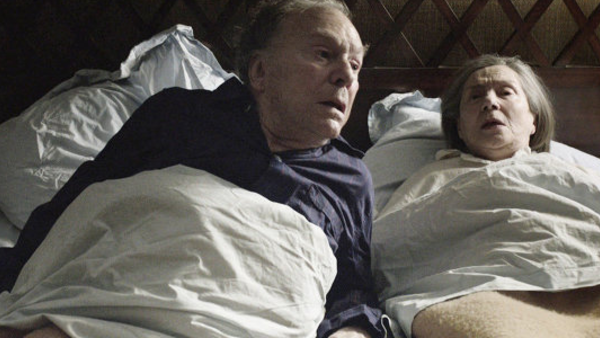
Amour, one of the few foreign-language films to be nominated for Best Picture so far this decade, absolutely wants you to feel miserable. About an old couple, Georges and Anne, struggling to cope and look after one another after the latter suffers a stroke, Michael Haneke's film is unrelentingly grim. The premise is ripe for affecting material regardless of how it's presented, but it only makes you so upset because of how believable this relationship is.
Georges and Anne have relied on each other forever - loved each other forever - and it's because that clear affection is communicated in every frame, through silent glances and subtle gestures, that their constant struggle, and inevitable tragedy, is all the more heartbreaking. It's the kind of film you'll only watch once, but will stick with you forever.
JB
52. Hidden Figures

There are some small criticisms to be made of Hidden Figures: the script has its fair share of issues, not least in how predictable it is, or in how it mostly lacks any kind of subtlety. A couple of cameos are wasted too.
Where Hidden Figures works, though, is as an absolute crowd-pleaser. The story of three women who played a pivotal role in the space race, only to have their stories largely ignored, manages to be extremely uplifting. Taraji P. Henson, Octavia Spencer, and Janelle Monáe all excel in the lead roles, and even a couple of years on from release it feels like a necessary feel-good film, if not an exceptional one.
JH
51. The Fighter

On a story level, The Fighter doesn't add a great deal new to the pantheon of acclaimed Oscar movies we've had since Rocky debuted in 1976. It's account of Micky Ward sticks to the tried-and-trusted underdog tale, which means it can be a tad predictable, but it's lifted by three superb performances.
Unfortunately, Mark Wahlberg's isn't one of them (he's fine, but not outstanding). Christian Bale shines brightly in one of his greatest transformations to date; his appearance grabs the headlines, but it's in how he makes Dicky Ecklund so well-realised and complicated that really deserve the plaudits. Likewise Melissa Leo and Amy Adams (who was more deserving than her co-star) give brilliant, nuanced turns in supporting roles, elevating The Fighter into the Best Picture race.
JH
50. Selma
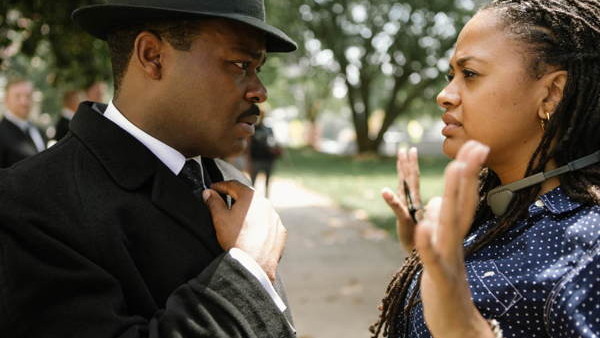
Well before Selma came out, if you were looking ahead to 2014's releases, you'd probably have picked it out as one that the Academy would pay attention to. It's the kind of thing that not only appeals to their fascination with real history, but which also offers the institution an opportunity for some casual artistic reparations.
But Ava DuVernay's tale of the 1965 historic march earned its right to a Best Film nomination on its own merit. Sure, it's an important historical document, but it never seeks to insist of anything, instead relying on powerhouse performances - particularly by David Oyelowo, whose Martin Luther King is not a man without flaws or complexities - and the stirring power of the story. As a film it's already great, but as a FIRST film? Incredible.
SG
49. The Favourite
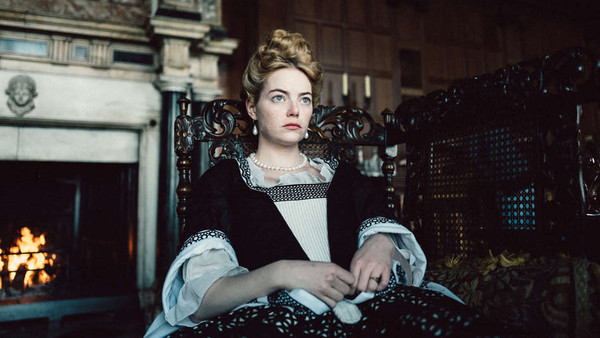
In a way, it's kind of surprising that The Favourite became such a frontrunner at 2019's Academy Awards. Sure, on paper, Yorgos Lanthimos' movie has everything the Academy loves: a period setting, stunning cinematography and production design, and a whole host of great performances. But it's also totally bats**t.
Each frame bubbles with a mad, chaotic energy, fuelled by a darkly comedic streak that isn't afraid to linger on the genuine horror of Queen Anne's twisted relationship with her closest allies, enemies, and herself. It's hilarious and biting, but what makes it so special is that once you peel away all the artifice and opulence, there's a real darkness lurking underneath that unnerves you as much as anything in Lanthimos' other thrillers.
JB
48. Fences

Fences took a lot of undeserved flak during the 2017 Oscar race. The period drama, all about a working-class family in the 1950s, was viewed as being something of a vanity project for director and star Denzel Washington, while some critics took aim at the film for being un-cinematic and more suited for the stage.
Those criticisms aren't necessarily unfounded, but they overlook the fact that as a character study, Fences is pretty damn remarkable. Denzel and co-star Viola Davis are stunning together as a dysfunctional husband and wife, and the two embody and humanise a script which is, admittedly, written in broad strokes that would benefit the theatre.
It's very much these performances that carry the film and, vanity project or not, they demand to be appreciated.
JB
47. Beasts Of The Southern Wild

Shown at Cannes initially to rapturous applause (always a good sign for Academy prospects), Beasts Of The Southern Wild is a difficult film to watch, in that it looks at life at the burnt end of a quickly shrinking candle. But it's about improbable hope and joy and the power of imagination - not least within the characters but also in the way this little gem was made. Cheaply and happily.
It's the kind of film that makes you happy for the occasional opportunities first time directors have to utterly floor you. Like Quvenzhané Wallis' performance as the fierce, vulnerable Hushpuppy (basically Mad Max with an afro), it bursts out of absolutely nowhere and once you've seen it, you don't know how it ever won't make essential viewing to everyone.
SG
46. A Star Is Born

It's not an understatement to say that A Star Is Born took everyone by surprise. The directorial debut of Bradley Cooper, Lady Gaga being cast in the lead role and it being the fourth take on a classic Hollywood plot raised worries in the run up to release - worries which its initial festival showing dashed utterly and completely.
The first hour in particular is stunning. It's here where Cooper's direction really shines as well, with long, improvised scenes making the formation of this relationship feel so organic and real, with the filmmaker allowing the chemistry between the two leads to essentially become the narrative. The second half only dips a little, and you won't even mind once you hit that final, heartbreaking musical number.
JB
45. Bridge Of Spies

Bridge of Spies seems to be largely forgotten about amidst Steven Spielberg's output this decade, and yet I'd argue he's never been better in the 2010s than with his supremely well-crafted Cold War thriller.
The film looks great, and Spielberg has a real mastery over the story here: he knows exactly when to ratchet up the tension in this game of cat-and-mouse, and when to catch you off-guard with a moment of humour instead. Crucial to this are the performances of Tom Hanks and Mark Rylance, whose relationship makes this stand apart. Hanks is as reliable as ever, but it's Rylance's compelling and emotional work that shows why he's been Spielberg's lucky charm the past few years.
JH
44. The Kids Are Alright
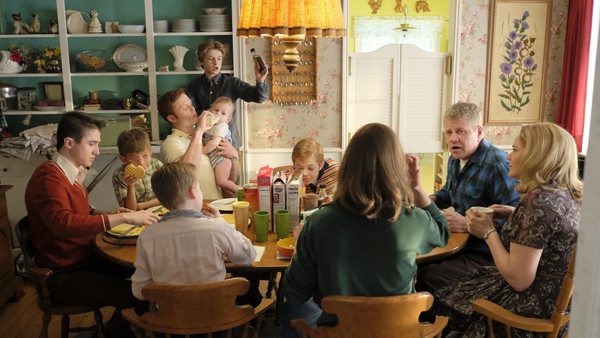
Looking at the likes of Juno, Little Miss Sunshine, The Descendants and August: Osage County, the Academy has something of a thing for dysfunctional family units and small scale dramas that break worlds apart across kitchen diners and dinner tables.
In The Kids Are Alright, they got that plus something else they love - a tense portrait of lost and found identity as Julianne Moore's Jules embarks on an affair with the sperm donor her son insists on finding behind her wife's back. It's the kind of interweaving, slow-brewing family drama that the committee eats up and the fact that it ends on a note of hope just makes it even more impressively crafted.
SG
43. Silver Linings Playbook

Director David O. Russell was on a pretty impressive hot-streak in the early 2010s, but his best release during this period wasn't the big, flashy American Hustle or The Fighter, but the unassuming romantic comedy, Silver Linings Playbook. Once again teaming up with Bradley Cooper, Robert De Niro and Jennifer Lawrence, each actor gives unsurprisingly amazing performances, but ones which aren't conventionally recognised by the Academy.
It gets heavy when it needs to, but the most surprising thing is just how funny Silver Linings Playbook is. There's a frenetic energy running through its veins - perhaps best exemplified in the electric musical sequences - but it remains focused in a way that O. Russell's other flicks from this period never were.
JB