Pinocchio Review: 4 Ups & 6 Downs
Robert Zemeckis' live-action Pinocchio is a predictably pointless remake.

The latest of Disney's seemingly never-ending slew of live-action remakes of their beloved animated movies is out now on Disney+ - Robert Zemeckis' take on Pinocchio.
Between the many varied Pinocchio adaptations we've seen in recent years - not to forget Guillermo del Toro's upcoming stop-motion animated version for Netflix - it wasn't easy to get excited for Zemeckis' remake, especially given the filmmaker's spotty track record in recent years.
And so, it's not at all surprising that this glossy, straight-to-streaming new movie is another aggressively mediocre, even unnecessary attempt to update a classic animation that really didn't need updating at all.
Disney tellingly embargoed reviews until release day, and at the time of press critics are predictably skewing firmly negative on it, citing the lack of magic and ingenuity in a rather forgettable remake nobody was really asking for.
Is it terrible? Certainly not, but it feels more like a cynical commercial calculation by a company keen to create Content for its streaming service than because anyone actually had an interesting vision for delivering a new Pinocchio movie.
And with that in mind, here's where it went wrong...
Downs...
6. Most Of The Changes Will Annoy Fans

Though Zemeckis sticks pretty closely to the basic narrative beats of the 1940 animated film, he and co-writer Chris Weitz (About a Boy) do make some changes to the plot that are unlikely to be enthusiastically embraced by fans.
At best these alterations feel unnecessary and excessive, and at worst they're poor substitutes for what occurred in the original movie.
For starters, Geppetto (Tom Hanks) is given a sob story in this version - he's a grieving woodcarver who creates Pinocchio (Benjamin Evan Ainsworth) while mourning the loss of his son. As changes go it's not hugely offensive, yet feels like a tacked on attempt to wring some added emotion from the story.
Elsewhere trickster fox Honest John (Keegan-Michael Key) has been given a cringe-worthy "modern" update, as he talks to Pinocchio about turning him into an "influencer" and even jokingly ponders giving him the nickname "Chris Pine."
The most substantial changes occur at the very end of the story, though, when Pinocchio and Geppetto face off against Monstro.
Beyond the fact that Monstro himself has been altered from a giant sperm whale into a tentacled whale-kaiju abomination, Pinocchio is given a nifty, almost superhero-like ability to help escape Monstro, and the outcome of their escape is also changed from the animation.
All in all it feels like Zemeckis and Weitz wanted to differentiate their film from the original in small ways, yet ultimately almost every single change made is less interesting than what came before. As the saying goes, if it ain't broke, don't fix it.
5. The Storytelling Lacks Emotion

Pinocchio is one of Disney's most classically affecting stories - a sweet tale about a living puppet who yearns to become a real boy, and finally gets that wish at film's end.
As difficult as it seems to not wring easy emotion from that concept, Zemeckis' film does feel oddly neutered compared to the animated version, even with its more overtly treacly attempts to prize tears from our eyes.
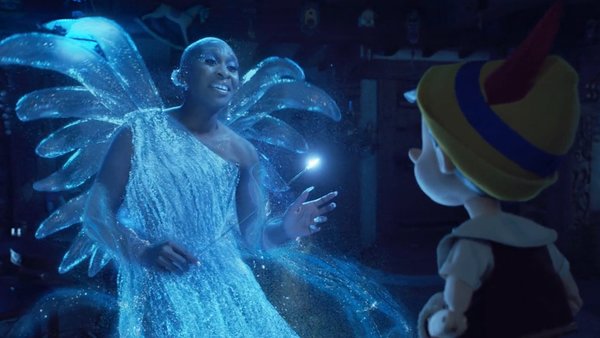
Aside from a spirited rendition of "When You Wish Upon a Star" from Cynthia Erivo's Blue Fairy, this is an oddly cold, disconnected film where its basic emotional throughline is concerned.
We know we should feel something, yet this is constantly at odds with the sheer perfunctory vibe of almost the entire movie, that it's an obligation for a streaming service rather than a story somebody desperately wanted to tell.
4. The Uneven Pacing

The 1940 movie itself has a relatively lazy, unfussed pace despite its seemingly reasonable 88-minute runtime, yet Zemeckis' remake commits the same sin as so many recent Disney remakes, of needlessly bloating itself out.
This new version is roughly 20 minutes longer than the animation, and given the relatively basic nature of Pinocchio's journey, you certainly feel that length by film's end.
The saggy, uneven pacing is most egregiously felt in the second act, once Pinocchio joins Stromboli's (Giuseppe Battiston) puppet show and things more-or-less grind to a halt.
Conversely, the third act feels like a frantic, rushed sprint, with nowhere near enough time being spent on the Monstro sequence, in turn undermining the tension and ultimate payoff.
3. It Sanitises The Original's Edgier Elements

Disney's remakes to date have quite predictably cleaned-up the edgier and more transgressive elements of their original animations - such as Dumbo's drunken escapade getting cut from Tim Burton's 2019 version - and Pinocchio is sadly no exception.
Zemeckis, presumably at Disney's mandate, has planed the cheekier elements from the 1940 film away, as is most apparent during Pinocchio's trip to Pleasure Island. No, don't expect to see him smoking cigars in this version, while the beer he consumed in the original is replaced with root beer.
The climactic Monstro sequence also feels considerably less intense than it did in the original, with Disney blatantly toning down the visceral terror of the giant whale.
All in all it results in a film that feels both less challenging and less interesting - parents know they've got a safe, comforting babysitting tool for their children, albeit one that's hugely lacking in personality and vision as a result.
2. The New Songs Don't Add Much

As with most musically-focused Disney remakes, Pinocchio adds a number of new songs to the movie's soundtrack, presumably in the hope that it could net itself an Oscar nomination for Best Original Song.
Yet that's unlikely to be the case, as the new songs from legendary composer Alan Silvestri and songwriter Glen Ballard don't really touch the sides at all.
Four new tunes have been written for the movie - Geppetto's "When He Was Here With Me" and "Pinocchio, Pinocchio," "I Will Always Dance" by Kyanne Lamaya's new puppeteer character Fabiana, and The Coachman's (Luke Evans) "The Coachman to Pleasure Island."
Despite the game efforts of the cast, who certainly don't want for enthusiasm, you'll be lucky if you can remember anything from these songs at all by the time the end credits roll.
1. It's Another "Pointless" Disney Remake

But the prevailing problem with the new Pinocchio? It fails to persuade us that it "needs" - or has any artistic reason - to exist, beyond Disney wishing to industriously remake all of their beloved animations over the next few decades.
There's just no creative spark here which would suggest that someone, in their heart of hearts, genuinely wanted to give the world an imaginative new vision of Pinocchio.
Instead it feels like a pure obligation, and despite Zemeckis' standing as a master filmmaker, he's perhaps never felt like more of a hired hand.
Considering the other, bolder takes on Pinocchio we've seen in recent years - namely Matteo Garrone's brilliantly dark 2019 adaptation of the original Pinocchio book - this can't help but feel like a staid, even soulless piece of cinematic Content.
Yet despite all this, Pinocchio isn't all bad. And so, here's what it actually gets right...
Ups...
4. The (Mostly) Solid Visuals

At least we can (usually) expect robust visuals from a Robert Zemeckis film, and despite its many flaws his Pinocchio is at least a regular feast for the eyes.
Sure, not all the character designs are going to work for everyone, but the digitally created Jiminy Cricket (Joseph Gordon-Levitt) looks fantastic, as does Pinocchio himself.
Yet it's during the Pleasure Island sequence where Zemeckis truly gets to dazzle viewers with a bombardment of eye-popping visuals.
The director clearly relishes the opportunity to expand the island's scope beyond that of the animated film, and it's by far the movie's most evocative and effective set-piece.
If some of Disney's live-action remakes - particularly Dumbo - have leaned too heavily on excessive green screen, at least there's a tactile feel to much of Pinocchio, which skillfully combines its digital and live-action elements into a mostly seamless whole.
3. The Strong Ensemble Cast

The film is also elevated considerably by the efforts of its enthusiastic ensemble cast. Tom Hanks is an obvious yet fitting choice to play Geppetto, bringing a grandfatherly charm to the character even if as written he's not given all that much to do.
Elsewhere in the live-action stakes, Cynthia Erivo gives a brief but impactful performance as the Blue Fairy, and Luke Evans is a campy riot as The Coachman.
On the voiceover front, Benjamin Evan Ainsworth gives a terrific performance as Pinocchio himself, while Joseph Gordon-Levitt brings spry life to Jiminy Cricket, and Keegan-Michael Key is amusingly mischievous as Honest John, no matter some of the iffy lines he's given.
For as many problems as the movie has, it's certainly not for the cast's lack of trying, and without such a shrewdly cast ensemble, it'd be far less watchable.
2. Fabiana Is A Compelling New Addition
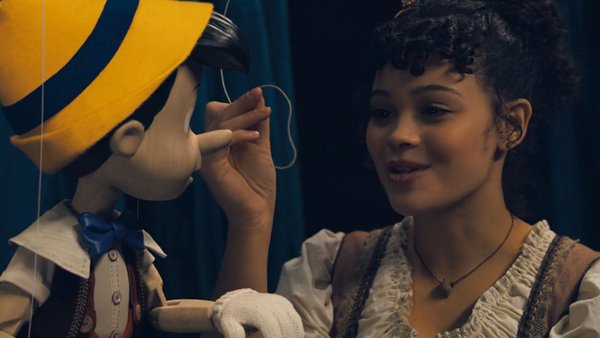
Of all the changes made to the story, there is one addition that actually works, and that's the inclusion of a new dancer-puppeteer character by the name of Fabiana, played by newcomer Kyanne Lamaya.
To be clear, Fabiana is an entirely original creation for Zemeckis' film and, believe it or not, surprisingly effective. Fabiana befriends Pinocchio at Stromboli's show, and uses her ballerina puppet Sabina to bond with Pinocchio.
Unlike most contemporary additions to Disney remakes, Fabiana actually feels totally organic to this story and world, and while certainly not a necessary figure in the scope of the story, she does bring some much-needed humanity to a narrative that often feels oddly detached.
1. Alan Silvestri's Stirring Musical Score
Though most of the new songs aren't up to much at all, composer Alan Silvestri's work on the general musical score is still as robust as you'd expect from the industry legend.
The new arrangements of the original film's most iconic tunes are largely faithful and stirring, and Silvestri's noted penchant for affecting orchestral sweep is certainly present throughout the movie.
While the new music doesn't outdo the original in any way, Silvestri is nothing if not an extremely safe pair of hands where composing is concerned, and does his best to extract as much emotion from the visuals as possible - no matter the relative blandness of the script.