Ranking All 17 Billion Dollar Movies - From Worst To Best
 It's hard to believe that ten years ago there had only been one billion dollar movie, with many box-office analysts proclaiming it as a feat that may never be duplicated. It's easy to understand their reasoning seeing as the elusive ten-figure club only had one member for seven years, but since then we have seen a further sixteen movies join the ranks. In fact, there has been at least one billion dollar movie every year since 2008 and ten in less than four years. It's easy to understand why, given that ticket prices have been steadily increasing over the years, with the 3D boom at the turn of the decade taking an extra couple of bucks out of the moviegoer's pocket. Given Hollywood's reliance on a built-in audience and brand recognition to market their tentpole releases to mass audiences, it's no surprise that the list of billion dollar movies contains only one original property (I'm sure you can guess which one), with the rest of the list comprised of sequels, adaptations and 3D re-releases. In fact, thirteen of these movies are a sequel of some kind, six have a colon in the title and five of them are the third entry in their respective franchises. Hollywood; where originality comes to die. However, a billion dollar gross is not a surefire indicator of a movie's quality and that notion served as the inspiration for the article. It is a list filled with highly anticipated sequels, final chapters in monumental franchises and a couple of all-time classics. Of course, as with any article that ranks movies based on quality, the list is entirely subjective. I'm sure I'll get criticism from some quarters (this is the internet after all), but it's all down to personal taste in the end, especially as none of these movies are offensively bad. Do you agree with the rankings? If not, how would you list these movies based on your preference? Do you think recently-released The Hunger Games: Catching Fire and upcoming The Hobbit: The Desolation of Smaug will join the billion dollar club? Let me know in the comments below.
17. Alice In Wonderland (2010)
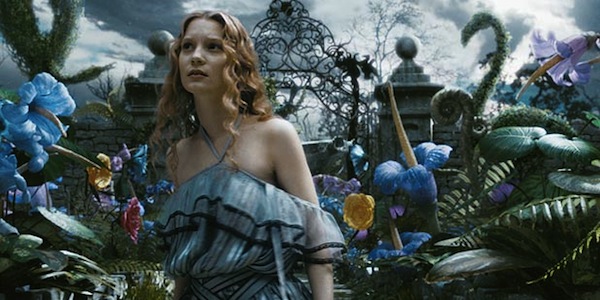 Tim Burton's completely unnecessary adaptation of Lewis Carroll's timeless 19th century fantasy novels took many people (myself included) by surprise when it stormed the box office in March 2010 en route to becoming Disney's second-ever billion dollar movie. Despite massive commercial success and Academy Award wins for Best Art Direction and Best Costume Design, it isn't very good. At times visually immersive, the movie is let down by a plodding narrative and flat 3D that compromises the top-notch production design. Featuring a sprawling ensemble cast, some of whom only provide voice-work and others that appear in CGI-augmented form, Alice in Wonderland is an undoubted visual treat, which is to be expected from the vivid imagination of Tim Burton. However, the narrative is slight to say the least, with many of the performances so over-the-top the 3D almost lets you feel the actors chewing the scenery. Shooting 90% of the movie against a greenscreen doesn't lend itself to Burton's darker sensibilities, and despite the incredibly detailed world of the movie a no-more-than-okay 3D post-conversion renders much of it murky, especially when the third act becomes a full-blown CGI assault on the senses. The movie opened to a massive $116.1m domestically, and took almost $700m internationally to finish up with $1.025bn worldwide, making it the sixth-biggest movie ever at the time. Would Alice in Wonderland have crossed the billion dollar mark if it wasn't the first high-profile 3D release following Avatar's game-changing success?* Probably not. Is it the worst movie to gross over a billion dollars? I certainly think so. *I guess we'll find out with the sequel recently announced for a May 27, 2016 release, this time with Muppets director James Bobin at the helm.
16. Star Wars Episode I: The Phantom Menace (1999)
 George Lucas returned to the director's chair after 22 years with what was at the time the single most anticipated movie ever. First rumored back in 1993, Lucas was now convinced that visual effects technology had sufficiently caught up to his vision to make the prequel trilogy a reality. What we got was one of the most disappointing movies ever made, and one that almost ruined a generation's cherished childhood memories. Enough has been written about the shortcomings of Episode 1 that I'll try to keep things brief. Lucas made a very lucrative career for himself out of one great idea, but his strengths have never been as a writer or director. Yes, the pod race sequence and the climactic lightsaber duel remain standout action sequences and the visual side of the movie is impressive, but the dialogue is stilted and the performances wooden. Lowest marks go to Jake Lloyd for showing us that one of cinema's most iconic villains began as an annoying little brat, and of course the abhorrent Jar Jar Binks. Nonetheless, any Star Wars movie is a guaranteed smash hit, and Episode 1 broke numerous box-office records on its way to a worldwide gross of $924.3m, which made it the second-biggest movie ever at the time. Thirteen years later, the 3D re-release somehow enticed people to return to the theater to watch the movie again, adding over $100m to the coffers and taking it past the billion dollar mark. At this point, Episode VII is almost a lock to become the most lucrative Star Wars movie ever when it hits theaters in 2015. Hopefully it's a lot better than this.
15. Pirates Of The Caribbean: On Stranger Tides (2011)
 After the bloated mess that was 2007's At Worlds End, the Pirates of the Caribbean franchise returned to cinemas after jettisoning most of the original cast, and trilogy director Gore Verbinski. Despite narrowing the complex mythology that had bogged down the previous two movies, On Stranger Tides still suffers from an overly-complicated plot, with Johnny Depp's iconic Captain Jack Sparrow coming dangerously close to overstaying his welcome. Very loosely based on Tim Powers' novel of the same name, regular screenwriters Ted Elliott and Terry Rossio once again over-write the script to within an inch of its life, and the movie features the multiple plot twists and double crosses that were used far too frequently in the last two entries in the franchise. Despite the efforts of newcomers Penelope Cruz and Ian McShane, along with the returning Geoffrey Rush (who has now inherited scene-stealing duties from Depp), On Stranger Tides is a tedious affair that features flat and uninspiring action scenes, with little of the excitement that made the first movie such a success. I actually fell asleep when I saw it in the theater, and had to catch it again on DVD. Nonetheless, the movie was a massive success when it was released. Despite having the lowest domestic gross of the entire franchise, On Stranger Tides took over $800m at the international box office and ended up with $1.045bn worldwide, in the process becoming the first franchise to have two movies cross the billion dollar mark. With Dead Men Tell No Tales slated for release in 2016, let's hope its more like The Curse of the Black Pearl than this one.
14. Transformers: Dark Of The Moon (2011)
 Michael Bay's so-called final involvement with the Transformers franchise (that went well) featured all of the hallmarks of the series; models that can't act, good actors wasted in terrible roles, a runtime at least 20 minutes too long, fetishistic product placement and of course, explosions. Lots of them. Still, at least it was better than Revenge of the Fallen, right? The script remains as terrible as we've come to expect from the franchise, of course. Undercooked characters, poor dialogue and gaping plot holes are still the order of the day, but that's not why people go to watch Transformers movies. Ignoring the fact that respected actors John Malkovich and Frances McDormand are completely wastedin their roles, Shia LaBeouf is at his most irritating and Rosie Huntington-Whiteley couldn't act her way out of a paper bag, at least the action is suitably spectacular. Reining in his excessive visual style (ever so slightly) to suit the addition of 3D, Michael Bay vastly improves on the incomprehensible action scenes of the last movie, and the final act devastation of Chicago is nothing short of jaw-dropping. Audiences clearly agreed as the critic-proof franchise saw its biggest hit yet, with Dark of the Moon scoring a massive $1.12bn at the worldwide box office, and it remains the sixth biggest movie of all time. Of course, this was helped by the added 3D and IMAX premiums, with the giant robot showdowns proving remarkably coherent when viewed in the third dimension.
13. Titanic (1997)
 Cinema's first-ever billion dollar hit remained the highest-grossing movie of all time for 12 years, and Titanic's enduring popularity was further reinforced when the 3D re-release became a smash hit in its own right. Not bad for a tortured production that saw the budget swell to $200m (making it the most expensive movie ever at the time), had studio executives panicking over the commercial prospects of a three-hour romantic epic, and saw the cast suffer for their art under a director labelled as 'tyrannical'. At a butt-numbing 194 minutes, Titanic isn't exactly a well-paced movie. Although the performances are solid across the board and the visual effects and production design are second to none, it doesn't half drag on until the eponymous disaster. The class-divided love story suffers from James Cameron's often-derided narrative and characterization problems, but when the ship hits the iceberg, all hell breaks loose in an expertly-staged sequence that seamlessly blends practical and visual effects to create both a visually and emotionally spectacular scene. I still can't stand that damned Celine Dion song, though. Following its release, Titanic was more akin to a cultural phenomenon than a blockbuster movie. It held onto the top spot at the domestic box office for a record 15 weeks and played in theaters for ten months, becoming the biggest movie in history with a worldwide total of $1.843bn and swept the board at the Academy Awards with 11 wins from 14 nominations. A 3D re-release in 2012 to mark the 100th anniversary of the disaster saw the movie gross almost $350m, which also made it only the second movie to cross the $2bn mark worldwide. That James Cameron sure knows how to put butts in seats.
12. Pirates Of The Caribbean: Dead Man's Chest (2006)
Pirates of the Caribbean: The Curse of the Black Pearl surprised many when it took over $650m at the box office in 2003. This, coupled with positive critical response and an Academy Award-nominated turn from Johnny Depp as the instantly-iconic Jack Sparrow meant there was a new blockbuster franchise in town. Three years later, the follow-up became only the third movie to reach the billion dollar mark, and reached the milestone in the quickest time yet. As with most large-scale sequels, Dead Man's Chest both upped the ante and expanded the mythology with mixed results. Highlights include another magnetic performance from Depp, the stunning CGI (especially in the case of Bill Nighy's Davy Jones) and some standout action sequences. However, the multitude of overlapping plot strands begins to over-complicate the proceedings, something that would become a hallmark of the Pirates franchise. The 150 minute runtime does the pacing of the movie no favors, especially as it is merely a placeholder to the final chapter in the trilogy. Still, Dead Man's Chest continues the escapist fun of the first installment, something the third and fourth movies were desperately lacking. One of the most anticipated sequels ever, Dead Man's Chest grossed $135.6m on its opening weekend which was a record at the time. The movie smashed numerous box office records over the following weeks, and ended its box office run with $1.066bn. A little over ten years since the infamous Cutthroat Island had almost rendered the pirate movie obsolete, the sequel to a movie based on a theme park attraction had become one of the biggest hits ever. Not bad.11. The Hobbit: An Unexpected Journey (2012)

10. Avatar (2009)
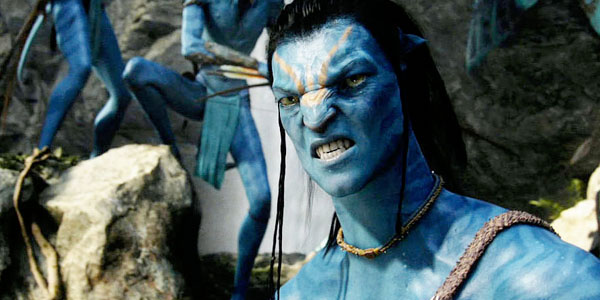 Twelve years after Titanic had smashed box office records on its way to becoming the biggest movie of all time, James Cameron made his return to filmmaking to... do the same all over again. Given that no other movies have even come close to the two-billion dollar mark at the box office, it is all the more impressive when you remember that Cameron has done it twice. During his time away from the silver screen, the director had been perfecting the technology required to bring his epic vision to life. Designing the world of Pandora entirely from the ground up, the photo-realistic performance capture work was filmed on a set known as 'The Volume', six times larger than any other of its kind, using equipment he had helped develop. Ironically, seeing as it was the movie started the recent 3D boom, Avatar's characters are decidedly two dimensional. The formulaic narrative and on-the-nose socio-political message are undoubtedly heavy-handed, but as a visual experience there is nothing quite like it. Seen on the big screen in fully-immersive 3D, audiences across the globe lost themselves in the world of the movie while Cameron showed he had not lost the knack to stage spectacular action set-pieces. I saw it twice in theaters (the second time in 2D), and it was definitely a lot better first time with the glasses on. After a solid yet unspectacular $77m domestic opening, Avatar showed unprecedented staying power by dropping only 1.8% in its sophomore frame, ultimately topping the US box office for 7 weeks on its way to becoming the first (and so far only) movie to gross over $700m at the domestic box office, also becoming the only movie to cross $2bn in overseas receipts. The highest-grossing movie of all time by almost $600m, it seems unlikely that Avatar's incredible box office success will be replicated anytime soon. Funnily enough, the only movie that might stand a chance is Avatar 2...
9. Iron Man 3 (2013)
 After The Avengers provided the biggest, brashest, largest-scale superhero movie ever produced (at least until Man of Steel came along), many were wondering how Marvel Studios would possibly be able to top it. The ever-savvy studio decided not to bother, and instead made Tony Stark's third solo outing a stripped-down, more character-based affair. Well, as much as was possible when you have a $200m budget and one of cinema's most popular characters in his flying metal armor. Continuing a solid track record of choosing the right directors for their projects, Marvel handed the reins of the franchise to Shane Black for only his second feature (and first in eight years). Unsurprisingly, the script featured some of the writer/director's archetypes (meandering voice-over, Christmas iconography), but Iron Man 3 is still arguably the best-written Marvel Studios movie yet. There are plenty of character moments and humor to complement several spectacular action scenes (with the attack on Stark's mansion the standout), the buddy-cop dynamic between Tony Stark and Rhodey deserves a movie in itself, and the hugely-divisive Mandarin twist took everybody by surprise in the age of internet spoilers. Despite Guy Pearce's underwhelming (and fire-breathing) villain, Rebecca Hall's undercooked character the inclusion of a child sidekick and a rushed ending, Iron Man 3 is undoubtedly one of Marvel's best. Coming just a year after the massive success of The Avengers, Iron Man 3 had the benefit of a huge knock-on effect at the box office. The movie had the second-highest domestic opening ever at $175.3m, and ended up with a worldwide total of over $1.2bn (more than the previous two Iron Man movies combined) that made it the biggest movie of 2013 by some distance and the fifth highest-grossing ever. If Robert Downey Jr. ever signs up for Iron Man 4, expectations have been raised considerably.
8. The Dark Knight Rises (2012)
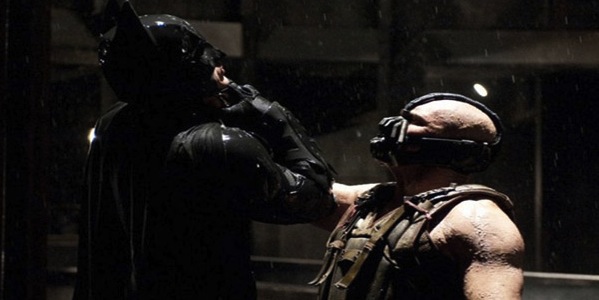 One of the most anticipated movies of all time, The Dark Knight Rises came with expectations it could never have realistically fulfilled. It was never going to be as universally adored as its predecessor, but that doesn't mean it isn't a good movie in its own right. Sure, there are some gaping plot holes and more than a few inconsistencies in the script, but it remains a fitting end to one of cinema's greatest trilogies. Let's start with the positives, shall we? Unfairly compared to Heath Ledger's iconic Joker, Tom Hardy's Bane is a worthy adversary, proving himself as mentally and physically superior to Batman as he exiles the Caped Crusader and seizes control of Gotham City. Christian Bale is as great as ever as Bruce Wayne, bringing the character's arc full circle as he reluctantly returns to action for a fight he isn't sure he can win. As always the supporting cast are superb, with series stalwarts Michael Caine, Gary Oldman and Morgan Freeman providing the necessary gravitas while newcomers Anne Hathaway, Joseph Gordon-Levitt and Marion Cotillard more than hold their own (despite the latter two being let down by some clunky plot machinations). Despite a lengthy running time and an overly-complicated and portentous narrative that creaks under its own weight by the end of the third act, The Dark Knight Rises is nonetheless a visually stunning, well-acted and epic conclusion to Christopher Nolan's trilogy. The Dark Knight surprised many by crossing a billion dollars at the box office 2008, and with significantly higher expectations it was expected that The Dark Knight Rises would be an even bigger success. And it was, but not by much. The movie opened to $160.9m domestically, just over $2m more than its predecessor but that is still an incredible achievement for a 2D-only movie, and it became the first movie since Avatar to gross $100m from IMAX screenings, aided by Nolan's preference for the large-scale format. Despite a lower domestic total, The Dark Knight Rises' increased international box office saw it finish up with $1.084bn worldwide, and it sits comfortably as the ninth biggest movie ever.
7. Skyfall (2012)
 After the critical and commercial success that came with 2006's reboot Casino Royale, the rejuvenated Bond franchise took a severe nosedive in quality in 2008 with the misjudged and poorly-directed Quantum of Solace. After a four-year hiatus from the big screen, 007 returned in style to mark the 50th anniversary of his big-screen debut with one of the greatest entries in the franchise's 23-movie history. After the previous two Daniel Craig movies opted to stay away from the classic Bond mythology, Skyfall instead opted to embrace the franchise's roots with several knowing references to 007's long and storied history. The result was a movie that felt familiar, yet still fresh; we saw the return of franchise regulars Q and Moneypenny in modern guises that more reflect our times, a facially-disfigured villain (albeit only glimpsed in one pointless shot) that has a top-secret lair, and a change in the hierarchy at MI6. Despite a disappointing finale that has more than a hint of Home Alone about it, unproven action director Sam Mendes handles the movie with aplomb, with no small thanks to the stunning cinematography of Roger Deakins. Both Judi Dench and Daniel Craig give their best performances yet in the Bond franchise, Javier Bardem's Silva instantly establishes himself as one of the all-time great villains of the series, and despite some inconsistencies in the plot (like the database MacGuffin that is never explained), Skyfall is a return to form of epic proportions. That Adele song remains terrible, though. No matter how hard she tries, nothing rhymes with Skyfall. Despite positive critical response, Skyfall shocked many when it crossed a billion dollars at the box office, becoming the biggest 2D-only movie ever released and almost doubling Casino Royale's $599m total to become the highest-grossing Bond movie ever by a massive distance. The movie became the first to ever cross £100m at the UK box office and almost 75% of the movie's gross came from overseas markets, showing the worldwide appeal of the Bond franchise. All told, Skyfall's worldwide total stands at over $1.1bn, which ranks as the eighth-biggest movie ever.
6. The Avengers (2012)
 The culmination of a groundbreaking movie strategy, Marvel Studios tied all of their existing standalone properties together in the ultimate superhero team-up, which smashed box office records around the world and ultimately grossed more than the first solo efforts of Iron Man, Thor and Captain America combined. Sure, it was never going to win any Academy Awards, but as pure popcorn entertainment The Avengers is two of the most entertaining hours to be had in a movie theater. After a slow opening act, the movie builds momentum as it establishes main protagonist, and Marvel Cinematic Universe favorite, Loki as the man who bands the heroes together. Once the team is finally united, the movie really kicks up a gear and culminates in the Battle of New York, a showstopping action set-piece that gives every character a chance to shine. Except maybe Hawkeye. Credit goes to Joss Whedon in only his second directorial effort to balance the unique blend of inter-personal bickering, throwaway gags and spectacular action that comes with the sprawling ensemble cast necessary for Marvel's most ambitious feature yet. After four years of teasing through various references and credit stings across the MCU, The Avengers became an absolute monster at the box office. Smashing the opening weekend record with a $207.4m domestic bow, the movie showed surprising legs at the box office and became only the third movie to cross $600m domestically on its way to over $1.5bn worldwide, officially making it the biggest movie that wasn't directed by James Cameron. Age of Ultron, consider the marker laid down.
5. Harry Potter And The Deathly Hallows Part 2 (2011)
 One of the biggest events in the history of blockbuster cinema, the release of the final chapter in the ten year, eight movie Harry Potter saga saw the series go out on a high note from both a financial and artistic perspective. It was already the most lucrative franchise in movie history by far before the release of Deathly Hallows Part 2, but the closing chapter of the cinematic and cultural phenomenon broke box-office records around the globe, as well as being the best movie in the series since Prisoner of Azkaban. The decision to split the final movie into two parts with release dates six months apart seemed to be a purely financial decision to build anticipation (and thus increase box office) for Part 2, but it turned out to be a wise move. Although Part 1 was as visually spectacular as we've come to expect from the franchise, the lack of real danger in the narrative sees the story merely treading water as opposed to advancing, saving all the best moments for the final movie. However, it all worked out in the end as Deathly Hallows Part 2 is the Potter universe's equivalent of a war movie, with an unrelentingly thrilling third act that stands tall as the franchise's greatest extended set-piece. A generation of cinemagoers have watched these characters develop over a decade, and the movie is an intensely rewarding experience that gives all of the key cast members emotional and physical character moments. David Yates' mastery of the source material provides a visually rewarding, action-packed, heartfelt conclusion to one of cinema's greatest franchises. Unsurprisingly, the end of the Harry Potter series resulted in the biggest box-office yet for the multi-billion dollar franchise (although the 3D release may also have helped). Deathly Hallows Part 2 took $169.2m in its domestic bow, the biggest ever at the time, and an incredible $483.2m worldwide opening weekend that easily stands as the biggest ever. It also became the first non-James Cameron movie to cross $900m in overseas grosses on its way to a worldwide total north of $1.3bn, and it sits comfortably as the fourth biggest movie in history.
4. Jurassic Park (1993)
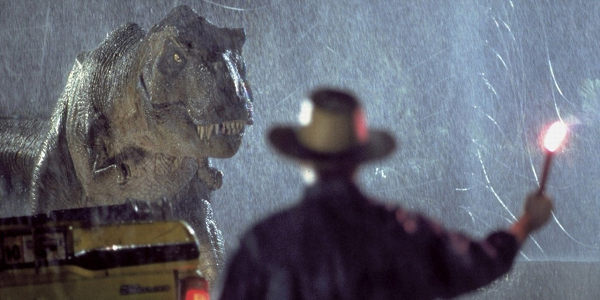 One of the greatest adventure movies ever made that sparked a generation's obsession with dinosaurs (me included) and helped bring about the CGI revolution, Jurassic Park became the highest-grossing movie of all time when it was released with a worldwide total of over $914m, a record it would hold for four years before Titanic sailed along. However, it would take 20 years and a 3D re-release to see Steven Spielberg's classic cross the billion dollar threshold. Maybe I'm a little biased as its one of the movies that defined my childhood, but Jurassic Park remains a timeless classic and one of the high points of event cinema a full 20 years after its release. Yes, the child actors veer dangerously close to annoying, the science is questionable at the best of times, and its a bold move for any movie to market its own merchandise onscreen. Yet the sense of wonder endures with every viewing; from the stunning first shot of the brachiosaurus, the flawless mix of CGI and animatronics (effects that still hold up today), and several thrilling action set-pieces and signature moments that retain their appeal despite being mercilessly parodied over the last two decades. Although most of the human characters are a little two-dimensional, they are buoyed by charismatic performances from the likes of Sam Neill, Jeff Goldblum and Richard Attenborough. But nobody watches Jurassic Park for intimate character studies, do they? As two hours of popcorn cinema, the movie is entertainment of the purest form. To mark the 20th anniversary of the movie's initial cinematic release, Jurassic Park was unleashed upon cinemas again, this time with the added gloss of 3D. In the age of shoddy post-conversions, it was refreshing to hear that it was a nine-month process to add the third dimension to the movie using the same company who had worked on the acclaimed 3D rendering of Titanic. The enduring appeal of Jurassic Park saw the re-release claim fourth spot at the domestic box office, and open to a huge $28.8m in China. All told, Jurassic Park 3D added almost $90m to the movie's box office total, taking it to $1.029bn, bumping it up to the thirteenth biggest movie of all time. To paraphrase the original tagline, it was a billion-dollar adventure 20 years in the making.
3. The Lord Of The Rings: The Return Of The King (2003)
 Peter Jackson's epic conclusion to the Lord of the Rings trilogy is one of the greatest achievements in movie history; a visually breathtaking, gorgeously designed, emotionally satisfying conclusion to one of cinema's landmark achievements. Audiences clearly agreed as box office takings increased with each entry in the series, culminating in Return of the King becoming only the second movie in history to cross the billion-dollar mark. Tying up all the loose ends across multiple plot strands as Frodo attempts to complete his epic quest to destroy the Ring (stop sniggering at the back...), each of the Fellowship are given ample screentime to complete their narrative arcs as the sprawling story draws to a close. Of course, at 200 minutes in length that shouldn't be surprising, especially when the movie decides to have half-a-dozen endings that verge on the tedious. But I digress; the smaller character moments are just as important to the movie as the incredible battle scenes, and there are plenty of both. Arguably the pinnacle of fantasy cinema, Return of the King brings an end to one of cinema's greatest trilogies with a blend of action, humor, heart and pathos that delighted critics and audiences alike to the tune of ten-figure box office and eleven Academy Awards. Following a domestic opening weekend of $72.7m, the overwhelmingly positive response to Return of the King saw audiences and critics alike label it as a 'must-see' event, and it set first-weekend records around the world, holding extremely well throughout the holiday season to become the first movie in six years to reach a billion dollars, ultimately closing with almost $1.12bn. It speaks volumes for the popularity of Return of the King that ten years after its release, with increasing ticket prices and 3D premiums now commonplace, it still remains the seventh biggest movie of all time.
2. The Dark Knight (2008)
 After Batman Begins inadvertently became the yardstick by which all dark and gritty reboots are now measured, Christopher Nolan returned to Gotham City for an even darker and grittier take on the adventures of the Caped Crusader. It also happened to be a billion dollar smash hit, one of the best movies of the year (that was unfairly overlooked by the Academy in most major categories), one of the greatest sequels ever made, and arguably the pinnacle of the superhero genre as a whole. Despite being carried by an utterly mesmerizing, instantly-iconic and deservedly Oscar-winning turn from the late Heath Ledger as arch-nemesis The Joker, The Dark Knight is much more than just a one man show. Across the board, the cast are nothing short of fantastic; Christian Bale's understated performance conveys the fractured psyche and dual personalities of Bruce Wayne and Batman, Aaron Eckhart's tragic demise from savior to villain anchors the narrative, while Gary Oldman, Morgan Freeman and Michael Caine provide the heart of the movie. Even Maggie Gyllenhall makes an impression in a somewhat underwritten role. Besides the acting, the bank heist is one of cinema's all-time great opening scenes, while the city-wide vehicle chase is a stunning example of why practical effects are often better than CGI. Technically, the writing, direction, cinematography and production design are all first-class, elevating the movie above Hollywood's standard generic superhero fare. Despite a relatively shaky third act (compared to the rest of the movie at least), The Dark Knight is fully deserving of its status as a modern classic of any genre. Although many analysts claim the demise of Heath Ledger created a morbid fascination with The Dark Knight that boosted box office takings, that's a hugely unfair statement. Although Batman Begins grossed less than $375m worldwide, the movie accrued a huge following on DVD that increased audience awareness for the sequel, as well as the obvious fact that Batman has always been one of pop culture's most recognizable figures. Still, it came as a surprise when The Dark Knight set a new opening weekend record with a domestic bow of $158.4m, and held incredibly well throughout the summer to become only the second movie in history to cross $500m domestically. Finally, a full seven months after its release, it became only the fourth movie to join the billion dollar club, squeaking past the mark with a total gross of $1.004bn. Interestingly, it is the only billion dollar movie in history that has seen less than 50% of its takings come from overseas markets.
1. Toy Story 3 (2010)
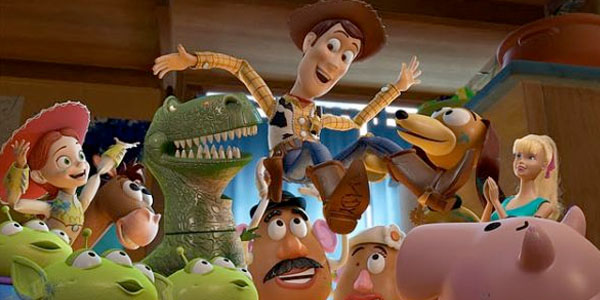 A full fifteen years after the original Toy Story broke new ground and paved the way for the computer-animated features that now saturate the marketplace (and eleven years after Toy Story 2 provided one of the all-time great sequels), Woody, Buzz and the gang returned in Toy Story 3. Not just a critical and commercial smash hit, or the biggest animated movie in history, but an expertly-crafted and massively satisfying conclusion to one of the greatest trilogies of all-time. The best animated movie ever? Possibly. The best threequel ever? Probably. The best billion-dollar movie? In my opinion, definitely. The plot centers on a grown-up Andy leaving for college, and the fate that befalls his treasured childhood possessions now that he no longer has any use for them. Shipped off to a daycare center where things aren't quite what they seem, under the masquerade of a prison-break movie Toy Story 3 infuses the story with the darker underlying themes of loss and rejection. Michael Arndt's Academy Award-nominated script deserves immense credit, as it introduces several memorable new characters to complement the returning favorites while also crafting an emotionally engaging story that sees the characters question their very existence, before things ultimately come full circle by the final reel. Heavy stuff for a 'kids' movie, huh? Deftly blending the heavier emotional aspects of the film with the series' signature wit, humor and adventure, the movie appeals to audiences of all ages on both an artistic and thematic level with the third act in particular bringing many a grown adult to tears. It became only the third animated movie to be nominated for Best Picture at the Academy Awards, and ended up walking away with the Best Animated Feature trophy. Despite being absent from the big-screen for over a decade, the Toy Story franchise had lost none of its appeal at the box-office. Toy Story 3 set a June record with its $110.3m domestic opening and with the added bonus of 3D ticket prices the movie became the first (and so far only) animated movie to gross over a billion dollars, finishing its theatrical run with a total of $1.063bn which is considerably more than the first two movies combined.