Ranking Every Aspect Of The MCU From Worst To Best
Movies, TV shows, and short films, oh my!

The all-powerful, all-conquering Marvel Studios is the biggest brand in Hollywood and can seemingly do no wrong. Not content to rest on their laurels, Marvel have set their sights on expanding their shared universe to even greater heights to capitalize on their insane levels of popularity.
This year saw the studio increase their release schedule to three movies a year. The first two, Guardians of the Galaxy Vol. 2 and Spider-Man: Homecoming, both earned at least $860m at the box office. The third, Thor: Ragnarok, quite frankly looks f**king fantastic.
Even on the small screen, Marvel show no signs of letting up. Inhumans hits next week, The Punisher and Runaways are coming to a streaming service near you before the end of 2017, Agents of SHIELD is returning for Season 5, and next year brings both Cloak & Dagger and New Warriors to television. And that's without even mentioning that all four Netflix shows have been renewed.
With so much content being produced on an annual basis, can Marvel keep up the quality across several media platforms or are they content to coast by on the strength of brand recognition? With sixteen movies, a web series, five short films and six television shows already in the bag just nine years after the Marvel Cinematic Universe began, the studio's output has varied wildly in quality without ever becoming outright terrible. Yet, anyway.
19. WHiH Newsfront
It may not be the most important or integral part of the MCU by any means, but WHiH Newsfront nonetheless provides an subtle extra layer of continuity to Marvel's ever-expanding cross-platform universe.
WHiH further reinforces Marvel Studios' idea that everything is connected no matter how insignificant it may seem as even their viral marketing campaigns are regarded as canon, with the digital shorts peppered with cameos from several recurring characters from the MCU both present and future. To further this point, the in-universe current affairs show is hosted by Leslie Bibb's Christine Everheart, a character who first appeared as a reporter in Iron Man almost a decade ago.
While the combined running time for the ten episodes produced so far is only a little over twenty minutes, WHiH has established itself as a fan-pleasing piece of foreshadowing that has covered everything from the Sokovia Accords to Scott Lang's release from prison for corporate espionage, including interviews with William Sadler's President Matthew Ellis.
18. Inhumans

There may only be the first two episodes available on which to pass judgement, with the series not officially premiering until September 29, but Inhumans is already looking like the MCU's first major misfire.
Originally planned as a feature film, Inhumans was eventually shunted onto television, and it already seems as if the show is doomed to fail unless the final six episodes provide a drastic improvement in overall quality. However, with a current score of just 7% on Rotten Tomatoes, that seems unlikely.
The costumes look cheap, the visual effects range from passable to decidedly ropey, the acting is frequently wooden, and the whole thing comes off as a half-hearted attempt to replicate the Game of Thrones formula in the superhero realm. Inhumans has its work cut out to keep its head above water when it finally hits the small screen.
17. Iron Fist

Easily the weakest of the Netflix shows to date, Iron Fist suffers much more noticeably from the 'mid-season dip' that has become a hallmark of Marvel's output on the streaming service than its peers, simply due to the fact that it is the least interesting series on so many levels.
Finn Jones has neither the acting ability or charisma to turn Danny Rand into a fully-formed character, often coming off as nothing more than a whiny and petulant brat. The story features as many tedious boardroom scenes as it does poorly-lit fight sequences, and the over-reliance on the Hand slows the narrative to a crawl much like it did for Season 2 of Daredevil.
Certain members of the cast try and do their best with the material, notably Jessica Henwick and a scenery-chewing David Wenham, but for the most part Iron Fist is a chore to get through and serves as a reminder that even the all-powerful Marvel Studios aren't immune to a misstep or two.
16. The Incredible Hulk

The forgotten stepchild of the Marvel Cinematic Universe, if it weren't for the return of William Hurt's Thaddeus Ross in Captain America: Civil War then you would be forgiven for thinking that the studio were trying to quietly erase Louis Leterrier's movie from existence entirely.
So far the only standalone feature not to get a sequel (follow-ups to Ant-Man, Doctor Strange, and Spider-Man: Homecoming are all on the way), after two disappointing solo efforts in the space of five years Marvel wisely decided that the Hulk works best as a supporting character rather than the anchor of a big-budget blockbuster, while also handily avoiding a legal battle with Universal (who own the distribution rights to movies where Bruce Banner's alter-ego takes center stage).
As a movie, The Incredible Hulk is perfectly okay. Not terrible, but not great either. The direction, performances and action sequences are solid-if-unspectacular, but as the lowest-grossing entry in the entire MCU and the second worst-reviewed (after Thor: The Dark World), it will endure as nothing more than a footnote in the history of Marvel's multiplex domination.
15. One-Shots

Essentially glorified DVD special features, Marvel One-Shots were one of the most anticipated aspects of the studio's home video releases. Offering a more human perspective on the events that transpired in the latest $150m blockbuster, fans have been clamoring for their return since All Hail the King came as a bonus extra on Thor: The Dark World over three years ago.
The Consultant, A Funny Thing Happened on the Way to Thor's Hammer and Item 47 all serve as a direct precursor to Agents of SHIELD, fleshing out the recurring characters of Phil Coulson and Jasper Sitwell while also giving an insight in the day-to-day operations of the organization when there aren't superheroes involved.
Similarly, the positive reception to Agent Carter saw the character eventually given her own television series, and All Hail the King seemingly retconned the hugely-divisive Mandarin twist from Iron Man 3 as well as giving Ben Kingsley another chance to ham it up as the oblivious Trevor Slattery.
Despite their brief and seemingly-inconsequential nature, the One-Shots actually played an important role in expanding the mythology of the MCU on a smaller level than the movies and their return would be much welcomed, even if it was purely a business decision to entice fans to purchase DVDs in the wake of dwindling sales of physical discs.
14. Doctor Strange

On paper, the story for Doctor Strange is very similar to that of Iron Man: selfish, incredibly talented but supremely arrogant a**hole finds themselves in a new-found state of self-pity after an accident, before learning to focus on the greater good and redeem themselves as a hero. Hell, they both even have similar goatees.
Despite sharing many superficial qualities, Doctor Strange distances itself from the rest of the MCU's origin stories by doubling down on the weirdness. Marvel Studios are often accused of playing it too safe in their movies, and Scott Derrickson attempts to blow these accusations out of the water by creating a series of trippy-as-f**k visual sequences straight from the pages of a Jack Kirby comic book that expand the established universe into the realms of sorcery.
That being said, the movie is by no means perfect. The third act falls into the standard 'stuff happening in the sky' trope that has plagued many a Marvel movie and one of the best casts the studio has assembled to date wastes Mads Mikkelsen, Rachel McAdams, and Chiwitel Ejiofor as Bland Villain #13, Pointless Love Interest #7, and I'll Be The Villain In The Sequel #4 respectively. In short, a promising start for the Sorcerer Supreme. Hopefully the sequel manages to delve deeper into the characters instead of focusing entirely on the endless visual possibilities.
13. The Defenders

The Defenders provided a microcosm of both the best and worst elements of the Netflix shows. It reduced the episode count from thirteen to eight, yet still dragged in the middle. It finally brought Daredevil, Jessica Jones, Luke Cage and Iron Fist together and allowed them to verbally and physically spar with each other, but it took almost three hours of exposition to get there.
Danny Rand, despite being the least interesting and most critically-reviled character by far among the central quartet, was made the focal point of the story as a walking MacGuffin. The various supporting characters from the individual shows interact with each other, but have very little to actually do. The great Sigourney Weaver was brought in to play the villain, but her motivations were left unclear as she was shunted off to the sidelines in favor of the Hand. Again.
Hardly a disaster, but The Defenders is definitely a missed opportunity that failed to realize its true potential. Some of the action is strong, fans will get a kick out of seeing the four heroes fight alongside (and often against) each other, and the actors generally have a great dynamic, with Krysten Ritter on scene-stealing sardonic form. Hopefully if New York's street-level heroes team up again, Marvel will learn from their mistakes and genuinely deliver the small-screen Avengers we were all hoping this would turn out to be.
12. Ant-Man

The universally-beloved Paul Rudd slotted seamlessly into the MCU as the most unlikely superhero this side of Seth Rogen's Green Hornet in Ant-Man, a movie that overcame its well-publicized behind-the-scenes issues to deliver another straightforward Marvel Studios origin story, albeit with some artistic flourishes.
Peyton Reed hits all of the story beats we've come to expect from the studio's potential franchise-launchers in workmanlike fashion; the reluctant hero looking to make things right for the sake of those closest to him, a two-dimensional villain that represents an evil version the title character, a forced love interest, cameos to establish the movie as part of the wider universe, a healthy dose of daddy issues and a CGI-fuelled climax. So far, so Marvel.
What elevates Ant-Man above mediocrity is the light and breezy caper-infused approach to the material that allows for some great visual gags and a script heavy on the one-liners, which was to be expected really given that the script is credited to Edgar Wright, Joe Cornish, Adam McKay and Rudd himself, the first actor to be publicly credited as having worked on an MCU script. Take that, Edward Norton!
11. Luke Cage
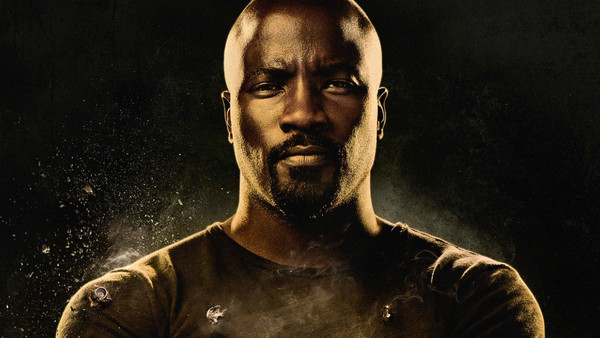
Much like Harlem itself, Luke Cage's television debut brought a melting pot of different ideas and inspirations to Netflix's corner of the Marvel Cinematic Universe. Again, it suffers from the same pacing and narrative problems that have become an unwelcome trademark of the Defenders' solo efforts, but overcomes these minor problems through confident performances and socially-relevant themes.
Juggling elements of the superhero origin story, blaxploitation, soap opera and even hints of the Western genre, Luke Cage plays a delicate balancing act and largely succeeds. Despite missing the crackling chemistry he shared with Krysten Ritter's Jessica Jones, Mike Colter does great work as the title character, leading the show with a great blend of understated natural charisma, confidence, heart and of course, the perks that come with being an a**-kicking bulletproof vigilante.
Luke Cage also features the best use of music across any of the MCU's many platforms, the series backed by a thumping soundtrack that enhances both the locations and the characters. Even though the early departure of Mahershala Ali's Cottonmouth greatly reduces the stakes for our hero as a much lesser villain is drafted in, expectations are high for the upcoming second season after such a dynamic and eminently watchable introduction to the man born Carl Lucas.
10. Agents Of S.H.I.E.L.D.

A lot of people may have given up entirely on Agents of SHIELD after an admittedly hit-or-miss opening season, but in the last couple of years the series has really come into its own and established a unique identity as one of the most underrated shows around.
It may have taken a good 30 episodes to find its footing, but once Agents of SHIELD leaned much more heavily into its comic book roots rather than being a standard procedural that just happens to take place in the Marvel Cinematic Universe, it became a hugely enjoyable aspect of the MCU.
In recent seasons, the show has varied up its narratives by covering everything from HYDRA and Inhumans to Secret Warriors, Life Model Decoys and even Ghost Rider, which keep the story moving along at pace. Agents of SHIELD also does a nice line in villains, with the titular team having come up against the scenery-devouring stylings of Bill Paxton, Kyle MacLachlan, and Powers Boothe in recent years.
The references to the movies can sometimes be a little on-the-nose, but Agents of SHIELD has compensated by drafting in names such as Nick Fury, Maria Hill, Sif, Peggy Carter and the Howling Commandos for cameos that are mostly relevant to the story. However, the real connective tissue comes through Clark Gregg's Phil Coulson, who leads the show with a warm and laid-back lead performance that belies the sheer volume of exposition he has to deliver on a weekly basis.
9. Thor

Thor has proved a tough nut to crack for Marvel Studios. Sure, people enjoy the character and Chris Hemsworth has made the role his own, but the God of Thunder's two solo outings so far rank among the weakest of Marvel Studios' output.
The problem has always been finding the right tone. The first Thor was a huge gamble, as it took the MCU away from Earth for the first time and had an awful lot of world-building to do in the process. Kenneth Branagh's Shakespearean stylings were a great fit for Asgard, but then the movie makes a jarring shift from which it never really recovers, becoming a fish-out-of-water comedy set almost exclusively in a dusty New Mexico town.
Follow-up The Dark World is generally regarded as the weakest entry in the studio's filmography, one that suffers very obviously from all of the studio's default settings (forced humor, tired love story, terrible villain, stuff happening in the sky etc.), with only the realm-hopping sequence during the third act providing any real sense of originality.
While the Thor franchise has many problems, it does have one ace up its sleeve; the rapport between Hemsworth and Tom Hiddleston's Loki. Bringing spades of charisma and screen presence to their respective roles, the actors have a fantastic dynamic that has seen the relationship between the characters remain in a constant state of evolution, no matter how many times they appear onscreen together.
8. Agent Carter

After seeing her solo show cancelled after two seasons and being killed off (well, dying of old age) in Captain America: Civil War, it seems that Hayley Atwell's Peggy Carter is slowly being pushed out of the Marvel Cinematic Universe bar a further cameo or two.
Which is a real shame because, thanks largely to Atwell's confident and dynamic performance across the movies, television shows and one-shots, Peggy Carter is arguably the most popular and well-rounded female character in the history of Marvel Studios. And she's also the most important woman within the fictionalized timeline of the MCU thanks to her role as an integral part of both the SSR and SHIELD for over 40 years.
Although the audience for spin-off series Agent Carter dropped by over 60% across just two seasons and eighteen episodes, this is in no way an indictment of the show's quality. The storylines may not have been the greatest or most original, but there was plenty of enjoyment to be found from the show's retro stylings and sense of fun, all anchored by Atwell's constantly charming presence in the lead role and several scene-stealing cameos from Dominic Cooper's rogueish Howard Stark.
7. Daredevil

Netflix got their corner of the Marvel Cinematic Universe off to an impressive start when Daredevil's first season dropped in April 2015. Although the second season may have stumbled from time to time, The Man Without Fear has more than earned his reputation as the linchpin of The Defenders.
Daredevil was the perfect character on which to lay the foundations as Netflix set out their stall early, establishing that their take on the MCU would be more grounded, realistic, character-driven and violent than either the theatrical features or ABC shows.
Charlie Cox fully inhabited the complex of conflicted psyche of Matt Murdock, and more than holds his own in the bone-crunching fight scenes. They say that every hero is only as good as their villain, so luckily for us we got Vincent D'Onofrio's stunning turn as Wilson Fisk, a terrifying force of nature that was sorely missed in the second season.
Following on from such an auspicious debut, audience expectations were sky-high for Season 2, but unfortunately the show failed to meet them. The additions of Jon Bernthal's Frank Castle was an undoubted highlight, but the misguided Elektra storyline and over-reliance on the Hand almost sank the narrative on several occasions.
The first season was a captivating blend of superhero origin story, police procedural, crime thriller and character study, and if the upcoming third season can hit those heights again then Daredevil could make a real claim for being one of the greatest comic book shows ever made.
6. Spider-Man

He may only have had a brief amount of screentime in Captain America: Civil War and has just one feature-length movie under his belt, but it is a testament to Tom Holland's performance that the argument can already be made for the English actor being the definitive cinematic incarnation of Spider-Man.
Many people rolled their eyes when another Spider-Man movie was announced, even in the wake of Marvel Studio's game-changing licensing agreement with Sony. We'd already seen a trilogy, a reboot and its sequel between 2002 and 2014, and there was a very real danger that audiences could suffer from Spidey fatigue.
Thankfully, Holland's extended cameo in Civil War and this summer's Homecoming laid any lingering doubts to rest. After reintroducing the character with a bang, Homecoming manages to tell a smaller story than many of its contemporaries, one that very obviously takes place in the MCU without becoming bogged down in the world-building that blights many blockbusters.
It also helps that it is possibly the funniest Marvel movie to date, utilizing the high school experience everyone remembers for different reasons to both dramatic and comedic effect without ever losing sight of the personal stakes involved.
Young, inexperienced, hopelessly out of his depth, socially awkward, incredibly excitable, morally conflicted, torn between great power and great responsibility and prone to a quip; this is a Spider-Man ripped straight from the pages of comic books.
5. Jessica Jones

The strongest of the Netflix shows, Jessica Jones makes better use of the leeway afforded by the streaming platform than any of its Marvel contemporaries. Using the creative freedom afforded by the lack of cinematic or network distribution to its advantage, the series creates a compelling story led by a damaged hero, packed with difficult themes.
The noir-tinged visuals give greater depth to the show's depictions of sexuality, rape and PTSD, things not usually found in a superhero television series. Of course, with this being Marvel on Netflix it has to be said yet again; the filler episodes in the middle are present and accounted for, but the performances from the cast help cover up the fact that the narrative is doing nothing but spinning its wheels for a couple of hours.
As a whole, the positives far outweigh the negatives. Krysten Ritter turns the borderline-cliched 'reluctant hero' into a three-dimensional character, full of snarky asides and a no-f**ks given attitude that gradually softens over the course of thirteen episodes, and finds a perfect counterpoint in David Tennant's creepy-as-hell Kilgrave, a villain made all the more terrifying because he doesn't believe what he is doing is wrong.
In short, Season 2 can't happen quickly enough.
4. The Avengers
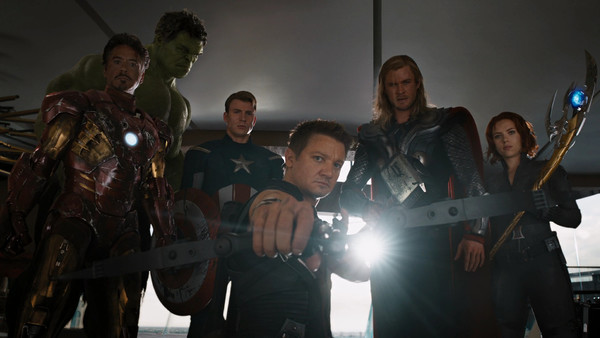
The reason why The Avengers worked so well is that it was the result of four years and five movies worth of buildup, allowing audiences time to invest in the characters and gradually learn about the wider mythology and its potential threats to the world. Marvel Studios were constantly telling us that we should be excited, because it was going to be the biggest superhero movie of all time. And it was.
Although The Avengers and Age of Ultron don't hold up quite so well on repeat viewings, the first time you watch either movie is nothing short of spectacular. Characters we've seen on solo adventures teaming up, trading banter, and constantly in-fighting before taking down a common enemy in a third-act action extravaganza is almost the definition of blockbuster entertainment.
Of course, they are by no means perfect. Both movies are guilty of unnecessary subplots, dramatic tension frequently offset by a poorly-timed one-liner, ignoring certain characters and reducing the main threat to a charismatic villain backed by an army of dispensable cannon fodder.
But when it works, it really works. Joss Whedon's trademark dialogue allows the disparate personalities to bounce off each other, the character dynamics are frequently shifting and the defining set-pieces are some of the most impressive ever seen in the comic book genre. Hopefully the Russo brothers manage to adapt and evolve the established template now that Whedon is no longer at Marvel Studios in any capacity.
3. Iron Man

If Iron Man was a terrible movie, then there would be no Marvel Cinematic Universe, it's that simple. Luckily for audiences around the world (and the money men at Marvel Studios), that turned out not to be the case.
Iron Man still remains one of the studio's very best efforts, carried by Robert Downey Jr's instantly iconic and improv-heavy turn as Tony Stark. Jon Favreau set the template that many of the studio's origin stories would follow, but never with the same level of success. The world-building is there, but it only exists on the fringes. It takes the material seriously, but always remains self-aware. The barrage of one-liners fit the characters and serve the story, they're not just there for a cheap laugh.
Iron Man 2, on the other hand, is the definition of how not to make a sequel. Essentially an advert for Marvel's upcoming projects rather than a decent standalone feature, it creaks under the weight of exposition and ends up as the cinematic equivalent of downloadable content; you don't need it, but it's there if you want to complete the set.
With Downey Jr. showing little interest in a fourth standalone feature, the divisive yet still massively entertaining Iron Man 3 (a typical Shane Black movie wearing superhero clothes) looks set to be the character's solo swansong. Iron Man is the most important figure in the history of the MCU, even if the legacy of the movies doesn't quite reflect the fact.
2. Guardians Of The Galaxy

James Gunn has the most creative freedom out of any filmmakers working under the Marvel Studios banner, and it shows. As the only current inhabitants of the cosmic side of the MCU, the Guardians of the Galaxy are free to do pretty much whatever they want seeing as their adventures have little narrative bearing on the Earth-set franchises.
The first movie was a breath of fresh air for the increasingly-formulaic superhero genre in 2014, a pop-culture referencing throwback to the space operas of old, this time armed with a blockbuster budget and a brilliant soundtrack to boot. Sure, it suffered from yet another undercooked villain (this time doing the bidding of Thanos and his Exposition Chair) but the overarching sense of fun and natural chemistry between the cast kept things moving along briskly.
Audiences loved the witty, bickering and anarchic Guardians and recognized the movie as the direct product of Gunn's vision. The Troma veteran even had the balls to cast Vin Diesel and Bradley Cooper, two of the biggest movie stars around, as a tree and a racoon respectively.
Vol 2. may have lost some of the freshness of the original by ticking the required sequel boxes of going bigger and adding more backstory, weakening the final product as a result, but it remains a hugely entertaining follow-up that brings heavy doses of both the irreverent humor and fantastical locations that have quickly become the Guardians' stock-in-trade.
1. Captain America

Who would have thought that the least interesting Avenger on paper would turn out to be their biggest success story onscreen? Captain America, a straight-arrow do-gooder with a strong moral compass that always does the right thing, could easily have become a dull and one-dimensional character. Instead, Steve Rogers has become the most well-rounded character in the entire MCU.
It helps a great deal that each of the standalone movies have stood out as a unique entity, eschewing the traditional formula of franchise filmmaking.
The First Avenger is a pulpy old-fashioned period flick about a man regarded as 'weak' his entire life given incredible powers before trying to figure out his place in the world, the politically-tinged Winter Soldier sees Rogers' past come back to haunt him before a sense of loyalty sees him betrayed and hunted by a system he was created to protect, while Civil War finds our hero at odds with some of the people closest to him as he disobeys the law in an effort to hold onto his beliefs.
Credit is due to the writers and directors who have constantly evolved the character and the stories around him, but the most important ingredient in series' success is Chris Evans. The actor brings great depth to a potentially one-note character and has allowed shades of grey to seep into the traditionally stoic hero, and his work has allowed us to truly buy into Steve Rogers as a wimp, soldier, fugitive, outlaw and hero.
How would you rank these aspects of the MCU? Let us know down in the comments.