Ranking Every MCU Film From Worst To Best
Which hero gets the biggest bragging rights?

Who would have thought that any idea as bold and lurid as Kevin Feige's unified Marvel universe would ever get anywhere near old age? Most franchises that get anywhere near their twelfth addition have usually jumped and rejumped the shark several times, or at least had the dignity to retreat to the safer haven of straight to DVD releases and C-Movie casting alternatives. But not so of the MCU.
The series that was built on the surprisingly broad shoulders of Tony Stark has survived more than one release that could well have put paid to lesser projects, while shrugging off accusations of a lack of sexual and racial diversity to broaden out into a many limbed monster that will (in theory) exist long after the first stars are too old to continue.
And with Phase 2 now over, this is the perfect opportunity to look back at what has gone before - including the curiously tagged on Ant-Man - before the MCU rips itself apart with Civil War and goes somewhere entirely unprecedented with Doctor Strange. This is very definitely a cross-roads, and hopefully Feige will draw more from the films at the top of this ranking than those languishing in its darkest depths.
So where does the ant-house that Edgar Wright almost built actually figure in the new ranking?
12. Thor: The Dark World

Given Marvel's track record and Pixar-like agenda to making hit after hit after hit, the chances of them ever making a film as bad as Thor: The Dark World are hopefully slim.
Despite some good ideas - Loki as Hannibal Lecter, the death of Frigga and the appearance of the Infinity Stone/Aether - the best elements are painfully undercooked and it takes way too long to develop to the point where it's actually entertaining.
There's just about enough in there for Loki fans to get excited about, thanks mostly to Tom Hiddleston's inevitably scene-stealing performance and Chris Hemsworth still fills the armour well. But for the first time with Thor, the fact that his solo world is a little silly showed: perhaps because Alan Taylor didn't quite embrace the theatricality that Kenneth Branagh had brought to the first film. And it wasn't like the film could fall back on the culture clash element that works so well for Thor's position in the wider MCU, where there's pleasure to be had in his clashes with the "normal world".
Dropped back into his own world with dark elves (another wasted idea), Thor just isn't as interesting on his own. Hopefully, the third film - with its promise of greater stakes and closer ties to the rest of the MCU - will do better.
11. Iron Man 2

It's not quite fatal, but Iron Man 2 takes everything that was good about Iron Man and scrumples it up into a little ball before casually tossing it out of the window.
Where the first is a funny, cocky portrait of Tony Stark's metamorphosis from short-sighted, arrogant tech-billionaire brat to legitimate hero, the second is about his difficulty to cope with it. That transition is too quick and unfounded in comparison to the explanation behind Iron Man 3's crisis of confidence and identity, but ironically it's the best part of the story. And that all comes down to Downey Jnr's stellar performance as Tony Stark.
When he puts the suit on, rather frustratingly, the whole thing descends into a vulgar toy story of threatless fights and zero stakes, with one dimensional villains who could have been so much more. In the end it just feels like the enthusiasm ran out about two thirds of the way through and the rest was phoned in.
10. The Incredible Hulk

As long as Marvel classify Louis Leterrier's film as an official MCU Phase 1 movie, there's little cynics can do to ignore its claim. And frankly, though there are a lot of issues and the production power struggles show in the final product, it's far from as terrible as some of the criticism levelled at it might suggest.
Tim Roth chews way too much scenery (as usual), Ed Norton isn't quite likeable enough and the end is deeply unsatisfying, but the premise is a strong one and the introduction of the Abomination was inspired. It's just that the execution of even the best ideas was never refined enough and despite the obvious agenda to add emotional stakes, the film is curiously heartless.
The result is that the action sequences look impressive on the surface but they're soulless spectacle, as if the ghosts of Ang Lee's preceding adaptation loomed so large that the only solution was over-compensating to the point that Leterrier made a violent B-movie.
9. Thor

Just as James Gunn would for Guardians Of The Galaxy, Kenneth Branagh succeeded in making Thor a mainstream property because of the way he treated the source. Despite the inevitable appeal of sanitising the Norse God/Alien to fit more conventional expectations, Branagh neither treating the material like it was silly, nor attempting to go gritty with it.
The director was an inspired choice, drawing on his theatrical experience and fully embracing the camp of the character. It was also his approach - of dropping the arrogant hammer-wielder into his own George Of The Jungle/Crocodile Dundee culture clash story - that established the model for Thor's dynamic in the Avengers.
Though the lore and mythology around Asgard is compelling, it's simply not as entertaining as seeing how Thor interacts and clashes with "modern" characters, where he is a curio and an anomaly, rather than the norm. And Branagh's film was smart enough to stack his film towards those sequences, while introducing the franchise's most popular character, in Tom Hidleston's serpentine Loki.
8. Captain America: The First Avenger

Despite the existence of four other Phase 1 movies by the time Captain America came out, Joe Johnston's stand-alone felt like the first time that the MCU was a real thing. Previously, flirtations with a shared universe had amounted mostly to easter eggs, and despite the announcement of an Avengers ensemble, it wasn't until April 2011 that production actually started.
Surprisingly the slow-burning retro-futurist adventure did significantly less well at the box office than Thor, but the film itself was more entertaining as a whole. Thanks to brilliant casting of both Chris Evans and Hugo Weaving, the charm and character focus was enough to fill in for the lack of a more stylised aesthetic. And while it wasn't quite pulpy, but it's certainly the most pulpy of all of the MCU films.
It was an unfortunate shame that the film so definitively moved away from Cap's contemporary timeline - particularly as it meant the end of the Howling Commandos - but the amalgamated universe required the first Avenger to meet the rest of the team, and it was a good move in that respect.
7. Iron Man

Without Iron Man's success in 2008, there wouldn't be an MCU. There also probably wouldn't be a DCCU, either, but that's not for discussion here. And without Robert Downey Junior's casting as Tony Stark, there probably wouldn't have been the same kind of ground-breaking success.
The actor - almost fabled for his debauched, self-destructive behaviour - was Marvel's biggest gamble at the time, particularly given how close they'd got to having Tom Cruise in the famous red suit. But typically, just as he's done with the majority of his roles, Downey Jnr was a revelation, drawing on his own personal experiences as a public "wild child" to pull Stark off the page in not only an authentic way, but in a devastatingly charming one.
His origin story is easily the least spectacular of all of the heroes in the MCU, but watching Downey Jnr claw his way from brattish arrogance to self-awareness and altruism is utterly irresistible thanks to the lead actor and a very tight script.
And in presenting Obadiah Stane as Stark's antithesis as well as the antagonist, Marvel set the model for almost all of the MCU films, where the most compelling villains reflected something about the hero.
6. The Avengers

Despite a tacked on third act that appeared to be filling a violence quota and a silly name change for UK cinemas, the Avengers was an astonishing success, not least in financial terms.
That public response - and the critical reception as well - was the perfect tonic to suggestions that the film would have too many elements and too many personalities to ever work, as well as the whispers that some of the characters weren't all that great.
But in bringing Joss Whedon on board, Marvel hit the bullseye, as the Buffy creator balanced all constituent parts perfectly, and managed to actually make Hulk work as a sellable character again. Whedon deserves credit for a lot of brave decisions that paid off magically: the reuse of Loki as the main villain primarily, but also killing Agent Coulson, reimagining Tony Stark as a grand manipulator and pulling off some legitimately hilarious gags.
It's the film's commitment to spectacle and blockbuster principles without seeking to dull the audience's brain with special effects assaults that should be remembered most fondly, however. Because balancing that with 8 main characters (including Loki) was an unprecedented achievement.
5. Ant-Man

No doubt a controversial choice, but Ant-Man was far more than the Phase 2 after-thought it appeared to be when Marvel shifted their slates to accommodate Civil War.
For Peyton Reed to have achieved anything positive with it is hugely impressive; that he made the funniest, second biggested hearted adventure with a hero who was in danger of effectively becoming Marvel's Aquaman is downright astonishing.
It's a divisive film, inevitably, but a lot of its success actually comes down to the reason some are calling it a failure - the departure of Edgar Wright part of the way through production. While Wright's fans will no doubt fall over themselves to suggest he should have been allowed to finish his vision, the fact that the bones he built were fleshed out by Reed's less zany ideas has to be a good thing.
Paul Rudd is incredibly well cast, his team of sidekicks - though a little self-indulgent - likewise, and the relationship between Michael Douglas and Evangeline Lilly is one of the most believably human dynamics in the entire MCU.
That perhaps is the point that will define how much people like Ant-Man. Wright's vision was for something more fantastical, but Reed and Adam McKay crafted a relatably human story with sprinkles of magic. And while it's not like the rest of the MCU, that isn't a bad thing at all.
4. Iron Man 3

Obviously, the whole Not Really The Mandarin situation was a bitter pill to swallow for a lot of fans of Marvel's comics, but if you push that aside (and it's not really that much of a problem in hindsight anyway), Iron Man 3 is exactly what an Iron Man movie should be.
It's packed with spectacle and set-pieces - including the ludicrously entertaining Iron Legion sequence - it has a genuinely threatening villain (fire breathing capitalist pigs with political agendas always fly) and it has Tony Stark wrestling with some serious demons.
Thanks to the release coming in the wake of the Avengers, retro action junkie Shane Black was able to play with the notion of a hero counting the costs of his own heroism with a knife-sharp script that blew all of the problems with Iron Man 2 into the abyss. And of course the film set the precedent for the haunted version of Stark that was so key to Age Of Ultron, and whose new principles will change the world entirely in Civil War.
3. The Avengers: Age Of Ultron
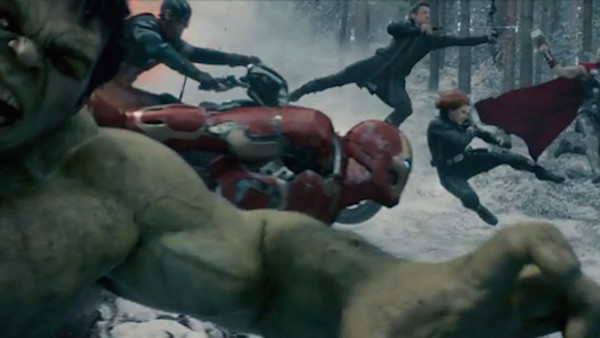
It's still baffling how Joss Whedon managed to balance all of the elements he had in the air for Age Of Ultron without making a mess, but it is perhaps telling that the experience exhausted him so much that he immediately cut ties with the MCU in its wake.
The result of his blood, sweat and tears (as well as some Marvel tinkering) is a huge spectacle that not only explored some weighty issues like responsibility, causality and mortality, but which was also funny enough and entertaining enough to gleefully wear the Popcorn Movie label.
There were fan-baiting moments like Hulk V Hulk Buster, Iron Man V Cap and an origin story for Black Widow, and the script was strong enough to knit several enormous set-pieces together without compromising on the simple central message that the cost of being an Avenger can be awful.
Yes, James Spader's performance was a little self-congratulatory, but when something is that irresistibly watchable, why should anyone derail it with anything as vulgar as restraint?
2. Captain America: The Winter Soldier

Like Ant-Man's generic flirtation, The Winter Soldier's homage to 1970s political intrigue movies like All The President's Men was an impressive transgression, and an extremely brave one. Considering the principles that had built the MCU to a crescendo at the end of Phase One, breaking to build slowly after Iron Man 3's high octane starter was risky.
The fact that it came after Thor: The Dark World made that doubly true.
But thanks to the brilliant direction of the Russos and an incredibly compelling script escalating HYDRA's threat and re-introducing Avenger-in-waiting Bucky Barnes, the gamble paid off.
The Winter Soldier is arguably the most stylised of all of the MCU movies, and it's definitely one of the most intriguing. And anything that introduces Robert Redford to younger audiences and sells toxic politics so well (take note, George Lucas) deserves all the praise it gets.
1. Guardians Of The Galaxy
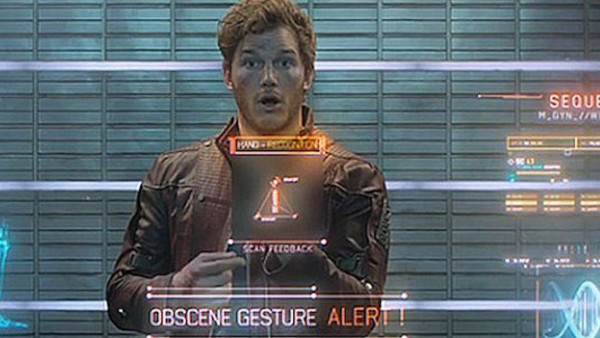
When Marvel announced that the next source material they would be adapting was Guardians Of The Galaxy, few could have predicted that the film would even work, let alone emerging at the top of the entire MCU pile. Those initial feelings of doubt were compounded rather magnificently by the casting of Vin Diesel as a talking tree and Dave Bautista, the wrestler. Cynicism spiralled, and it looked like Marvel were over-compensating too much after years of a lack of creative diversity with a gamble that could have left the future plans for broadening of the MCU in tatters.
But then, thanks to the power of some extremely good casting (Chris Pratt being a big part, but not the only one) and Gunn's commitment both to the source and his characters, Guardians fit together like the most gloriously unexpected jigsaw puzzle.
Despite the presence of some odd characters - to say the least - Gunn never treated the material like it was as silly as it clearly was. And in Chris Pratt and Groot, he had the most surprisingly charismatic (and disarmingly devastating) pair to hang the brilliant script on.
It also obviously helped to have access to a soundtrack that would become a character in its own right, and which sets a precedent to build an extra level of anticipation for the sequel.