Remembering Richard Attenborough: 6 Defining Career Moments

The world lost a true cinematic legend on Sunday.

The world lost a true cinematic legend on Sunday the 24th of August with the death of Richard Attenborough, Baron Attenborough, who passed away at the age of ninety, just five days short of his ninety first birthday. Educated at the Royal Academy Of Dramatic Art (RADA), which he would later serve as Chairman and then President, Richard Attenborough's career began in the 1940s, when he accumulated a string of bit parts on both the screen and stage during the Second World War, in which he joined the Royal Air Force and was made a part of the RAF Film Unit, where he recorded bombing missions. Over the next few decades, Attenborough appeared in a handful of roles in both British and American films and plays (including the world's longest-running theatrical production), becoming involved in a number of projects as a producer before switching his hand to directing. He would eventually direct twelve films with varying degrees of success, whilst additionally becoming involved with an assortment of causes and organisations, from Chelsea FC to UNICEF, in later life. The father of three children (one of whom passed away in the Asian tsunami of 2004), Attenborough was also known as the brother of renowned naturalist Sir David Attenborough, who survives him. This article seeks to pay tribute to the man and his distinguished career.

6. Breaking Out (Brighton Rock, 1947)
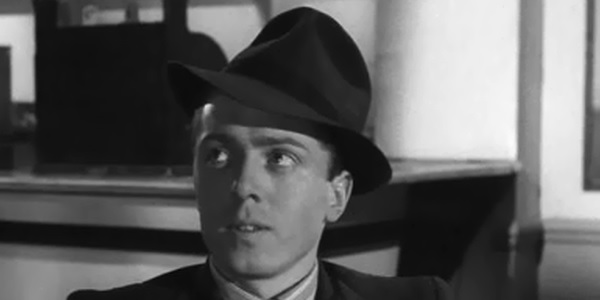
Brighton Rock was first published as a novel in 1938. Written by Graham Greene, it focuses on the sociopathic Pinkie Brown, who pursues a newspaper reporter responsible for indirectly causing the death of his gang's leader by exposing one of their rackets, becoming involved with a naive waitress named Rose and pursued by an amateur sleuth named Ida Arnold. A theatrical production of the novel began on the West End several years later, in which Richard Attenborough made the role of Pinkie his own and earned a number of plaudits for his portrayal. This led to him being cast as the character in a 1947 film adaptation, despite the fact that his film experience to that point consisted of a few walk-on and minor supporting roles. Directed by John Boulton, the film was the most popular British release of 1947, and its success allowed Attenborough to work consistently as an actor in the years that followed and make his name more widely known across Britain. A remake of the film was released in 2010, starring Sam Riley in the Pinkie role, but it failed to generate much in the way of interest from filmgoers, earning back just a sixth of its budget. The original (as well as the novel) is still considered a classic, however, immortalised not only by its perfect 100% score on RottenTomatoes but also by Attenborough's chilling portrayal of its psychotic lead.

5. Embraced By A New Generation (Jurassic Park/Miracle On 34th Street, 1993/1994)
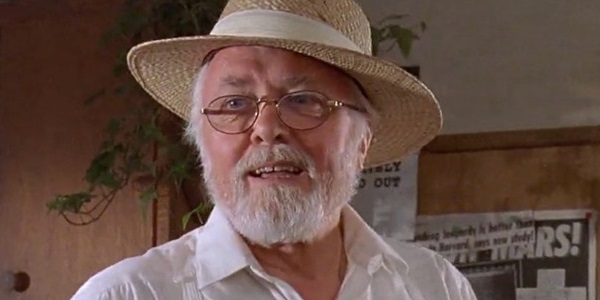
After regularly appearing in films as an actor in the 1950s and 1960s, Richard Attenborough appeared less regularly from the 1970s onwards, appearing in no films between 1979 and 1993 as he opted to focus on directing instead. In 1993, however, he became known to a new generation of filmgoers when he appeared in Steven Spielberg's Jurassic Park, playing the role of park owner John Hammond. Spielberg had initially wanted to cast Attenborough as Tootles in 1991's Hook, his reimagining of Peter Pan that featured Robin Williams (also recently deceased) in the lead role. Whilst Hook made a respectable $300 million at the box office, however, Jurassic Park made close to $1 billion and broke records in a number of countries across the globe. In 1994, Attenborough then appeared in the lead role of Kris Kringle in a remake of 1947 Christmas film A Miracle On 34th Street. Despite mixed reviews, the film has become something of a holiday season staple, ensuring that Attenborough appears on television year after year when individuals seek to lose themselves in Christmas-themed cinema. Attenborough would appear in a handful of other films after these, including Jurassic Park's 1997 sequel, The Lost World (despite his character not appearing in the source novel). Despite these, however, Jurassic Park and Miracle On 34th Street have remained the defining films of his later years and will be fondly remembered.

4. Early Directorial Successes (Oh! What A Lovely War/A Bridge Too Far, 1969/1977)
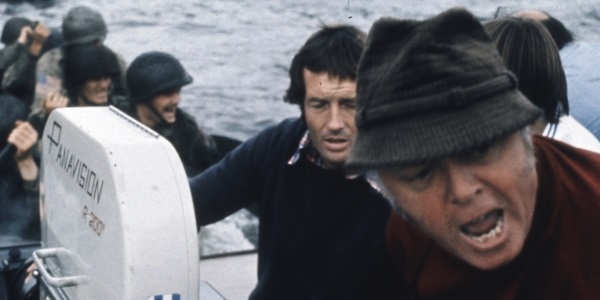
Most directors begin their careers with something small, such as short films or independent releases. Not Richard Attenborough, whose directorial debut in 1969 was an adaptation of stage musical Oh! What A Lovely War, which boasted a huge cast and a widespread release. Nominated for 8 BAFTA's, it won 5, as well as a Golden Globe for its cinematography. In the wake of the film's release, Attenborough was invited to star and direct in a film about the early life on Winston Churchill by writer/producer Carl Foreman, who was blacklisted in Hollywood following the release of classic Western High Noon but found success in Britain with films such as The Bridge On The River Kwai and The Guns Of Navarone. Foreman had been encouraged to take up the project by Churchill himself, as the two-time Prime Minister enjoyed the Guns Of Navarone and sought to meet the film's writer following the its release. Though declining to star, Attenborough accepted Foreman's offer to direct the film, delivering a well-received account of Churchill's schooldays, military service and journalistic career prior to his election to Parliament. Though nominated for three Academy Awards, the film ultimately took home none. One of the definitive war films would follow in 1977 in the form of A Bridge Too Far, an epic that focused on the ill-fated Operation Market Garden, which saw the Allied Forces attempt to secure three bridges in the Nazi-occupied Netherlands. With a budget of $25 million and an all-star cast that included Michael Caine, Sean Connery, Robert Redford, Laurence Olivier, Gene Hackman and Anthony Hopkins, Attenborough proved his ability to helm a large-scale production, and even though the film was criticised by some for its length and ignored by award voters for its exposure of failures in the Allied campaign, it remains a fixture on many a man's DVD shelf.

3. Leading One Of The Greatest Films (The Great Escape, 1963)
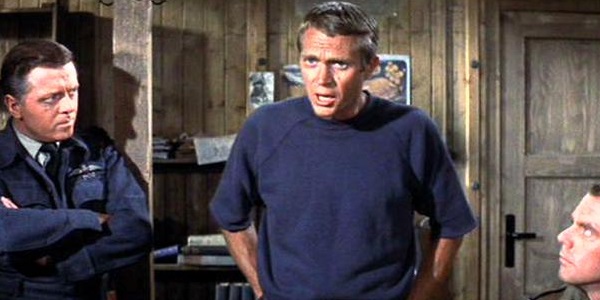
Though Brighton Rock made him a notable name with British audiences, it wasn't until the 1960s that Richard Attenborough would become well-known Stateside. This was when John Sturges, the director of The Magnificent Seven, opted to make an adaptation of Paul Brickhill's The Great Escape, which documented the escape of 76 men from a German prisoner of war camp in 1944. 73 of the men were eventually recaptured, with 50 being shot on the orders of Hitler, making the story a triumphant but ultimately tragic one - perfect for Hollywood. Despite the real escape involving airmen from a number of countries, the film adaptation opted to exclusively use British and American actors (including James Garner, Charles Bronson, David McCallum, James Coburn and Donald Pleasance) to play predominantly British and American characters, though in reality, all American servicemen were transferred out of the camp before the escape took place. Despite this strong deviation from reality, the film is held in high regard to this day and ranked amongst the all-time greats by many (From Quentin Tarantino to this author). Despite the iconic image of the film being Steve McQueen (as Hilts) attempting to traverse barbed-wire fence into Switzerland on a motorcycle, Attenborough is arguably the lead of the film in the role of Roger Bartlett, the architect of the escape, and the character will always be the most iconic portrayal of his acting career given the Great Escape's enduring popularity.

2. Back To Back Golden Globes (The Sand Pebbles, 1967 And Doctor Dolittle, 1968)
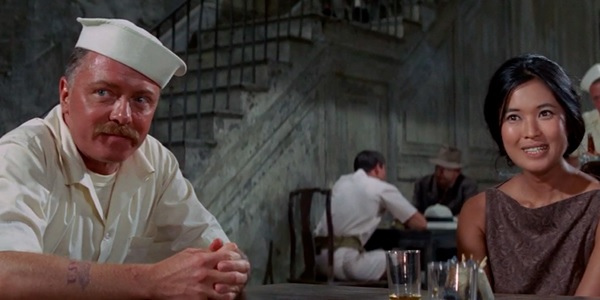
After appearing in The Great Escape, Richard Attenborough's profile as an actor was greatly enhanced, and more high profile roles on both sides of the Atlantic Ocean were offered to him. 1964 saw him star in three films, The Third Secret, Séance On A Wet Afternoon and The Guns Of Batasi. Though the former wasn't particularly well received, the latter two were and Attenborough's performances in them saw him take home the BAFTA Award for Best British Actor in 1965. A role in The Flight Of The Phoenix alongside James Stewart followed, before Attenborough reunited with Steve McQueen in The Sand Pebbles in 1966. The film, about an American gunboat in tense 1920s China, saw him play Frenchy Burgoyne, a seasoned sailor whose actions are the catalyst for the film's action-packed second half. A Golden Globe for Best Supporting Actor was conferred on him for the sensitive portrayal. A second Golden Globe, also for Best Supporting Actor, would follow in the subsequent year to round off a considerably award-laden few years for Attenborough. The film in question for this second victory was Doctor Dolittle, a musical that saw Rex Harrison play the role of the lead character that many man only remember for Eddie Murphy's portrayal some thirty years later. Whilst he would never again receive any major awards for his acting career following his Golden Globe double whammy, Attenborough was renowned for his craft worldwide by the end of the 1960s as a result, and his performances continue be to be appreciated today.

1. Winning Best Picture & Best Director (Gandhi, 1982)

With Oh! What A Lovely War, Young Winston and A Bridge Too Far, Richard Attenborough more than proved himself as a competent director of both biographical films and large-scale productions. Despite this, however, he struggled to secure funding and locations for his dream project, a cinematic retelling of the life of Indian independence leader Mohandas Gandhi, which he'd been trying to bring to the screen since 1962. In 1976, before the release of A Bridge Too Far, Attenborough was able to secure support for the project from Warner Brothers, though a state of emergency in India declared by Indira Gandhi (the-then Prime Minister of India and daughter of Mohandas' contemporary and fellow figure in the Indian independence movement Jawaharlal Nehru) rendered filming impossible until 1980. Attenborough then secured funding through Goldcrest Films, the National Film Development Coroporation of India and by selling his and his wife's rights to 10% of the profits from The Mousetrap, the 1952 play (still running to this day) that they'd originally starred in. Starring Ben Kingsley (actually born Krishna Bhanji of Indian descent) in the lead role, the simply-titled Gandhi depicted the life of the Mohatma from his early days as a lawyer in racist South Africa to his non-violent struggle and ultimate assassination in the wake of India's recognition as an independent state. Notable for its use of 300000 extras in the scenes depicting Gandhi's funeral, the film was nominated for eleven Academy Awards, winning eight of them. Two of these wins were for Best Picture and Best Director and both were received by Attenborough. Gandhi ultimately transpired to be the only film that Attenborough would personally receive an Academy Award nomination for, though his next three films, Cry Freedom (about black activist Steve Biko), Chaplin (a biopic of the 'Little Tramp') and Shadowlands (about C.S Lewis) all received nominations in non-directorial categories. Gandhi always remained the crowning jewel in Attenborough's filmography, however, given how its success cemented his place in cinematic history.

Contributor
Contributor

Alex was about to write a short biography, but he got distracted by something shiny instead.