The Movie That Made SPIDER-MAN Possible
Years before he redefined superheroes with Spider-Man, Sam Raimi made the cult classic Darkman.
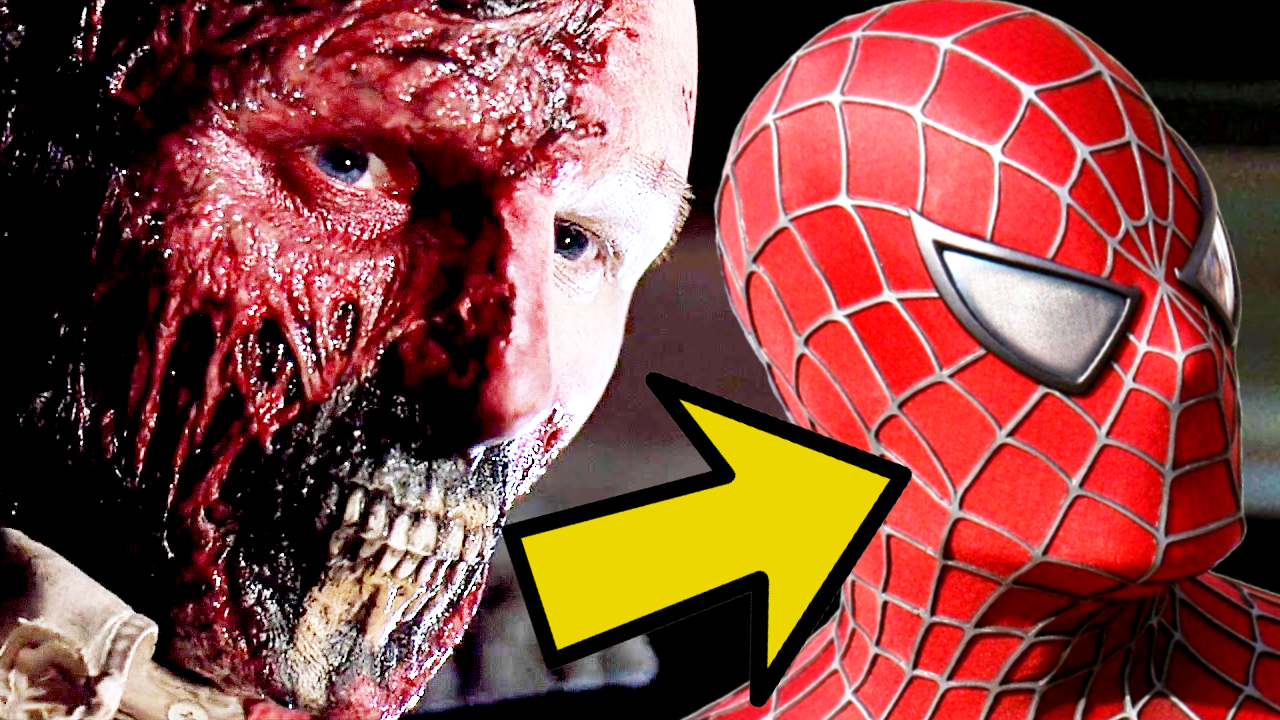
Superhero movies ain't what they used to be. That's not necessarily a pejorative statement - the genre has come on leaps and bounds in a great many respects - but a comic book movie released in 2026 is going to have a markedly different flavour profile to one, say, released in 2002, or especially 1990. Cinematic trends surge and ebb, and whereas today we have a box office landscape dominated by cape flicks made in the mould of the Marvel Cinematic Universe, 30 years ago, it was a much different story.
With Hollywood then basking in the ructions of Tim Burton's Batman, a major box office phenomenon that redefined what a superhero was in mainstream popular culture, other studios were looking to get in on the act. The following years ended up being this charming mix of febrile experimentation and awkward evolution - an in-between limbo where audiences hadn't yet discovered the joys of Hugh Jackman's Wolverine, but where capes and costumes could still be big money. (If, of course, they were done right.)
While X-Men very much marked the beginning of the genre's maturation and evolution into a consistent box office force, it was Sam Raimi's Spider-Man which boasted the more transformative impact. Like Burton's adaptation of the Dark Knight years prior, Raimi's interpretation of Marvel's wall-crawler was distinctly his own, guided by a personal affection for the original Stan Lee, Steve Ditko and John Romita Sr. comics, as well as his dark, gonzo impulses as a filmmaker. The end result was a cultural reset, with 2002's Spider-Man storming the box office as Chad Kroeger and Josey Scott's anthemic "Hero" wailed divorced dad-ishly in the background.
Spider-Man was everything that a great adaptation should be, lovingly drawn from and faithful to the source material whilst also being expressive, inventive, and thoroughly individual. In other words, while being faithful to Marvel's comics, Raimi was also faithful to himself, carrying across many of the trademarks he'd developed as a genre filmmaker in the 1980s and nineties and applying them through a maximalist, blockbuster lens.
Raimi had emerged in the former decade as a force in the horror genre with seminal, low-budget classics The Evil Dead and Evil Dead II, two masterpieces renowned for their dark comedy, inventive visual effects, and slapstick brilliance, anchored by one of the all-time great physical performances from Bruce Campbell. The technical invention and sheer entertainment value of Raimi's Evil Dead trilogy (capped off with Army of Darkness in 1992) became his cinematic calling card, and it should've been no surprise that it ended up translating perfectly to the Marvel mythos.
Horror and superheroes have gone hand in hand since the beginning - a feature Burton tapped into heavily with his gothic adaptation of Batman in 1989, and which Raimi accentuated in his own way for Spider-Man. Superman was born in the fires of a destroyed planet; Bruce Wayne took on the symbol of a bat to strike fear into the criminals of the underworld; and the heroes of the Marvel Age - created by Stan Lee and Jack Kirby - were more often than not the victims of horrific experiments gone wrong, tapping into Cold War anxieties as much as they did Space Age fascination. Just as Burton's gothic stylings made him a perfect fit for the Caped Crusader, so too did Raimi's affinity for gonzo horror make him an ideal match for the web-slinger.
But Spider-Man wasn't Raimi's first comic book rodeo. Over a decade before, in those aforementioned awkward, adolescent years for the genre, he brought his own hero to the big screen - a film that, while still boasting its own cult following, isn't talked about nearly enough: Darkman.
[Article continues on next page...]
Why Darkman Is The Most Underrated Comic Book Movie Ever
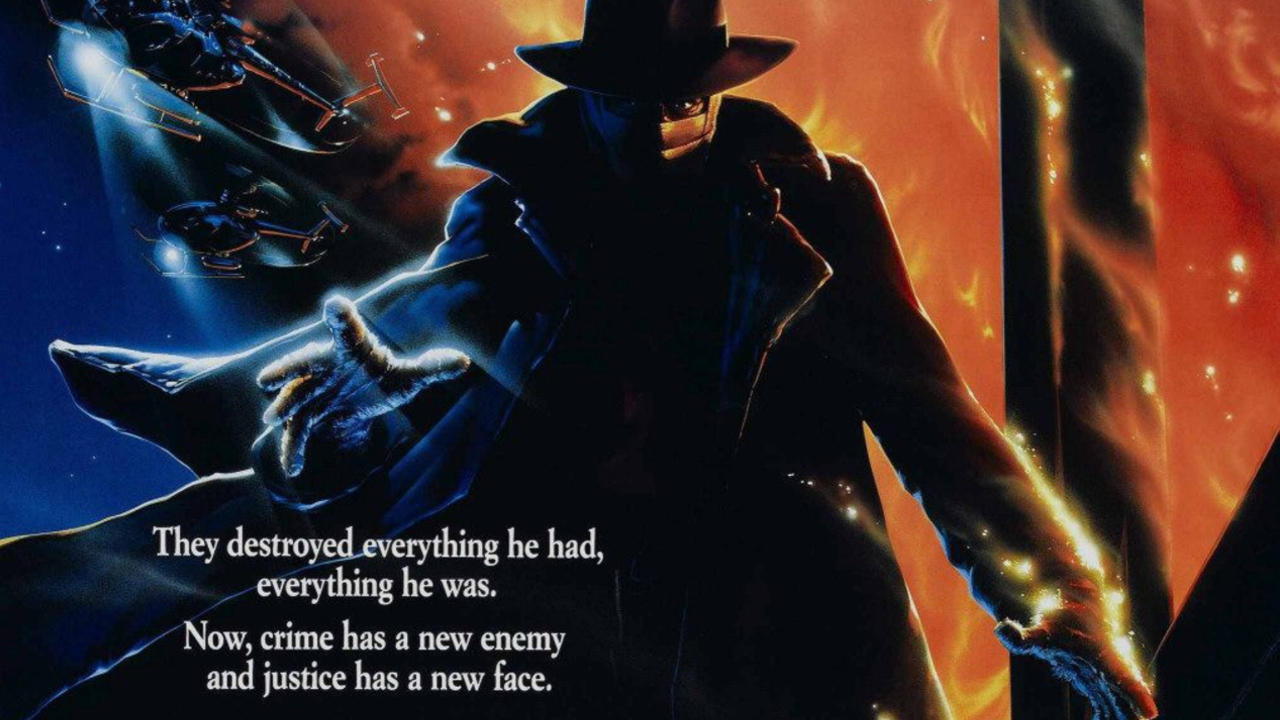
Made in the wake of Batmania and the ensuing but brief pulp noir revival of the early 1990s, Darkman was Raimi's tribute to Golden Age comics and retro radio serials with a sprinkling of gothic horror thrown in for good measure. The film itself revolved around the eponymous vigilante, a vengeful but brilliant scientist, Dr. Peyton Westlake (Liam Neeson), who was disfigured and left for dead by a marauding criminal syndicate. Westlake emerges from the wreckage of the encounter and rebuilds his ruined lab, using his synthetic skin invention to play the crooks against each other and save his would-be fiancée, Julie Hastings (Frances McDormand), from falling into their hands.
Part The Shadow, part Phantom of the Opera, and also a little Universal horror, Darkman was in essence 100% Raimi - a loving reflection of the many composite features we've come to associate with the director, distilled into a single, pulpy, and resplendently maverick package. But it could've been a lot different. Raimi had struggled for years to successfully pitch Universal on an adaptation of Walter B. Gibson's The Shadow - arguably the most iconic pulp hero, as well as the key inspiration behind Batman - before reworking his idea into the original concept of Darkman.
The change paid off, with Darkman not only illustrating Raimi's genre versatility and ability to handle a production with a loftier budget (albeit not without conflict with Universal), but also laying the groundwork for the next phase of his career, kickstarting a multi-film partnership with composer Danny Elfman that would become iconic in the next decade with Spider-Man and its sequels. It was also a minor critical and box office success, albeit one that, over time, has quietly become a victim of circumstance.
While Raimi created a stupendously fun movie that captured the formative, pulp vibes of the 1930s superhero, it came amidst a tidal wave of endearingly misguided but equally impassioned pulp mania. 1990 saw the release of Warren Beatty's bizarre but moxy-filled adaptation of Dick Tracy, while 1991 gave us the beloved box office bomb, The Rocketeer, courtesy of Joe Johnston. After that came Alec Baldwin's (mostly disposable) take on The Shadow, and lastly, the appropriately zany Billy Zane-starring adaptation of The Phantom. There's a sort of tonal amorphousness to this period of superhero cinema which, when coupled with the seismic significance of Batman and then Raimi's own Spider-Man a decade later, means it can often feel like Darkman gets lost in the mix.
[Article continues on next page...]
What Makes Darkman A Forgotten Liam Neeson Classic
The same could arguably be said for much of Raimi's filmography in between The Evil Dead trilogy and Spider-Man (1995's The Quick and the Dead is still frustratingly awaiting its flowers), which is understandable given the significance of those films as genre and pop cultural landmarks. Still, Darkman's absence from comic book movie discourse feels particularly unfair - not just because it paved the way for Spider-Man, but because its filmic quality distinguishes it as so much more than just a genre curio like Beatty's Dick Tracy.
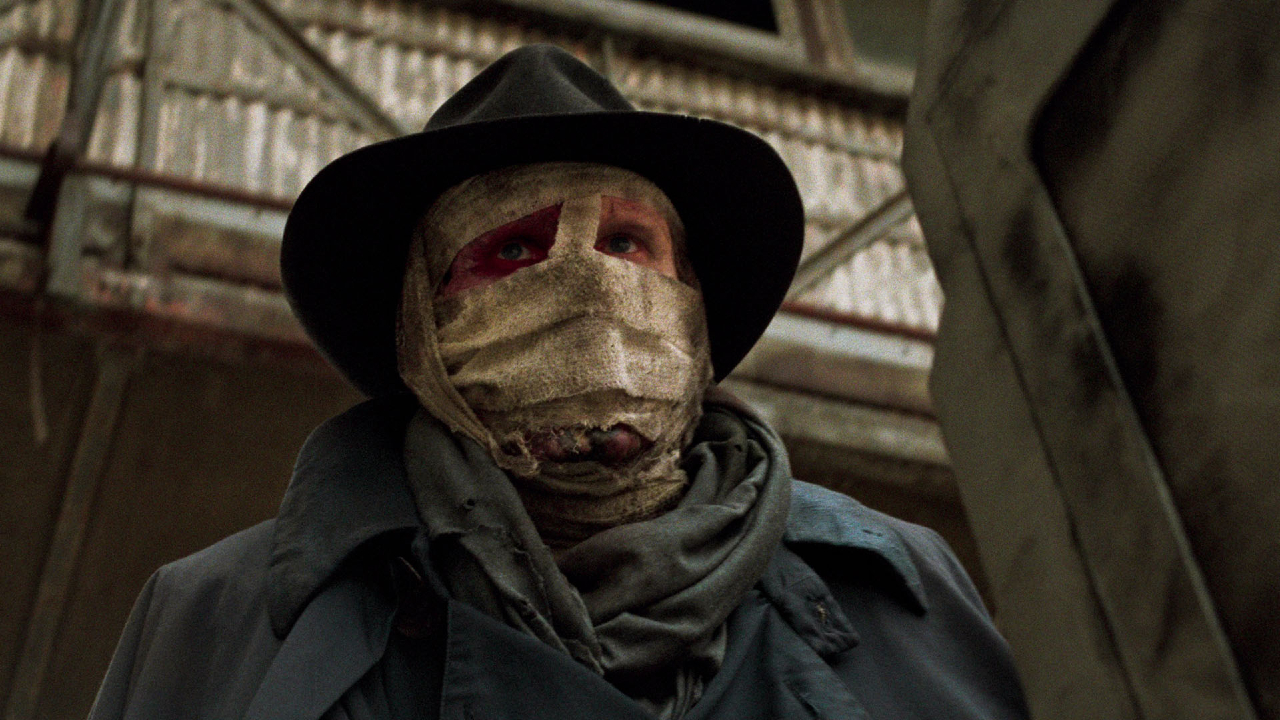
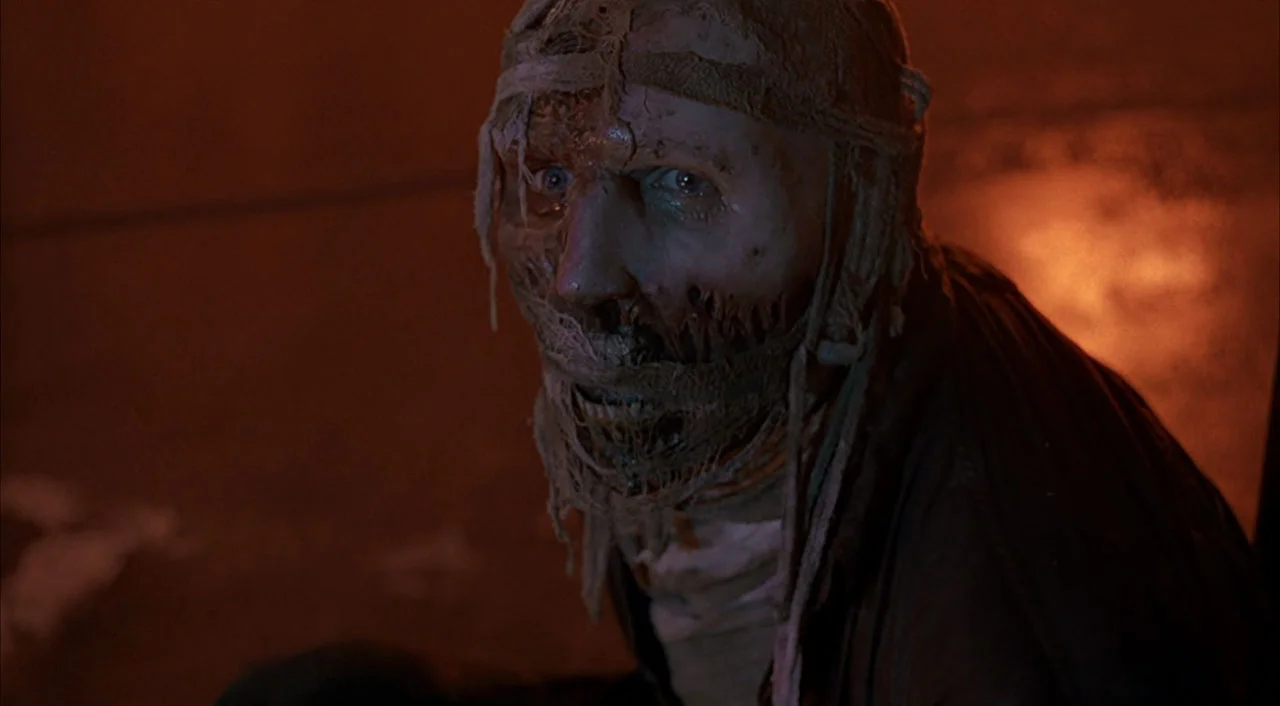
Darkman might not be Raimi's best film, but it does feel like it's the one most broadly representative of his passions and, with an R Rating, one that didn't have to compromise. The gonzo violence of the Evil Dead films is present and accounted for, along with Raimi's commitment to delicious practical effects. Neeson's Westlake rocks a gloriously gnarly disfigurement for the majority of the runtime, obscured in parts by bandages that recollect James Whale's The Invisible Man, while the film's many action set-pieces are accomplished with a mix of elaborate, practical staging and appropriately deliberate rear projection and green screen.
Combined with its strong art direction, which incorporated Fleischer-esque, retro-futuristic motifs into a more grounded and gritty contemporary cityscape, Darkman emerges as one of the most unique genre creations of the last several decades - a testament to Raimi's indelible filmic preferences and a monument to a forgotten era in American comic book history. It is, in other words, a director having the best time ever.
[Article continues on next page...]
How Universal Almost Destroyed Darkman
While Darkman is both a certified Hoot and Riot, the party didn't last forever. Raimi had directed a picture that embodied his foundational influences with all the eccentric bells and whistles (and stuffed elephants) he could fit in, but that brought with it a degree of studio anxiety. Universal's concerns were seemingly vindicated when the first cut of Darkman, handled by Raimi and editor David Stiven, produced poor audience test scores. So great was the pressure on Stiven that he reportedly left the project due to mental exhaustion, which led to a protracted post-production process in which competing edits - a heavily cut version, handled by Bud S. Smith, and a modified version, handled by producer Robert Tapert and Bob Murawski - vied for final cut.
Incredibly, in an act of subterfuge that would've made Dr. Westlake himself proud, Tapert went behind Universal without Raimi's knowledge and delivered his and Murawski's cut as the final edit. The studio was too late to intervene by the time they discovered the ruse, making Darkman that bizarre example of a film that made it to cinemas without the explicit approval of either its director or its studio.
It was an unconventional path to release for an equally unconventional film, but Tapert's instincts came good. Darkman didn't produce Batman numbers (nor could it ever be expected to, given the sheer "nuclear bomb versus coughing baby" levels of commercial disparity going on there), but it was successful in theatres and drew enough of a following on home media to produce two direct-to-video sequels - Darkman II: The Return of Durant, and Darkman III: Die Darkman Die - with The Mummy's Arnold Vosloo replacing Neeson in the title role.
More importantly, Tapert's sneaky bit of movie espionage preserved the spirit of Raimi's loving pulp tribute, cementing the director's action credentials in a way that no doubt provided a springboard for his escapades in the ensuing two decades. After Darkman came Army of Darkness - by far the most action-oriented of the Evil Dead films - a producing role on John Woo's first American film, Hard Target, and then after that The Quick and the Dead and, ultimately, Spider-Man. The fact that those Spidey films can trace their lineage to this plucky, bizarre superhero movie and even The Evil Dead before it is frankly incredibly cool, and a reminder to current movie producers that the genre first found its footing by letting stylistic filmmakers work their magic unimpeded by brand synchronisation.
[Article continues on next page...]
How Darkman Proved Sam Raimi Was The Perfect Guy For Spider-Man
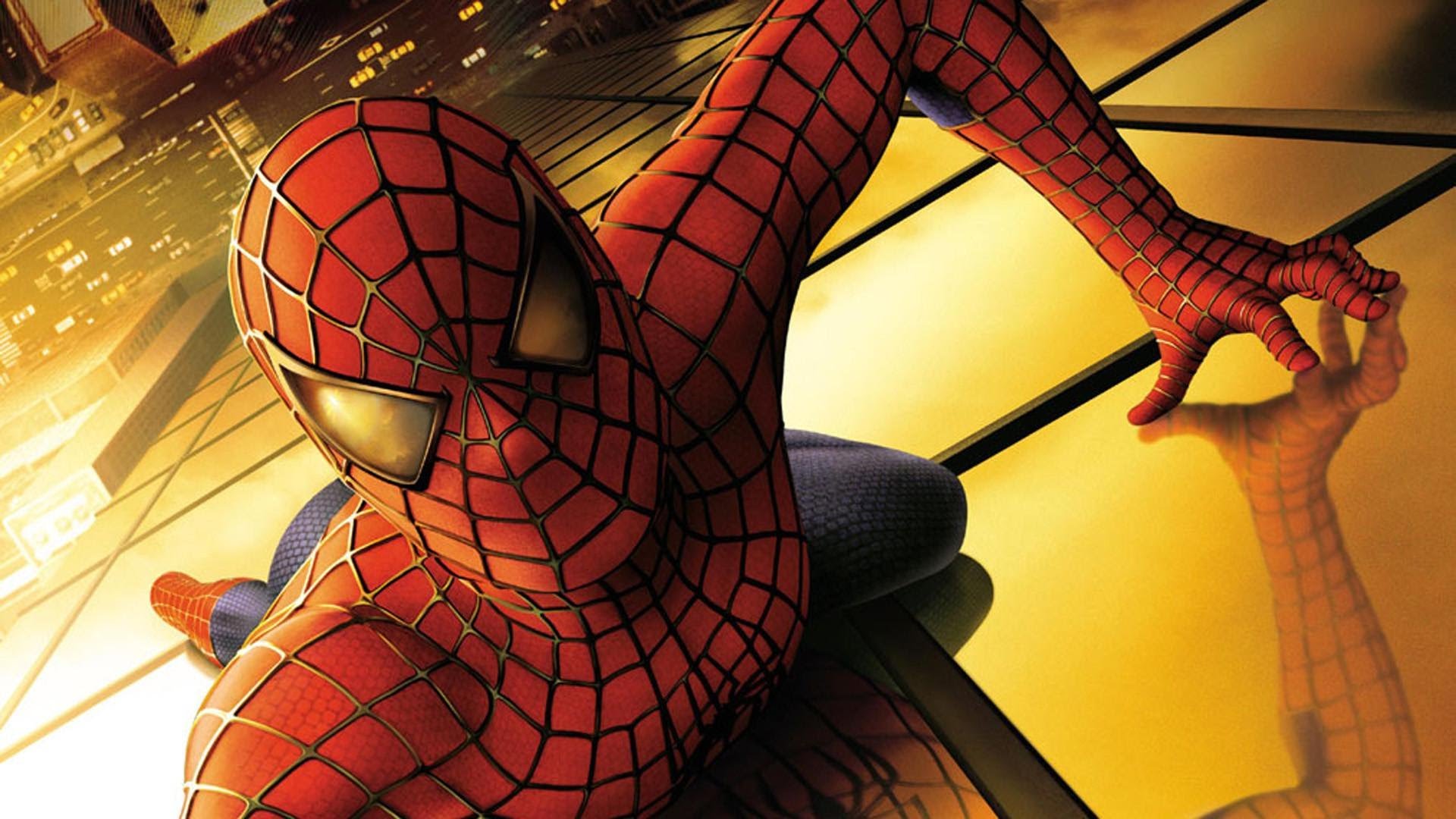
Before Raimi was attached to Spider-Man, a number of other filmmakers had expressed an interest in the project - chief among them James Cameron. Cameron's pitch for Spider-Man had earmarked Leonardo DiCaprio for the role of Peter Parker and was said to be dark, explicit, and took some big swings away from the source material. Cameron eventually ditched Spidey to focus on Titanic, during which time the rights to Spider-Man were sold to Sony and other directors entered the running.
Among the filmmakers Sony looked at for Spider-Man were Michael Bay and David Fincher, but like Cameron before them, there appeared to be a general lack of affection for or affinity with the original Marvel comics. Fincher ostensibly dismissed the idea of making an origin story and - perhaps unsurprisingly - was more drawn towards an adaptation of "The Night Gwen Stacy Died", a key and influential Spider-Man comic, but one which had little impetus behind it as the foundation for the web-slinger's first big-screen outing. Other directors, like Jan de Bont and Tony Scott, boasted impeccable action resumes, but little grounding in what was then still a relatively fledgling cinematic genre.
Enter Sam Raimi, who not only had the love for and understanding of Stan Lee and Steve Ditko's Spider-Man comics, but who was also being courted by Sony producer Amy Pascal for the project. Raimi's subsequent pitch to Sony was predicated on his knowledge and understanding of the character, and it wouldn't be disingenuous to assume that his genre versatility - as well as his experience shaping a superhero movie in Darkman over a decade prior - would have gone some way towards sealing the deal.
Raimi not only had the firsthand comic familiarity to make Spider-Man a success, but the individual genre components and filmmaking flourishes to make it unlike any other superhero movie at the time - or even since. It is both completely and utterly faithful to Lee and Ditko's mythology and yet also quintessentially Sam Raimi - a big, bold, beautiful action-horror fusion that also serves as a love-letter to a foundational piece of American pop culture. In other words, it was Darkman 2.0.
But Spider-Man was iterative, rather than reiterative. As a project grander in scope, scale, and budget, Raimi was able to leverage his then two decades of filmmaking experience into a film that was both a commercial leviathan and one that reflected his own cinematic journey in a subtly affecting way.
That a blockbuster as gargantuan as Spider-Man could also be so passionately drawn and so rooted in the same genre principles that guided his first film is a testament to Raimi's tenacity as a filmmaker, but it's also a fitting reflection of the tenets that distinguished Spider-Man as a character in the first place.
The same individual pieces that resulted in a low-budget horror phenomenon 20 years earlier in The Evil Dead are just as prevalent in Spider-Man, the proverbial cherry on top coming in the form of a Bruce Campbell cameo and Scott Spiegel having his pizza nabbed in the sequel. That level of commitment and affection - to have that singular vision, which goes beyond Darkman, back to when Raimi was making movies in the woods with his pals as a teenager - imbues Spider-Man with a beautiful sort of catharsis, writ large in red and blue and Willem Dafoe going full goblin mode in his silly little lab.
Darkman alone didn't set Raimi's Spider-Man free, but taken together, they mark two pivotal chapters in one of the great filmmaking journeys of the modern era.