Saw X Review: 5 Ups & 5 Downs
A welcome change to the Saw ethos, but one without the power to resurrect the franchise.
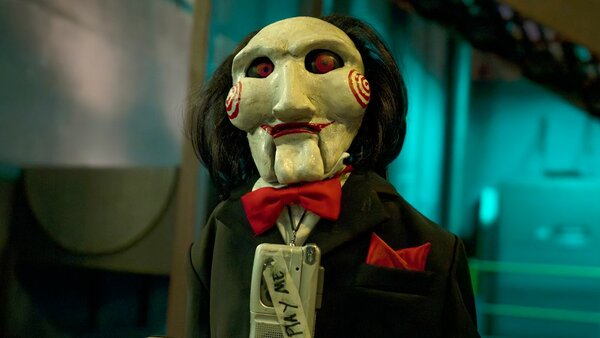
It has been 13 years, three films and one Ice Nine Kills song since the so-called Final Chapter (2010) of iconic horror franchise Saw, and yet somehow Jigsaw is still coming back for more. Following a lacklustre prequel (Jigsaw, 2017) and a failed spin-off (Spiral, 2021), the series goes back to the source with a story set between James Wan's original movie and its sequel.
Tobin Bell returns as John Kramer, the Jigsaw killer, with director Kevin Greutert, of Saw VI (2009) and Final Chapter infamy, back behind the camera. After killing Kramer way back in Saw III (2006), the series has wed itself to finding increasingly batsh*t ways to bring him back, but this straight-up prequel allows Jigsaw to let rip once more without the need for secret letters, videos or cassettes.
While far from essential viewing, Saw X defies the series' established norms as Kramer goes on a quest for some very personal vengeance, bringing along his acolyte Amanda Young (Shawnee Smith) and giving audiences a hefty chunk of character to chew on. But if you're after the standard trap-n-splat shenanigans, you'd better point your vacuumed eyeballs elsewhere.
Before we get into the blood and gore, however, let's take a look at what makes the film sparkle...
Ups...
5. Vengeance Drives The Story

Anyone who has seen the trailer for Saw X knows this is a story harbouring clear and present motive, as Jigsaw hunts and traps some ne'er-do-wells who faked an off-the-books miracle surgery for his brain tumour and then made off with his cash.
As such, X is a straight-up tale of vengeance from beginning to end, marking it out from the other Saw films, which lean hard on their mystery elements, making liberal use of flashbacks and non-linear narratives.
Relying on a singular story following a small group of crooks from their initial misdeeds through to their redemption or demise, there is a notable lack of the detective thread that runs through the other films. That means no police, SWAT, FBI or law-enforcement of any kind searching for the killer; we're riding along on the big man's wrath from titles to credits, and only his victims can save themselves.
It's simple, straightforward, and when blood is shed, every drop feels earned.
4. Tobin Bell Is Fantastic
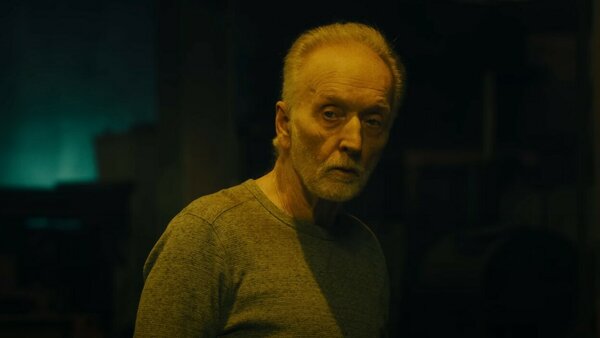
As everyone and their great aunt knows from the ubiquitous glut of trailers, poster and bus-side banners, Tobin Bell once again reprises his role as John Kramer for the franchise's 10th instalment.
Now in his eighties and still going strong, Bell barely looks to have aged a day in the two decades since the series began. And he brings his A-game to Saw X. While the performances surrounding him range from after-school special sincerity to cartoon villainy (more on that later), Bell underpins the whole affair with his most sincere performance yet.
Opening up a whole new side of the Jigsaw killer that nonetheless remains true to the character, Bell draws on reserves of emotion and gravitas that make us sympathise deeply with someone who spends his days engineering the most unrepentantly gruesome torture devices. And, make no mistake, Bell makes us feel every bump on the rocky road to his ruin.
3. John Kramer Gets Fleshed Out
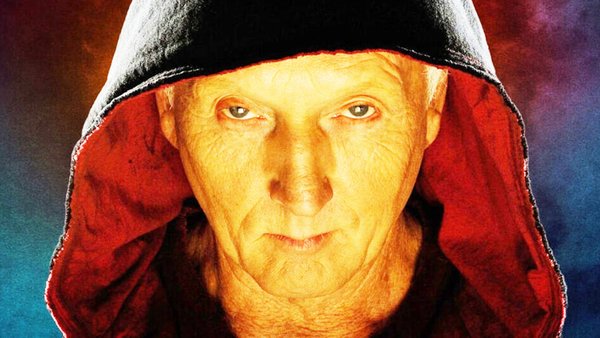
John Kramer is so much more than just a maniac in a hood, with a toy puppet, and an obsession with physically-deforming traps... Okay, sure, he's unhinged, but this instalment of blood and mania shows us more of the man behind the manslaughter.
Taking the little snatches of Kramer's life and miseries offered up by the other films and running with them, Saw X seeks to put more meat on the character's bones as he faces his final months on Earth.
And, do you know what? It works. From the outset we are embedded in his perspective, seeing an intensely vulnerable, caring and trusting side to him that the other films only hinted at. Kramer is warm, he's tender, he's desperate for a second-chance, and in the most tragic of ways this causes the typically cold and calculating mastermind to stumble.
Kramer's morality has long been in question, but X adds to the character's worldview while further clouding our judgements of him. The result is as personal a movie as something featuring scooped brains and vacuumed eyes can possibly be. And seeing him on the back foot more than once throughout the film only compounds our moral qualms.
2. It Is The Longest One Yet
Combining its focus on the Jigsaw killer's personal side with a two-hour runtime, Saw X winds up being a more substantial piece of cinema than its predecessors.
While, in a run-of-the-mill Saw movie, the extended runtime may not be such a welcome addition, X uses the extra half hour to establish more of a balance between drama and gore, leaving plenty of space for a bit of emotional backbone and even a classic character cameo at the end. Although the pace is occasionally leisurely (as far as Saw movies go), it packs more character moments and higher stakes into the plot via a considered build-up.
The extra time could have been coincidental -- a result of all the beats it needed to hit for the story being told -- or it could be a conscious response to the lukewarm reception of the film's predecessor, Spiral, which was criticised for trying to cram too much into a 90-minute runtime. Either way, it feels worthwhile.
1. It Is Less Trap-Focused Than Ever
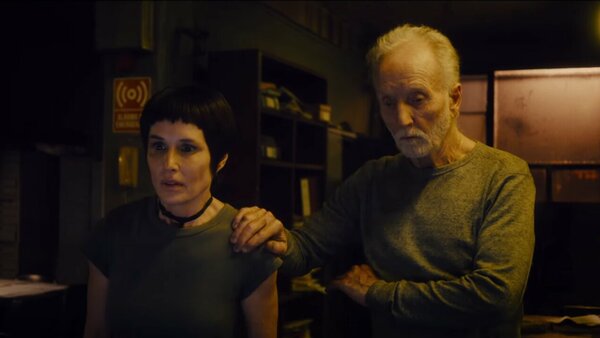
Overall, Saw X is considerably less concerned with the gut-wrenching traps the series is known for than its franchise companions. That doesn't mean the traps are gone, of course -- there are still plenty of sequences to lose your lunch to -- but in this outing they are counterbalanced by the motivating factors for creating them in the first place.
As in so many other ways, X deviates from the series' established formula, positioning plot, character and staging at higher priority than trap-centric splatter. In stark contrast to the other films, John is physically and personally present for all of the traps, setting them up with the participants conscious, explaining his reasons and standing watch with a stewardly yet not uncompassionate demeanour.
Gone are many of the theatrics that typify these films, offering a welcome change for new and old generations alike. Stylistically, the goriest sequences retain the sickly industrial yellow and green hues, canted camerawork and frenetic pacing that are hallmarks of the franchise, but for once the traps are presented less as pure titillation for the viewer and more with the kind of foreboding and disgust they duly deserve.
Downs...
5. It Is Less Trap-Focused Than Ever
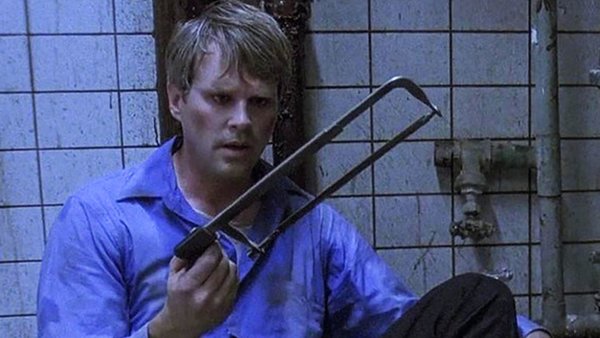
As double-sided a coin as a horror film like this could produce, the lack of traps or progression through any kind of trials is likely to split audiences down the middle. While for many this is a welcome change to the series, it nonetheless denies casual fans and torture porn connoisseurs many of the thoughtless thrills and spills they came for. Saw X's games are few and far-between, and often waylaid by the kind of human drama this instalment is determined to foreground.
The trap sequences that do make it into the movie are less creative, frequently feeling only tangentially relevant to the crimes of Jigsaw's victims. Several of them are also considerably more brutal than usual, thanks to the revenge narrative driving their creation; the victims of X can only dream of the halcyon days when sawing off a foot or dipping their hand in acid was all it took to survive.
Consequently, the traps are nowhere near as fun as usual, often feeling grimly morose and downright miserable, executed with a procedural approach.
4. The Villain Is Cartoonishly Evil
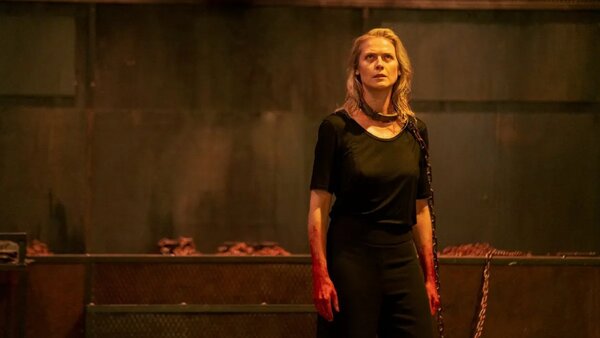
For once, a Saw movie has a clear, definitive villain: Cecilia (Synnøve Macody Lund), the leader of the crew who defraud Kramer of his wonga.
But, by transitioning from well-meaning doctor to ruthless, egomaniacal Disney villain within an hour of screen time, Cecilia's character is at odds with the more considered tone X shoots for overall. And, in a series first, she forces a child to undergo one of Jigsaw's traps. While it certainly ups the stakes, it also compounds the character's cartoonishly two-dimensional presentation.
Granted, it would have been more challenging to present an antagonist with complex moral concerns while both John Kramer and Amanda Young are experiencing their own moral reckonings, and yet many of the previous Saw movies do precisely that, offering up misguided or downright monstrous characters who nonetheless have enough moral fibre to question their own actions.
This misstep rests squarely on the shoulders of writers Peter Goldfinger and Josh Stolberg, whose previous credits -- including two of the lesser Saw movies, Sorority Row, Piranha 3D and Piranha 3DD -- don't exactly smack of character development.
3. Several Of The Traps Don't Deliver
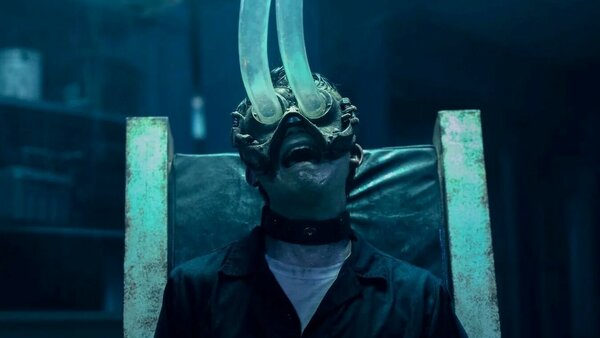
As ever, the trailers preceding Saw X promoted the best of the movie's traps, teasing audiences with some of the bloody depravity to come.
Unfortunately, several of these don't quite deliver.
In particular, the eye vacuum, which has been the big headline piece featured heavily in most of the marketing material, is a red herring. Dispatched in record time at the beginning of the film, X's most ingenious and gloriously depraved device turns out to be naught but a fantasy concocted by Kramer as a possible yet ultimately unrealised punishment for a potential victim.
The final trap, the details of which we will keep under wraps, disappoints in other ways. Acting as a secret test for two of the film's primary characters, the last trap of the movie is a bit of a damp squib. It is not only basic and thoroughly underwhelming, but leaves a certain character's fate -- and, thus, the audience -- in the lurch, denying any sense of closure.
2. It Returns To The Established Formula
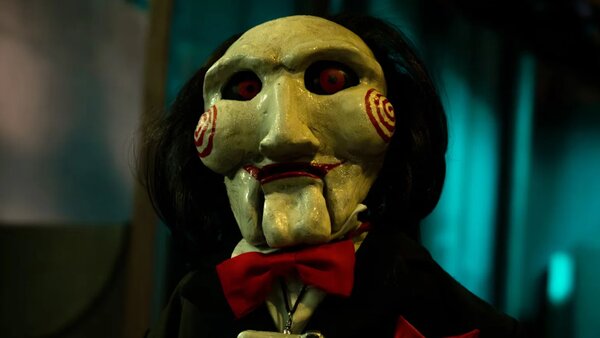
After so boldly going where no Saw has gone before, it is disheartening to see the film dive back into the franchise's familiar machinations towards the conclusion.
Saw X quite literally wheels out Billy the Puppet in the latter half, before setting up the final 'reveal' of an overarching plan that has been in place all along, and barraging the audience with a stereotypical, rapid-fire flashback montage. But, despite how hard the movie baits us to look the other way, after ten films, fans know what to expect.
This is almost without doubt an attempt to make X slot more neatly into its designated position in the series, and yet this instead leaves the film perched awkwardly and precariously between the new, character-driven sensibility it has spent the better part of two hours gunning for, and the fewer dimensions of the existing titles.
1. There's A Pervasive Sense Of Pointlessness
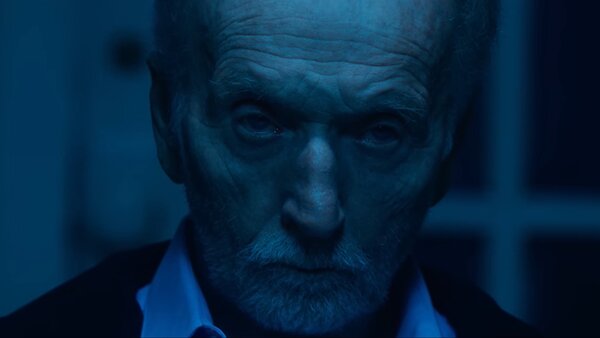
Much like Rogue One does for the Star Wars saga, X plugs gaps in the Saw series that aren't really there.
Whether it is Kramer's continuing plight towards the grave, his complicated personal relationship with Amanda, Amanda's own journey towards breaking point, or the covert interventions of another series regular, all of the substance in X is already inferred and accounted for within the other Saw movies.
Despite the tonal change from other entries in the franchise, the movie still feels like a bare-faced excuse to wheel out Jigsaw one more time. Saw X may add some weight to the John Kramer character, but it doesn't actually change anything nor do much to illuminate other facets of the series' mythos. After all, what is the point in putting more flesh on the bone of a dead character, especially when the film (jammed, as it is, between the first two Saw movies) can't exactly lead anywhere else.
As a result, it all feels somewhat inessential and, as is the risk with any mid-series prequel, a little bit pointless.