Spiral: From The Book Of Saw Review - 4 Ups & 6 Downs
Another disappointing attempt to restart the Saw franchise.
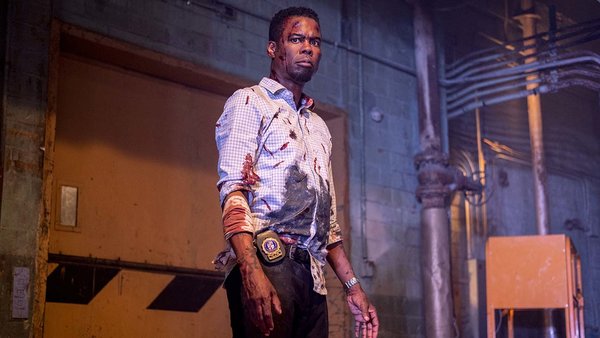
A year after it was originally meant to hit cinemas, Spiral: From the Book of Saw is finally out worldwide. After 2017's Jigsaw left most fans underwhelmed, this ninth entry into the franchise attempts to rejuvenate the series with a seemingly radical, left-field quasi-reboot.
Despite a tantalising marketing campaign and the obvious appeal of the respected likes of Chris Rock and Samuel L. Jackson, there's no joy at all in reporting that Spiral is a muddled attempt to make the franchise relevant again.
Wildly mixed reviews likely won't do much to deter fans, who are used to the series being critically mauled at this point, but in Spiral's case it feels like a massively missed opportunity to reinvent the series for a new era and global mood.
There's very clear potential for Saw to become another beast entirely in 2021, but this shockingly generic, rushed mess of a film is unlikely to satisfy either the die-hard Saw fans or anyone coming to the series for the first time.
Note: this is a non-spoiler review and won't give away any significant plot points...
Downs...
6. It's Another Lazy "Soft Reboot"

If Jigsaw marked an attempt to pass the torch from Tobin Bell's John Kramer to one final apprentice, many fans were left rather unconvinced by this.
As such, Lionsgate decided to hold fire on a direct sequel, instead eventually announcing a new take from the mind of Chris Rock.
And while Spiral does absolutely exist within the continuity of the original Saw movies, it more-or-less ends up feeling like a lazy copycat of the better entries in the series.
The casual mentions of John Kramer just feel like perfunctory lip-service to remind audiences this is actually a legit Saw movie, rather than a by-the-book thriller with the Saw label slapped on it.
Most of the changes made to the series' iconography - especially the awful new digitised Jigsaw voice - don't really work, and while Saw clearly had to move away from Kramer eventually, this just isn't a very inspired way to do it.
You can sense the filmmakers struggling to craft a storyline that pays fitting tribute to the series' past while also moving it in a direction for modern audiences.
Furthermore, the film's soft box office opening in the U.S. - even for the standards of the pandemic era - might suggest this new take on Saw is over before it's even really started.
5. The Frantic Pacing
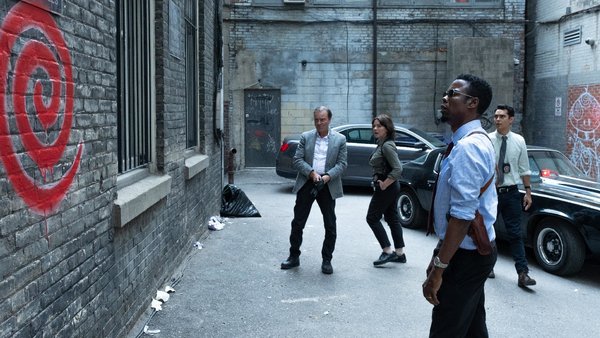
The overwhelming majority of the Saw movies clock in at a tight 90-ish minutes, and while that's usually a good thing, in the case of Spiral it makes the entire movie feel incredibly frantic and rushed.
Urgency may be necessary for any Saw movie, but given that this film needs to introduce us to an entirely new cast of characters with their own distinct backstories - unveiled through flashbacks, per the series' custom - 93 minutes does feel a little too hurried.
Director Darren Lynn Bousman gives scenes no room at all to breathe, frantically transporting viewers between gory traps, the hunt for Jigsaw, and those aforementioned flashbacks.
Given that the marketing suggested Spiral would be a more contemplative detective thriller in the vein of Se7en, a longer runtime to support that vibe would've benefitted the film immensely.
Instead, scenes cut away the moment they've got their basic meaning across, preventing audiences from being able to savour much of anything at all.
4. Not Enough Samuel L. Jackson

As intriguing and unexpected as the casting of Samuel L. Jackson is in this movie - as protagonist Detective Zeke Banks' (Chris Rock) father Marcus - it won't surprise many to learn that his role in the final film is rather small.
This isn't a spoiler in any way, simply that Jackson's part is more of an extended cameo than a fully-fledged appearance, lending some star power to the production while probably only spending a couple of days on set.
The bulk of Jackson's part is told through flashbacks and establishing scenes opposite his screen son, and though Jackson brings his typical gravitas to the table, it's a shame he isn't given more to do.
It's impossible not to smirk at Jackson quipping, "You wanna play games, motherf**ker?," but given the potential of his involvement, it's a strangely low-profile appearance.
3. The Predictable Twists & Turns

Again, no spoilers, but Saw movies are all about the loopy twists and turns which sneak up on audiences and force them to re-evaluate everything they thought they knew.
The series has struggled to muster any particularly interesting twists since Saw VI, and sadly Spiral is no different.
While it can't exactly be said that Spiral recycles some of the series' more well-known twists, the biggest surprises are unfortunately incredibly easy to predict.
Fans of the series will have no trouble at all guessing what's coming, which for a franchise which has prided itself on bamboozling audiences with shocking mic drops is colossally disappointing.
The wow factor that defines the better Saw movies isn't here at all, and gives the sense that the filmmakers thought they were being a lot smarter than they actually were.
2. It's A Tonal Mess

Though most of the Saw movies have a pretty firm handle on their interior tone, Spiral is the first film in the series to try something a little different, with mixed results.
The eight prior films more-or-less take themselves incredibly seriously, beyond a few darkly comedic traps which skate on the fringes of social satire.
But Spiral flirts with more outright comedy through its dialogue, with Rock's Detective Banks dropping ridiculous one-liners in the police precinct like his life depends on it.
Sadly much of this dialogue lands with a thud and only upends the grim tone of the film otherwise.
Part of the problem is undeniably the hurried pacing, which forces to film to move between moods at a whiplash-inducing clip, but also the writing is just straight-up not good in a lot of these scenes.
It almost feels as though Rock just improvised some of the inane cop banter, because despite his generally decent performance, the comedy shtick really doesn't fit.
1. The Massively Underwhelming Ending

Even ignoring how flatly unremarkable the film's big twists are, Spiral fails to end on anything close to a compelling setup for future films. It certainly indicates a clear direction for the tenth Saw, but is it one many fans will actually be keen to follow? Unlikely.
It doesn't help that the actual execution of the ending feels, again, rushed, failing to land with the shellacking impact expected of any Saw climax. Instead it comes off strangely pedestrian, somehow feeling less punchy than even the very worst films in the series.
There was definite potential in how Spiral aims to keep the series alive without John Kramer, but this non-event of an ending makes even Jigsaw's unconvincing climax seem competent by comparison.
So, Spiral isn't a good film and a sure disappointment, but it isn't a total failure. Here's what it gets right...
Ups...
4. The Sharp Production Values

Easily the most imminently praise-worthy aspect of Spiral is its production quality. With a budget of $20 million - more than double Jigsaw's price-tag - this is by far the most professional-looking and aesthetically appealing Saw movie to date.
The cinematography, lighting, and production design are all a major leap ahead of the first seven movies in particular, ensuring that even in its worst moments it's at least appealing to look at.
Returning director Darren Lynn Bousman - who previously helmed Saw II through Saw IV - combines this slicker style with some of the more typical Saw hallmarks, such as speed-ramped editing during traps, to ensure it looks consistent enough with what came before.
It's just a shame the clear care put into the film's production didn't transpire through to the script.
3. The Brutal Traps

While it's definitely fair to say that Spiral is on the tamer end of the Saw series where gore is concerned, it does at least deliver a number of memorably gruesome traps.
Two traps in particular stand out in their inspired, creative nastiness: a trap involving fingers and another involving shards of glass. In both cases Bousman lingers on the bodily mutilation in nauseating fashion, and even hardcore Saw fans are sure to be left wincing.
If the gore had gotten relatively cartoonish by the time Saw: The Final Chapter was released, Spiral's blood-letting feels like more of a restrained compromise: infrequent but plentiful when it does arrive.
By any measure, it's more viscerally offputting than Jigsaw's strangely benign assortment of traps.
2. Chris Rock's Solid Performance

Chris Rock is far from the most natural casting choice for a Saw movie, better known for his comedy work as he is, but he nevertheless gives a (mostly) convincing performance as Detective Banks.
Sure, his more animated moments don't always convince 100%, but it's clear he's taking the responsibility of starring in the franchise seriously, and is more persuasive in the role of a gritty cop than you might expect.
Granted, anyone who saw the fourth season of Fargo will likely appreciate Rock's wider dramatic chops, and as bizarre as it is to see him in a Saw film, he blends in easier than you might think.
For all the film gets wrong, his casting is actually pretty inspired, making him one of the more interesting and easy-to-root-for protagonists in the series, no matter how rough the material might be.
1. Its Topical, Provocative Themes

Despite its weirdly formulaic execution, there are some interesting ideas at the core of this movie, primarily by centering so much of the narrative around corrupt cops and police brutality.
The trailers make it clear that the new Jigsaw is targeting cops, which in a political climate where the police - especially American police - are under more scrutiny than ever before, lends the film a searing topicality.
Obviously Bousman and company couldn't have anticipated quite how 2020 would reignite conversations about the merits of the police, but as a result the film nevertheless has its finger on the pulse of society in a way that no other Saw movie really does.
It's a shame, then, that the script doesn't take this even further, especially with a prominent Black creative like Chris Rock spearheading the film's creation, using it instead as a fairly shallow fringe to tell a frustratingly conventional Saw story.
Still, for many exasperated with state-sponsored violence in the U.S., the bones of Spiral's story do hit closer to home than any previous Saw film.