Stanley Kubrick: Ranking His Films From Worst To Best
 Many great filmmakers have a type of film to which they might generally stick and are wonderful at making pictures in those particular genres. Martin Scorsese has gangster/crime films, Billy Wilder did comedies, as does Woody Allen and then we have Stanley Kubrick, one of the most eclectic filmmakers of all time who has done crime, comedy, drama, war, sex, sci-fi, epic, historic and heist, to name a few. Kubrick is one of, if not the most fastidious filmmaker in history, with his cast and crew often attesting to his attention to the tiniest detail, often to their own annoyance but to his astounding success. He was a control freak and this would typically be a bad thing but in my own opinion, he never made a bad film. Kubrick started out with short films and the occasional documentary, which have not appeared on this list for I have reserved the sacred spots for features. His influence is incalculable and the breadth of that stretches to pretty much every director working today including David Lynch, Paul Thomas Anderson, The Coen Brothers and of course, the Kubrick-devotee Steven Spielberg who is about to commit a grave sin in adapting Kubrick's Napoleon - the greatest film never made - for a Television miniseries. His films feature a melange of powerful performances, wonderful dialogue, incredible cinematography and visuals and of course, unforgettable music, particularly in 2001 and A Clockwork Orange. Woody Allen called him "one of the all time great motion picture makers". He wasn't a typical filmmaker who makes one film after the next, allowing the option to have the odd flop here and there. He took years between productions In order to perfect his work, allowing for masterpiece after masterpiece after masterpiece. Unlike awaiting a new film from some random filmmaker, you were patient with Kubrick because you knew the final product would be great. After he finished Full Metal Jacket he retreated from public view for so long that an Englishman managed to impersonate him for many years because people had forgotten what Kubrick looked like. He returned in '99 with Eyes Wide Shut, his final film before his death after he finished editing it. Right then, here we go:
13. Fear and Desire (1953)
 Fear and Desire was Kubrick's first feature film, which he directed, produced, edited and provided the cinematography for. Fear and Desire is about a war between two unknown countries and a plane that crash lands behind the enemy line. The film then includes a girl who is kidnaped by the soldiers and held captive by a mentally disturbed man. The plot isn't that great, it lacks something and it is a generally unenjoyable film. Fear and Desire is more famous for Kubrick's loathing of it, he is thought to have spent an awful lot of money acquiring as many copies as he could so that he could burn them all. In 1994 he said it was "a bumbling amateur film exercise", which was probably a fair evaluation. As I've said, he directed it, produced it, shot it, edited it, did the cinematography and financed it primarily through his own sources, the only things he didn't do was act and narrate. But what is notable about the film also is Kubrick's DIY attitude which may or may not be because of the small crew and the extra money It would've cost him to hire more crew. The film was produced on a estimated starting budget of 10 thousand dollars which reportedly stretched to 33 thousand, most of which was given to Kubrick by friends and family, in-particular from his uncle Martin Perveler, a wealthy pharmacist.
12. Killer's Kiss (1955)
 Killer's Kiss follows an early obsession of Kubrick, boxing. The film is about Davey Gordon's relationship with his neighbour and her violent boss. The film also paved the way for Kubrick's love and demand for final cut privilege, for United Artists demanded that Killers Kiss be released with a happy ending, against the director's wishes. The film was received with mix reviews at the time, and whilst being a good noir, it's not a great Kubrick picture. It stars Irene Kane who didn't quite achieve any level of fame in cinema, instead being regarded more so as a celebrity biographer. Her co-star was Jamie Smith and Frank Silvera, the wonderful character actor known as "the man with a thousand faces." The film was again financed by Kubrick's uncle, now in the range of $40,000. As would become common Kubrick did most of the work, immersing himself in directing, producing, shooting, editing and cinematography and also trying his hand at writing alongside Howard Sackler.
11. Spartacus (1960)
 Spartacus is one of the greatest historical epics of all time, alongside Gore Vidal and Ben-Hur. A few days into filming, the director, Anthony Mann, was fired and replaced by Kubrick, who star Kirk Douglas had worked with on Paths of Glory and thought him a fine choice to direct. But the problem throughout filming was that Kubrick did not retain full control, something he needed in order to fulfil his own visions. Despite this, he went on to direct a great picture which made a Killing at the box office. The film is notable for not only its great length but also its wonderful cast which includes the aforementioned Kirk Douglas, Tony Curtis, Peter Ustinov and the legendary stage and screen wonder that is Laurence Olivier. The film proved problematic for Kubrick, who is said to have not enjoyed filming it as much as was first believed because he did not possess hat fastidious control he so loved. From there on in he demanded entire control over his pictures, knowing that his vision would lead the films to success. Was he wrong? I don't think so. The film is also noteworthy for helping to end blacklisting because screenwriter Howard Trumbo was part of the blacklist in Hollywood and when the disappointing John F Kennedy crossed picket lines to see Spartacus, the blacklist was near the end. The film won four Academy Awards for Actor In A Supporting Role (Ustinov), Art and Set Decoration, Cinematography and Costume Design.
10. The Shining (1980)
 The Shining was Kubrick's first real endeavour into horror and it could be said it was a risky take, but proved greatly successful nonetheless. It's pointless even telling you what its about, because by now we all should know: Jack, typewriter, Overlook Hotel, Axe, naked old woman, twin girls and that wonderful tracking shot. "Here's Johnny!" has become one of the most iconic lines in cinematic history which is accompanied by the wonderful Jack Nicholson pushing his head through a bathroom door he has just demolished with an axe. The Shining has had a profound effect on popular culture, with its astounding place as one of the all-time great horror films, if not the greatest. I believe the film was a successful horror because it relied more on the tilting insanity of the character, the suspense and not on incest-rape and revenge like is commonplace in other "horror" movies that are made simply to shock instead of entertain. The suspense could rival that of a Hitchcock film easily because of Kubrick intelligent use of camera angles and music to create an atmosphere which makes the film wonderfully enjoyable to watch but creates a still and uncomfortable atmosphere. The film's effect on popular culture is greater than any other Kubrick film having influenced or been featured in hotel adverts, Kate Bush music and of course the loved-by-Kubrick-loved-by-everyone Simpsons TV show, one of the all-time great shows. For extra analysis on this wonderful picture one should direct oneself to Room 237, a recent documentary about The Shining's hidden meanings.
9. The Killing (1956)
 Kubrick wasn't even thirty when this film was released. It was his first true feature film and it follows the meticulously planned robbery of a racetrack. The Killing is an enduring film, regarded as one of the all-time great film-noirs and comes with a story where Kubrick had laid out a very detailed track for a camera shot. The cinematographer, the much-respected Lucian Ballard, disliked the track and changed it before a young Kubrick approached him and said to him in a soft, calm voice: "put the camera where I asked you with the lens I asked for or get off the set and don't come back". There was never a disagreement between the two again. The film was the first produced by Harris-Kubrick Pictures, a company set up by Kubrick and producer-friend James Harris. It stars Sterling Hayden alongside the wonderful Coleen Gray and Vince Edwards. The box-office killing that was expected didn't happen but what was more important that did happen was the reception from critics and viewers which was a primarily positive response. The film has gone on to influence numerous others, including Quentin Tarantino's Reservoir Dogs.
8. Eyes Wide Shut (1999)
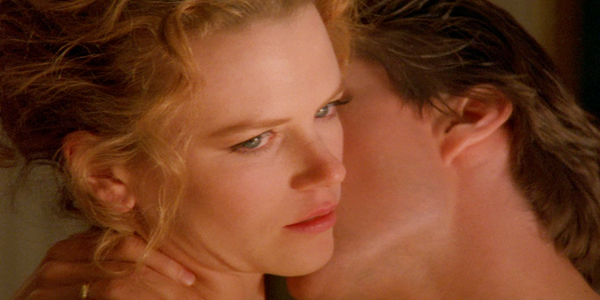 Kubrick's last film, Eyes Wide Shut starred Nicole Kidman and Tom Cruise and is one of the most erotic films I have ever seen. It features orgies, masks, dreams and murder. A most unusual Kubrick film. Eyes Wide Shut was a great success, and easily the greatest film of '99. Kubrick worked himself to death, suffering a heart-attack only five days following his screening for Warner Brothers his final cut of the film. But if anything, Eyes Wide Shut was one hell of a leaving gift, a wonderful film featuring top acting, wonderful dialogue and visuals as-well as an incredibly interesting plot and the chance to see Nicole Kidman with most of her clothes off. Based upon Dream Story by Arthur Schnitzler, it stars, alongside Kidman and Cruise - then husband and wife - Sydney Pollack and the wonderful and underappreciated Alan Cumming. Eyes Wide Shut also holds a world record for the longest constant movie shoot which lasted 400 days. Woody Allen and Steve Martin were considered for the role of the Jewish protagonist and one must wonder that the film wouldn't have worked out so well had either of the two been involved in Kubrick's idea of making it a sexual comedy, a sort of X-Rated Lolita with of-age actors. Eyes Wide Shut was a wonderful parting gift from Kubrick, even though he wasn't planning on parting with us.
7. Paths of Glory (1957)
 Paths of Glory is one of the greatest war films of all time, trailing in second place behind Francis Ford Coppola's Apocalypse Now and sitting one spot ahead of Kubrick's own Full Metal Jacket. Paths of Glory is an anti-war film which, unlike Kubrick's other war film, offers a bleaker outlook which follows a team of French soldiers who refuse to follow a suicidal order of going "over the top" which would have seen them absolutely slaughtered. Their commander, Colonel Dax (Kirk Douglas again), then attempts to defend them against charges of cowardice which would have seen them killed. Following The Killing, Kubrick and James Harris were given free reign in MGM's pile of scripts and novels and stories to choose their next project. Kubrick had read Paths of Glory years ago and decided to film that, despite it having been rejected by every major studio. It was filmed in Germany and is noteworthy not only for its stark honesty and brutal depiction of war but of a Douglas story which recounts Kubrick's meticulous nature:
"He made the veteran actor Adolphe Menjou do the same scene 17 times. "That was my best reading." Menjou announced. "I think we can break for lunch now." It was well past the usual lunch time but Kubrick said he wanted another take. Menjou went into an absolute fury. In front of Douglas and the entire crew he blasted off on what he claimed was Kubrick's dubious parentage, and made several other unprintable references to Kubrick's relative greenness in the art of directing actors. Kubrick merely listened calmly, and, after Menjou had spluttered to an uncomplimentary conclusion, said quietly: "All right, let's try the scene once more." With utter docility, Menjou went back to work. "Stanley instinctively knew what to do," Douglas says"Kubrick also met his lifelong wife during production, Christiane Harlan who sang In German in the final scene. They remained married until his death in 1999.
6. Full Metal Jacket (1987)
 Kubrick's second war film Full Metal Jacket is highly respected for its honesty and comedy. Filmed, believe it or not, entirely in England, it went on to become one of Kubrick's most adored and successful films which is remarkable for its action and sense of humour, something typically lacking from your general war films. The film follows a simple plot; a team of men go into training for the Marines and are then sent off to Vietnam to fight in the most-immoral and possibly illegal war. Above all of the blood and guts and numerous explosions this film presents to the viewer, the scene that made me the most uncomfortable is one which still makes it difficult but important to view the film: it is the scene where Pyle is attacked and beaten in his bed for being less skilled than his fellow trainees. That is a truly terrifying scene, the atmosphere of which is heightened by a clever use of cinematography and music. Vincent D'Onofrio, who played Private Pyle had to put on considerable weight for the role which makes him the record holder for most weight gained for a film. The second spot belongs to Robert De Niro for Raging Bull. But the greatest performance in this film comes not from D'Onofrio for the tortured Pyle or Pappilon Soo Soo who played that iconic prostitute but instead it comes from R. Lee Ermey for his portrayal of ruthless Gunnery Sergeant Hartman whose insults are both uncomfortable and hilarious to view.
5. Lolita (1962)
Lolita, light of my life, fire of my loins. Vladimir Nabokov's notorious novel was made into a film by Kubrick in 1962. The book is notorious, yes, but it is also an absolute work of art which is also miserably sad and hilariously funny, all of which are a testament to Nabokov's style and ranking as the greatest novelist of the twentieth century. Considering English was his third language he puts all his peers to shame. The film was originally penned by Nabokov but scripts weren't his thing and so Kubrick took on an unaccredited role as screenwriter to polish it down. Lolita stars James Mason and Sue Lyon alongside the impeccable actress Shelley Winters as Charlotte Haze. Mason plays Humbert Humbert, a middle-aged European professor and intellectual who falls in love with his landlady's twelve year old daughter Dolores (Lolita). In order to become closer to Lo' he marries her mother and when Charlotte dies he begins a sexual relationship with his step-daughter. Sick. Wrong. Wonderfully enjoyable - read the book and watch the film, you'll probably agree. Lo's age in the film was increased so as to reduce some of the controversy, controversy Kubrick didn't expect and he once said had he known what the limitations would be he would have never made the film. Most of the film relied on what we the audience thought was happening because naturally the film couldn't show Humbert raping Lolita or doing other unspeakable things to and with her. One of the great features of the film is Claire Quilty, intelligent playwright/paedophile/child pornographer who is acted wonderfully by Kubrick-favourite Peter Sellers, a man who proved his extreme talent in Dr. Strangelove. The great thing about the film in terms of money-making which I believe Kubrick knew is that we as humans love controversial things, even hebephillia such as this and that is why the film relied almost purely on word of mouth for its audience to arrive at the cinemas, which they did.4. A Clockwork Orange
 A Clockwork Orange was released in 1971, an adaptation of Anthony Burgess' novella of the same name which revolved around Alex DeLarge and his droogs whose interests include murder, rape and on Alex's part, Classical Music and Beethoven. The film was, as you can imagine, notorious for its gruesome depiction of violence which was heavily criticized for all the wrong reasons. The film has been likened to a study on contemporary issues such as violence and politics. It was banned in many places and following its release its reputation was tarnished by a string of crimes which were apparently influenced by scenes in the film. Due to increased public anger, arrests and protests outside his mansion in England, Kubrick ordered Warner Brothers to withdraw the film from British cinemas, which they did. Firstly I should note that I disagreed with Kubrick's cowardly choice to remove the film: an artist should always stand by his art and secondly it is a testament to the power and respect Kubrick held that he could simply stop all showings of a film in a major market such as Britain which was bringing Warner Brother's massive amounts of money from the increased controversy and then desire of more people to see it. Despite all of the controversy it is still a highly regarded film and widely seen as one of Kubrick's greatest contributions to cinema. A sad point about this film is that it both started and ended the career of Malcolm McDowell, who is an extremely talented actor. In one way it drew him to the attention of other filmmakers but in another way it made him "that guy from A Clockwork Orange".
3. 2001: A Space Odyssey (1968)
 Steven Spielberg called 2001: A Space Odyssey his generations "big bang", a feeling shared by millions more around the world at that time. It is widely considered as the greatest sci-fi film of all time, second only to Star Wars because of Star Wars' less complicated nature. 2001 explores topics such as evolution, the perils of technology, artificial intelligence and extra-terrestrial life, all fused together in one long film with ground-breaking, legendary special effects, incredible music and minimal dialogue. This is a film which I need to be in a relaxed and patient mood to watch, almost like a David Lynch film, and when the viewing session has completed, boy was it worth it! I like to think of 2001 as this generation's Cloud Atlas, a monumentally wonderful film that has polarized critics and fans but has gone on to wide critical acclaim. Cloud Atlas has yet to receive the acclaim it deserves but I suspect it will one day. Not only was 2001 an incredible leap in the field of special effects but it was the precursor to films that have shaped cinema such as Star Wars, Alien, Blade Runner, Contact and other science-fiction films. The Vatican curiously called 2001 one of the greatest films of all time and invited Kubrick's widow Christiane Kubrick there to screen the film. It is a widely perplexing film, the meaning and ending of which is still being debated across the world by professional critics and casual film fans alike.
2. Barry Lyndon (1975)
 Barry Lyndon is a film regarded as one of the all-time greatest which is especially special for its perfect cinematography and use of natural light. Period-dramas are difficult to do and do well but fear not if you haven't seen Barry Lyndon, Kubrick did it very well. Ryan O'Neal stars as Redmond Barry Lyndon, an eighteenth century Irish adventurer. As was the norm Kubrick directed, produced and wrote the film as-well as dabbling in various operations here and there. The film won four Academy Awards for Cinematography, Art Direction, Costume Design and Musical Score. Kubrick was nominated for Best Director, Best Adapted Screenplay and Best Picture, none of which he won making his only Academy Award win the one he received for the Special Effects on 2001: A Space Odyssey. Barry Lyndon is an arduously long film but for those of you who are devotees of cinema that won't bother you - hell, you've probably sat through Gone With The Wind and The Birth of a Nation in one sitting, right? - because the film is almost magical in its use of light and transferring that to the screen via use of candles and ultra-quick lenses. It is, much like 2001: A Space Odyssey and The Shining, a feat in some technological advance in cinema (SFX in 2001 and Steadicam in The Shining.) The internet tells me that quotations from the film appear in various other films and upon viewing said films the internet is right; those films are The Age of Innocence, The Duellists, Rushmore and Dogville. Barry Lyndon truly is a great film and it is, like the great-late Roger Ebert said, possibly "the most beautiful film ever made."