Star Trek 3 Plot: 10 Moral Dilemmas From The Show That Could Be Resurrected

Let's help the screenwriters with some potential plot dilemmas for Star Trek 3...

Science fiction literature/entertainment is rife with all sorts of controversy or moral dilemmas; Star Trek is not immune to this type of plot generation. Only its longevity has spawned dozens of all sorts of moral choices that have made its thousands of loyal fans constantly debate about what the right choice should have been. The re-booted Star Trek franchise is bound to resurrect some of these scenarios, or if it doesn€™t, then it should and the question that begs to be asked is: which ones are they going to dig up? With the script for Star Trek 3 currently being written for a probable release in 2016, the writers would be wise to tackle these moral dilemmas once again...

10. Artificial Life €“ Or, Simply Put: Creation

This is a doozy. It€™s a good one to start off with. My all-time favourite movie from the classic movies is Star Trek II €“ the Wrath of Khan. It€™s funny, because it starts off resting on the foundations of a moral dilemma Kirk was forced to make in the original series (€œSpace Seed€). We€™ll come back to that one, but there€™s a bigger dilemma in this film that just seems to have been glossed over. You see, Spock€™s death (Sorry €“ was that a spoiler for anyone?), Ricardo Montalban€™s rippling pectorals and the discovery that Kirk has a son all seem to overshadow the fact that the United Federation of Planets knows how to build a freaking planet and create life on other worlds. Forget about seeking out strange new worlds, now they can put them in their own backyard. This is huge and while there was the occasional nod to the level of technology involved in this process, there really wasn€™t a recognition of the amount of morality involved in the decision making process of this new science. In fact, the writers of this story just projected the demise of the Almighty to some point in the middle of the 23rd century. That€™s right € God now has an expiry date. Will J.D. Payne re-visit Genesis? If so, will there be any inclusion of the back-story behind it? I mean, Carol Marcus does show up in Star Trek: Into Darkness and all we got in STWOK was the fact that Captain Kirk used to have a fling with the lead scientist on the project that resulted in his status as an absent father, but this is pure gold that simply can€™t be ignored. Hey €“ maybe they can re-build Vulcan with it? Just a thought...

9. Time Travel

Okay €“ this is a fairly obvious old chestnut to use, but it€™s an over-frequent one that always seems to rear its head in Star Trek, regardless of the time or iteration. There are at least three episodes in TOS that come to mind that involve all sorts of moral implications: €œCity on the Edge of Forever€, €œTomorrow is Yesterday€ and €œAssignment: Earth€. €œCity on the Edge of Forever€ places Kirk in the position of exchanging his happiness for the preservation of his future. It means that one person he loves very dearly must die € and he must ensure that it happens. This is the type of dilemma that makes one wonder if he, or she, would have the same sort of strength, placed in the same situation. It€™s the conversation that keeps nerds up late at night. €œTomorrow is Yesterday€ shows how fallible those with the power to affect the time stream are. It doesn€™t matter if you can go back in time and make changes; the chance for error is always there. Even Mr. Spock, despite his powers of immediate recall and reliance on logic still made a mistake in advising that Captain Christopher should return with them to the 23rd century. Certainly his disappearance would have no significant change on the time stream, but what about his children? His involvement in their lives would certainly have implications on their individual futures. Spock initially missed this, but the lesson has been learned: look before you leap. €œAssignment: Earth€ is an episode where the crew of the Enterprise has been sent to perform historical research and travels backwards in time via the slingshot method €“ that€™s where the ship uses warp speed to somehow use the gravity of the sun as well as moving faster than light to somehow deposit them back in time. I€™ve never been completely clear on the theoretical physics, I just accept it for the giant deus ex machina that it is. It€™s often easier that way. But the point is, time travel has been reduced in value and taken for granted. The moral implications of this attitude are staggering €“ and this needs to be addressed in the new franchise € € Particularly given that the damage to the continuum was the bedrock upon which the new franchise currently rests: the death of James Kirk€™s father (screwing the kid up even more), the premature introduction of Romulans to the Federation and the destruction of Vulcan are all issues that significantly caused a great deal of moral outrage with hardcore Star Trek fans. I€™m personally hoping that the lesson has been learned here and Star Trek III includes some sort of temporal repair and restoration to the original continuum the first film caused.

8. Artificial Intelligence

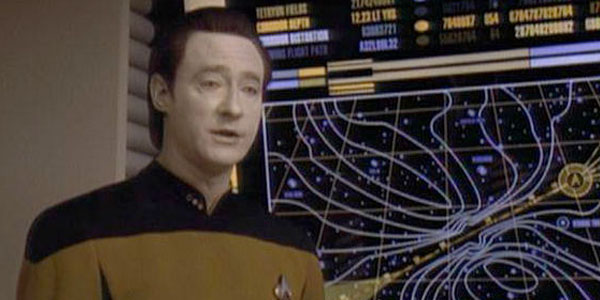
From Ruk, and M-5 to Data and the Borg €“ when will it end? In €œThe Ultimate Computer€ not only do we see humanity wrestling with how much control of our lives do we give over to the machines, but we also see Captain Kirk also contemplating his own obsolescence. While the 1960€™s storyline was a bit over-simplistic in its moral lesson that teaches the superiority of human subjectivity, this is a moral question that we see over and over again in the various iterations of Star Trek. We see it asked in if an android should be allowed to hold rank over humans in Star Trek: TNG and or should the scope and function of artificial consciousnesses in the forms of holograms be expanded to allow for personal discovery in Star Trek: Voyager. The question hasn€™t changed in any form of Star Trek or in our own world. As we ourselves develop further into this field without thought of consequences of this technology, scientists are hardly concerned with if they should do it and more focused on if they can do it. This is a question that would find good ground in Star Trek III.

7. To Do What€™s Right... Or What Is Ordered?

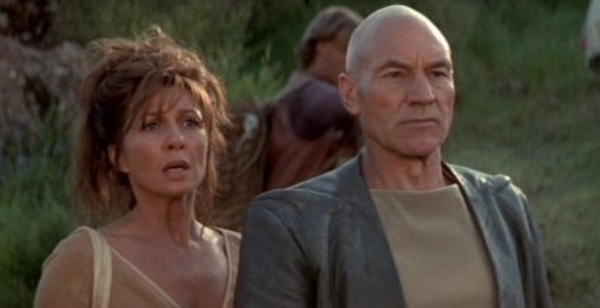
Star Trek: Insurrection looked at this scenario. Picard was faced with the issue of blindly following orders from a superior officer or disobeying them on the basis of their questionable morality. Picard exercised his own judgement and placed his career in jeopardy in order to adhere to a higher ethical, professional standard. Will we see this scenario raise is noble head in Star Trek III? Will Kirk or a fellow officer follow his €“ or her conscience? It stands to reason that if captain and crew of the USS Enterprise are true heroes, then obviously this is a moral dilemma that can easily find itself woven into the plot. Perhaps it€™ll be a choice of disobeying Star Fleet in order to save Spock€™s life? In Amok Time, Kirk disobeyed orders in order to get Spock to Vulcan to initiate Ponn Farr. Remember that one? Sure €“ maybe it was a bit selfish in that Spock was his best friend and all that, but there€™ll be plenty of opportunities for Kirk to disobey orders yet again, in order to serve the greater good. Of course, in the next movie, my bet€™s on our faithful local sawbones, Dr. Leonard H. McCoy.

6. Social Development In The Federation€ Or Who Cleans The Toilets?

You know, ever since the TOS episode, €œThe Cloud-Minders€, I€™ve always been curious about more information on Gene Roddenberry€™s vision of the egalitarianism of the Federation. Even in Star Trek: TNG we see Picard getting his hair cut (well, trimmed) by a barber who he is irritated by, and in the re-booted Star Trek, Kirk still has to pay for drinks using currency and Star Fleet Security (aka Shore Patrol) still needs to enforce the law, stop bar fights and take people into custody. So, is money still a major pursuit of human civilization in the re-booted universe or has this also been thrown out by J.J. Abrams? The question needs to be asked: just how has humanity advanced socially in the 23rd century? If the bar fight scene is any indication that humans haven€™t advanced as much as Rodenberry would have liked for his creation, then Abrams and Payne need to demonstrate some minimal degree that humanity is not just a futuristic version of the morality that we have in the present. I, for one, would like to believe that we are capable of some type of moral growth in the future that allows us the wisdom to use space flight in some sort of noble endeavour. If the re-boot can€™t replace what Roddenberry provided in the first place, then it€™ll be hard to believe that the Federation is any better than the political structures we have in place today. That€™s a major dilemma in terms of the very nature of Star Trek that binds fans together. Star Trek represents a Utopian future that people can believe in and can aspire to. If this element is missing from the re-booted franchise then it diminishes the value of Roddenberry€™s work, and that€™s something that will have to be addressed in the third film.

5. Peace At What Cost?

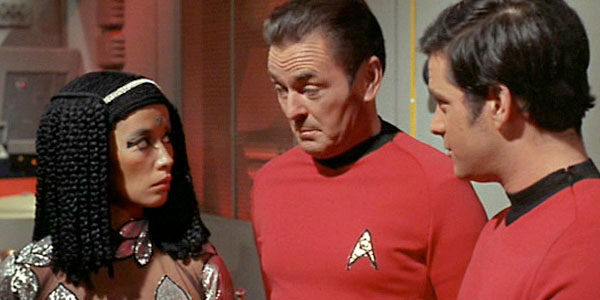
In the episodes €œElan of Troyius€ and €œThe Empath€, we see Star Fleet captains in both generations of Star Trek ready to deliver a free individual into a political marriage to preserve peace between warring planets. Both occasions are somewhat hypocritical in that Star Fleet officers dedicated to preserving the rights of individuals in the Federation should be so willing subjugate these individuals€™ rights, despite being ordered to do so, or even recognizing the inherent customs of other races. If it€™s wrong, it€™s wrong. A further complication in these two episodes is that both captains had personal feelings for the women they were effectively selling into indentured servitude. If these men of such distinctive character can swallow their own personal beliefs to engage in such behaviour, isn€™t it possible that other similar choices might be made in the service of peace in Star Trek III? This is the type of personal scenario that forces the viewer to ask himself if he might make the same decision. Would you willingly part with someone you had personal feelings for if it meant the avoidance of war?

4. Eugenics

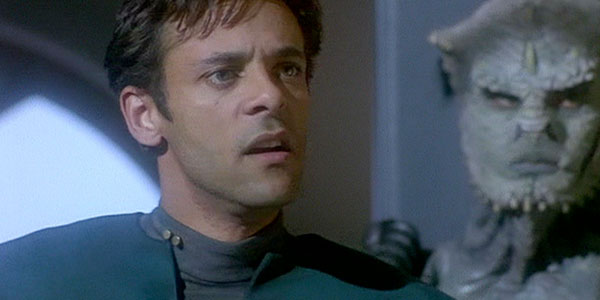
I don€™t think this subject got enough attention in Star Trek: Into Darkness. Khan€™s origin was barely touched on and the idea of his genetic alterations barely got more than a nod of notice. In fact, it was more surprising that he was from the 20th century. His backstory was more of an explanation for his presence rather than an issue worth notice. When Julian Bashir from Star Trek: DS9 was discovered to be illegally genetically altered (Doctor Bashir, I Presume) it caused plot complications and character ramifications for episodes afterwards. In Into Darkness, Khan was simply a threat to overcome, with no apparent regard for his altered status. When you consider the TOS episode €œSpace Seed€ spawned an entire motion picture, the audience really needed more introduction and appreciation of Khan€™s status in Into Darkness than just simply a villain. Genetic alteration is a serious issue within the Federation as we can see from the behaviour of Bashir€™s parents. Why didn€™t it get more regard in Star Trek II? Maybe this is something that can be addressed in Star Trek III.

3. Earth First?

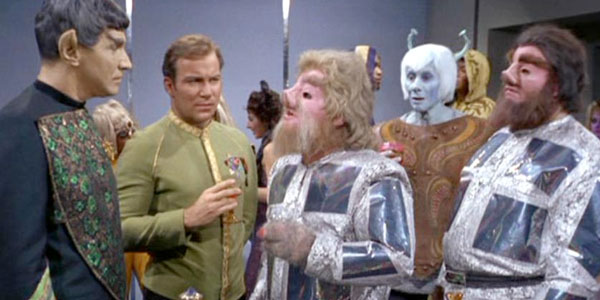
The problem with a multi-species political organization like the Federation is that eventually someone has to rise to the top. One culture is bound to gain more influence over the others. As much as each species is to be accorded equal representation and regard within the Federation, if we look at the TOS episode €œJourney to Babel€, the various representatives of the different races were prone to infighting, bickering and all sorts of abhorrent behaviour that made them appear reprehensible. It was Terran diplomacy and behavioural superiority that kept their base attitudes in check. Even in Star Trek: Enterprise, Terrans appear to be the noble underdog and the intellectually and technologically advanced Vulcans who welcomed Earth to the stars are presented as a bullying and overbearing race. It€™s almost propagand-ish in that despite this €œbullying€ and the Terran lack of experience, the sense of racial and moral superiority still manages to propel humanity into situations it isn€™t prepared for, despite Vulcan intervention or admonitions. The Terran attitude in this case is one that borders on racial superiority. While Star Trek III is to exist in a time frame beyond the years of these episodes, it would be interesting to see if Earth values supersede those of the Federation allies. Perhaps this is something that could be explored further €“ should Earth submerge its identity and values in preserving the integrity of the Federation or will Terran stubbornness overwhelm common sense?

2. Environmental Issues

Remember that episode in Star Trek: TNG (Force of Nature) where it was discovered that warp travel had negative environmental effects on the fabric of space? It was in the seventh season of ST: TNG but nobody ever picked this up again in the various incarnations of Star Trek. Now, I know that ST:TNG is supposed to be years ahead of the re-booted alternate reality (who knows, maybe the Next Generation won€™t even happen now!) but it surprises me that this was an issue that was never really capitalized on, given the importance of environmental concerns in today€™s society. It€™s a major dilemma as well. In order to keep the Federation together, ships have to be able to travel and maintain communication with the far sectors of its territory. But if travelling at warp speed damages the very nature of the universe, at what cost? If travel is curtailed, will empires shrink? Will privateers form their own space forces now that the larger powers are unwilling or unable to defend them? There are so many implications that hinge on this and moreover, the issue of whether to ignore this damage and continue as normal until the universe holds out or not could be a major story dilemma to explore in the new film. Maybe € and maybe this might not have a lot of play, but it is certainly a dilemma that has been abandoned and could be considered fair play in the re-booted universe.

1. War

Finally, the greatest moral dilemma (and arguably the most successful one in any of the Star Trek incarnations) of any political nation is the decision to wage war on a perceived threat. This dilemma is responsible for the best episodes €“ Balance of Terror (TOS), The Best of Both Worlds I & II (TNG), Redemption I & II (TNG) and €œFavor the Bold€ (DS9). In the first re-booted Star Trek, members of the Romulan Empire destroyed a Federation starship, destroyed a Federation member planet (Vulcan) and even threatened the existence of the Federation€™s central government structure. Isn€™t this enough of a threat for the Federation to declare war on the Romulan Empire? Again? That€™s right, because if we follow established Star Trek canon up to the point of George Kirk€™s death, then the Federation will have already concluded its war with the Romulan Empire. Remember that one? It was concluded via subspace radio according to €œBalance of Terror€. So the dilemma here that could be followed up on is an all-out declaration of war with the Romulans for the actions of the Romulan Nero in his obsessive quest. Why not? Of course, there will be all sorts of ways to examine the issue: was he a renegade? Do the actions of an individual from the future constitute the governing policy of a nation in the present? There are many moral questions that could be examined in relation to the decision to go to war and all would fit nicely in the third movie. You know, if we€™re lucky, that decision could possibly end with a complete restructuring of the original timeline, reversing all the previous damage done in the first re-boot, restoring J.J Abrams and J.D. Payne back into the fold of blessed canonical absolution. I€™m game if they are!

Contributor
Contributor

John Kirk is a Teacher-Librarian and currently a History/English Teacher with the Toronto District School Board. But mostly, John teaches Geek. Comics, Sci-Fi (Notably Star Trek), Fantasy and Role-Playing and table-top games all make up part of John’s repertoire, There is a whole generation of nerds-in-embryo who rely on him to make sense of it all, to teach that with great power comes great responsibility, that the force will be with us always and that a towel IS the most useful thing to have in one’s possession. When John isn’t in the classroom, he can be found in his basement writing comic reviews for www.popmythology.com and features for Roddenberry Entertainment's www.1701news.com.