Star Wars: 10 Greatest Original Trilogy Moments
 In May 1977, 20th Century Fox released George Lucas's Star Wars and Hollywood would never be the same. Combining amazing characters, thrilling action, and a creative screenplay, Star Wars went on to become the most successful film of all-time. Grossing $307.2 million domestically and earning 10 Oscar nominations (including prestige categories like Best Picture and Best Director... yes, there was a time when George Lucas was considered to be the Best Director), it quickly became a classic film. Spawning two sequels, The Empire Strikes Back and Return of the Jedi, the Star Wars trilogy went on to become the defining cinematic event for an entire generation. For over three decades, Star Wars has endured and is still as immensely popular as it was when it was originally released. While the disappointing prequels may have hurt the brand during the 2000s, it's a testament to the original trilogy's strength that the franchise still has legions of fans who will continue to share the adventures of the Rebel Alliance no matter what age of Hollywood we are currently living in. The films are that timeless. The main reason why the first (and in some fans' minds, only) three movies still hold up is because they are full of classic movie moments that stand out and stay in your mind long after you're done watching them. To celebrate Return of the Jedi's 30th anniversary (which was May 25 this year) here's a list of ten of these moments and as you read this article, you'll begin to understand the enormous task JJ Abrams has when attempts to bring the saga back. NOTE: It's impossible for me to rank these, so the moments are listed in no particular order.
10. The Opening Sequence - Star Wars
 A great opening sequence should immediately draw you into the film's world and command your attention so you remain invested for the next few hours. That's exactly what the very first sequence in the whole trilogy accomplished. I can't think of a better way to open the film. It was perfect.
Capturing the sense of interstellar adventure in the opening shots, Lucas set the stage for his Galactic Civil War. The audience gets a feel for just how outmatched the Rebels are as soon as that jaw-dropping shot of the Star Destroyer flying by is shown. Immediately, without hearing any dialogue or meeting any of the characters, we understand the magnitude of the threat. We see the Rebels' tiny ship getting pulverized by the Empire and we feel helpless and excited at the same time. How can these guys possibly win? we wonder as we never take our eyes of the screen.
Of course, the action shifts to the interior of the Rebel ship and again we are shown again how uneven the fight is. The stormtroopers (who are smartly nameless, faceless uniformed soldiers) blast their way through the Rebels (the audience sees their faces in pain and they seem more human to us. Another smart choice) as they take over the ship. With the knowledge of what's at stake - the Rebels already have the Death Star plans - there's a rooting interest and a reason to care about what's happening as explosions go off. We feel relieved when R2-D2 and C-3PO get away safely, setting the story in motion. And obviously, we get our first glance at Darth Vader, perhaps the greatest villain in film history. As he enters the scene, we are immediately filled with a sense of dread and fear. Vader is the personification of evil and we see that even the stormtroopers are afraid of him. Combining the iconic text crawl, the music of John Williams, and some outstanding visuals, Lucas draws moviegoers into his galaxy by crafting a terrific example of effective filmmaking. The sense of wonder and adventure that incapsulates the series is established and the film has only just begun.9. Obi-Wan's Sacrifice - Star Wars

8. The Death Star Trench Run - Star Wars
 Everything in the original film builds up to the climactic showdown as the Rebels stage one last-ditch effort to defeat the Empire and save their base. It's a thrilling and exciting finale for a great film. From a technical standpoint, the special effects are still fantastic if not unparalleled. It may lack the fancy CGI of today, but ILM's models and miniatures look great and make everything feel real. The way the sequence was edited stands out as well. Using footage of World War II dogfights as inspiration, the crew created an extremely fast-paced battle that never drags. John Williams's score once again sets the tone as the audience is swept up in the danger and adventure of going toe-to-toe with the Empire. But like all the best parts of the Star Wars trilogy, the Death Star trench run also serves the characters involved. Luke learns the lesson of trusting his feelings when he destroys the Death Star by using the Force, not his targeting computer. And we also get the great moment when Han Solo saves the day at the last minute, showing that this scoundrel has a heart of gold and a conscious. By combining style with substance, Lucas gave moviegoers a reason to cheer when the credits rolled.
7. Yoda Lifts The X-Wing - The Empire Strikes Back
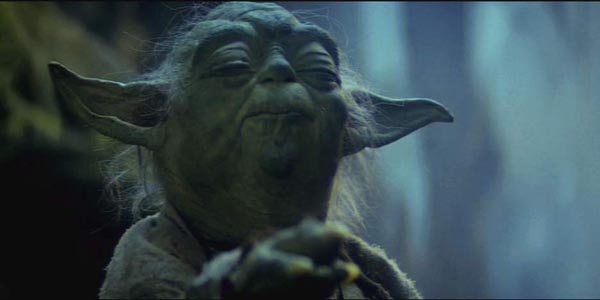 The Empire Strikes Back is one of the few instances in Hollywood where a sequel outdid its predecessor in all facets. One of the main reasons for this was the addition of Yoda, who is responsible for several of the film's memorable moments - both comedic and dramatic. He's the last guy you'd expect to be a Jedi Master, but that's the point. Lucas was illustrating that you didn't need to be a great warrior in order to be powerful (something that was lost on him in the prequels). The Force was about more than physical strength; it's mainly about spiritual strength. In the setup for this scene, Luke attempts to use the Force to lift his X-Wing out of the Dagobah swamp but fails because he claims it's just too big. Yoda scolds his pupil with a priceless monologue about how "size matters not" and that the Force is a powerful ally because life creates it. "Luminous beings are we. Not this crude matter," Yoda says as he pinches Luke's shoulder. Unimpressed, Luke goes away to pout and what follows is one of those magical movie moments. Yoda, small, old, frail Yoda, closes his eyes and places the ship on the ground, demonstrating the true power of the Force and what you can accomplish with it. Luke, awestruck, exclaims "I don't believe it," learning the most important Jedi lesson of all. You need to believe in the Force in order to control it and have it be your ally.
6. "I love you." "I know." - The Empire Strikes Back
 Another element that was memorable about The Empire Strikes Back was the relationship between Han and Leia. Basically hating each other during the first film, the characters begin to respect and admire each other as they run from the Empire together, ultimately falling in love. As Han is about to be lowered into the carbonite, it's an extremely tense and dramatic moment. The audience has no idea if Han will survive the freezing process, so this could be the last time we see him. Afraid, Leia confesses her true feelings for Captain Solo and he responds in the most Han Solo way possible by simply saying, "I know." Credit Harrison Ford for the ad-lib. I don't think words can describe how perfect that line was. Showcasing Han at his most emotionally vulnerable, the man who was once ready to take on the entire Death Star by himself now tears up at the thought of never seeing his friends again. He was frightened. He was scared. We never saw Han scared before. He was always so sure of himself, but not this time. Like all the great moments in this franchise, this scene serves to show us new sides to the characters we've grown to care about, always looking for ways to make them seem relatable and more human. If anyone still had the impression that Han didn't care about anybody but himself at this point, they learned that simply was not the case.
5. "I am your father." - The Empire Strikes Back
 You knew this was going to be on here. When I wrote about how secrets can help or hurt films, I said that a great plot twist adds substance to a film, gives the characters more depth, and forces the audience to reevaluate what they have just seen. In my opinion, no plot twist better represents that definition than the shocking revelation Lucas dropped at the end of The Empire Strikes Back. Let's examine why. Adding substance to the film: The twist that Darth Vader is Luke's father gives the entire series a new layer that wasn't there previously. It enhances the relationship between Luke and Vader. Originally, Vader was thought to be the one who betrayed Luke's father. Luke hated Vader for that reason and because he killed Obi-Wan. Now, he learns the shocking truth and it becomes almost like a Shakespearean tragedy. Giving characters more depth: Vader is elevated from the pure embodiment of evil to a much more interesting character. It was Lucas's first effort to make the villain seem like a real person (more on this later). He became a guy who had ulterior motives, plotting against the Emperor to rule side-by-side with his son. This was also one of the first signs of Vader's good side. Previously choking people and chopping his former master in half, Vader frequently pleads with Luke, "don't make me destroy you," showing the beginnings of the internal conflict that will define him during the next movie. He very easily could have killed Luke, but felt something - maybe love and/or compassion - because Luke is his offspring. Speaking of Luke, his character gets more depth as well. Once hellbent on killing Vader (his failure in the Dagobah cave proves this), he now has an important decision to make. Does he try to kill his own father if it means victory in the war? It helps makes his character more dynamic as he struggles to deal with this development. Reevaluating what we have just seen: Obi-Wan lied about Luke's father. Now we know why. He didn't want Luke to face this dilemma. Earlier in Empire, we see a scene between Vader and the Emperor discussing Luke's future and Vader has the line, "He will join us or die, Master." Before the twist, this could mean that Vader will be the one killing Luke. But as we would later see in Return of the Jedi, Vader probably is talking about what the Emperor would do to Luke if his son refused to turn. Vader also seems somewhat protective of Luke during this scene, stating "he's just a boy," potentially as a way to get the Emperor to back off a bit. Before that could seem like Vader dismissing the idea of Luke as a serious threat, but with this added element, paternal instincts pop up. It was such a great twist for so many reasons. Undeniably, it's one of the most famous moments in cinema...
4. Han's Rescue - Return of the Jedi
Harrison Ford wasn't sure if he wanted to return for the third installment, but it's a great thing he did. The first act of Return of the Jedi is Star Wars at its best. It has the feel of an Indiana Jones-style cold open with our heroes embarking on a dangerous mission to save Han from Jabba the Hutt. It's certainly one of the most entertaining sequences in the entire trilogy and once again captures that sense of adventure that defines this franchise. Three movies in, Han's rescue gives fans a rare chance to see the entire Rebel gang work together as a team (the main players were separated for most of The Empire Strikes Back). Everybody - from Luke to R2-D2 - gets their moment to stand out. It was also great to see how the chemistry between the characters had developed over the course of the films. You really got the sense that these people have been friends for a long time and want to help each other out. From a story perspective, we get to see the next step in Luke's character evolution. Once a whiny farm boy who wanted to go check out some power converters, Luke has grown into a powerful Jedi who is very confident about his abilities. Using everything he has learned from Obi-Wan and Yoda, Luke is always cool and under control throughout the whole situation, no matter what happens. I love how he mocks Jabba with the line, "This is the last mistake you'll ever make," right after Luke and his friends are sentenced to death. It was also a nice way to foreshadow Luke's internal struggle when he is tempted by the Emperor later in the film. He seems like a much darker character during Jedi's opening sequence and certainly relishes in his power. With his all-black attire and (for him) devil-may-care attitude, the seeds of doubt are planted in the audience's mind. Could he turn to the dark side? Full of humor (Han: "How we doing?" Luke: "Same as always." Han: "That bad, huh?"), thrilling action (the Sarlacc battle), and giving Lucas an ideal opportunity to tie up loose ends (the Han/Jabba feud is finally put to rest), the first act of Return of the Jedi is a lot of fun for fans of the series. It encapsulates everything you'd want in a Star Wars movie - and like the original film - it had only just begun.3. Luke Unleashes His Anger - Return of the Jedi
 The lightsaber duels in the classic trilogy were more about the characters than actual lightsaber fighting. For further detail on this, watch Red Letter Media's amazing review of The Phantom Menace, particularly this section. No duel in the original trilogy demonstrates this better than the one between Luke and Vader in Return of the Jedi. The best part of this confrontation comes at the very end. Luke is hiding in the shadows, hesitant to fight his father in fear of giving into his hatred, betraying his friends, and turning to the dark side. Vader, eager to bring him out, taunts him by suggesting that if he does not turn, his sister Leia will. Struggling to maintain his composure, Luke lets his emotions get the better of him and unleashes at Vader. Fueled by anger, the younger Skywalker attacks his father with ferocity. It's a reversal of the Empire duel where Vader was in complete control and toying with Luke. This time, Vader is the one who is outmatched. Blinded by rage, Luke beats Vader into submission until he slices off Vader's hand. I love Luke's facial expression right after he beats Vader. He seems as if he's embracing the Emperor's teachings and allowing the dark side to take him over. By using the attributes of the Sith, Luke was able to become more powerful (physically) than he was before. Once again, the filmmakers allowed us to see a new side to a familiar character. At this point in the film, audiences had to fear the worst. After teasing Luke's darker nature at Jabba's palace, it seemed as if he had given in. We never saw Luke like this, and it made the movie more intriguing.
2. Vader's Redemption - Return of the Jedi
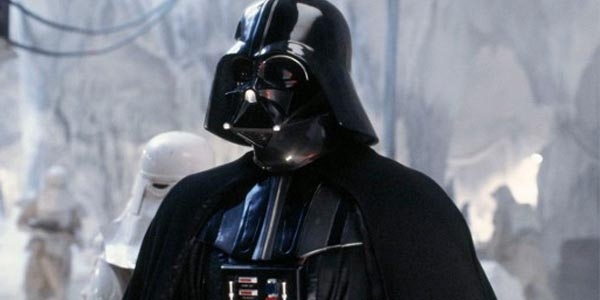 After defeating Vader and completing his training, Luke realizes what's happening. The shot of him clenching a gloved fist while staring at Vader is very symbolic. The Emperor laughs, believing he has won, but Luke stares him in the eyes and proclaims, "I am a Jedi like my father before me." He knows he's inviting the Emperor to kill him. He would rather die a hero than become a villain (unintentional Dark Knight reference). Not too pleased, the Emperor begins to electrocute Luke, torturing him before delivering the fatal blow. Helpless, Luke calls upon the only one who could save him, his father. Lucas can tinker with this scene all he wants, but there's more emotion in the original 1983 version than any alterations can forge. We can almost see through Vader's mask as he struggles between choosing saving his son or aiding his mentor. It's the ultimate character moment for him. Does he allow Anakin Skywalker to return or has he completely turned? In a move that had to have gotten applause in the theater during its original run, Vader of course picks up the Emperor and throws him over the balcony, redeeming the Jedi Knight he once was. Vader allowed his emotions to take control, but they were ones of love and compassion. In Luke, Anakin saw the man he once was; strong-willed, good-natured, and kind-hearted. He knew overpowering the Emperor would likely lead to his demise, but Vader wanted his son to live a full life. One of the main themes of Return of the Jedi is Luke trying to save Anakin, but in the end Anakin had to save Luke. It was a nice way to bring everything full circle.
1. "Tell your sister you were right" - Return of the Jedi
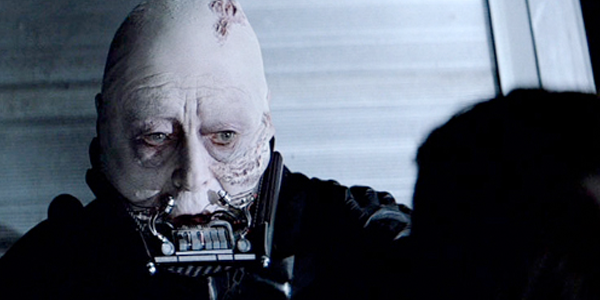 What makes certain blockbusters stand above the others aren't impressive special effects or fast-paced action sequences. It's the smaller, dramatic character moments that can elevate a crowd-pleasing spectacle to something special. The Star Wars trilogy is full of these and this one is one of the most powerful. After sacrificing himself to save his son, Vader knows that nothing can save him from his impending death. Against Luke's pleas, Vader asks for his mask to be removed so he could at long last look at his son with his own eyes. Luke obliges and has a touching moment with the man who was considered to be the most feared in the galaxy. The last two installments of the trilogy made an attempt to humanize Vader. In Obi-Wan's words, he is "more machine than man," but that doesn't change the fact that there is still a man under that helmet. Vader's scenes with Luke in both Empire and Jedi change his character from a potentially one-dimensional menace that gave the movies their bad guy to someone who felt like a real person. They rounded him out and made him more dynamic. You get to see the good side of Vader that Obi-Wan talked about and it's easy to buy into the fact that yes, Anakin is a decent man (the prequels notwithstanding). This scene made Vader relatable. What father wouldn't want to speak to his only son in his final moments? This scene was also one of the sadder parts of the series. After all we've been through watching this relationship grow, it's over. When Vader admits he was wrong and tells Luke he was right all along, it's hard not to get choked up because there's so much emotion. We feel Luke's pain as he wishes to save Vader. We feel happy that Vader - after so many years of pain and suffering - can finally be in peace. It was the best way to close the book on one of the finest trilogies in movie history. There are no lightsabers. There are no explosions. It's a brief scene between two characters sharing dialogue and it's great. What are some of your favorite original trilogy moments? Any that aren't listed here? Let us know in the comments!