Star Wars: All The Movies Ranked From Worst To Best

The Force has awakened, but where does it fit among the rest of the saga?
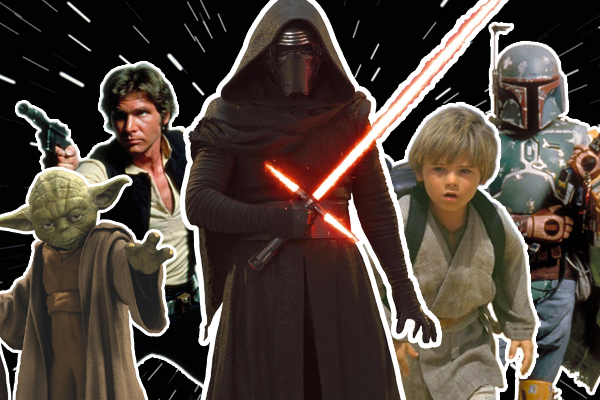
Blue text (how very seventies) giving us an apposite time period and setting, a fade to black as the longest second imaginable plays out, then boom; a massive note plays and giant logo fills the screen. It's been almost forty years since Star Wars quite literally burst onto cinema screens, and in that time it's become one of the great modern myths - a story that transcends all the games, TV shows, comics, toys, lunchboxes and, yes, movies to become legend in its own right. There may have been slight dips in cultural dominance at points (the late eighties were a barren landscape of Ewok adventures and post-prequels things looked to have spiralled into over-cynicism), but Star Wars has never stopped being beloved - even if Disney hadn't bought up Lucasfilm in 2012, promising a whole new run of films (including the long-hyped sequel trilogy and a bevy of spin-offs), we'd have still been bemoaning endless Special Edition changes and debating tantalising minutiae. Now the Force has awakened, though, the future of Star Wars is brighter than Tatooine at midday, with a new movie planned for every year through to 2019 (and that's saying nothing of all the requisite tie-in materials). But, of the films released so far, which ones still hold up and which were clearly born of merchandising opportunities? Let's find out.

9. Star Wars: The Clone Wars

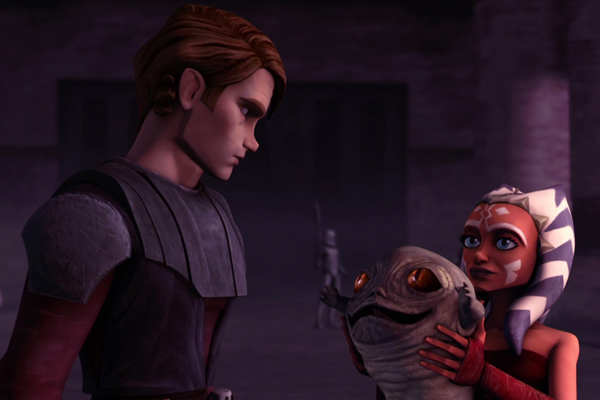
If Disney take one lesson from the failures of George Lucas before he offloaded Lucasfilm, it's that slapping the Star Wars name on anything and pushing it into cinemas doesn't guarantee a hit. Once the hype for Episode VII dies down, they're going to be turning their eyes towards an expansive universe of spin-off movies, something that has had limited success in the past. The Clone Wars may not be as all out dreadful as The Star Wars Holiday Special, but in terms of prominence represents the nadir of Star Wars as a marketing brand. Heck, it shouldn't even really be on this list - it is, quite literally, a glorified TV pilot. In a somewhat ironic turn given that he made the entire prequel trilogy about the folly of greed, Lucas, seeing the early concept for his post-Sith CGI cartoon riffing on the prequels' central conflict, realised he could make more of an impact (and merchandise push) if he took the first couple of semi-linked episodes and released them a big movie event in their own right. The result is a mess. The threads include Anakin getting a padawan (what?), Jabba The Hutt's son being kidnapped (WHAT?) and Padmé going undercover in a camp crime lord's lair (oh you must be joking) and they hang together with ad break clarity. There's clearly a passion for the saga underpinning what's on show here (just look at any interview with cowboy hatted-director Dave Filoni to get a taste of that), but the TV-level writing, animation and voice work (Obi-Wan is quite literally an imitation of an imitation) and complete lack of vision mean this is never elevated above pandering filler. Rogue One, you've got a harder task than you realise. The TV series that followed improved things, although with entire episodes dedicated to the misadventures of Jar Jar Binks and a canonical resurrection of Darth Maul it's still hard to recommend to non-die-hards. Instead, check out the 2D Star Wars: Clone Wars shorts released between Clones and Sith - much better on every single level.

8. The Special Editions

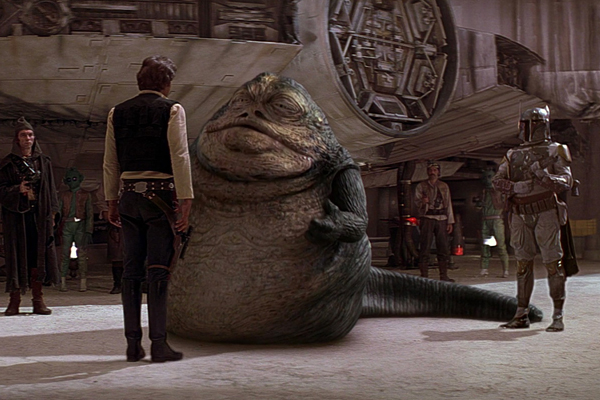
Forget the prequels, it's the Special Editions that really put a mar on the Star Wars legacy. If you don't like Episodes I-III you can just ignore them. But if you can't stand (deep breath) Greedo shooting first, the CGI smogasboard of Mos Eisley, Jabba in A New Hope (or the fact the movie's now subtitled A New Hope), Kiwi Boba Fett, Jedi Rocks, a snouted Sarlaac, Vader screaming "Nooo" as he kills the Emperor or, worst of all, Hayden Christensen as Force ghost Anakin, then tough. Originally intended to be a restoration of the original trilogy to celebrate the 20th Anniversary (and get a new generation hyped for the prequels), Lucas became increasingly enamoured with the prospect of actually altering the movies to utilise ground-breaking CGI to enhance the experience. The results are, across the board, terrible. He does fix several technical issues - blue screen bleeding, matte lines - but these background improvements are negligible compared to the amount of sh*t forced into the foreground here and in the later DVD (2004) and Blu-Ray (2011) releases. But that's only half the story. Taking the standpoint that these were the definitive versions of the movies - the ones he'd always wanted to make - Lucas made the original edits unavailable, leaving fans with no choice but to sit through his increasingly deranged tinkering. The Special Editions are still, at their heart, the movies we all love, but the bastardisations turn them into something else - it's like watching the originals, only with George Lucas pausing them every five minutes to jab you sharply in the side with his pen. And, with a high quality version of the unmeddled prints unavailable (the only feasible options are VHS rips and the lazy Laserdisc-sourced DVD bonus feature from 2006), they are a bigger blight on Star Wars than anything else (yes, even The Clone Wars).

7. Star Wars Episode II: Attack Of The Clones
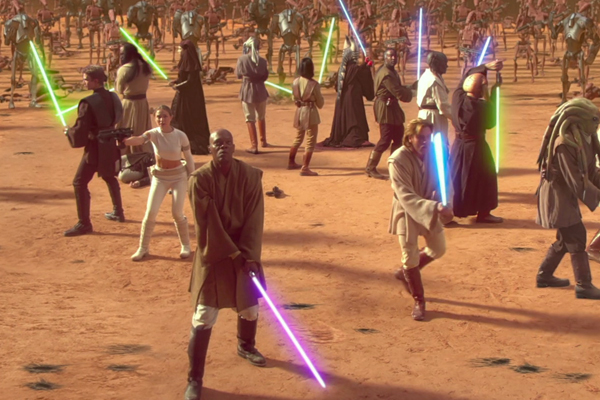
Yup, that's right. The worst Star Wars movie isn't the one so often crucified, but its successor. In the aftermath of the greatest disappointment of our time, Attack Of The Clones snuck in with an "Oh well, it must be better" sentiment without really doing anything to earn it. Now I don't hate Episode II (in fact, I'm in the rather enviable position of actually enjoying all seven of the main Star Wars films) - it's an average movie that really goes in for George Lucas' rhyming structure while also twisting it on its head (its plot is both a mirror and a reversal of The Empire Strikes Back) and offers up a real taste of what the age of the Jedi actually looked like - bemoan excessive lightsaber fighting all you want, but seeing 200 sabers ignited all at once in that arena is childhood dreams realised. The thing is that any solid moment - the Blade Runner-inspired Coruscant, Anakin killing the Tusken Raiders, pretty much all of Obi-Wan going detective - is directly juxtaposed by something misjudged - Anakin and Padmé's wearisome flirting, Ani's post-massacre breakdown and the shoehorning in of the Fett dynasty into wider Galactic politics. The Phantom Menace may go for some odd plot directions thanks to being set-up, but it's Clones that doesn't fully hang together as a fully fledged movie. In fact, this feels a lot more formulaic than Menace, with each scene having a singular, obvious purpose that is either intended to build story or character, but never both. The film repeatedly stops dead to have a bit of character discussion or, more commonly, hamfisted romance, while action scenes are dominated by lots of undeveloped, one-shot action beats, rather than extensive set-pieces. The heart of the problem with Lucas' direction appears to be that defining facet of the prequels; CGI. Clones relies on computer generated effects much moreso than the practically-minded Menace, despite them not being up to level needed for the plethora of blue screened backdrops and fully-CGI characters to feel real. This further informs George's structure of scenes, with him focusing on the effects and limiting actors to string puppets. What hope did Hayden Christensen have?

6. Star Wars Episode I: The Phantom Menace
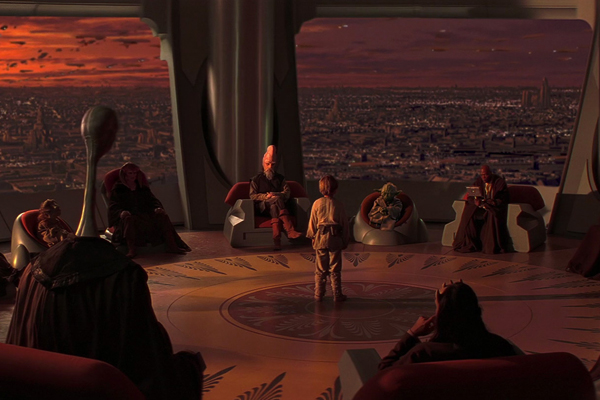
Do you want to know the biggest lie in cinema? The Phantom Menace isn't that bad. Oh, it's not a great movie by any stretch, with some iffy performances rivalled in woodenness only by the dialogue the actors were given and some characters ill-conceived on a basic level (if Jar Jar really was "the key to all this", Lucas was majorly deluded), but it's an overall fun watch. What stands out so much about the movie is that, while it's so often crucified for being all about taxation and trade routes and other sleep-inducing nuggets of boredom, it's actually a fast-paced action-adventure with minimal time actually spent on all the politics. In fact, at the end of the film's second act Lucas even shows up bureaucracy as a boring blight on excitement; he himself is passing comment on the very thing fans blame the movie for. Not to get all defensive, but this is a movie that nowadays is more about context than content. People base their opinion of the film off the impressive-but-bias RedLetterMedia reviews over personal assessment of the movies themselves - there's many worse movies that people give a free pass just because nobody's done a high-profile feature-length rant on them. The Mr Plinkett analysis is the most important piece of film criticism of the 21st Century (and I say that without a hint of hyperbole), but as much as it has defined Episode I's reputation, it has also obscured what the movie really is. Sixteen years on, The Phantom Menace is less a cautionary tale about hype than it is a story of how fanboy disappointment can seep over into the popular consensus. When it was released in 1999, the film got broadly positive reviews; when it was rereleased in 3D in 2011, things were much more negative, pushing the film into rotten on RottenTomatoes and seemingly validating all the whining. And that's not really fair. The Phantom Menace is an average movie. Maybe that's a crime given what it followed, but that doesn't make it bad.

5. Star Wars Episode III: Revenge Of The Sith
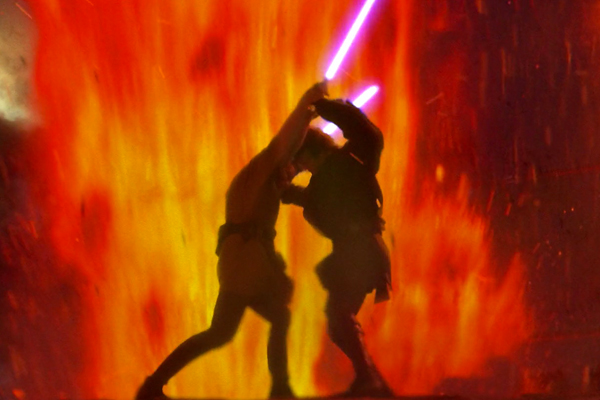
Whisper it lest the bastions of Lucas hatred attack, but Revenge Of The Sith is actually a pretty well-directed blockbuster. It still has a lot of the issues that plagued Attack Of The Clones in the dialogue scenes (odd pacing and poor blocking), but overall holds together as a single movie (like Star Wars it begins in situ, yet is immediately possible to pick up), as a finale to the prequel enterprise and, at the time, the franchise as a whole. It helps there's a lot going on, and in addition a lot that feels important to the wider narrative - after two movies that could be dismissed as glorified set-up, we finally get to see Anakin become Darth Vader, the Republic reorganised as the Empire, the Jedi hunted down, the birth of Luke and Leia, and Obi-Wan go into exile. Many of these events were conceived during the development of the original trilogy, readapted to fit the burgeoning theme of the ills of greed, and that shows in their mature handling here - more so than the other prequels, this feels like genuine Star Wars. Order 66, in particular, is a franchise highlight and gives a real taste of Lucas' eye for a story. Bizarre inconsistencies in the Jedi Order become very human weaknesses, the clones are given a purpose outside of honouring a throwaway line from A New Hope and the death of a bunch of nameless supporting characters really hits home; Anakin igniting his lightsaber in front of a bunch of cowering younglings is chilling. He may have fumbled emotion in Clones, but here George's emotive beats work (Obi-Wan's screaming to a burning Anakin is iconic in its own right). Of course, being closer to the original trilogy means we're dealing with more favourable elements, which instinctively make for a more enjoyable experience, but also give a lot more opportunity for interesting exploration. Design-wise, everything feels like a mesh of the technologically perfect prequels and the worn originals, but this is in general the closest the prequels got to the original ethos of the original Star Wars. To bemoan Clones or Menace for not feeling like Star Wars ignores that each of the original trilogy have their own distinct mood, but Sith is definitely the one that fits best.

4. Star Wars: The Force Awakens

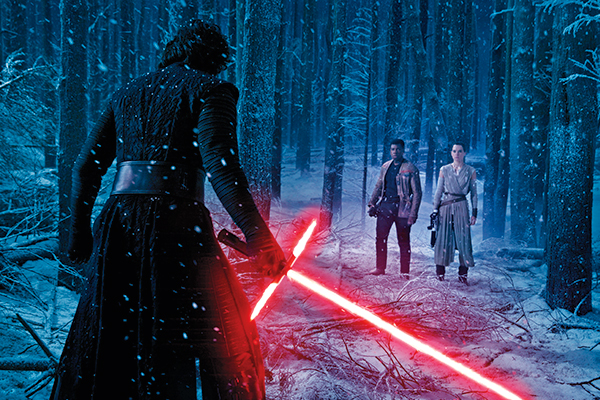
It was always going to go this way, wasn't it? No matter how much hype was put behind it, at the end of the day Episode VII was only ever going to sit snuggly between the original and prequel trilogies - even for someone like me who likes Episodes I-III, they're not the hardest act to beat, while the classics are pretty much untouchable. And that's exactly what it does - it's a rousing return for Star Wars, a fun and entertaining romp, but one that has certain issues. While it's inevitable that a film that's been anticipated since 1983, 2005 or 2012 (depending on when you brought into the idea of more Star Wars sequels) would be unable to quite live up to all the fan-instilled hype, it is nice to see that The Force Awakens does come together as a great Star Wars experience that gives full respect to the originals while also forging ahead on its own. As I said in my review proper, it's the best disappointment ever. The balance of the old and new, something that dominated the marketing, is very strong with this one; the entire first act is devoted to the younger generation before offering up the classic cast and the film makes a big point of the meeting of generations (it is, after all, all about the hunt for Luke Skywalker). And boy does it work. Rey and Finn (and, even if more through implication, Poe) are instantly relatable, in the space of two hours conjuring up almost as much of a connection as the original three. But by far the best is Kylo Ren, a character intrinsically tied into the wider story who exists in a perpetual state of obsession and inferiority in reference to Darth Vader. The issues predominantly come down to pacing and juggling of the rhyming story structure, with certain elements not given room to breathe. But when it comes down to it, they're minor niggles rather than fatal flaws. The Force Awakens is probably the best it feasibly could have been, all things considered, and will the sheer joy of having Star Wars a pop culture staple again that's hard to complain about.

3. Return Of The Jedi

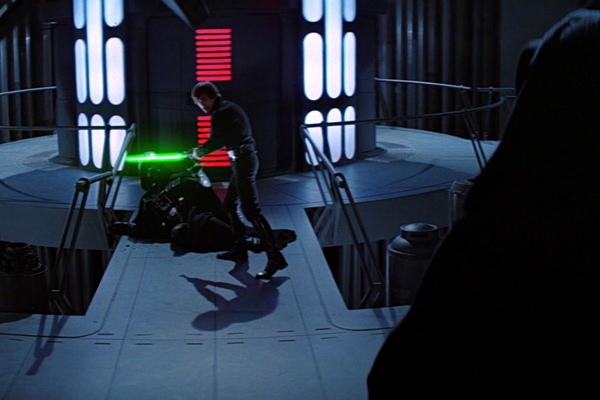
When was the meeting where we all decided we didn't like Return Of The Jedi as much? Because I sure missed it. Episode VI has had a delayed backlash in recent years, with many now quick to declare it a major step down from the other original trilogy classics (and some even going as far as to calling it a bad film). Quite why is unclear - part of of it seems to be that many of the major fan complaints with the prequels seem to have their origins here (and that is somewhat true - producer Gary Kurtz dropped out on the back of some of Lucas' more commercial decisions), making it hypocritical to despise Jar Jar yet love Wicket. But this near-proliferation hides that this is a painfully contemporary stance - back in 1994, Kevin Smith based one of Clerks best exchanges around the crazy suggestion Empire was the superior sequel, clearly working against the grain. And while I wouldn't argue it's better than Star Wars and Empire, Jedi is still a brilliant film. It fully embraces Lucas' original idea of an ongoing serial, devoting the first third to cleaning up Empire's cliffhanger (the whole Jabba plot is one of the franchise's best extended sequences), then diving into a thematically continuous plot that offers up a great sense of resolution, from the big - Luke redeems Vader - to the personal - C-3PO overcomes his personal weaknesses and tells a good story (something seeded in the first movie). Richard Marquand may not be the most personal director, leading to suggestions George Lucas ghost directed vast swathes of the film, but that doesn't mean there's no some interesting choices here. What any distaste of Return Of The Jedi really shows is how Star Wars fans have a tendency to over-egg various elements (something the film sends up by slaying Empire's silent badass Boba Fett in the most flippant way possible) - the Ewoks may not be the most inspired creation ever, but the teddy bears never overstay their welcome (seriously - the golden deity subplot is humorously brief and their role in the Battle of Endor feels well structured). Besides, it's all worth it to have two/five movie's worth of build-up finally culminate with Vader's return to the light side.

2. The Empire Strikes Back

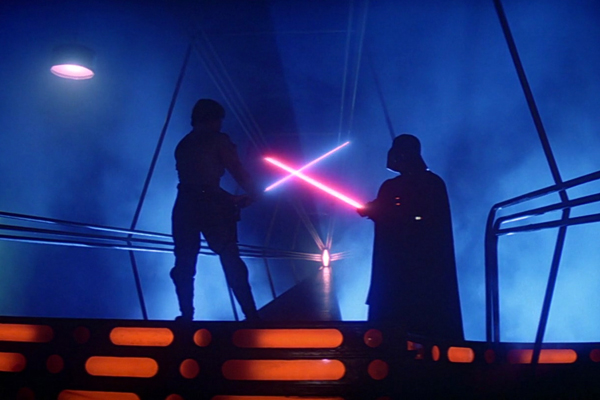
Basic cinematography? Standard hero's journey narrative? Messy fantasy dialogue? All of the common filmmaking dismissals of Star Wars (which, let's be fair, can't really be genuinely levelled against any of the original movies) feel at their most off point with The Empire Strikes Back. Just look at the twist at its heart. A universally known, legacy dominating moment, there's a lot more to the reveal that Darth Vader is Luke's father than just the base, emotive reveal in the bowels of Cloud City. Lucas may not have conceived of the parental redefining until the second draft (don't listen to any of that Dark Father in Danish rubbish), but through the rewrites the film came to be defined by it; although Frank Oz and Alec Guinness didn't know the twist (they were, like the rest of the cast, under the impression Obi-Wan had killed Anakin), the discussion of the powers of the Dark Side and Vader's fall are underpinned by their knowledge and fear of what Luke could become. Even the scene where Vader and the Emperor discuss their plans to capture Luke unbeknowingly drip with the weight of the secret (in its original version anyway - the 2004 DVD redo with Ian McDiarmid is a little too knowing). Empire is just that well written. But it's also impressively constructed, with Irvin Kershner gifted the most freedom of any Star Wars director and thus turning in a moody, artistic film that gets sci-fi fans and movie scholars alike giddy with excitement. What's particularly impressive is that despite ending on the lowest of low notes - Luke is crippled mentally and physically, Han is tortured and kidnapped, the Rebels are on the backfoot - the film doesn't preach an ultimately depressing message; the final scene, of Luke, Leia and the droids watching Lando and Chewie jetting off to save Han, is dominated by a sneaking optimism. It's a dark movie (the whole "darker sequel" notion was popularised here, after all), yes, but that doesn't mean it's devoid of hope.

1. Star Wars

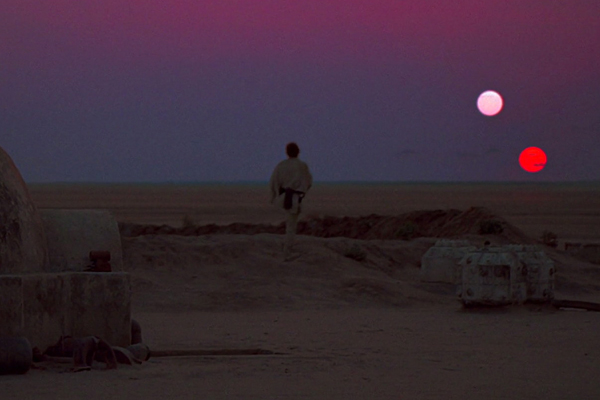
From the text crawl leading into the awe-inspiring shot of the overhead Star Destroyer right through to the orchestral crescendo of John Williams' score at the very end of the credits, Star Wars (no Episode number, no subtitle) is a deliriously exciting movie. And what do you expect? This is the movie that sparked the entire franchise, and the things that so captured imaginations in 1977 are what make it hold up as well as it does today. It is a film that offers both the incredibly tangible and the obscenely fantastical at once. Inspired by Flash Gordon serials and the works of Akira Kurosawa (and liberal lifting from Joseph Campbell), the story is highly familiar - a dreamer goes on a big adventure, saving a princess and taking on an Empire - yet it's against a backdrop of space wizards and demon aliens, a contrast no better seen than in the shot of Luke musing on his future while looking at the twin sunset of Tatooine. What makes this transcend simple story transplanting is that the world of the movie itself is so utterly complete and believable, with everything (be it the nature of the Force to the downtime of the Jawas) feeling like it exists in its entirity just offscreen. Much is made in reviews of the "used future" aesthetic, and that is totally a winning factor, but it's how that design choice (and everything else) extends into every crevice of the film that's so impressive. When I did my list looking at the very best of Star Wars cinematography, it was this movie that popped up the most (10 out of 25 shots were from the original film), which is testament to how even what is viewed as one of the series more standardised elements can still be used to incredible effect - rather than creating a generic feel, normalising the fantastical world and giving it scope. Empire is the conventional favourite among fans of the franchise, but for everything it introduces and implies, turning us all into dreamers, it's Star Wars that wins out here. How would you rank the Star Wars movies? Share your ordering down in the comments.

Contributor
Contributor

Film Editor (2014-2016). Loves The Usual Suspects. Hates Transformers 2. Everything else lies somewhere in the middle. Once met the Chuckle Brothers.