Star Wars: The Force Awakens - 6 Things That Were Perfect (And 3 That Were Disappointing)

Impressive. Mostly impressive.

Let's just take a pause to take in the sheer awesomeness of what's just happened; Star Wars Episode VII has just been released. The movie that for so long was little more than a fan-dream, a delirious "What if?", is playing right now in cinemas. It goes without saying that no movie has ever been more hyped than Star Wars: The Force Awakens. Oh, you could argue The Phantom Menace arrived under a bigger cloud of anticipation, but that was in the early days of the internet - the hype machine for The Force Awakens has been in full gear for well over year, with a pitch perfect marketing campaign getting even the biggest prequel detractor onside (that's what casting the original trio will do). Does the movie live up to the hype? Well, not quite, but it is still a ruddy entertaining film, with some franchise high-points and things that'll keep people debating all the way through to Episode VIII in 2017 (although it isn't without some odd, disappointing fundamental issues). You can check out the full review here, but let's take a deeper look at the film's highs and lows with six elements from Star Wars: The Force Awakens that were perfect and the converse three that were disappointing. Contains minor spoilers (but no major plot stuff or anything).


Perfection:

6. The Lightsaber Duel Brings The Best Of Every Previous Fight

Everyone loves a good lightsaber duel, and The Force Awakens has a great one. It's an intense, exhilarating action sequence that puts our heroes in real peril against a villain who's severely lacking in limits by this point. It's one of the extended sequences we'd seen the least of from trailers, and that makes it all the more exhilarating here (even if the true participants were kinda obvious). The duel is very much like a merging of the two vastly opposite fighting styles we saw across the previous two trilogies - there is a heightened physicality and general creativity with the laser swords that we saw in the prequels (no flipping acrobatics though), but the focus is very much on the fight as in terms of emotional development, telling us about and actually developing our characters, just as it was in the originals. J.J. Abrams also brings some new elements to it all - the camera spins around the participants up close and, instead of being an orchestrated dance, things are messy, with characters getting grazed and burnt by waylaid blades. Its conclusion is brought about by outside events, meaning a rematch down the road is all but inevitable.

5. It Has The Best Opening Crawl

By far my most anticipated part of The Force Awakens was the opening crawl - this was it, the return of Star Wars, and nothing announces that more than the requisite introduction. And not only did J.J. fully honour the franchise tradition (which was itself honouring the Flash Gordon serials that inspired the whole franchise), he actually provided the best version of it. That's right - I'd hazard this is the single best opening crawl. Putting aside the sheer thrill of seeing the words "EPISODE VII" in all their yellow glory, it's a tightly written, focused piece that handles the very tricky job of setting up the film and filling in thirty years of unseen history brilliantly. Also, the pan down to a desert planet, seeing its moon first, then having a Star Destroyer block out the screen, but it in a new way, is a great way to immediately symbolise the whole old/new rhyming structure. Oh yeah, that old chestnut...

4. The Rhyming Works

This is probably going to be the biggest point of contention amongst the fans; Star Wars rhymes. Back when developing The Phantom Menace, George Lucas described the saga "Like poetry. They rhyme," referring to how he intended the prequels to narratively mirror the originals (which they do to quite an impressive extent). It has since been mocked heavily - mainly thanks to RedLetterMedia's scathing prequel reviews - as a emblem of the simplistic, ill-informed approach Lucas took with those movies, but that seems a little off; not only does it give the whole saga a greater, epic quality, it provides an underlying implied structure to the expanding roster of episodes. Once you accept the rhyming as part of the series, it becomes one of its integral charms, and for me much of the thrill of the hype for The Force Awakens came from seeing this new story slot into the broad strokes of the saga. And the finished film does it really well - while its plot with Starkiller base obviously mirrors A New Hope, there's a lot of extra-narrative elements introduced (a rogue stormtrooper, a premature family connection reveal, a more mystically driven plot) that make it still feel fresh and exciting.

3. Kylo Ren Is A Phenomenal Villain

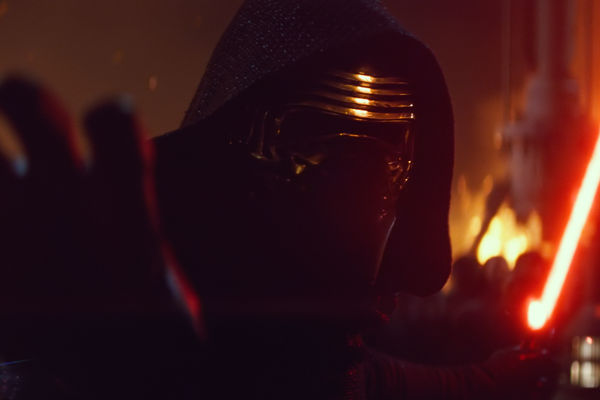
Ever since he was introduced stalking through the snowy woods before igniting his once-controversial cross-guard lightsaber, Kylo Ren has been an intriguing proposition. A character explicitly designed as an inheritor of Vader's legacy both in terms of in-universe character and marketing propositions, it was incredibly unclear through all the trailers what - aside from chatting with a mask (something that's even creepier in the finished movie) - he was up to. It turns out, a lot more than we expected. Far from just a menacing presence, Kylo has a major stranglehold on the plot and his arc in the movie makes for some of the most emotional scenes. He's a well-rounded character with clear reasonings behind his dark side leanings and the conflict within, and Adam Driver goes all in on this. Driver was one of the first actors linked to Episode VII, and seeing what they do with his character here it's now very easy to see why. What's so interesting is that Kylo isn't just a manical, all-powerful figure. His obsession with Vader makes way for almost blatant imitation, and with that a pretty violent inferiority complex. It ties wonderfully into the film's themes of legacy, and means we're getting something totally unique (and not just a rhyme with any of the other Sith). What's also interesting is his relationship with First Order leader General Hux - instead of a mutual respect thing similar to Vader and Tarkin, the two bicker like brothers, both vying for the affections of Supreme Leader Snoke.

2. It's Really Funny

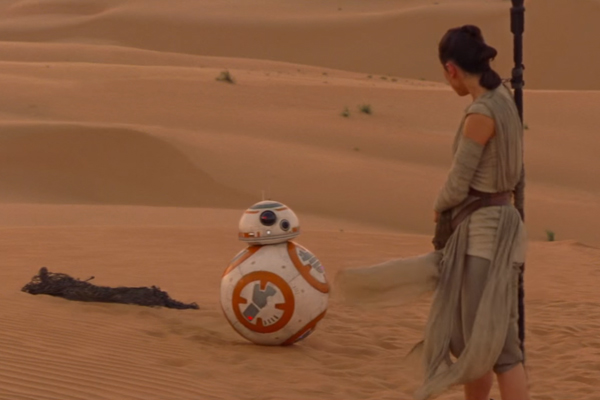
Although everyone's favourite movie in the franchise is The Empire Strikes Back, the unequivocally darkest entry in the series (yes, Anakin kills younglings in Revenge Of The Sith, but whatever), Star Wars as a franchise isn't really that bleak. The overriding message is one of hope, and there's always been a levity to the films (see: following C-3PO and R2-D2 for much of Episode IV). And The Force Awakens may just be the funniest movie in the series (at least in terms of jokes that land - Lucas clearly intended Jar Jar to turn The Phantom Menace into a comedy), with plenty of banter between the heroes, moments highlighting the ridiculousness of the Empire's all-out evil and a general playfullness in tone that feels incredibly welcome (and rather unexpected), especially when things take a darker turn in the final act. A big shout-out here to BB-8, the ball droid that's rolled his way into everyone's hearts. His gadgets are a little more varied than what we've seen with Artoo, and they're used to great comedic effect, with even the more out there elements still working. He appears a little less in the latter half, but whenever he's on screen it's hard not to smile.

1. You Care What's Going To Happen To The New Cast
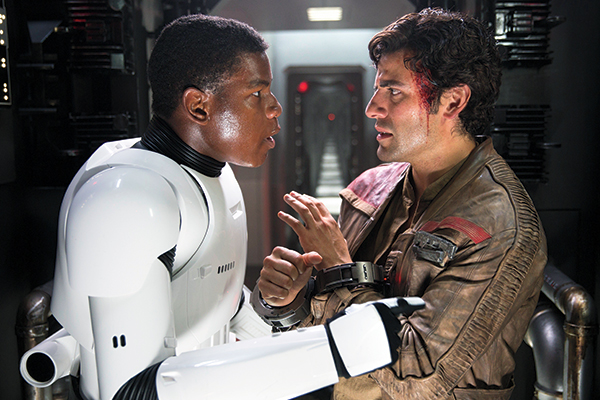
The biggest risk with an Episode VII featuring the original cast was that it could very easily have turned into a final roll-call for Hamill, Fisher and Ford, with the new cast just serving as their enablers. In fact, early rumours were that screenwriter Michael Arndt left the film because he wanted to focus more on the new characters rather than the older trio, something Disney reportedly disagreed with (the implication being the younger generation would only get to do their own thing in Episode VIII). But, thankfully, that wasn't the case. For the first act of the movie we're just with new characters, getting to know their personalities before putting them up against the sci-fi icons, meaning that later scenes are Rey meeting Han Solo or Finn meeting Leia, rather than the audience reuniting with an old friend and a new actor just standing there. All three of the leads (and, of course, Kylo Ren) are given such well-written, perfectly-defined personalities which they so fully immerse themselves in (even Daisy Ridley, who some feared would be a little wooden) that you don't just enjoy watching these new characters, you really care for them. You feel every ship crash, Force mind trick and lightsaber singe and, more importantly, are excited to know what's next for each of them. This was something absolutely essential for Disney to do if they were really going to make Star Wars into the mega-franchise they have mapped out; even if all three of the original characters had survived, they would eventually have to take a backseat and the fate of the franchise would rest on the younger lot, so it was essential to have audience's be onside with them straight away.

Disappointment:

3. The Lack Of Answers
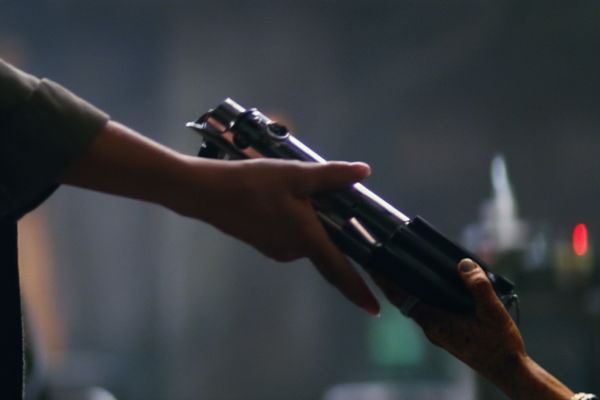
Obviously as the start of a whole new trilogy - and whole era for the franchise - The Force Awakens was going to be seeding later events, introducing some plot threads that won't get paid off until Episode IX. And, for the most part, it's done well (it's a lot less obvious than fellow Disney franchise Marvel, that's for sure). Rey's vision, the hidden spectre of Snoke, Kylo Ren's entire arc and the real purpose of Luke all get enough catharsis in this episode that they feel worthy of inclusion outside of the set-up. The problem is that there's a lot of other things that felt like they really should have been answered in the film, and are left dangling for no purpose. Why did Luke turn his back on the galaxy? Why, after the marketing hinged on it, did the mystery behind Rey's parents only get cursory references? And, biggest of all, how did Maz Kanata get Luke's old lightsaber? These are at best overtly teasing the sequels, at worst plastering over plot holes that won't be addressed again (as Maz wasn't seen after the attack on her castle, I wouldn't be surprised if we never see her again and the lightsaber magically making its way to her from a freaking gas giant is just accepted).

2. It Goes So Fast It Overtakes Itself

Star Wars movies always move fast. Even The Phantom Menace, which people constantly moan about for being a bore that gets bogged down in political chat, has serious pace to it. But The Force Awakens blows the rest out of the water. This was a clear decision on the part of Abrams and screenwriter Lawrence Kasdan, who opted for a constantly progressing adventure that goes by at such a pace any of its illogicies cease to matter. It's a nice idea, and does mean that some of those unanswered questions mentioned early don't become a problem until well after viewing, but it has some pitfalls of its own. Because the first act is so tightly focused on the new characters, little of the wider First Order threat is established until later on, meaning that when all of a sudden it's revealed Starkiller base is targeting the Resistance base it comes totally out of the blue, and it takes for the actual attack to start for you to realise we've magically turned up at the film's big action finale. At certain points, such as when Rey runs away from Maz's castle, a bit of slowing down and taking stock, similar to Luke's training on the Falcon in A New Hope, would have been appreciated. As J.J. intended, it doesn't hurt the enjoyment of the film too much, but it does reduce the amount of development certain plot threads get.

1. The Sheer Amount Of Set-Up

The Force Awakens probably has more to set up than any other movie in history; it needs to introduce an entirely new set of characters and situations, bring back the cast and iconography of the original trilogy updated in a believable manner, tie those two elements together into a wider world that is similar, but not identical, to what came before, all the while setting up events for the following two Episodes. Oh, and tell its own, self-contained story during all of that. Imagine the original Star Wars if it had to give the entire backstory of the prequels in pretty explicit detail in addition to everything else it did. That is a mammoth narrative undertaking (no wonder Star Wars alum Lawrence Kasdan was brought in to sort it out) and, in fairness, for the most part the film deals with it pretty well. It's just when you have characters like Kylo Ren, who have so much weight to them entire tomes could be written on essential backstory (keep an eye out for that book actually), it can all be a bit unwieldily in the scenes surrounding them. It's important to remember that these previous three points are disappointments, not the conventional "things that suck". They aren't movie-ruining moments or decisions that will be treated on a level as those George Lucas made with the prequels - they're irritations that rise more out of overexcitement than anything that too negatively impacts the whole picture. I've seen the film twice now and when you take it outside of the hype bubble it is a really entertaining movie that slots nicely into the Star Wars canon. They did it; J.J. Abramas may not have made a perfect film, but boy did he make a great Star Wars movie. What did you think of Star Wars: The Force Awakens? Share your thoughts down in the comments.

Contributor
Contributor

Film Editor (2014-2016). Loves The Usual Suspects. Hates Transformers 2. Everything else lies somewhere in the middle. Once met the Chuckle Brothers.