Star Wars: The Last Jedi - 39 Things We Learned From The Director's Commentary
20. Rose And DJ

Rose was intended to be the angel on Finn's shoulder, with DJ serving as the devil. Johnson proclaims that Benicio del Toro is one of his very favourite actors, and that the notion that he was going to do something he didn't expect was scary but exciting, with the director comparing him to the fox in Pinocchio, and del Toro really had a big part in crafting the character. Of his character's true nature, Johnson says:
“I was very conscious of kind of the history of scoundrels in the Star Wars universe - you're always conditioned to see them come around, see the light. I didn't want that happen with DJ."
19. Intercutting Storylines

Originally there was a lot more intercutting between the various storylines, and the film back and forth a lot more frequently.
As they started getting into the cutting process and piecing things together, Johnson realised that was detracting from the experience. Once he was with the stories he wanted to play them out for longer. He admits he thought hopping between scenes would keep energy and investment levels up, but that ultimately wasn't the case and instead it was better to see something through.
18. The Flashbacks

Johnson knew early on that he wanted to do a flashback, but was also aware that there are rarely flashbacks in Star Wars, so it was breaking from the norm. The idea was to go back and see Kylo and Mark when they were first training, but then the question became of how much do they put on screen? "Do we show a full training montage? A scene where we show his corruption?"
It was "too much of a tangent" to see all of it, so instead the decision was made to just go back to the moment that matters specifically to Luke's character, which is the moment of his failure, as it's his feeling that it all comes down to this. The Roshomon-style three versions, however, came late in the writing process. The one from Kylo's point-of-view is the truth from Ben Solo's perspective, and it was Luke distorting things the first time around.
17. Mirror Cave

Johnson talks about having lunch with Larry Kasdan and meeting JJ Abrams Michael Arndt, but that most important was he spent time hanging out with Rick Carter, who he describes as the "unseen Yoda behind this sequel trilogy".
The pair spent a couple of weeks talking about the movie: “If you know Rick, you know that when you’re talking with him about story you aren’t talking about action scenes, set-pieces, toys… you’re talking about what matters to you in the story, you’re talking about the mythic stuff behind it all, images that matter to you, how it relates to your experience." It was very important that that was the first conversation Johnson had about his story.
The image in the cave with the endless line of Reys, is all about her finding herself, wondering 'Which one am I? Where's it going to end? Is it going to define me?' That is supposed to represent adolescence. The Hero's Journey, Johnson says, isn't about literally becoming a hero, it's really about the transition from childhood to adulthood, and finding your place in the world.
16. Kylo And Rey

The transition of Kylo had to be plausible through Rey's eyes, and Johnson spent a lot of time talking with Adam Driver and Daisy Ridley about how to get there. There is a primal connection between Rey and Kylo, which is due to their shared power, but they also needed Rey to have a viable reason for leaving and attempting to turn Kylo. That came down to believing it would help win the day, but that itself stems from her clash with Luke over his hubris.
Meanwhile, the scene where Luke blows the wall of the hut apart, after discovering Rey and Kylo “chatting” was accomplished with practical effects and pieces of wall on wires, rather than CGI.
15. Yoda

The shot used to introduce Yoda, showing the back of his head first, was Frank Oz's idea, knowing instantly that everyone's heart would jump as they recognised who it was.
They managed to find the original mould for Yoda and recreated puppet from Empire Strikes Back, and even managed to track down the same woman who painted his eyes and had her return. Oz helped edit the Yoda scene as well as controlling the puppet, giving really important insights into how to make it play. Oz also taught Johnson that Hamill's reaction is as important to the puppet's performance as the puppet itself.
14. Monty Python
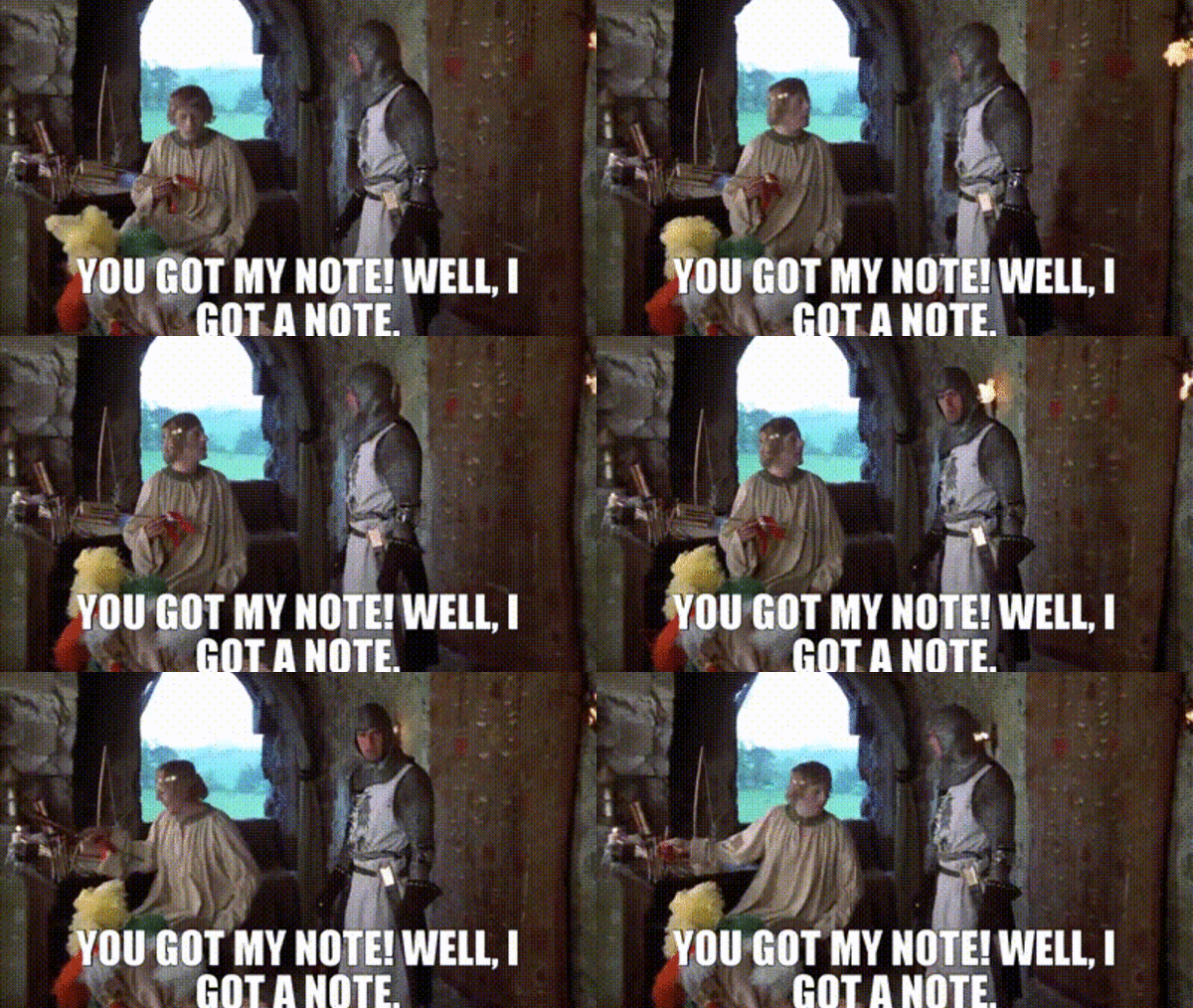
Johnson cites a few examples of classic British comedy during his commentary, including pointing out a Young Ones reference and a lot of love for Ade Edmonson, who appears in the film and is, according to the director, always worth keeping an eye on because he's doing something funny in every scene he's in.
Monty Python is specifically cited on a couple of occasions too: first for the Hux/Poe scene, then later when he talks about the exchange where Poe asks if Finn found the hacker and Finn replies that he found a hacker, a nod to Monty Python and the Holy Grail.
He also reveals that the small, seemingly simple moment where BB-8 tosses the communicator and Finn catches it took 20 takes to get right.
13. Escape Pod

The small pod that Rey travels in from the Falcon to Snoke's Supremacy is supposed to resemble a coffin, and was likely inspired by Johnson’s love of C.S. Lewis’ Perelandra, which had a similar image on its cover.
The reaction scene where Rey wakes up and they see each other in the flesh for the first time in the movie was almost cut completely, but Johnson realised how important it is to see those reactions and later ended up re-shooting a different version.
12. May The Force Be With You
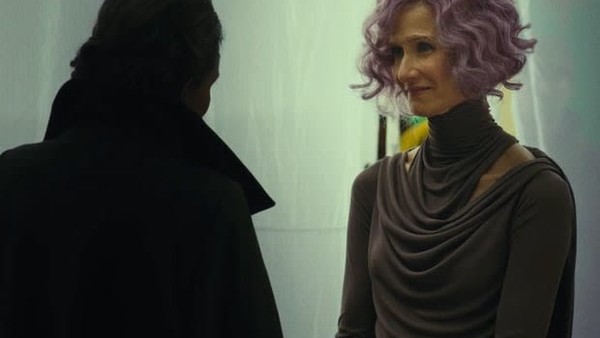
The goodbye between Holdo and Leia is one of Johnson's favourite scenes in The Last Jedi. Leia's farewell line, "You go, I've said it enough", was all Carrie Fisher's idea, and that whole scene was crafted by Johnson, Dern, and Fisher getting together and talking about it for an entire afternoon.
The tension between Poe and Holdo, and also Poe and Leia, and the notion of discord between good guys in the confines of this tight ship, was inspired by Ronald D. Moore's Battlestar Galactica.
11. Praetorian Guards

The design of the Emperor's Royal Guards was one of Johnson's favourites in the Original Trilogy, and he wanted to homage that, but also they had to be built to move.
The Throne Room fight sequence with Snoke's Praetorian Guards was developed very early in writing process. Daisy Ridley and Adam Driver trained constantly for the battle scene, which allowed Johnson to shoot them doing the choreography in wide shots and meant he didn't need to use stunt performers, so he could really show them fighting. The director cites Jackie Chan and Jet Li movies where performers can just carry it, which is what he wanted to achieve here.