Star Wars VII: 5 Things That Could Potentially Ruin It

The journey back to the galaxy far, far away is not as smooth as it might seem...

Not all is well in a galaxy far, far away. The Emperor seems to have struck back, as it has been rumoured that Ian McDiarmid (AKA Emperor Palpatine) may reprise his role in the forthcoming Star Wars sequel trilogy; given his almost certain death in the closing sequences of Star Wars VI this reprisal could be the start of a chain of deficiencies that could weaken these additions to the Star Wars canon. When Star Wars VII is released and the litany of loyal fans sit back in the cinema and see those awe-inspiring words of 'A Long Time Ago, In a Galaxy Far, Far Away...' there will in no doubt be controversy over some of the twists and tribulations; George Lucas did intend to make 9 movies, so there is clearly some source material with which this trilogy will be based, and Lucas is capable of making major plot twists (Darth Vader's revelation that he is Luke's father being the most obvious). Whether the shock, excitement and sheer exhilaration, which has been a stable part of every Star Wars film can be leapfrogged into a new decade is a contentious question, and one which we will never know the answer to until we can feast our eyes on the tantalising feast that is the new Star Wars movie.

5. Reviving The Dead

Emperor Palpatine is surely dead: he plummeted to his death at the hands of his redeemed apprentice Darth Vader. Likewise, Yoda died in front of Luke's very eyes, disappearing and everything. The Star Wars universe has the capacity to bring back ghost-like remnants of dead characters, but does it risk going over the top? Alec Guinness returned for small, sporadic, yet vital appearances as the ghost of Obi Wan Kenobi, and this worked fine, and enabled us to understand the complexity of the films plot-as well as explaining Jedi concepts to us. Do we want to see the ghoulish return of most of the characters we saw die? No, because frankly, this would do little more than eradicate some of the magic of Episode VI. The joy of Episode VI lay in its atmosphere of despair: Yoda has died; the Empire is embarking upon a new Death Star and the rebel forces have one final chance to destroy this. The underdog spirit is what makes the film so uplifting; if it is a futile attempt to temporarily slow down the impending return of a new evil endeavour surely the Ewoks and rebels would have died for nothing? Could this new trilogy discredit or weaken the originals? There certainly is the scope to do so. Rather than relying on the original cast, it makes far greater sense to renew the spirit of Star Wars with fresh, new talent; new characters; new scenarios; new enemies. It is not worth undermining the tour de force that is Episode VI, and the original trilogy, for the advancement of new story-lines; make sure that there is a sense of continuity between the two projects, and certainly ensure that there is fidelity to the power of the original trilogy.

4. The Original Cast

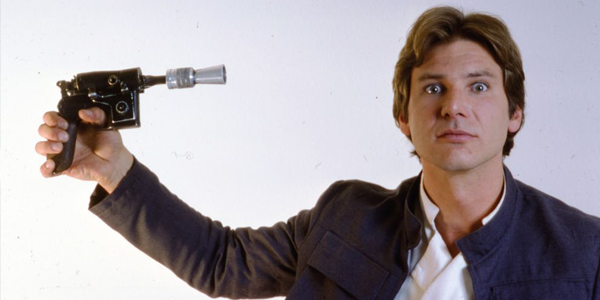
Mark Hamill, Carrie Fisher, Harrison Ford, Billy Dee Williams and of course Anthony Daniels and Kenny Baker did a sterling job of portraying the characters we all fell in love with, but do we want these characters to be extended for the purposes of corporate profit? Should we not leave them in the timeless sense of closure we saw when they partied with the Ewoks to celebrate the fall of the Empire? This is not to say that they should be ignored, omitted or neglected; cameos and references for plot purposes are necessary to provide continuity between the old and the new. But do we want to see Mark Hamill swinging a lightsaber around whilst Carrie Fisher snuggles up to Harrison Ford? No - we want to experience new character development, new dangers and new thrills. It has been 3 decades since the cast were on the same screen, and a lot has changed; Harrison Ford has become an extremely successful star, Mark Hamill has become synonymous with the maniacal laugh of the Joker; could a return to the building blocks of these careers be detrimental to the franchise? The power of Star Wars is its ability to allow us to connect with characters, so why not give us some new ones to relate to. Over the original trilogy this ramshackle brigade of shambolic space-pirates, royalty, angry adolescent and old married couple (C3-PO and R2-D2) became a band of brothers who the audience loved. Their characters were spectacularly developed into ones where we cared about them; don't destroy this feat of cinematic genius by trying to create new drama out of these characters.

3. Too Many Celebrity Cameos

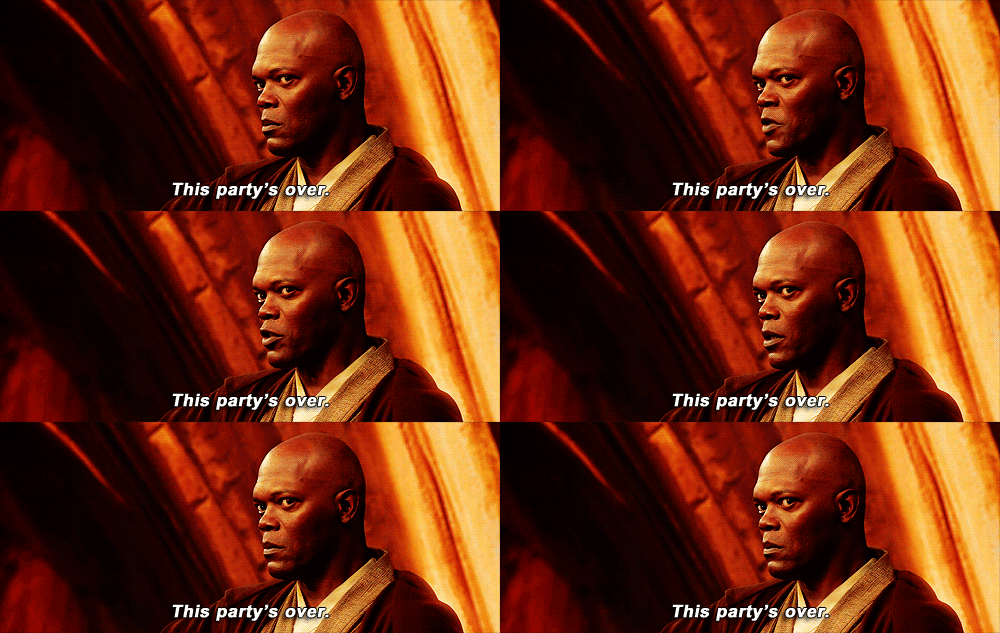
Samuel L Jackson played the disciplinarian of the Jedi Council, Mace Windu, with amazing depth and power. Who would dare threaten the authority of such a character? But given the phenomenal success of the original Star Wars trilogy, it is not surprising that celebrities will jump through hoops for a part to play in any forthcoming extension of the franchise. Likewise, Liam Neeson played Qui-Gon Jinn with phenomenal depth, although the character was in some ways needless; the role was played extremely well (even if The Phantom Menace is a weak film). But for every decent celebrity cameo there is an equally unnecessary and embarrassing cameo; look no further than the frankly atrocious character of Boss Rugor Nass by Brian Blessed in Episode 1. He served no real purpose other than to showcase the special effects departments ability to master the cinematic potential of CGI. Christopher Lee played Count Dooku with a sense of power which could rival Mace Windu, but his association as an actor with villainy made his portrayal somewhat lackluster; it is far from shocking to see Christopher Lee playing an evil character. The prequel trilogy had numerous problems; being reliant on CGI was one of the worst, but the lack of unknowns made it equally hard to connect with the characters. In contrast, the original trilogy made household names of the stars (even if Harrison Ford was the only one to really get a 'big' career out of it.) The sequel trilogy should do the same; pick an unknown, harness the power of the blank canvass - Samuel L Jackson has an aura of authority, so Mace Windu automatically had a strong stature, whereas Mark Hamill, Harrison Ford and Carrie Fisher had to earn their power and respect of the audience in the movies.

2. An Over-Reliance On CGI

Star Wars is known for its spectacular special effects; the original trilogy has avoided aging as radically as the prequel trilogy because it used models rather than CGI. CGI has its place in films; enhance an explosion; create terrifying monsters; construct the unbuildable. But it is not necessary to make every single detail through a computer. The clone troopers of the prequels (who would become the storm-troopers of the originals) were supposedly all made with CGI; watch Episode III and you will see that there is a clearly computer generated tint to each and every one of them. This makes sense as they are meant to be clones, but it cannot be that hard to find a legion of men keen to step into a storm-trooper costume; reality trumps CGI-a lesson we have all learnt the hard way thanks to the prequel trilogy. JJ Abram's has stated he would rather avoid CGI effects if possible; the reboot of Star Trek had amazing effects through this, although the penchant he has for lens flares can become rather irritating. I doubt that the new Star Wars will bare a major resemblance to Star Trek as such a crossover would provoke fan-fury, but the wariness of Abrams to use CGI could be a good thing, especially when we consider how deep George Lucas fell in love with the new effects.

1. An Imbalance Of Action And Substance
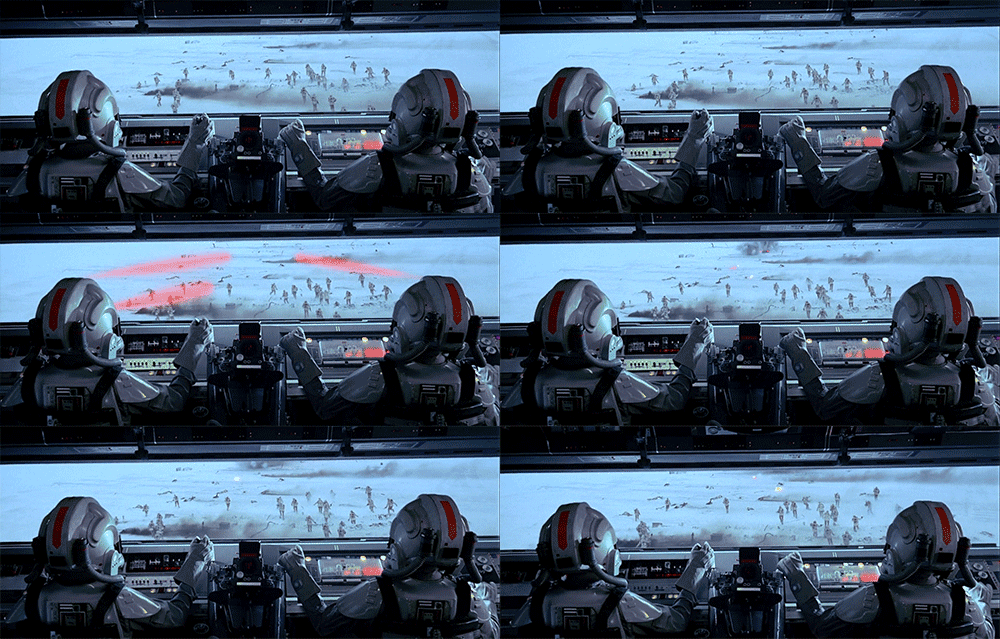
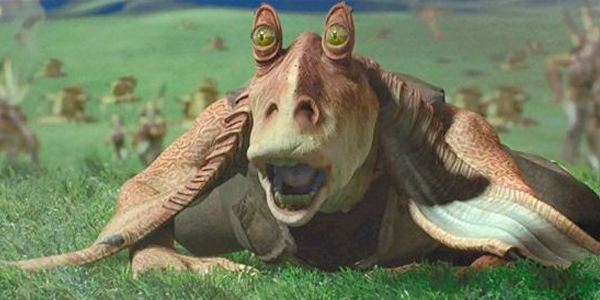
Action is key to success; this much is indisputable, but, it is not the only thing necessary for blockbuster success; a good plot (which Lucas must have had at least an idea of); a good tempo; and above all, good characters. Star Trek Into Darkness was an amazing film; it had all of these necessary factors and more, but it also decayed into a typical action film. The original trilogy contained action - the destruction of the Death Star, the Battle of Hoth, the fight to escape Jabba the Hutt - but it was carefully laid out to ensure the film had a continuous flow. If the action packed bonanza that was Star Trek Into Darkness is repeated there are grounds to worry that Star Wars will descend into mediocrity; even if the action is built on a foundation of spectacular special effects. There is no gap in the market that can be filled solely with action- GI Joe and Transformers have been slated for being little more than explosive films, and Star Wars cannot be allowed to be added to this list. Use the action sequences wisely; build up to them, don't put them in because you have the time, money and capacity to do so. That is precisely the attitude which ruined the Phantom Menace; who needs a pod racing sequence, or the utter waste of time and money that was Jar Jar Binks. What other potential pitfalls stand in the way of Star Wars VII's success? Share your own thoughts below in the comments thread.

Contributor
Contributor

A 21 year old History graduate looking for someone to listen to his ramblings. Lover of comic books, movies and all other superhero related things. Published in The Independent, always looking for interesting things to write about...Follow me on Twitter at @samclements1993, and check out my blog: http://samuelclements.wordpress.com/