Stephen King: Ranking His Films From Worst To Best

17. Firestarter
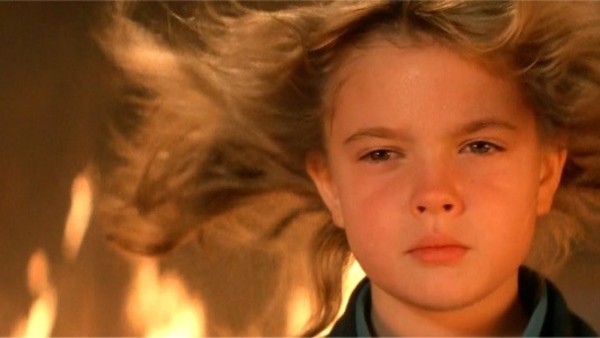
One of King's earlier novels (which wasn't too far removed from Carrie) got adapted into this 1984 film (which wasn't too far removed from the Carrie film). In this case, the young girl at the centre of it all is about half of Carrie's age, and her telekinetic abilities manifest in her power to, well, start fires. Obviously. It's a pretty literal title. In the Snakes On A Plane-vein. Firestarter is mostly notable for being one of the few films Drew Barrymore made during her early career as a child actor worth watching. Before she went off the deep end and emerged as a Charlie's Angel, Barrymore did pretty well as the nine-year-old whose powers make her the target of a shadowy government agency. It's not a masterpiece by any stretch, but a pretty impressive ensemble is what makes Firestarter. Barrymore has that same early star power seen in E.T., and she's surrounded by stars of the age like Martin Sheen, Heather Locklear and George C Scott. Another fun B-movie, with a great Tangerine Dream synthy score.

16. The Dark Half

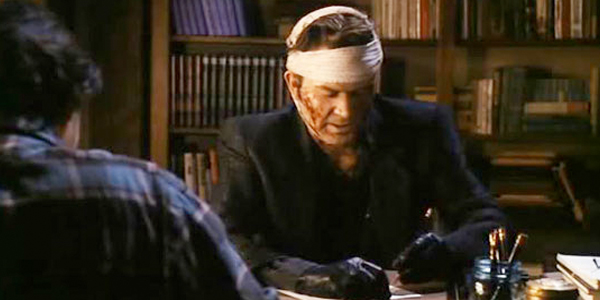
This 1993 horror film is based off of one of the author's more post-modern novels, again directed by Romero. The Dark Half is a semi-autobiographical tale about a writer who utilises a pen name to produce more brutal (and popular) work, who eventually makes the decision to kill his alter ego off. Unlike King cutting the Bachman pseudonym loose, however, Timothy Hutton's Thad Beaumont finds it much harder to get rid of George Stark. Having staged a mock funeral and burial for his alter ego, Beaumont finds himself suspected of murdering his editor, agent, and his agent's ex-wife €“ all because witnesses saw him at the scene of each killing. It turns out that George Stark has somehow become a real person, digging himself out of his pretend grave and getting revenge on the people who helped Beaumont €œkill him€. A creepy, sharp and sophisticated script is brought to life by Hutton's great central performance(s) as the author(s).

15. Creepshow

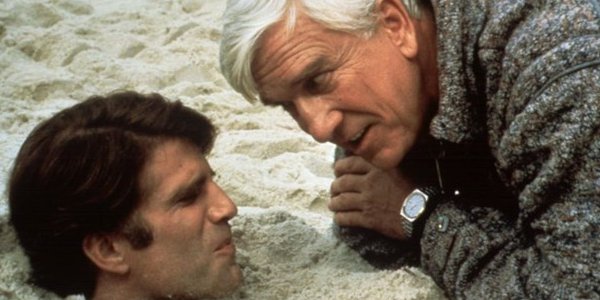
It seemed inevitable that Stephen King and George Romero would team up at some point. King writes novels that frequently use horror themes to explore contemporary, real-life issues, and Romero made his career on his €œLiving Dead€ films, where zombies were used as a metaphor for everything from civil rights to consumerism. As it happens their first collaboration, Creepshow, was a little more schlocky and tongue-in-cheek than their most successful work. An homage to the twisty horror comic books of the fifties - particularly those published by EC - Creepshow is an anthology film directed by Romero and written by King, with half the stories being adaptations of short works he'd already published, and half of them being originally produced for the film. It's a silly, gory movie with some great actors (Ted Danson! Leslie Nielsen!), followed up by a couple of sequels.

14. 1408

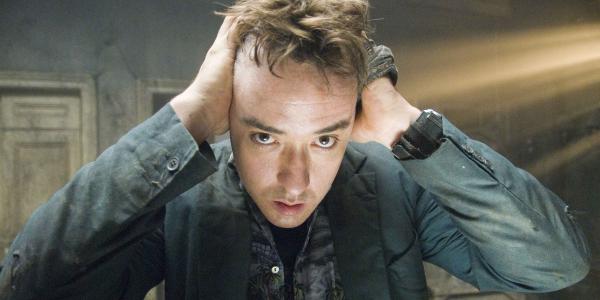
It's a brilliant performance on the part of John Cusack that practically carries this entire film, a one-hander that deploys Samuel L Jackson well to set up the story, before letting Cusack get on with it. Based on a short story, Swedish director Mikael Håfström uses every trick in the box for a fun little ghost story. Cusack plays Mike Enslin, a horror author whose job involves staying in supposedly €œhaunted€ locales and writing stories based on them. He's become somewhat cynical and disenchanted, with each haunted house revealed as a hoax, and is increasingly unhappy with his lot in life after his daughter's death. Then he gets an anonymous tip to visit a particular New York hotel room and, despite Jackson's protestations, spends a night there which turns his world upside down. Some genuinely good CGI, jump scares and Cusack's performance make for a fun one-watch ghost story.

13. Dolores Claiborne

One of the lesser-known but better-reviewed Stephen King adaptations, the novel too is one of King's smaller but well-liked works. It's pretty experimental, too, written as a paragraph-less, chapter-less monologue of a confession from the titular domestic servant. Again, Dolores Claiborne features little of the supernatural, save for a couple of €œtelepathic visions€ which are open to interpretation. The book was adapted into more of a straight narrative, rather than having Dolores (Kathy Bates) narrate the events of her life to a police interrogator. But the story is much the same, as she struggles to convince her arresting officer that she didn't murder her employer. She does, however, admit to orchestrating the death of her husband two decades earlier, after discovering that he had molested their teenage daughter. Jennifer Jason Leigh plays the adult daughter, who returns to her home town to support her mother, facing painful memories of her past. Another tough watch, but full of brilliant performances.

12. The Running Man

Surprisingly, not many of Stephen King's novels produced under the pen name Richard Bachman have been adapted into films. King took the Bachman name both so he could publish multiple books in a year without readers wearying of him, and so that he could write in different genres than his mainstream horror work. The sci-fi dystopia of The Running Man is one such example. The Arnold Schwarzengger-starring film takes some liberties with the specifics of the plot, but the basic set up from King's novel is all there, with a future where civilians are routinely drafted (by lottery) into a lethal TV show where participants €œrun€ through a series of death traps, facing off against insane murderers. The Running Man movie adds an extra wrinkle, with Arnie being a cop who cottons on to some corruption and is tossed into the game to keep him quiet. It's one of the more superior eighties Arnie films: there's plenty of violence and stupid one-liners, but King's premise gives it some surprising resonance.

11. Christine

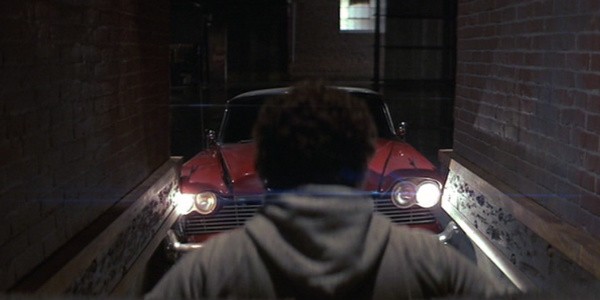
Christine is something of a curio in John Carpenter's filmograpy. At least early on, he was best known for working from his own, highly idiosyncratic screenplays, and Christine too often gets forgotten amongst the likes of Halloween and Escape From New York. It shouldn't, though, because Christine is a bloody good horror flick. It's also a horror flick about an evil car that kills people, but that's besides the point. Well, actually it is the point, but what's impressive is that Carpenter manages to make a film about a killer car viable, somewhat camp but never tongue-in-cheek or winking at the camera. With some impressive practical special effects that still seem beyond belief and a plot where the violent car seems like a manifestation of its teenage owner's own issues, Christine is probably the best killer car movie before the inevitable gritty Herbie reboot.

10. The Mist

Frank Darabont's most recent Stephen King adaptation, struggles with the balance between human drama and the supernatural. Having previously helmed two of the more straight, horror-deficient King stories, Darabont threw himself into one of the author's strangest, most self-consciously pulpy works with The Mist, which he made using much of the cast and crew he'd later work with on The Walking Dead. The Mist has many of the same strengths and weaknesses of the zombie TV show, in fact. The set up is undeniably fascinating, with a mysterious fog rolling over a town which contains hidden, tentacled monsters, leaving a diverse bunch of survivors holed up in a supermarket, planning their next move. It's got a great cast, too, with Thomas Jane as the lead clashing with Marcia Gay Harden's religious fanatic who manages to start a cult following in the supermarket. Sometimes the budget isn't quite enough to sell the scary moments, and some of the performances are better than others, but you can beat that absolutely devastating, sadistically genius ending.

9. Pet Sematary

The first of the more low-budget, pulpy Stephen King adaptations is nonetheless nothing to baulk at. In fact, Pet Sematary again explores many of the themes that figure into King's more celebrated, prestige movies. It's just that it does it through the prism of a gory, nightmarish slasher flick. With the guy who played Herman Munster in a late, dramatic turn. The whole premise of Pet Sematary is weird. Having discovered the burying the family cat at a local pet cemetery brings the moggy back to life, Dale Midkiff's grief-stricken doctor attempts to do the same for his infant son after he's struck down in a car accident. It's a pretty gripping, emotional drama, which also involves a killer cat and a zombie kid trying to stab his father to death whilst Herman Munster looks on in terror. Pet Sematary actually does a good job with balancing the schlocky horror and the genuine human drama, in a way only King does. One of the best adaptations, in that way.

8. The Dead Zone

Another film in the more pulpy vein is David Cronenberg's 1983 movie based on King's novel The Dead Zone. The same book was later turned into a far less inspired TV series; Cronenberg's film, meanwhile, got Christopher Walken in the lead role as a man who awakens from a coma to psychic powers. Which is a better deal than most people who wake from comas get. Unfortunately, Walken's character is burdened with the knowledge that a US Senatorial candidate played by Martin Sheen is destined to become the president who initiates a full-blown war against the Russian, bringing about a nuclear holocaust. Cronenberg brings his typical flair for making even the most out-there scenario seem like a nightmarish reality that could very well happen in the near future, just far enough removed from our reality to be entertaining, but close enough to leave a lasting impression.

In this post: 
Stephen-King
 
Posted On: 
Contributor
Contributor

Tom Baker is the Comics Editor at WhatCulture! He's heard all the Doctor Who jokes, but not many about Randall and Hopkirk. He also blogs at http://communibearsilostate.wordpress.com/