Studio Ghibli: 7 Unforgettable Moments That Defined Their Films

Studio Ghibli changed animation forever, and these moments prove how.

In August Studio Ghibli downed tools and revealed that they would be taking a break from production, raising concerns among fans that they may never return after years of delighting audiences around the world with their award-winning animated films. The news coincided with the studio's announcement that company founder and movie legend Hayao Miyazaki was retiring from the creation of feature-length releases altogether. One of Japan's greatest living animators, Miyazaki underlines the distinctive outlook that informs his studio's storytelling, having stated that "the concept of portraying evil and then destroying it - I know that this is considered mainstream, but I think it is rotten. This idea that whenever something evil happens someone particular can be blamed and punished for it ... is hopeless." His ideas permeate all of his company's work, swapping conventional portrayals of good and evil and focusing instead on enthralling settings and nuanced character development. The result is an approach that appeals to all ages, blending whimsical fairytale motifs with dark undertones and, often, a serious message about contemporary life. Such is the personal impact of Studio Ghibli's films that ranking them yields its own thought-provoking discussions; everybody has their favourite, for different reasons. Some will marvel at the jaw-dropping visuals and fantastic settings. Others prefer to point at the simple beauty in a quiet conversation between two characters. This list details some of the most memorable moments in the company's illustrious history, with each one showcasing some of the remarkable traits that will make them so sorely missed. Warning: this list contains SPOILERS for several Studio Ghibli films. With that said, let's begin...

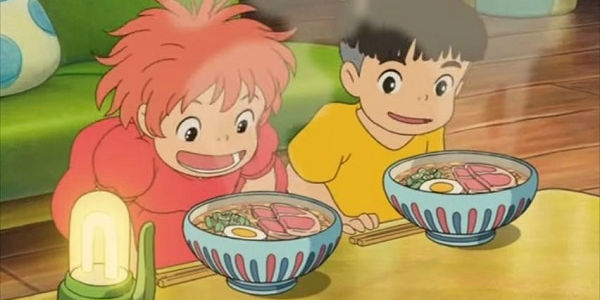
7. "Ham!"

Film: Ponyo (2008) Despite ranking among their more child-friendly films, Ponyo serves as a recent example of Studio Ghibli's artistry. After they dabbled with CGI touches in films like Howl's Moving Castle, Ponyo marked a return to hand-drawing as the sole method of animation. This back-to-basics approach was as refreshing as it is rare in modern cinema, carrying a sense of innocence that's reflected in the storytelling itself. Not every aspect of the studio's work is necessarily concerned with heavy-hitting themes and sweeping backdrops, and sometimes it's the little things that stick in the memory. Their films are full of moments that act as windows into the lives of their characters, portraying everyday habits like cooking, eating, cleaning, or tending to a garden with so much care and attention to detail that they are elevated from tedious asides to fascinating moments in their own right. Ponyo, while less cerebral than some of their other work, sticks firmly to this tradition - not least with the title character herself. Her love of ham makes for a cute catchphrase, sure, but beyond that it alludes to the character's relentless curiosity about all things human. It's a characteristic that's reflected in the studio's continued commitment to moments that aren't always rigidly linked to the film's plot, those charming digressions that can bely logical storytelling conventions and offer the audience an experience that's somehow both ordinary and ethereal at the same time.

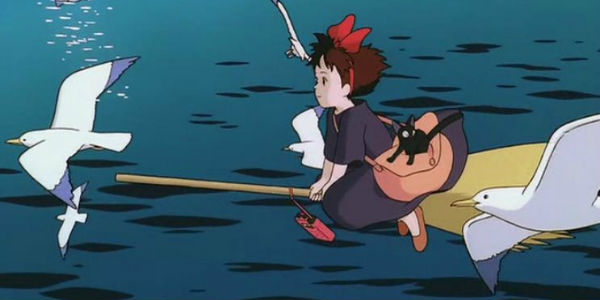
6. Kiki Takes Flight

Film: Kiki's Delivery Service (1989) Witches, broomsticks, and a talking pet cat; Kiki's Delivery Service is filled to the brim with magic and wonder. But behind these fantastical elements this is the quintessential coming-of-age film, shying away from some of the darker material present in Studio Ghibli's other work in favour of a series of vignettes that detail the protagonist's journey to independence. The film chronicles the adventures of Kiki, a thirteen year-old witch who sets off to begin the traditional rite of passage of training in a nearby town. On her way, she encounters the dismissive remarks of a more experienced witch before finding herself flying through busy streets crammed with noisy traffic and uncaring passers-by, tempering her youthful optimism with a dose of anxiety and fear. Kiki's mode of transport is a key part of that sensation; throughout the film she dips and sways, tumbles clumsily, and rises up to vertigo-inducing heights as she grows her fledgling delivery business. It's an elegant metaphor for the uncertainty that faces her at every turn, and a situation that's all-too relatable for anyone who has faced a similar change - say, in the form of moving to university or starting a new job. The idea of casting aside home comforts for an intimidating new lifestyle is a common one in the film world, but as ever Studio Ghibli's execution makes their interpretation better than most.

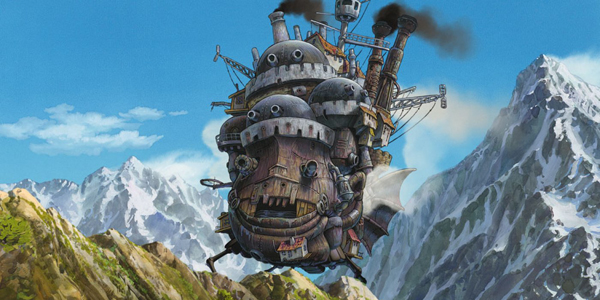
5. Meeting Howl's Moving Castle

Film: Howl's Moving Castle (2004) Howl's Moving Castle is a bit of a tough film to unravel. Based on the novel of the same name by Diana Wynne Jones, it's that particular literary grounding that makes it such a unique addition to the Studio Ghibli canon. There's a lot to wrap your head around here, from the castle's fire demon Calcifer to lofty political intrigue to overarching ideas about youth, vanity, and the preservation of beauty. But one thing that earmarks this as a Studio Ghibli film is the consistently sublime direction. This entry could easily have been devoted to all manner of scenes, such as the Witch of the Waste's excruciating climb up the palace stairs or the unfurling beauty of Howl's vibrant, dreamlike garden. But there's a serenity to the opening seconds of this film that merits discussion of its own. The scene lingers on its namesake: a massive, ramshackle edifice of metal and wood, clumsily creaking and clanking its way across a hushed landscape. The studio used a combination of traditional methods and CGI to create the castle, and it really is a wondrous thing to behold when treated with Miyazaki's characteristically patient direction. It's a credit to the studio that, rather than feeling tedious or overlong, the scene encourages the viewer to marvel at every piece of shading and detail. Next to the bluster and noise of so many other animated features, it's an example of why Studio Ghibli's style continues to be so mesmerising.

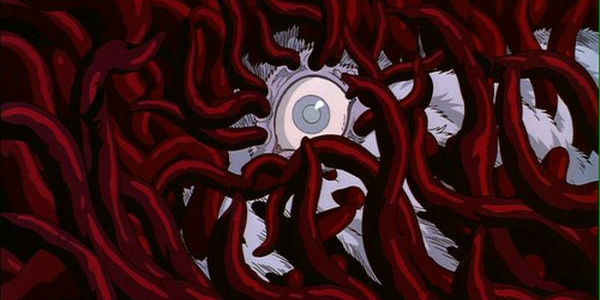
4. Okkoto's Corruption

Film: Princess Mononoke (1997) Analysis of Princess Mononoke commonly centres around a single word: epic. Everything about the film is grand, from the diverse cast of massive gods and spirits to the improbably high stakes of Prince Ashitaka's quest. He follows a narrative arc that echoes the traditional hero's journey, setting off to find a cure for the curse that blights his arm before finding himself tangled up in a tumultuous war. Far more than just a territorial squabble between neighbouring factions, the conflict involves wolves, boars, apes, and forest spirits as they try to protect themselves from ecological devastation at the hands of a nearby village called Irontown - all while the protagonist desperately tries to keep the peace. It's considered one of the studio's more adult-oriented releases for a reason; from the moment Ashitaka's arm is corrupted, the film-makers aren't afraid to display scenes of war in some detail. The violence on display is far from gratuitous, though; in many respects, it's vital to the power of the film's message. That much is true for one particularly memorable moment during the film's climax, in which Irontown's troops disguise themselves as boars in order to surround and attack the blind boar god Okkoto. Okkoto's gunshot wounds transform him into a grotesque, rampaging demon similar to the beast that attacks Ashitaka's village at the beginning of the film. It's an exhilarating scene, and one that carries the full thematic weight of the film's environmental concerns. The humans' anonymity and the insidious nature of their assault is almost unbearably gruesome - most of all because it hits so close to home.

3. Satsuki And Mei Wait For The Bus

Film: My Neighbor Totoro (1988) Totoro is without a doubt one of Studio Ghibli's most recognisable characters. From stuffed toys to crockery sets, the creature has become synonymous with the studio €“ he's even right there in the company logo. Aside from being a cute character, Totoro's ubiquity also pays homage to one of the company's most iconic films, in which two sisters try to overcome the challenges of acclimatising to a new home and waiting for their mother's return from hospital. The title of this entry seems innocuous enough, but that's the beauty of Studio Ghibli: they have an uncanny ability to squeeze magic out of even the most mundane of activities. Here, Miyazaki and co. demonstrate how to let the on-screen action breathe, supplementing it with little more than the steady patter of rain on the road beneath the characters' feet as Satsuki and Mei nervously find shelter from the downpour. And then, of course, there's the surreal moment that Totoro joins the sisters, gratefully accepting their extra umbrella before riding off in a giant bus-shaped cat. A lengthy scene, it's full of quiet tension that allows the audience to reflect on the girls' unsettled emotional state - specifically, the kids' unfamiliarity in their new home, their strange new friend, and the burgeoning uncertainty surrounding their hospital-bound mother. It all serves to transform the scene into one of those long, wordless interludes that have such a spellbinding effect in Studio Ghibli films.

2. The Robots Of Laputa

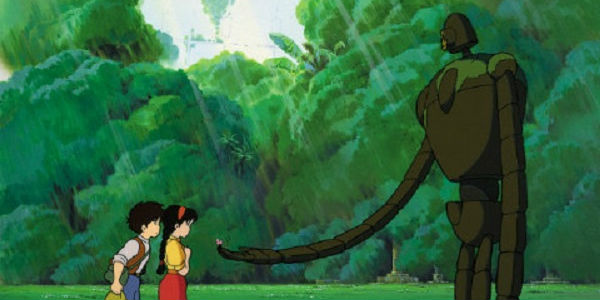
Film: Castle in the Sky (1986) Watching Castle in the Sky is a throwback to the origins of Studio Ghibli. Miyazaki's Nausicaä of the Valley of the Wind may have led to the creation of the company in 1985, but Castle in the Sky was their first official release as a fully-formed studio, and it remains one of their most critically-acclaimed films to this day. It depicts the abandoned flying city of Laputa, which looms above a setting that takes inspiration from Gulliver's Travels and an old Welsh mining village. With airships, aeroplanes, and abandoned mines serving as remnants of a civilisation's rampant industrialisation, the film succeeds in portraying the quiet grace of a once-powerful society after catastrophe and decay. Nowhere is this sentiment more pronounced than with the introduction of the floating island's mechanical residents, who are equally adept at maintaining Laputa's garden and unleashing large-scale destruction. These enigmatic automatons stand up as one of the highlights in Studio Ghibli's cast of weird and wonderful side-characters, conveying a mixture of tranquillity and earth-shattering strength that courses throughout the film while lending it an atmospheric clout that ensures it has aged very well indeed.

1. Chihiro And The Ghost Town

Film: Spirited Away (2001) Spirited away is considered by many to be Studio Ghibli's crowning achievement, and with good reason. Everything that made the company so successful is on top form here, from dreamy animation and direction to complex characters and a plot that keeps the audience guessing right until the final scene. One of the film's most striking moments arrives in its opening act. Chihiro, reeling with the anxieties of moving to a new home, unwittingly follows her parents through a tunnel to an area that's inspired by the traditional Taiwanese town of Jiufen. There, her parents are overcome by their hunger as they tuck into some food at a market stall without much care for the eeriness of the town's empty streets, their greed summed up by the father's crude reassurance that he has "credit cards and cash." What follows is one of the most iconic images in the studio's history, as the town reveals its true nature by erupting into a sea of ghostly citizens that silently sweep along the ground. Chihiro returns to her parents only to find that, appropriately, they have been transformed into massive pigs as a consequence of their gluttony. With Chihiro lost, confused, and angered by her parents' thoughtlessness, the scene is a turning point whose effects linger throughout the rest of the film, setting the tone for the mystical aura of the bathhouse and the protagonist's growth from timid pessimist to confident heroine. Spirited Away is one of those films that shines after repeated viewings, and the introduction of its otherworldly setting serves as a reminder of why it is so often used as a benchmark against which to measure not only the rest of Studio Ghibli's work, but animated films as a whole.

Contributor
Contributor

History graduate, writer, and long-suffering Spurs fan interested in all things music and sports-related. Once briefly held the title of world's youngest person. You can follow me on Twitter here: https://twitter.com/sgfcarter