Tenet Review: 4 Ups & 6 Downs
Is Nolan's 2020 blockbuster worth it?
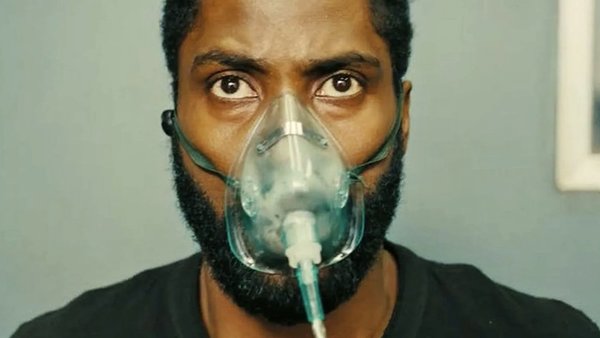
Over the years, Christopher Nolan has increasingly become known as a filmmaker who alternates between "one for himself" (The Prestige, Inception, Interstellar), and "one for the studios" (returning for Dark Knight Rises, Dunkirk).
For Tenet he's hot off nailing the highest-grossing World War II movie ever, and being both Inception and Interstellar each grossed over half a billion dollars worldwide, it feels like he's increasingly been given carte blanche to do whatever comes to mind.
With that in mind, we have his barmiest concept yet. A movie directly about portrayals of time and entropy, which Nolan himself is adamant is not a "time travel movie". That's debatable once you know the entirety of what unfolds, but the main takeaway is that Tenet as a film is sadly one of his worst.
I'll break things down as we go, but up front, I'm a huge Nolan fan. I champion what he brings to the medium, and as a creative force, his output exists almost on an island all its own - big budget, sci-fi infused conceptual thrillers made for a mass audience.
Very few directors would be given the green light or marketing budget that Tenet has seen, and whilst there are positives, in a rather shocking turn considering his track record, there are far too many faults alongside.
First, the positives.
--
Note: There are NO SPOILERS in this review.
Ups
4. Genuinely Jaw-Dropping Physical Set-Pieces

Ever since we saw the rotating hotel corridor in Inception, Nolan and his stunt team have gotten increasingly more daring.
A lover of practical effects and physical stuntwork over rubbery digital doubles, there's one prominent plane-crash here that practically dominates the whole movie in terms of sheer spectacle. Its actual purpose comes off as completely indulgent plot and tone-wise - a rough edge smoothed over by Robert Pattinson calling the move, "A little dramatic" - but once things lumber into motion, there's genuine adrenaline to what unfolds.
A certain highway scene too, needs to be up there with Dark Knight's underpass Joker duel, or The Matrix: Revolutions' eye-widening motorway chase.
Strangely, that in itself is an increasingly unique positive: A big budget blockbuster relying almost entirely on actual stunts and vehicle-mangling carnage. Realising the scale of production Nolan is working with gives Tenet an overwhelming sensibility, and if you want bang for your buck, it's right here.
3. Fight Choreography

Annoyingly this only really applies to two scenes in the whole flick, but there is some stunningly brutal fight choreography on display. Remember that one part in Dark Knight Rises where Bane and Batman finally go toe-to-toe in the final daylight showdown, and Bane just unloads on Bats?
It's very much that energy. A series of incredibly efficient takedown punches, slams, environmental interactions and vicious martial arts moves from John David Washington, that confirm he's an efficient killer above everyone else.
Robert Pattinson gets involved a few times too, and atop this is a fight scene that needs to be seen and dissected to even comprehend.
To explain why is fundamental to the film itself, but it's immediately impressive, and only gets more so as you pick apart how everything "works".
2. Next-Level Filmmaking

Speaking of a certain fight you need to actively cognitively process as you watch it, this is the biggest takeaway positive behind the entirety of Tenet:
Christopher Nolan has found a way to make a movie about the portrayal of time - the very notion of watching events unfold - only to split and re-approach, based on character perspective.
That in itself is the magic trick; the headf*ck of this film, and the "feeling" so many characters are actively telling the audience to enjoy.
Watching Tenet first time is an unpleasant onslaught - it's like listening to an incredibly dense lecture from a science major who isn't stopping for anyone putting their hand up.
All the information is here, but you'll need refer back to what's said, your own set of notes and anyone else in earshot to try and maintain clarity.
1. The Core Concept Is Original & Enticing

As far as I know - and again, no spoilers - I don't think anyone has made a movie quite like this.
It's very much depicting the element of time in a way that goes against how we conceive it. In the video game space, Jonathan Blow's Braid dove head-first into theories on chronology itself being playable, creating puzzles that required you rethink cause, effect and object permanence.
Tenet then, rolls together various "pop culture" theorems that often get bandied about online as fun talking points, creating this "mass audience science romp" that hopefully a lot of people can resonate with.
To say which theorems Nolan is pulling from would give things away, but if The Martian was a ringing endorsement of botanical studies and in-the-field practical solutions to humankind's survivalist woes, Tenet does the same for the theoretical science and all things mind-bending.
At least... that's the idea.
Downs
6. It Fundamentally Doesn't Work On First Viewing

Almost like a middle finger to casual audiences or the basics of filmmaking like narrative investment, character grounding or plot motivation, you're not given anything close to a reason to care about what's going down until well over the two hour mark.
Even then, we're talking lines of dialogue alluding to events and threats that are unquantifiable, rather than anything tangible.
Honestly, you have but the barest of access points to get invested.
Information comes thick and fast, with a mix of exposition-machines telling you not to care, while a main cast never gets fleshed out. I'll dive into character specifics in another point, as it's this brazen choice to force you into suspending disbelief so much, that eventually reaches a breaking point.
At some point in a 2.5 hour film, you need to know what's going on; need to recognise stakes and care about how situations may or may not unfold.
Retrospectively being given information you needed from the beginning can fill something out, but it actively cements that first-viewing experience as utterly confusing and simply annoying.
5. Editing Is A Mess

With a script like this, who knows how much footage was initially filmed to create a coherent edit.
Either way, the pace that comes across is unnecessarily thunderous in all the wrong ways. The whole movie feels allergic to establishing shots, with interiors used almost exclusively in the opening 40 minutes or so, as living rooms, restaurants, corridors and more blur into one.
The film even hops between various countries as everything unfolds, but you wouldn't know it besides scrutinising background brickwork or keeping a mental note of building architecture.
For whatever reason - and again, maybe it's just to bypass the "nerd speak" and get to the action - Tenet opens with its foot to the floor, only to continue rushing through everything else.
Ultimately it's detrimental to investment and enjoyment, the editing only contributing to the sensory and cognitive overload that is this film.
4. Sound Mixing Falls Apart In Every Important Scene

As if crashing a plane wasn't enough of a callback to Dark Knight Rises, we have scores of characters in masks delivering muffled dialogue to boot.
Now, the vast majority of dialogue is fine, but far too many incredibly important scenes are drowned out with background noise or unintelligible dialogue. It's notable that the first two major scenes where characters are enquiring as to mission details or what needs to happen, are completely lost in diagetic sound.
Waves crash, machines whir away, street noise invades your ears as characters walk and talk. You have to actively struggle to comprehend what is already a baffling rollout of information, and none of these scenes are pleasant.
3. There Are No Characters

John David Washington is literally called "The Protagonist" (a name that never lands, every time he's referred to), and this only speaks to a film that drastically values concept and bombast over anything comprehensible.
Robert Pattinson's Neil is an enjoyably quippy side-character who you're always glad to see, but that's it: We're given nothing of backstory to anybody; nothing as to why they do what they do. No real grounding as to who the factions we're watching are, or why they care about anything. There's not even a remark other than "...Woah" from our protagonist when faced with the fact our own reality is subject to change.
Kenneth Branagh is Evil Russian Guy 101, Elizabeth Debicki is boiled down to "female in danger with son, please care", and at no point does anybody have an actual conversation.
Christopher Nolan is trying to tell the audience, "Hey, don't worry. Just go along for the ride!", and that's fine, but you can't then also drop the ball on the character side. We can forgive technical hiccups if the script and actor chemistry is incredible, or we can forgive character work if a concept is dynamite.
For Tenet to so blatantly tell you to "shut your brain off" in a movie that is otherwise battering you with rules, confusing imagery and stop-start exposition, neither side lands.
2. A Totally Wasted Cast

It comes to something when even those who worked on the film couldn't get through a single day of shooting without stopping to ask questions. Such is the reality of how overly convoluted and complex Tenet is, but that innate sense of not REALLY knowing where scenes are going or how your character feels about a given reveal comes through in every performance.
John David Washington and Robert Pattinson as a buddy cop-meets-tech savvy duo are easily the best thing here, but they're so rarely given time to shine. Even simple dialogue scenes that should engender you to Washington's cause or be amazed by Pattinson channeling Tom Hardy's "Dream a little bigger, darling" scene from Inception get butchered by the edit.
I've mentioned Kenneth Branagh's Andrei and Elizabeth Debicki's Kat as severely one-note, and the scriptwriting is doubly standout because we can see brilliantly gifted actors given the barest minimum of range or things to do. Even Michael Caine pops up - arguably as himself - for ONE scene, despite placement in the trailers and marketing.
Any semblance of humanity is thoroughly surface level; skirted over to get to the next action set-piece or wannabe mind-blowing reveal.
Tenet the movie IS Tenet the in-world explanation, and that's it.
1. Treating The Audience Like Idiots

As I've mentioned a few times now, Christopher Nolan seemed to be one of the only big-budget Hollywood directors who could prove that a casual audience can and will tangle with more "high-brow" concepts. It's why Inception is arguably his finest overall work, and why the "love tunnel" script rewrite that became Interstellar's ending felt so off.
Audiences don't want to be spoken down to, or told not to care. We want characters to ask questions, the world to spark our imagination and have parts of answers that are enjoyable to parse out as more information is made available.
Scenes starting with rapid-fire terminology, characters asking "Is your head hurting yet?", others repeatedly stating that we shouldn't try to figure anything out - it creates a smarmy feeling of Nolan being above his audience. Of that person at a party reeling off information in a specific field for attention, only to bat away followup questions with, "Oh, you wouldn't understand".
In the past, Nolan was happy to take us along for the ride rather than dangle shiny keys in five directions at once as compensation. It's a notable gear change; into territory that verges on overly complex for the sake of it, and that was a fine line this auteur used to walk with ease.
Tenet is Christopher Nolan's most ambitious project on a conceptual level, but somewhere along the way he forgot who he was making it for.