Texas Chainsaw Massacre Review: 5 Ups & 5 Downs
Better than you're probably expecting, but still a mess.

Five years after the Texas Chainsaw Massacre franchise seemingly sputtered out with the critically reviled straight-to-video prequel Leatherface, the series is back with its ninth (!) entry, confusingly entitled "Texas Chainsaw Massacre."
If you've been following the film's production at all, you'll surely be aware that this direct sequel to Tobe Hooper's beloved 1974 original has had quite the tough journey to the screen.
Original directors Ryan and Andy Tohill were fired just a week into shooting amid creative differences, before being speedily replaced by David Blue Garcia, who re-shot all of the existing footage.
In addition to that, the producers' decision to skip a theatrical release and instead sell the horror sequel to Netflix certainly seemed to suggest it was being dumped to streaming because, well, they knew they had a turkey on their hands.
And while the marketing hasn't done much to convince otherwise, ultimately Texas Chainsaw Massacre is hardly among the very worst films in the wildly uneven franchise.
Is it particularly good? Not really, but it's hardly an offensive, sacrilegious betrayal of what came before, and at least delivers enough brutal gore across a speedy runtime to be basically watchable.
But again, not a good film overall, and so here's what it got wrong...
Downs...
5. It Shamelessly Rips Off Halloween 2018

The film's trailers made it clear that Texas Chainsaw Massacre is blatantly trying to give the series the Halloween 2018 treatment - that is, deliver a direct sequel to the beloved original that basically forgets the divisive sequels while bringing the original heroine back into the fold.
While this movie doesn't explicitly jettison the prior sequels from the continuity as David Gordon Green's Halloween did, it absolutely downplays them to the point where fans are basically free to decide for themselves what is and isn't canon.
It's a bit of a cowardly, non-committal approach to the series' mythology, though the bigger issue is the movie's utterly piecemeal, low-effort attempt to invest the audience in a belated second showdown between Leatherface (Mark Burnham) and original survivor Sally Hardesty (played here by Olwen Fouéré, subbing in for the late Marilyn Burns).
Not dissimilar to Halloween's Laurie, Sally is now a grey-haired, badass survivalist who attests she's been waiting an entire half-century to take revenge against Leatherface.
And yet, Sally feels less like a character here than a prop to mine fan nostalgia for the original film.
Her role is mostly saved for the third act, and smacks of the filmmakers attempting to desperately inject some emotion and gravity into a fundamentally schlocky horror movie.
It doesn't really work - the Sally subplot ends up feeling like a tacked-on reshoot, and the rushed payoff is sure to leave those who were interested in seeing Sally again totally underwhelmed.
4. The Clumsy, Cringe-Worthy Social Commentary

The film's deranged attempt at social commentary is sure to be its most divisive aspect, as rather than simply recycle inbred redneck tropes yet again, this movie turns its lens towards its more liberal, open-minded protagonists.
The movie is set in the small, dilapidated Texas town of Harlow, where a group of young millennials and Gen-Z kids have bought up some of the local real estate in the hope of redeveloping the area into something tourists would actually want to visit.
In the early going the script thickly lays on a shallow critique of both gentrification and smug young liberals, contrasting them with the more set-in-their-ways locals who evidently fear change.
It's all incredibly surface-level, though, and while the already-infamous scene in which Leatherface gets livestreamed and "cancelled" on social media while attempting to hack up a bus full of investors is undeniably cringe-worthy, the subsequent gory payoff at least somewhat makes up for it.
There's no real commitment to a distinct perspective or point-of-view here, and so the lampooning of young kids, forever buried in their phones and fearful of guns, feel a bit tepid and toothless.
3. It Fatally Lacks Suspense
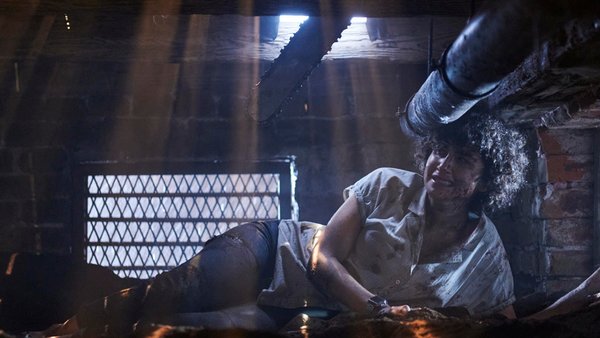
The basic expectation of any Texas Chainsaw Massacre movie is that Leatherface stalks a group of hapless victims around a claustrophobic location before brutally slicing them up with his trusty chainsaw, right?
While this new film mostly delivers on the gore front, the various "suspense" sequences largely fall pretty short of the mark.
Far too many times, we're forced to sit through an unremarkable, over-familiar set-piece in which a character quietly hides from Leatherface or attempts to silently escape him, and it quickly becomes repetitive.
It probably doesn't help that the characters are mostly unlikeable and so audiences will just be waiting for Leatherface to brutalise them, but there's very little in the way of tension during these delineated scenes.
The film's generally snappy pacing ensures they don't drag things down too much, but these sequences nevertheless feel like they were drawn out to pad the scant runtime.
2. The Messy, Thin Script

Even the film's defenders surely won't have too much praise for Chris Thomas Devlin's mess of a screenplay.
Beyond the aforementioned sloppy social commentary, the script is full of woefully stiff dialogue, and an abundance of the cliches audiences have been conditioned to expect from the series and indeed the genre.
Of course there's the suspicious gas station confrontation and an ominous police traffic stop in the first act, because would it be a southern fried slasher flick otherwise?
The script's biggest failing, however, is probably its inability to make the audience connect much with the characters.
Even Lila (Elsie Fisher), a school shooting survivor who attempts to overcome her trauma while battling Leatherface, feels like an underdeveloped cipher of a person rather than a defined character in her own right.
Yet its the scant characterisation of Sally Hardesty herself that's sure to rankle most fans. Why even bother bringing her back at all for such a flat, damp squib of a part?
1. The New Leatherface Design Will Divide Fans
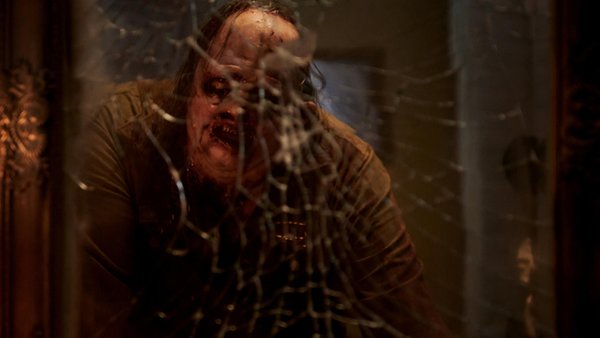
Generally speaking, Leatherface is one of the better-executed aspects of the movie - he's depicted as a monstrous, brutal force-of-nature who certainly makes expectedly "creative" use of his signature weapon, even if his actual design is sure to divide fans somewhat.
This isn't a massive divergence from the Leatherface fans know and love, though the new mask takes a bit of getting used to.
Its more grotesque design looks a little awkward and silly, especially in the first few scenes we see him wearing it, and it probably doesn't help that Mark Burnham's performance in the role doesn't hold much of a candle to Gunnar Hansen's iconic original turn (though, honestly, whose does?).
The Leatherface mask certainly looks better later in the film once it's gotten a little wet and bloodstained, but mileage is likely to vary wildly among the hardcore fans.
Accepting these gripes, then, here's what Texas Chainsaw Massacre actually gets right...
Ups...
5. The AWESOME Gore

By far the best thing about this new movie is the abundance of insanely brutal gore. Anyone worried it might tone down the violence in an attempt to appeal to a new generation of fans can let out a sigh of relief - this thing is ridiculously, at times hilariously violent.
Right from its nauseating opening kill, Texas Chainsaw Massacre boasts some of the most creative and effed-up death scenes in the entire franchise.
Once Leatherface gets his chainsaw at roughly the half-way mark, the murder comes thick and fast, as he slices his way through countless poor saps.
The easy highlight is surely the loony sequence in which Leatherface corners a group of investors on a bus and starts slicing away.
Though the gore is mostly of the CGI-assisted variety, it's well integrated into the movie's overall aesthetic and doesn't feel cheap as it does in so many lower-budget horror films.
Rather, digital effects are used to show bodies being cleaved in half and savagely mutilated, as will probably make this sequel a worthwhile enough sit for fans despite its many problems elsewhere.
4. The Surprisingly Solid Production Values
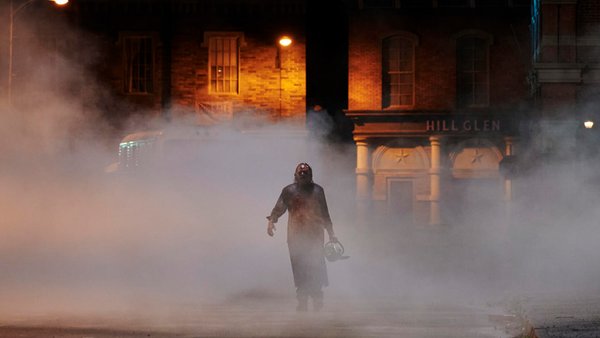
A Texas Chainsaw Massacre sequel shot on a low budget in Bulgaria that ends up getting dumped on Netflix doesn't exactly invite high expectations for its production quality, but this is actually a surprisingly competently made picture.
Despite a few overly frantic editing hiccups, director Chris Thomas Devlin knows how to create a compelling and atmospheric image.
Courtesy of cinematographer Ricardo Diaz, this is a far more handsome film than prequel Leatherface, which was also shot in Bulgaria for budgetary reasons.
While a lot of Netflix Originals have an offputtingly overlit, un-cinematic aesthetic, Texas Chainsaw Massacre basically looks like a "real movie" you could imagine playing on a huge cinema screen.
The desolate town of Harlow is a neat and unexpected setting for the franchise, while the sound design makes the most of that primal chainsaw revving noise, and a brooding score from Colin Stetson (Hereditary) helps set the tone well. Also be sure to stick around for the surprisingly snazzy end credits.
Considering how many later sequels in classic horror franchises end up feeling like lazy cash grabs intended largely to prevent the rights reverting, this movie actually has a decent amount of effort put into its style.
3. The Appealing Cast

Though Texas Chainsaw Massacre's characters aren't all that interesting, the cast at least makes a decent attempt to imbue them with something.
The terrifically talented Elsie Fisher (Eighth Grade) does her damnedest to evoke sympathy for protagonist Lila, and though she's so insanely "above" the material it's ridiculous, she gives a solid performance as a young woman racked with survivor's guilt.
Faring better is Sarah Yarkin as her more sassy, self-actualised sister Melody, who can certainly scream with the best of them and brings a decent amount of charm to the table.
Elsewhere the legendary Alice Krige shows up briefly in the first act as Mrs. Mc, an old woman who used to run the town's abandoned orphanage, with Krige typically bringing character and shade to an otherwise thankless, thin part.
Similarly Olwen Fouéré is well-cast as Marilyn Burns' replacement in the role of Sally, and though her part is frustratingly spare, Fouéré turns in a solid performance with what little she has.
2. The Lightning-Fast Pacing & Runtime

There's a lot to be said for a film that doesn't outstay its welcome, and that's certainly a major plus of this ultra-lean 81-minute gore-fest.
At a time where it feels like mainstream movies - especially blockbusters - are getting longer and more bloated, there's something to be said for efficiently conceived movies that understand their limitations and try to deliver the basic goods within a reasonable timeframe.
Only barely clocking in at feature length once you get rid of the credits, Texas Chainsaw Massacre wastes little time on preambles, quickly getting Leatherface back into his murderous mode, before letting loose with a second half that's basically wall-to-wall murder.
The film hops nimbly from one scene to the next without stopping to take a breather for too long, such that even when something isn't working, we're not forced to suffer through it for long.
There's definitely an argument to be made that a deeper and more substantial treatment of Sally's arc would've deserved a more filled-out runtime, but considering this is ultimately a shallow horror movie propped up by its insane violence, keeping things brief was certainly a smart move.
1. It's The Best Texas Chainsaw Movie Since The 2003 Remake

It will totally sound like faint praise - and, really, it is - but considering the pre-release word suggested this would decisively be the worst film in the entire Texas Chainsaw Massacre franchise, it's actually not. A far cry from it, in fact.
The new movie is absolutely better than the two entries into the series that preceded it - 2013's wretched Texas Chainsaw 3D and 2017's Leatherface - ensuring that it's basically the best Texas Chainsaw movie in almost 20 years, since 2003's not-bad remake.
It's also fair to say that this new take exceeds some of the earlier sequels, especially the rancid fourth film, The Next Generation, ensuring that at worst Texas Chainsaw Massacre 2022 is a mid-tier entry into a franchise that's never been particularly good outside of the original.
This new movie's ending doesn't propose a particularly radical or exciting next chapter for the series - despite the efforts of a post-credits tease - yet it'll be interesting to see whether or not it finds an audience on Netflix, enough that the streamer might cut a deal for a sequel. As ever, time will tell.