The Big Problem With Avengers: Endgame Nobody's Talking About
One of the MCU's greatest achievements undone in one film...
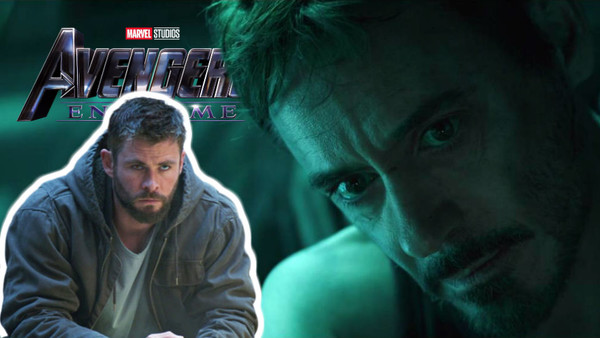
Avengers Endgame is, undoubtably, a masterpiece of superhero cinema.
I want to front load with that because, if you’re a fan of the film like me, the following won’t make for overly comfortable reading at points. What it achieves in terms character, narrative, fan-service, boundary pushing, emotion, all of that; I said in my review it’s a triumph and in almost all regards it is. The film, taken as a whole, as a body of work, is truly excellent.
But that doesn’t mean it’s without its flaws. There are already questions being asked over continuity issues, plot holes, basic leaps of logic, things like that - perfectly normal issues for any film to have, never mind one of this scale - and these conversations will rumble on for years.
The bottomline is that this is a wondrous if occasionally messy film, and how much most of its problems bother you will depend entirely on who you are. The overwhelming majority don’t care about them, but some do. A statement that’s true of pretty much anything.
However, there is one problem with the film that needs addressed. One that stretches out beyond it’s 3 hour runtime and begins to suffocate some of the best work done in the MCU over the last decade. Specifically, Tony Stark’s incredible psychological arc.
But the problem in Endgame isn’t Tony. His story ends in a way that’s about as perfect as it possibly could have been. A journey that started all of this back in 2008, saw his character hit such impossible highs and lows, comes to an almost poetic conclusion. You’re not the guy to make the sacrifice play Cap tells him in the first Avengers movie and… well… you saw all those films.
The journey he embarks upon is, comfortably one of the best things in the entire MCU. From his life-changing beginnings in Iron Man, to his identity crisis in Iron Man 2, his emotional trauma in Iron Man 3, his vision in Age of Ultron and how profoundly that affects him, the sacrifices he makes in Civil War and how personally he’s wounded by its end; by the time we got to Infinity War there was arguably no better developed character in all of cinema.
And the best thing about that development was this overwhelming strength and leadership and responsibility and power, being in constant conflict with his vulnerability. Stark is not presented to us as an extraordinary man, but a very ordinary one doing extraordinary things. This takes a huge toll on him.
There’s a scene in Iron Man 3 which, for me, is amongst the most important in the entire MCU. It’s in Iron Man 3 where Tony and Rhodes are sat in a restaurant, he’s signing a drawing for a child and he just breaks down, he can’t breathe, he runs out of the restaurant gets in his suit, asks Jarvis to check his brain, check his heart, asks if he was poisoned and he’s told no, none of that, he was having an anxiety attack. There’s a pause and he just says… "me?"

It might not seem like much, but having Iron Man suffer a panic attack was boundary pushing cinema. From there, we learn of his sleepless nights, how he’s haunted by the battle of New York and how he’s having these sudden, intense and debilitating episodes as a result. Despite what he says in the film, the clinical reading of this, as done by numerous doctors and journalists, is that he suffers from Post-Traumatic Stress Disorder.
PTSD is a mental illness. The central figure of the biggest movie franchise in history, one of the most iconic characters in cinema not only has a mental health problem, but becomes defined by it. Tony Stark has everything, he’s a successful businessman, a genius, a literal superhero but his brain breaks as easily as anyone else’s.
As far as addressing the stigma surrounding mental health goes, I cannot tell you how important that is.
So what’s the problem with Endgame then? Well, as I’ve said it’s not Tony. He may have moved on from the man he was in Iron Man 3, but that trauma still defines his actions throughout the rest of the MCU. It's still fundamentally the reason behind his addiction to being Iron Man - it being very much his only coping mechanism for it - and is what ultimately leads to his death.
The problem, is Thor.
For all the ways that the Battle of New York would come to define Tony Stark, by the time we pick up in Endgame that failure to kill Thanos has come to define Thor. He saw all those people die, he fundamentally blames himself for that unquantifiable loss of life and his realisation at the start of the film that he can’t fix it breaks him.
On paper, this is a brilliant narrative decision. The 5 year jump has allowed Tony to lead a different life, it’s allowed him to start a family, to hang up his suit, to recover if not necessarily to heal. Replacing that in the story with one of the strongest characters is very interesting but they way they approach it is so counter-productive.
When we catch up with the God of Thunder he had settled the survivors of Asgard somewhere on earth. New Asgard to be specific. But far from being the benevolent and magisterial ruler his father was he’s a washed-up, overweight, drunk who lives in a hut with Korg and Meek while playing Fortnite all day. This is a cheap image to go with but still, in of itself, it's not the problem.
The problem comes because this profound trauma he’s suffered, the guilt he feels and what it’s done to him, is almost entirely played for laughs.
Don’t get me wrong, I’m not saying it isn’t funny, as some of the film’s best moments of brevity arise from it and Thor is historically one of the funnier characters. But the problem is that you can’t set the groundwork for these topics as sympathetically and complexly as you do for Tony, and then pretend they don’t matter for Thor.

This all comes to ahead where, back on Asgard and completely devoid of the emotional nerve to complete the mission, Rocket slaps him across the face and tells him to “snap out of it”. It’s a gag, and raises a mild titter from the audience, but undoes so much of the franchise’s good work.
To build into the very fabric of your decade long narrative that these heavy emotional blows adversely effect your characters in the same ways they effect the rest of us, and then conveniently decide that, actually, they’re better used for comic relief, damages that entire premise. Take that scene in Iron Man 3 and, instead, imagine Rhodey just slaps Tony and tells him to “snap out of it”.
The counterpoint to this is that, simply, it doesn’t really matter. Thor is not Tony Stark, his story is very, very different, and it makes sense for him to play out this way in the context of the film etc etc. That’s all fair, but it it’s inconsistent.
Themes of duty, abandonment, self-destruction, fear of failure are all handled evenly across different films and different characters. Even the very idea of empire, specifically facing up to the sins of the past, is looked at in the same way in Iron Man, Captain Marvel, Black Panther and Thor Ragnarok. Four of the most different films in the entire franchise, led by heroes telling very different stories.
What makes the MCU so wonderful is how these big ideas hold true across the heroes, across the years, and even across the stars. Marvel set out what values they wanted their movies to have early on and part of what’s made the franchise so interconnected is that they’ve held true to these for 11 years.
I’m sure a lot of people will say that they don’t think how these movies handle mental health is important and, ok, fine, that’s your opinion, but what you can’t dispute is that Marvel thought it was important.
They wove it into multiple films and made it the defining part of their biggest characters entire makeup. It's what drove him to build Ultron, it's what pushed him to fight for the Sokovia Accords, and it's what fuelled the Iron Man addiction that ultimately saved the universe and cost him his life. To Marvel, it mattered.
It was sensitively handled, it was realistically written, it was profoundly affecting, and then, all of a sudden, it was a punchline. Did it work well for Thor in the moment? Probably. Does it work for the MCU as whole? No, and it’s one of a brilliant movie’s biggest missteps.
Fundamentally, and for very obvious reasons, this is a gripe that won’t be shared by the vast majority of the audience. But for everyone who has been applauding the MCU for how it’s bravely tackled these issues head on - when it was under absolutely no obligation to - it’s a stark reminder of how easily it is to forget them.