The Dark Truth Of The Joker Movie
The black mirror of Joaquin Phoenix's Clown Prince Of Crime...

We need to talk about the Joker. Again, yes, but the Joker doesn't go away. He's popular precisely because of his ability to reflect something about his creators. About the society that creates him. In order, he is chaos. In structure, he is excess. In decorum, he is outrageous. In straight-laced times, he is camp. He is everything we fear not about a guy walking around in clown make-up, but about ourselves. And that couldn't be more important to the new take on the Joker.
With the trailers for Todd Phillips' new vision for a Joker origin film out, there are some significant talking points. And it's not that Joaquin Phoenix looks amazing. Or that his laugh is incredible. Or that the cinematography looks wonderful. It's how the film seems to be portraying mental health issues, their stigmatisation and also, how this could either be a huge opportunity or it could make Phoenix's Joker the unwitting poster boy for groups like the alt-right and self-styled militant incels.
This is The Dark Truth Of The Joker Movie...
It's crucial to start in one place. The idea that Phillips' Joker isn't just an origin story about Joker but also the origin story of Gotham as we know it. It's a film about Gotham's fall and how that impacts its people at both ends of the spectrum - and even more importantly, those who aren't even on it any more. It's a story of how a perfect storm of mental health issues, a troubled past, systematic failures and a legitimate political movement of revolution combine to drag Gotham into the gutter.
We always knew from every Batman story ever told that there is a reason to love Gotham. There is talk, frequently, of Gotham deserving a hero. Of Gotham being saveable. Hell, why else would Bruce Wayne care to protect his city if it was always the grotesque, twisted monster it would become when he had to pull on his cape and cowl? That would make no sense.
For that to ring true, Gotham had to be great once. In Bruce Wayne's mind, it was great because of what his parents taught him before they died. They made it an aspirational place that would ultimately fall to corruption and darkness. Because in Bruce's eyes, of curse his elitist parents - with their riches, their power and their happiness - would love Gotham. They were thriving in it. Batman is essentially trying to save a Gotham of their creation - clipped of its rough edges and devoid of the more distasteful realities that were hidden from him until they passed away.
But those on the darker underbelly of Gotham existed. Joker is their story too.
Continued on next page...
Gotham Falls
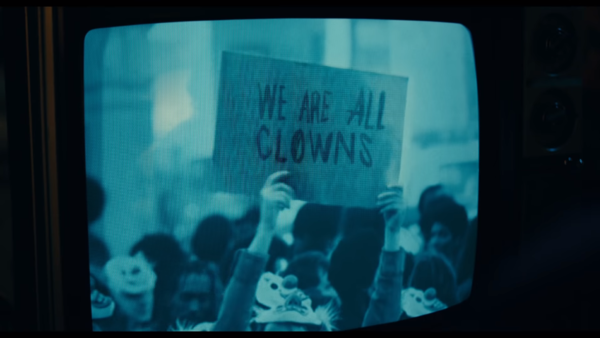
The Joker trailer already shows Todd Phillips giving those Gothamites their voice and we've seen hints of their movement. They are the clowns hinted at in news footage. They are, somewhat shockingly, the inspiration for Joker's look.
Joker is a story of how there's a revolution, French Revolution style, focused on "eating the rich" or dethroning them or equaling the playing field. Briefly, the trailer shows Shea Whigham's character being attacked on the subway while in evening wear. Later, you see Thomas Wayne as the personification of the rich elite. And there's very much a grimly fitting idea of the Waynes' later murder being a killing not just as a means to rob them, but as a means to do the same thing the clowns are seeking: to level things out.
The clowns are clearly trying to take back Gotham, and they - unwittingly probably - inspire Arthur.
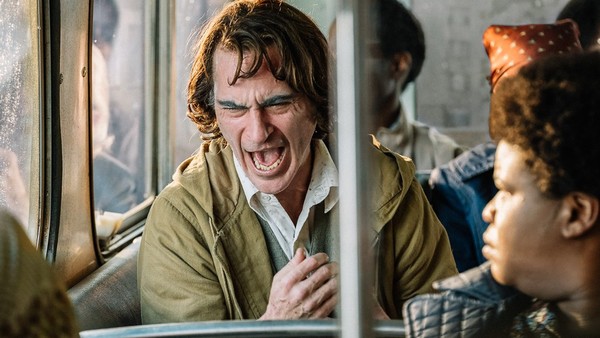
When we meet him, Arthur Fleck is ostracised, abused, vulnerable and he finds his place and validation amongst the mob after being cast off by his therapist, abandoned by his mother (who dies) and shunned by his neighbour who he is in love with. He's beaten up in the street for seemingly no reason while at work and then laughed at when he follows his dream of being a stand-up comedian. He is, unfortunately, keenly available as a target for indoctrination or to use it another, more popular word these days, radicalisation.
In the clowns, he sees his own people - rather bluntly drawn together by his job requiring him to dress as a clown and their adoption of the imagery for their movement - and more importantly he sees a community he can feel comfortable in that also actively wants to amplify his voice. They nourish his fears, twisting his own experiences into the results of what the elite have done. They weaponise him and he adopts their image in a more extreme way, becoming not just a man dressed as a clown but Joker.
This is all very smart, but there are dangers here, because we are actively being told that Joker is the portrait of a man with mental health problems who becomes the Joker. Not, as The Killing Joke says more overtly, a man who had the absolute worst of all possible days and broke. No, an already "broken" man.

We're being shown the portrait of a man - a fantasist, seemingly - who warped a real political movement that saw a recruitment opportunity in him into a true calling. By the end, don't be at all surprised if Joker imagines himself to be the leader of that protest and is validated by their agenda for change to do whatever he personally wants to do. So he'll take out everything from his past - his relationship with his mother, his link to Thomas Wayne, Murray Franklin mocking him and yes, his existing mental health issues - under the pretence that he is some sort of revolutionary in his own head.
But at the same time, you really do have to question what that's saying about people with mental health problems.
continued on next page...
The Joker And Mental Illness
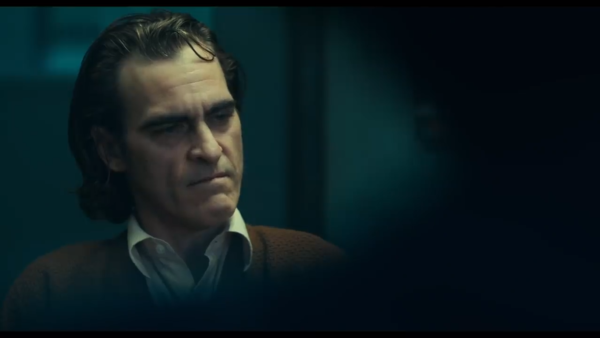
Fundamentally, it could be considered quite a dangerous message. It's not even entirely clear at the minute what the film's stance on it is: whether he's forgivable because he's mentally ill or whether his "derangement" is one of opportunity. This is a conversation we've heard before. It's one, unfortunately, we hear every time there's a mass shooting or a terrorist event that is quickly assessed to see how much of it can be linked to mental health.
Going back to that opening statement again, this is, fundamentally, the black mirror of cinema showing us what we fear most. Joker is a reflection of not what those terrorists are - or anyone driven to crime by emotion - but what the media conversation around them seeks to make them. He is, to put it rather inelegantly, a terrorist of fear inspired by a very, very real historical moment. Our own.
This wouldn't, of course, be the first time mental health was the driver behind great villains. Norman Bates of Psycho fame is right up there. So too is Jack Torrence of The Shining. James McAvoy in Split. It's an easy go-to because the majority of people do not understand mental illness. They see it, occasionally, through the absolute worst filter possible: through the media. And the only time you hear about mental illness in the press is when it's being blamed for the deaths of lots of people or when some celebrity unravels, acts self-destructively and checks in somewhere expensive to deal with it. Of COURSE that would create stigma.

There is already a concern that Joker's portrait of mental health concerns is dangerous. As Stephen Hinshaw, a professor of psychology at the University of California–Berkeley, told US News & World Report in 2015 (about characters like McAvoy, Torrence and Bates) "The worst stereotypes come out in such depictions: mentally ill individuals as incompetent, dangerous, slovenly, undeserving. The portrayals serve to distance 'them' from the rest of 'us.'" Joker's strange romanticism of Arthur's mental illness as an answer to one of the most compelling questions in modern cultural history is hugely significant. It is as awful as it is deeply compelling. As exciting as it is potentially troubling.
This doesn't come without a hopeful caveat though.
If the film were to be only about how easy it is for a mentally ill person to be weaponised without the fault of anyone else, it would be troubling certainly. But there is an opportunity here too...
Continued on next page...
2. The Power Of Mental Health Destigmatisation

We've seen in the trailers that Arthur WAS in treatment, but his counsellor - seemingly exasperated by a lack of progress or simply doing what the reality of some counselling is, checking boxes and moving him on - ends that treatment. He's clearly not in a place that suggests his therapy ought to be ended. All he has is negative thoughts. As he said in the first trailer, the most difficult part of being mentally ill is people insisting you appear not to. That's paraphrasing, but it's the sentiment that counts.
What is Joker is also a mirror for our own failings. Not just the demonisation of people with mental health issues - the establishment of lines that make them "other" or "exotic" in a terrifying way - but a systematic failure to help that leads them to the sort of thing that Arthur turns to. It should occur to us all that even when the media is attempting to distinguish whether terrifying terrorist atrocities are the result of mental health issues or if they're the result of radicalisation that it could be both. That in saying the answer lies with only the former and failing to help with it, we make the latter even more of a danger?
That definitely feels like something that could be explored here. Perhaps it's wishful projecting on my part, but it's a conversation that needs to be had, and using the Joker as a reflection of some very pressing real world issues is a huge opportunity.
Worryingly though, there's also a possibility here that this is all going to be misappropriated. In fact, it seems like Arthur's mental illness is going to be misappropriated in the film as he gets involved in the "we are all clowns" movement and then becomes a self-appointed figure-head of it. And there's a big hint of how he's going to do that too.
Continued on next page...
Joker Misappropriated

One of the most interesting parts of the trailer links to The Dark Knight Returns, rather than The Killing Joke. Everyone is picking up on the link between that seminal comic's talk show sequence and Joker appearing on Murray Franklin's show: he is, by the look of it, not only a reference to The Killing Joke's stand-up humiliation, but also this movie's proxy for David Endocrine. His function - and indeed the function of Joker appearing on his show to a captive audience - is very much the same, no mater how the specifics are shuffled around.
By the look of it, Joker will go on that show to do what he did to Endrocine and his audience in the comic. To kill them. To announce himself in as theatrical and bloody a means as possible. If Joker is looking to make a statement about bringing down the establishment, what better way to strike at it than through the other thing the elite worship above power and wealth - television.
That sequence, which starts with Joker demanding he be called Joker and sees Arthur tossed aside not only by the name-change but by the total change in his demeanour, will end in something difficult to watch. We will see Joker blossom out of horror and Gotham will see it happen too in their very own homes. He will use television to amplify his and the protest clowns' agenda the same way the Internet has been used to amplify the agendas of mass killers and their cultish followers in more recent years.
It will be horrifying not just because of what the Joker does, but because of what WE the audience see reflected in those actions of our own world.

And then there's the question of misappropriation. It seems painfully inevitable that like Fight Club, even if Joker is indeed seeking to make positive strikes for mental health and to criticise the mob that ultimately destroys Gotham - it's surrogate alt-right - there's an element of the audience who are going to take it at face value and proclaim Arthur Fleck and the Joker as their totems.
You don't have to have a vivd imagination to be able to see him being adopted as an alt-right symbol of hope by people in the belief that they're as victimised and abused as he is suggesting a similar stance against "the establishment." Which is as dangerous as the toxic masculinity groups who took Fight Club as a sort of call to arms to them when it was actually a criticism of them. They didn't get the point, and worryingly, even as Joker holds up a mirror to those people as well, they might not get the point of what Joker is hopefully trying to achieve.
Even as we the audience watch the horrors of that mob misappropriating the actions of a mentally ill man cast aside and twisted into something else, and are horrified rightly, there's a very real chance it's going to be happening all over again in our own world.
What do you think? Share your reactions below in the comments thread and check out WhatCulture.com for more like this.