Star Wars: The Force Awakens - 8 Things The Prequels Did Better

Lucas wasn't all bad, you know...
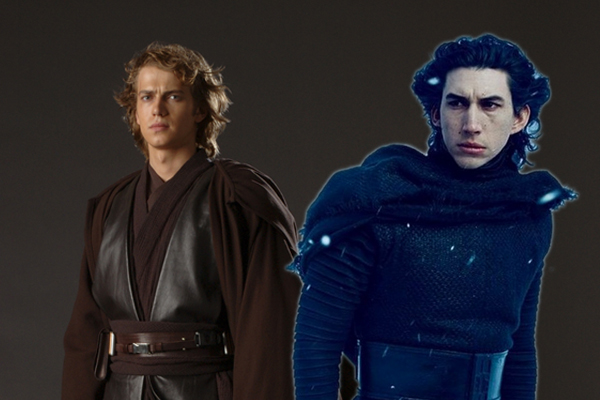
It's only fair to begin by saying this; The Force Awakens is a great movie. It attempted to both reboot and remake certain elements of the Star Wars series, all while establishing a bunch of new characters for us to root for in subsequent films. On the whole, the film was largely successful, and wildly entertaining to watch. But, just because The Force Awakens is great, that doesn't mean it's devoid of criticism. Nothing is perfect, and it's unrealistic to expect the seventh entry in a franchise to get every little thing right €“ especially when the series' creator is no longer involved. The Force Awakens casts a new perspective on the prequel trilogy. For all its flaws (and there were so, so many) the start of a new trilogy allows fans to see just what qualities George Lucas brought to those films (again, all while recognising their innumerable failures). The prequel trilogy may have been frequently terrible, but they absolutely felt like Star Wars movies. So be mindful of your thoughts and try and steel yourself for some difficult truths (and serious spoilers) regarding The Force Awakens...

8. They Appreciate The Severity Of Character Death
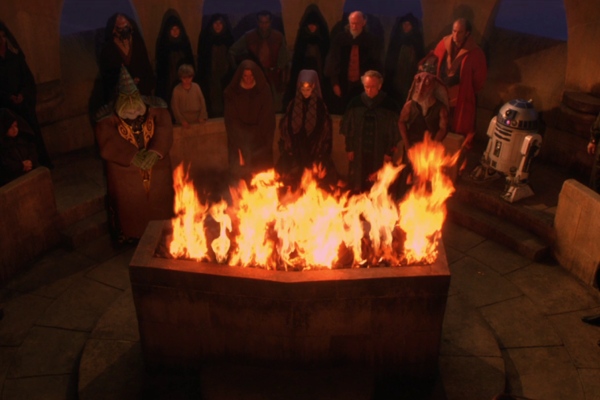
In general, Harrison Ford's inclusion in The Force Awakens was brilliant. His reprisal of Han Solo was far from a half-assed cash grab, with Ford throwing himself into the role with passion and enthusiasm. Somehow, despite the passing of nearly three decades, he was able to recapture the spirit of one of science fiction's most beloved characters. No, it wasn't the inclusion of Solo that was disappointing €“ it was how they treated him. After he dies there's a rather cursory scene between Rey and Leia, with Chewbacca trundling off in the background (although we do see a couple seconds of Chewie looking sad straight after). The scene between Rey and Leia is nice, but it's far, far too short, and why on earth wasn't Chewbacca included? After all they'd been through, you'd think Leia would find want to share some time with the big walking carpet. The prequels, on the other hand, respected nearly every big character death. The Phantom Menace sees a sombre, emotional response to Qui-Gon Jinn's demise, with many of the key players mourning the Jedi at his funeral (the scene also includes some genuinely haunting music). We see the same respect paid during Padme's funeral in Revenge Of The Sith, and the death of Anakin's mother in Attack Of The Clones is substantially weighty. Of course, Solo's body wasn't available for cremation like Qui-Gon, but for a character who is regarded as a legend both in the universe of the films (see Rey and Finn's reaction to meeting him) and to the audience, it struck a weird chord how only a mere minute was spent on sending him off.

7. They Handle Fan Service With Subtlety

A little bit of fan service is great. Everyone loves a brief nod to a previous event or story €“ hearing character's naturally reference their past is an effective way of pleasing the audience while also creating a sense of connectedness. For the most part, the prequel trilogy integrated its fan service with grace and dexterity. When Yoda shows up, it makes sense €“ he's a Master on the Jedi Council. The Clone Troopers in Attack Of The Clones are a great nod to the Storm Troopers, too €“ not just visually, but they provide an interesting explanation for the vast number of nameless, faceless soldiers in the original trilogy. They're an homage that serves the plot. In The Force Awakens, the use of fan service is entirely different. Excusing the appearance of Han, Leia and Luke (because let's face it, they're awesome) the fan service is much more for its own sake. For a start, there's a crowbarred reference to the Kessel Run. There's a collapsed AT-AT on the desert planet of Jakku €“ how on earth did it get there? C-3PO has no actual role in the film, but he has plenty of dialogue anyway €“ at least R2-D2 has a reason for being there. Then there's the plot of the film €“ there's the Death Star, but now it's bigger. Heck, there's a trench run, but now it's bigger. Adam Driver revealed in an interview at the London premiere that he shot a scene with Kylo Ren saying Darth Vader's famous line €œI sense something, a present I've not felt since...€. In the end, that was left on the cutting room floor, but it sums up just how unsubtle the fan service was in the film.

6. They Portray A Lived-In Universe

In the prequels, we see the Star Wars universe in a way we've never seen it before. We witness the vastness of the Galactic Republic, a sprawling underwater Gungan civilisation, the market settlement of Mos Espa, the metropolis of Coruscant, the swampland of Naboo... and that's just what we see in Episode I. Attack Of The Clones gives us the violent ocean planet of Kamino (complete with massive cloning facility) and the paradise of Naboo, inhabited by tons of alien wildlife, while Revenge Of The Sith ends on Mustafar, a scorching lava planet that's completely covered in bits of unfinished construction. How much more lived-in can you get? In The Force Awakens, we revert largely to the sparseness of the original trilogy. The most we see of any extended civilisation is a very brief clip before they're blown to smithereens by Starkiller Base. There's a Resistance who we barely know anything about, a desert planet with a tiny camp and... the bad guy's fortress. Hell, the most heavily populated place in the universe is apparently a bar on the planet Takodana, where we meet one of the film's key players Maz Kanata and learn approximately nothing about her. The prequels felt like they were showing off slices of a massive world, whereas The Force Awakens feels like there's nothing beyond the boundaries of what we can actually see.

5. They Have Better Original Music

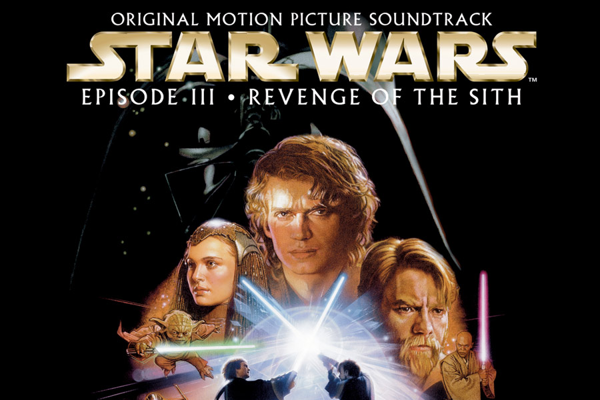
The music in The Force Awakens was, for the most part, completely fine. It was good, in fact. But when you remove variations and iterations of classic themes, things get a little more complicated. Be honest: can you distinctly remember a specific piece of original music from The Force Awakens? By far the most memorable track is Rey's Theme, which manages to be both dream-like and whimsical, while stirring the feeling that somewhere out there is a larger world. But that's about it. Like I said, the music isn't bad €“ it's generally entirely serviceable. But this is Star Wars €“ and this is John Williams. The music of Star Wars is a massive part of its identity. It's a way of characterising people and establishing settings. Of the innumerable memorable pieces of music from the prequels, the first film in the trilogy is responsible for gifting the world Duel Of The Fates, one of the most iconic tracks in Star Wars history. And then there's the brilliant Droid Invasion theme, which sets the tone for a battle of epic proportions. And who can forget Revenge Of The Sith's frankly amazing Anakin vs. Obi-Wan? Music is such a massive part of the identity of Star Wars that it's absolutely valid to evaluate the tunes in The Force Awakens... and they simply don't compare to those found in the prequels.

4. They Expand The Mythology Substantially

As mentioned before, the Star Wars prequels were brilliant at giving us a glimpse at a massive, sprawling world. But what they were also great at was expanding the Star Wars mythology. Forget all that rubbish about midi-chlorians. In The Phantom Menace alone we see Jedi infrastructure through the Jedi Council (learning how Masters and Padawans work, and how one traditionally learns the ways of the Force). We see the power hierarchy of an entire distinct species through Boss Nass and the Gungans. There's local sporting events on Tatooine in the form of Podracing and the vast, vast metropolis that is Coruscant. And despite the undeniable awfulness of all that stuff about the senate in Attack Of The Clones and Revenge Of The Sith, it was realistic. In The Force Awakens, there's almost no new information provided about the way the world works €“ the only thing that comes to mind is the culture of junk trading for food found on Jakku, and that's not particularly unique. The mythology is respected, sure, but it's left very much alone. The Force Awakens sticks so tightly to the plot beats of A New Hope that it's simply unable to prise the world open in new and interesting ways.

3. They Give You Time To Breathe

From the moment Finn and Rey steal the Millennium Falcon, barely five minutes go by without some sort of action sequence. There's the criminal/alien scene on the freighter, the arrival of Kylo Ren on Takodana, the destruction of a star system, and by the time we've arrived at the Resistance it's time to head out to infiltrate and destroy Starkiller Base, leading us to Han's death and the climatic Rey/Finn/Kylo duels. Don't get me wrong, there's always been plenty of great action in Star Wars, but The Force Awakens is the closest to a straight action movie the series has ever gotten, complete with tons of jokey one-liners. Compared to the prequels and original trilogy, the film never really gives the viewer any time to breath €“ to take in the world and appreciate the alien setting. Take the extended scenes on Naboo, for example, in Attack Of The Clones. Sure, they were terrible €“ I'm not denying that €“ but they were a crucial part of the film's pacing, and gave viewers a time to adsorb everything that was going on.

2. They Adhere To The Workings Of The Force
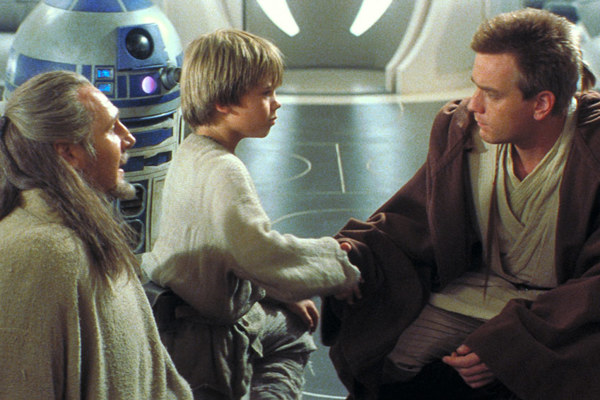
The Phantom Menace is practically devoted in its entirety to establishing how crucial training in the Force really is. Even at such a young age, Anakin is considered by Yoda to be too old to train. Many years pass between The Phantom Menace and The Clone Wars, so viewers get a sense of the scope of his training when it comes to seeing Anakin use the Force. In essence, it's been a long time coming. Hell, even in the original trilogy, Luke Skywalker (who is presumably around Rey's age) doesn't directly use the Force in the first film, and he's shown to be pretty bad with a lightsaber. His closeness to the Force manifests itself in amazing piloting, which we see Rey knock out of the park within the first half an hour of The Force Awakens. You certainly don't see him using Jedi mind tricks and going toe to toe with a trained Sith after five minutes. The point isn't that Rey hasn't received any training €“ she undoubtedly will, the ending of the film hinges on it €“ it's the uncharacteristic swiftness with which she becomes proficient that's completely off. In The Force Awakens, Rey learns the Force as the plot demands it (like in order to escape captivity) which just doesn't align with how it's treated in the originals or prequels. And sure, you can try and explain it away by saying Rey's more Force sensitive than any other Jedi we've ever seen in any of the other films, but that's a lazy explanation for disregarding what we know about the Force.

1. They Forge Their Own Identity

If there's one thing that can be said about the prequel trilogy, it's that it's unique. I don't just mean that in a smug, condescending way, either. Sure, they were at times (many times) uniquely terrible, but they absolutely forged their own identity. It's difficult to know where to start... so I'll start with the bad guys in The Force Awakens. The bad guys were Stormtroopers. They flew TIE Fighters. There were Nazi-esque generals in a big, round base that shoots a laser. I'm not saying that these things weren't great to see €“ they absolutely were €“ but it's undeniable that The Force Awakens leaned very heavily on elements from the original trilogy. Compare that to the prequels, which see standard battle droids, rolling Destroyer Droids, Clone troopers, General Grevious' cloaked guards (hell, Grevious himself). And while there are many amazing creatures in The Force Awakens, most of them are background elements (not you, Maz Kanata €“ you were great). The prequels contain a bunch of unique creatures as main characters, including Watto, Boss Nass, Jar-Jar (okay, strike Jar-Jar), the reptilian Dex Jettster, again fleshing out the world. Then there's the many unique and varied settings, from underwater cities to swamplands to a planet-wide metropolis. There's planet-specific hobbies and sporting events, details on the Jedi hierarchy, details on one of the universe's governments, new ships, a Queen, new weapons... the fact is, uniqueness permeated nearly every facet of the prequels. In The Force Awakens it was sprinkled here and there on-top of familiarity. Using the fact that The Force Awakens is €œconnected€ to the original trilogy isn't a particularly interesting or valid excuse, either €“ the prequels were connected to the classic movies too, yet they didn't rely on a blend of similar elements. You can prefer The Force Awakens over the prequels all you want (it's very tough not to) but as it stands, the prequels are currently so much more their own films. What did you make of The Force Awakens in reference to the prequels? Share your take on this controversial issue down in the comments.

Contributor
Contributor

Commonly found reading, sitting firmly in a seat at the cinema (bottle of water and a Freddo bar, please) or listening to the Mountain Goats.