The Hobbit: 10 Things You Might Have Missed
Say what you want about Peter Jackson's return to Middle Earth, there's no denying there's a lot of hidden gems within this trilogy opener...
 The Hobbit: An Unexpected Journey may have only been in cinemas a week, but it has already smashed box office records and left fans salivating for The Desolation of Smaug. Now the latest film entry in Peter Jacksons Middle Earth series is far from perfect: it is overly-long and (like many of Jacksons non-Rings work) overly self-indulgent, and while there may be sparks of brilliance (riddles in the dark) and a pleasing lightness in tone, it stands as incomplete the first half of a good movie; something Fellowship of the Ring never felt like. Sadly, all of its faults can be traced back to the incredibly ill-decided choice of splitting a tome shorter than any of The Lord of the Rings into three, lengthy parts. Even with the added content of the appendices thats a bit much. Regardless, theres plenty of splendour packed into the feature, with beautiful shots of both real life New Zealand and CGI vistas, as well as reference aplenty to keep real world hobbits glued to the screen for many a re-viewing. Here are ten such hidden gems within the film which may have passed you by the first time you returned to Middle Earth. Of course, the more eagled eyed viewer or big fans of Tolkiens work will likely have picked up on some, if not all of these; if you have, feel free to share any other discoveries in the comment section below.
Honourable Mention - The Wilhelm Scream
 A massive in-joke among sound effect supervisors, the Wilhelm Scream is a sound clip of (surprisingly) a character called Private Wilhelm screaming. Originally used in Distant Drums (and named after its third use in The Charge at Feather River), it came to popular use after Ben Burtt used it in the Star Wars and Indiana Jones films and now is used in many major Hollywood movies. Its an instantly recognisable sound, partially because it is so over the top, but mainly due to its ridiculous over use; the joke is no longer funny. It appears in The Hobbit as the dwarves and Gandalf are escaping from Goblin Town as one of the goblins is thrown down the mountain. But while it could be something worthy of putting on this list, the frequency with which it is used (or abused) is just too damn high.
1. New Logos
 The original Lord of the Rings films famously began with the eerily soundtracked New Line logo in deep blue. Now in The Hobbit, not only has their colour been changed to the more cheery gold, but it has a couple of friendly additions. The Warner Bros. logo, a familiar sight in blockbuster cinema after Harry Potter and Batman, makes its Middle-Earth debut, morphing into the New Line logo (and briefly through a homage to the older design). This is because this time Warner, not New Line, are official distributors, although maybe the ending of its two key franchises (the two mentioned above) has led to wanting more of a stamp on this trilogy (a guaranteed success). Even more noticeable is the addition of the MGM logo, who are part financing this trilogy; it was MGMs financial troubles back in 2010 that led to the loss of Guillermo del Toro (here credited with the screenplay).
2. Dwarf Women
 Its a blink-and-youll-miss-it moment, but when we are introduced to Dale in Bilbos introduction (pre-Smaug attack), we see a couple of dwarf women with some mighty fine facial hair. Its not quite the flowing beards of Gimili or Thorin, but its certainly some impressive sideburns that would make them the envy of most modern men. This is obviously a throwback to The Two Towers, when Gimili is explaining how dwarves of both genders look similar, Aragorn makes a joke it is down to the women's beards. It may not be full beards (thatd probably confuse newcomers to series), but its a nice nod that Jackson still remembers the smaller parts of his trilogy.
3. Legolas' Dad
 The beauty of having all the films made in one go (minus the extensive reshoot to extend the series to a trilogy), is that characters who dont become key until later instalments can still play a small part early on in necessary. One great example is Thranduil, the wood elf king who stands idly by as Smaug attacks Erebor. As well as making his later appearance (he certainly isn't Thorins biggest fan) mean more, its particularly cool as he happens to be Legolas father. Also worth noting (but more well known) is that Gloin (one of the more sidelined dwarves) is Gimlis Dad. Given the conflict between races I doubt these two will be playfully killing together. Expect to see more of Thranduil come The Desolation of Smaug, as well as the return of everyones favourite archer.
4. Back To The Start
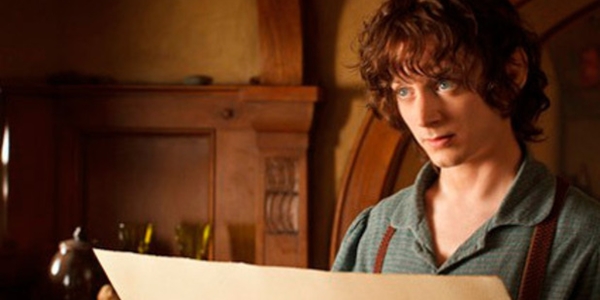 The earliest trailers teased An Unexpected Journey would have a narrative bridging device in the form of Bilbo writing his memoirs and talking to Frodo. What we didn't know was how relevant to the original trilogy it would be, with Bilbo deciding to start his book on his 111th Birthday. This is on its own a good thing; its nice to see both hobbits interacting outside the constraints of the story. Even more exciting, however, is Frodos exit from the film, asking when Gandalf will be arriving, going off to read in wait for him. This directly leads into the opening of The Fellowship of the Ring when Gandalf arrives in Hobbiton, with Bilbo even coyly mentioning about him not liking being late. Its a nice rounding together of the two trilogies and doing it from the very off creates a more joined series, rather than two separate stories.
5. Mirroring
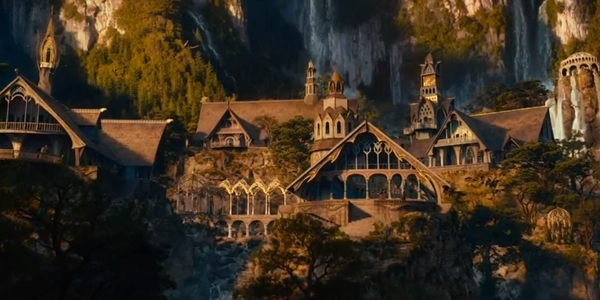 Obviously, with starting off at the Shire, travelling through Rivendell, above then under a mountain and final, woodland battle, The Hobbit admittedly shares a very similar structure to The Fellowship of the Ring. Although Peter Jackson has hinted that the next two instalments will have less in common with their Rings counterparts, its clear hes partially embracing the similarities. The treatment of Smaug, with the incredibly teasing glimpses in the prologue and a very minor reveal at the end is in very similar fashion to how Sauron was dealt with in the original trilogy, with Jackson slowly showing us Barad-Dur and the watching eye. And you'd be a fool not to see Thorin is clearly set to be the new Aragorn, with the character's grumpiness toned down. This is very similar to how George Lucas perceived the Star Wars prequels (They rhyme). There was obviously going to some similarities with a prequel trilogy over a decade later. But its startling both directors went with the very obvious thematic device of mirroring the originals. Heres hoping The Hobbits legacy is a bit better than those prequels.
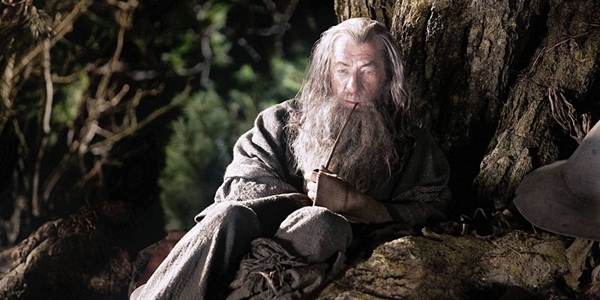
6. The Blue Wizards
7. The Trolls: Petrified Forever
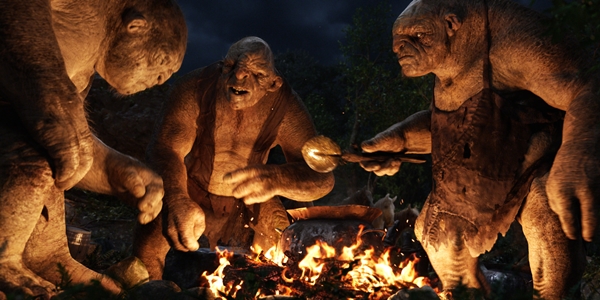 Jackson has appeared to be rather liberal with the visual continuity between the references to the quest in the Rings trilogy and The Hobbit itself (both Gollums loss and Bilbos discovery of the ring are noticeably different); Andy Serkis has said Jacksons philosophy is that continuity is for pussies. But with the mountain trolls who attempt to make a meal out of the dwarves, hes stuck surprisingly close. Not only is it Bilbo who stalls them (not Gandalf as in the book; a change which was suggested in Fellowship), but when the trio is petrified by the sunrise, they take the positions seen by Aragorn and the hobbits early on in the first film. Its one of the moments where the film actively works to improve its coherence with the wider cinematic world.
8. Radagast Returns
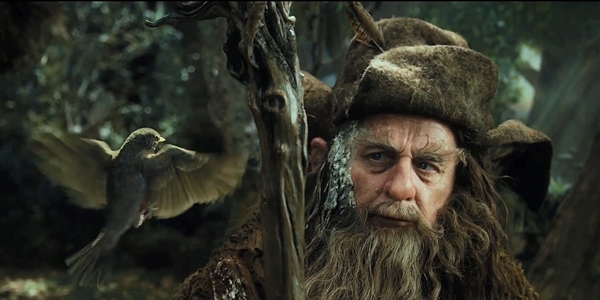 A notable addition to the Middle Earth cast is Sylvester McCoy as Radagast the Brown, who is the first to discover the rising power of The Necromancer. Its very interesting casting, given both the amount of running away from the villains the protagonists do (McCoy was, after all, the seventh doctor) and more seriously that McCoy was the second choice for Bilbo in the original Rings trilogy. But the presence of the character is what makes this point on the list. Namely, the fact that Radagast doesnt appear in The Hobbit book, instead featuring in Tolkiens The Lord of the Rings (accidentally betraying Gandalf to Sauroman and then inadvertently sending the eagles to save him from Isengard). The opposite inclusion in Jacksons films is not only an interesting choice, but thanks to writing of the character, feels completely natural; we dont miss him in Fellowship, but he feels integral to An Unexpected Journey.
9. Flight Of The Elves
 Given the success of the New Zealands Flight of the Conchords their HBO series brought them both popular and critical acclaim (as well as a handful of Emmy nominations) its likely many people spotted the Oscar winning (for this years The Muppets) Bret McKenzie as Lindir. What many may not have realised is that hes joining Elijah Wood, Christopher Lee et al in (sort of) reprising a role from the original trilogy. In a before they were famous story, McKenzie was an extra on Fellowship and caught fans eyes with his startling looks, quickly became a geek favourite known as Figwit. He reappears in Return of the King on Arwens journey to the harbour Technically this time his character name is different, but I think we can ignore the fan title and bask in the coolness of a big star in such a small role.
10. Chapter Titles
 If you thought Thorin and Gandalfs shared delivery of out of the frying pam, into the fire felt a tad contrived, thats probably because its inclusion in the script is. Along with A Merry Gathering and, more obscurely Roast Mutton, its one of the chapter titles in the original novel. For Tolkien fans (of which I am not one), the lengthened trilogy and the implied longer run time allows for a more encompassing experience; there is room for a slower pace, taking in the world and more opportunity for these sorts of in jokes. However, for those just interested in a continuation of the film universe, the trilogy move means there is a lot more stuff that doesnt quite make sense; in some ways, its almost as if were watching the directors cut, with less thought for the audiences sanity put in. But all that aside, discovering these hidden references and seeing this now epic tale on the big screen is an experience worth experiencing twice more. Roll on The Desolation of Smaug.