The Invisible Man Review: 8 Ups & 2 Downs
Elisabeth Moss powers this surprisingly strong reboot.

Re-running our original review now The Invisible Man is available on demand...
2020 hasn't exactly been off to a promising start for horror fans, with several high-profile genre duds such as The Grudge, The Turning, and Brahms: The Boy II stinking up cinemas worldwide.
Then along comes Saw writer Leigh Whannell to save us with his shockingly sturdy retooling of The Invisible Man, a property which not so long ago was intended for the big-budget treatment as part of Universal's aborted Dark Universe.
Instead, writer-director Whannell's take couldn't feel much more different: a refreshingly stripped down and scaled back genre film that's more concerned with tone, atmosphere, and performance than it is over-the-top set-pieces, though there's plenty of them to savour also.
While it occasionally requires audiences to jump over one logical hoop too many, it's an extremely well conceived film for the most part, and better yet, it actually has something worthwhile to say.
Above all else, Whannell has finally made the transition from an intriguing director to a truly great filmmaker...
Downs...
2. The Sometimes Contrived Storytelling

Though this is for the most part a smart and cannily written film, it does also ask the viewer to give themselves over to an increasing amount of "movie logic" as the story progresses.
No spoilers here, but as the nature of protagonist Cecilia's (Elisabeth Moss) predicament begins to crystallise in the third act, audiences may find themselves distracted by some questionable elements rather than simply focusing on the action that's unfolding.
Even if you can forgive that the central scenario could easily be resolved by reviewing security camera footage of the Invisible Man doing his thing, there are some sillier revelations later in the film which either require the viewer to buy into some rather credibility-straining ideas, or simply invites them to switch their brains off and enjoy the ride.
None of these scripting issues ruin the film, though they do hold it at arm's length from true greatness, especially given how easily Whannell could've sealed up some of the nagging lapses in logic.
1. It's A Little Too Long

The Invisible Man clocks in at an unexpectedly beefy 124 minutes, and though the film mostly justifies this length, there are certainly a few scenes that probably could've done with some trimming.
With its attempts to keep ahead of the viewer in the third act, the film perhaps over-extends itself slightly with its protracted finale, and a couple of the suspense beats earlier in the movie could surely be tightened up a tad.
Again, it's hardly a two-hour slog, but with 10-15 minutes shaved off, it'd probably feel like a smoother ride to the finish line.
But these gripes do little to harm a film that gets so, so much right. Here's why you should see The Invisible Man...
Ups...
8. Elisabeth Moss' Incredible Performance

To the surprise of absolutely nobody, Elisabeth Moss gives a terrific performance in this movie, and is absolutely the reason to see it.
She is entirely convincing as a woman riddled with PTSD, and her increasing desperation to make others believe her admittedly suspicious story makes for brilliantly frustrating viewing.
Though it's hardly a one-woman show, the entire movie is near enough carried on Moss' back, especially as the set-pieces, though fantastic, are relatively sparse and modest.
This is really more of a drama than it is a genre spectacle, and so it needed a performer of Moss' caliber to dig deep into the film's thorny themes and tether a potentially silly story to the ground.
7. Leigh Whannell's Exceptional Direction
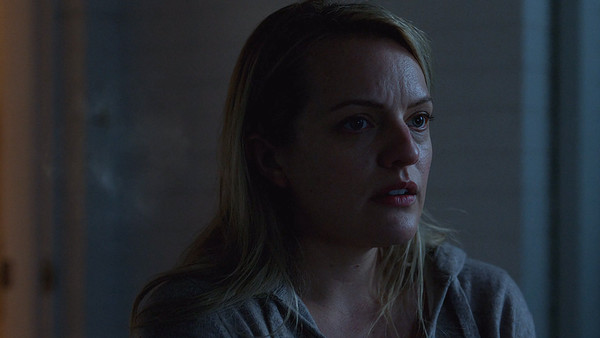
Writer-director Leigh Whannell sure has come a long way since entering the film industry as the writer of the first three Saw films and, in 2015, making his directorial debut as the helmer of the relatively mediocre Insidious: Chapter 3.
Whannell proved with 2018's Upgrade that he could turn in imaginative results on a low budget, as likely won him the opportunity to both write and direct The Invisible Man in the first place.
This film marks another bold step forward for the Aussie filmmaker, who impressive makes the mere $7 million production look several times more expensive than that.
While on one hand he makes sparing use of visual effects and often relies more on both the negative space of the empty frame and the stunning work of his sound team, Whannell also does a remarkable job with the brief bursts of shocking violence, utilising offputtingly jolting camerawork reminiscent of his prior work on Upgrade.
The result is a film that often feels more like an arthouse joint than a genre flick being released by Universal, but at the same time, it knows when to let loose with the gonzo action.
6. The Consistently Tense Atmosphere
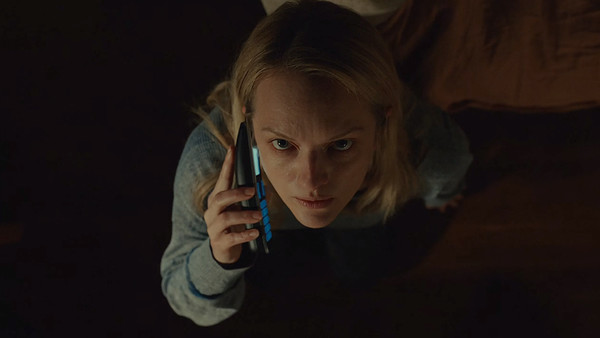
From its very first scene, this film is absolutely awash in paranoia-laced tension, and much of it comes down to how Whannell allows the audience to fill in many of the blanks themselves.
There are numerous sequences where Cecelia is in an otherwise empty room, and Whannell simply pans to an area of the room where the Invisible Man may or may not be standing.
Just as the Paranormal Activity movies derived most of their thrills from the viewer's own imagination, much of what makes The Invisible Man so enjoyable is trying to make sense of what's going on beyond what we can actually see.
The result is a film that remains consistently tense throughout, and even once Whannell eventually stops toying with the audience, the title character's presence is extremely unnerving.
5. The Massively Timely Themes
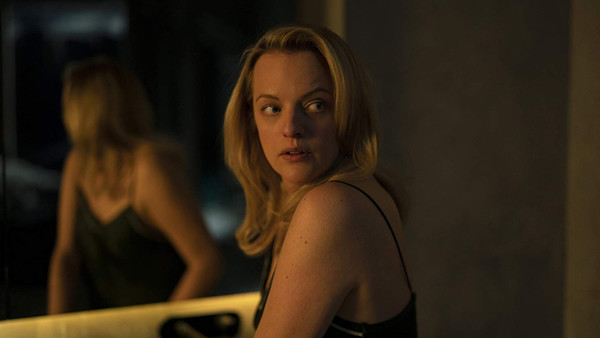
Many critics have already labelled The Invisible Man a "#MeToo horror film," which might ultimately be a pretty reductive way to describe a movie that certainly has its finger on the pulse of the current zeitgeist.
In a time where women are feeling more empowered than ever to come forward and shame their abusers, and our collective society is encouraged to believe these accusations, it's quite ingenious that this take on The Invisible Man is steeped heavily in the scars of domestic abuse.
Understandably, few of Cecilia's friends or family believe that she's being stalked by an invisible person, which serves as a not-so-subtle allegory for the skepticism that many abused women are met with in real life.
Of course it's in no way a direct or tidy parallel, but it's nevertheless a clever way to make the well-trod tale of The Invisible Man feel current and thoroughly of-the-moment.
Yet at the same time, the themes are massaged into the film's overall fabric well enough that it doesn't feel like Whannell is battering the viewer over the head with a patronising message.
4. Benjamin Wallfisch's Thunderous Musical Score

Benjamin Wallfisch (Blade Runner 2049, It) is fast establishing himself as one of the most talented movie composers working today, as he adds another impressively evocative score to his cachet with his work on The Invisible Man.
Though much of the film emphasises eerie quiet, Wallfisch's score is employed to brilliantly bombastic effect at a number of critical junctures - especially during the more chaotic third act - in turn evoking the operatic tenor of the earlier Invisible Man movies.
Above all else, the score accentuates the strong feeling of dread pervading throughout, and despite the project's low budget, the music has a strong sense of identity.
3. The Thrilling Action Sequences

Though most of the action in this movie is relatively modest, Whannell ensures that what audiences get is absolutely riveting.
The trailers have trained much of their focus on Ceclia's encounter with the Invisible Man at a hospital, and indeed, this is certainly the most extensive and technically polished set-piece in the film.
As with Upgrade's brutal action, Whannell strikes an expert balance of making these scenes both wince-inducingly violent and terrifying, employing creative use of the titular character's key ability while accompanied by silky smooth camerawork.
That Whannell was able to achieve so much with so little money is absolutely staggering, especially considering the pronounced VFX elements in the third act of the movie.
2. The Amazing Sound Design
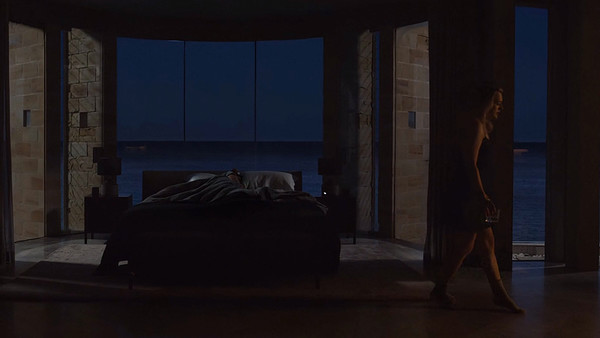
Aside from Benjamin Wallfisch's musical score, so much of the movie works as well as it does because it takes full advantage of the fact that the Invisible Man keeps quiet and allows Cecelia to stew in her own seemingly paranoid silence.
The first scene in the movie, where we witness Ceclia fleeing from her abusive ex-boyfriend Adrian (Oliver Jackson-Cohen), is largely underscored by blowing wind and smaller incidental noises, and it creates a chilly, ominous mood from the outset.
Many of the film's other suspense sequences employ similarly minimalist sound design, as is almost unheard of for horror films adapted from name properties.
Again though, Whannell knows when to focus on the sinister calm and when to crank up Wallfisch's score to 11, continually pushing and pulling the viewer between these two extremes.
1. It's A Rare Reboot That REALLY Works

With this movie unexpectedly turning out as well as it did, it's hilarious to consider that Universal very nearly made a larger-budget, Johnny Depp-starring Invisible Man movie a few years ago, as was set to be part of the studio's planned (and quickly cancelled) Dark Universe.
Rather than a $200 million slice of star-studded schlock, we ended up with a thoughtful, modest, and brilliantly acted film which, if nothing else, proves the triumph of a filmmaker's imagination over the "need" for executives to line their pockets from cynical tentpole froth.
Yet with this take on The Invisible Man tracking to be a stonking box office hit, it looks like a win-win for everyone involved, while indicating to studios that they needn't risk monstrous budgets to revitalise beloved IP.