The Irishman Review: 10 Ups & 1 Down
Scorsese delivers another all-timer instant classic.

This year's London Film Festival hosted Martin Scorsese's The Irishman as its closing night film, and it's tough to imagine a bigger or more anxiously anticipated film to close the festival up.
The hype has been steadily building for Scorsese's latest mob epic since its premiere at the New York Film Festival late last month, with the film holding universal acclaim from critics at the time of press.
But far from being overblown hyperbole, everything you've heard about The Irishman being an instant classic of American filmmaking and one of the director's strongest ever efforts is totally true.
Despite there being so many obvious elements which could've led to an overblown mess of a movie, Scorsese keeps his winning streak firmly in tact with an absurdly entertaining crime masterpiece that excels in every way which a great film must.
Naturally, The Irishman's going to be a mighty Oscar prospect moving forward, with nominations likely in almost every category it's eligible for.
And thankfully general audiences don't have too long to wait, as it will be receiving a limited theatrical release in early November before dropping worldwide on Netflix on November 27th...
Downs...
1. The Digital De-Aging Is Sometimes Distracting

There is so little to complain about here, but if there's one single aspect of The Irishman that doesn't quite come off, it's the controversial digital de-aging applied to Robert De Niro, Al Pacino and Joe Pesci throughout the film.
Though the effect is astonishingly impressive for the most part, the more radical de-aging effects, especially those on De Niro when he's a young man, lend a rubbery, distracting texture to the actor's face.
Thankfully Scorsese uses the effect in more subtle ways through most of the film, but there are many individual moments where a blink of the eye or mouth movement looks noticeably off, as it's clearly been tinkered with in post-production.
The film as a whole is so absurdly absorbing that you'll probably not be drawn out of it too much, but even with a stonking $159 million budget and a post-production period of over 18 months, the results are far from perfect.
With that gripe out of the way, though, here's everything Scorsese and co. get absolutely right...
Ups...
10. It's Basically The Anti-Goodfellas

It would've been easy for Scorsese to simply play the hits and give his fans another riff on the Goodfellas formula, but to his enormous credit, The Irishman is in many ways a polar opposite reflection of his 1990 mob classic.
Though The Irishman obviously owes a lot of its style and tonal identity to Goodfellas, it provides a far less romantic depiction of mob life, veering away from the slick cool that helped that movie become so iconic.
The Irishman is far less eager to portray the mobster life as sexy and exciting, focusing instead on how it dirties the souls of those involved and, in turn, rots entire cities and civilisations.
The passage of time is a key theme in the movie, with countless characters being introduced to us along with text indicating their later time and method of death, and by the time the end credits finally roll, it's tough to imagine anyone viewing the line of work in a flippant or favourable context.
As two sides of the same coin, Goodfellas and The Irishman would make one hell of a double bill - a damn long one, too.
9. Al Pacino Gives His Best Performance In Years
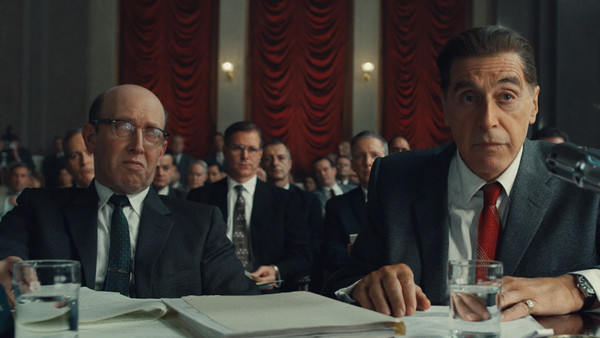
It's incredible to think that this is the first time Al Pacino has ever been directed by Martin Scorsese, but as just about everyone could've expected, the two make for a fantastically harmonious pairing.
As infamous labour leader Jimmy Hoffa, Pacino is more electrifying, unpredictable and exciting to watch than he's been in years.
Fans of Pacino's loud, over-the-top performances will relish his many infuriated rants throughout the film, laced with a wealth of black humour no less.
But Pacino also ensures not to make Hoffa an out-and-out cartoon, perfectly conveying the man's stubborn ignorance when the going gets tough.
It's a performance for which the actor will unquestionably receive a Best Supporting Actor Oscar nomination, and honestly, he might even win it.
8. Scorsese's Note-Perfect Direction
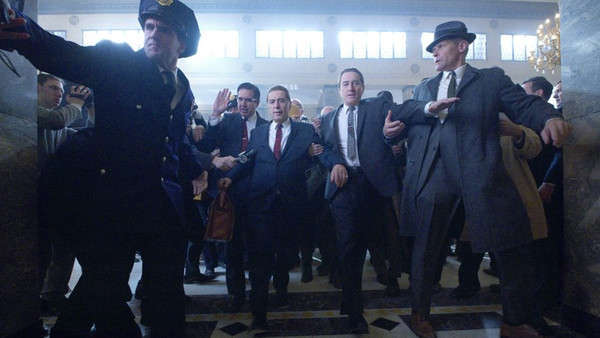
To the surprise of nobody, Martin Scorsese directs the absolute hell out of this movie, proving that at 76 years old, he still has all the vigour and vitality of a young, hungry filmmaker.
Though Scorsese self-consciously reins in his slick style for the sake of this more sobering look at mob life, shot selections and coverage are still wonderfully precise, and of course, he's a better actor's director than pretty much anyone else working today.
He makes basically all the right choices, and the result is a movie that not only extends his unprecedented winning streak, but delivers a movie that can stand tall among his very best.
7. It Earns Its Epic Runtime

Even the most ardent Scorsese fans raised their eyebrows when Netflix announced The Irishman's 209-minute runtime, though if there's any director who has proven himself worthy of an epic canvas, it's surely this one.
And duly, The Irishman earns all of those minutes, because there's not a single moment where the film drags or Scorsese's approach to the material feels self-indulgent or even undisciplined.
The film's sprawl across more than half a century notwithstanding, the 3.5 hours really allows scenes to breathe, and bar a few slight nips and tucks here and there, it's tough to imagine what Scorsese could've even dreamed of losing.
The end results crystallises how fortunate it was that The Irishman landed at Netflix, given their famously hands-off approach with their filmmakers, and in this case, clearly 209 minutes was exactly how long Scorsese needed to realise his vision.
At least with the movie streaming so soon, though, you'll be able to give yourself a bathroom break half-way through.
6. Robert De Niro & Joe Pesci's Brilliantly Understated Performances
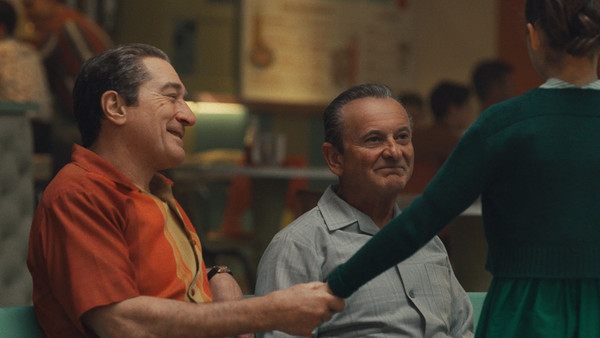
If Al Pacino gives an acidic, energetic performance, his two co-stars decide to go the other way and compliment his work with their more restrained and underplayed turns.
Robert De Niro adds another marvelous effort to his cachet as the titular character Frank Sheeran, a performance defined by exasperation and anxious tics, tripping over his words whenever he gets nervous or agitated. That he's destined for a Best Actor Oscar nomination goes without saying.
And then there's Joe Pesci, who Scorsese effectively had to bully out of retirement to appear in the movie, and boy, was it worth it.
If you were simply expecting another fiery, Goodfellas-esque performance from the actor, this isn't that at all: this is a quiet, reined-in rebuke to his Tommy DeVito character, but one still imbued with its own brand of low-key menace.
Pesci gets his best material in the film's haunting third act, and will absolutely end up a Best Supporting Actor Oscar nominee alongside Pacino.
5. The Hilarious, Witty Script
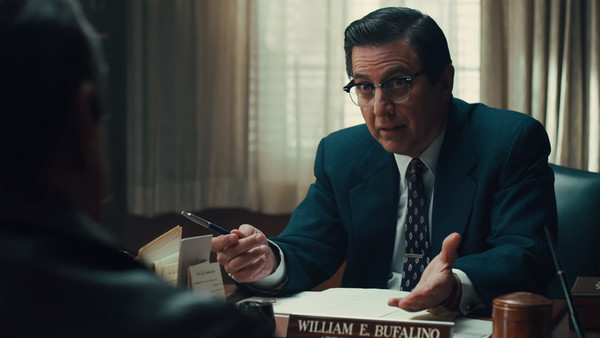
Despite its more melancholic tone than some may be expecting, The Irishman is also one of the year's funniest films, thanks to a firecracker script from Steven Zaillian filled with deliciously barbed squabbling between the various central figures.
A mid-film sequence where Hoffa chastises mobster Anthony Provenzano (Stephen Graham) for showing up late for their meeting is probably one of the most stingingly hilarious scenes from Scorsese's late-period filmography.
It's tough to imagine a world where Zallian doesn't win the Best Adapted Screenplay Oscar, which so expertly balance its tones and gives the cast so much beautifully insightful, human and hysterical dialogue to work with.
4. Its Rich Historical Context

Given that The Irishman both spans many decades and actually happened, it's not terribly surprising that Scorsese engages with history in an incredibly meaningful and poignant way.
This proves especially fruitful when the mobsters cross paths with the Kennedys, with Robert F. Kennedy (Jack Huston) especially none-too-fond of Hoffa, the exclamation point of which turns out to be the 1963 assassination of President John F. Kennedy.
But there's far more than that for history buffs to soak in, and the result is a literate yet never confusing film with a wealth of period detail on offer.
3. It Boasts One Of The Best Ensemble Casts Ever

If Pacino, De Niro and Pesci wasn't enough to make The Irishman an embarrassment of acting riches, Scorsese has clearly had his pick of the litter with his stupendously talented supporting cast.
Where to even begin? Harvey Keitel is great in his few scenes as mobster Angelo Bruno, Stephen Graham is fantastic as Anthony Provenzano, and Ray Romano kills it as criminal lawyer Bill Bufalino, while the likes of Jesse Plemons, Bobby Cannavale, Anna Paquin and Domenick Lombardozzi (almost unrecognisable in prosthetics) all shine in their smaller parts.
Everyone brings their A-game no matter the size of their role, no doubt helping ensure that every single scene in the movie feels absolutely absorbing and necessary.
2. The Stunning Editing & Cinematography
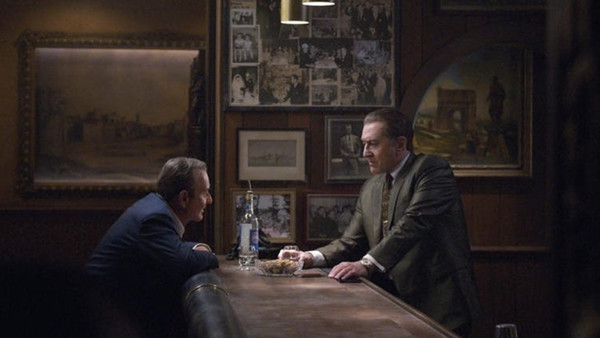
It takes an inconceivable amount of editorial skill to make a 209-minute movie feel well-paced, and so, Scorsese's long-time editor Thelma Schoonmaker once again knocks it out of the park.
Whether she's cross-cutting two different conversations to hilarious effect or simply allowing the film to find its rhythm, Schoonmaker's editing is masterful and sure to earn her her 8th Best Editing Oscar nomination - and quite probably the win, too.
The cinematography of Scorsese's regular recent DP Rodrigo Prieto is also likely to be up for awards, for while not particularly showy or ostentatious, it has a real texture and grit to it that accentuates the film's less-romantic tone compared to Goodfellas and Casino.
There are also some gorgeous slow-motion sequences throughout the film which seal the deal.
1. The INCREDIBLE Third Act

No spoilers here, but Scorsese absolutely saves the best for last with this movie, ensuring you likely won't be clock-watching as The Irishman crosses the three-hour mark.
The final third of the movie begins the slow wind-up of the principal characters' stories, and does so by meditating on the fact that death comes for everyone eventually, and far from the dishy public interest in sexed-up mob movies, the reality for most of these men is a lonely, depressing end.
It might be the most emotional work Scorsese's ever done, honestly, serving up a cold, hard dose of reality that's tough not to view as parallel to the accelerated age of both the filmmaker himself and his three main cast members.
That it does all this without ever feeling even remotely sentimental is hugely impressive. The Irishman goes out on a high after maintaining a baseline of excellence throughout.